
German-American History Painter
Emanuel Leutze
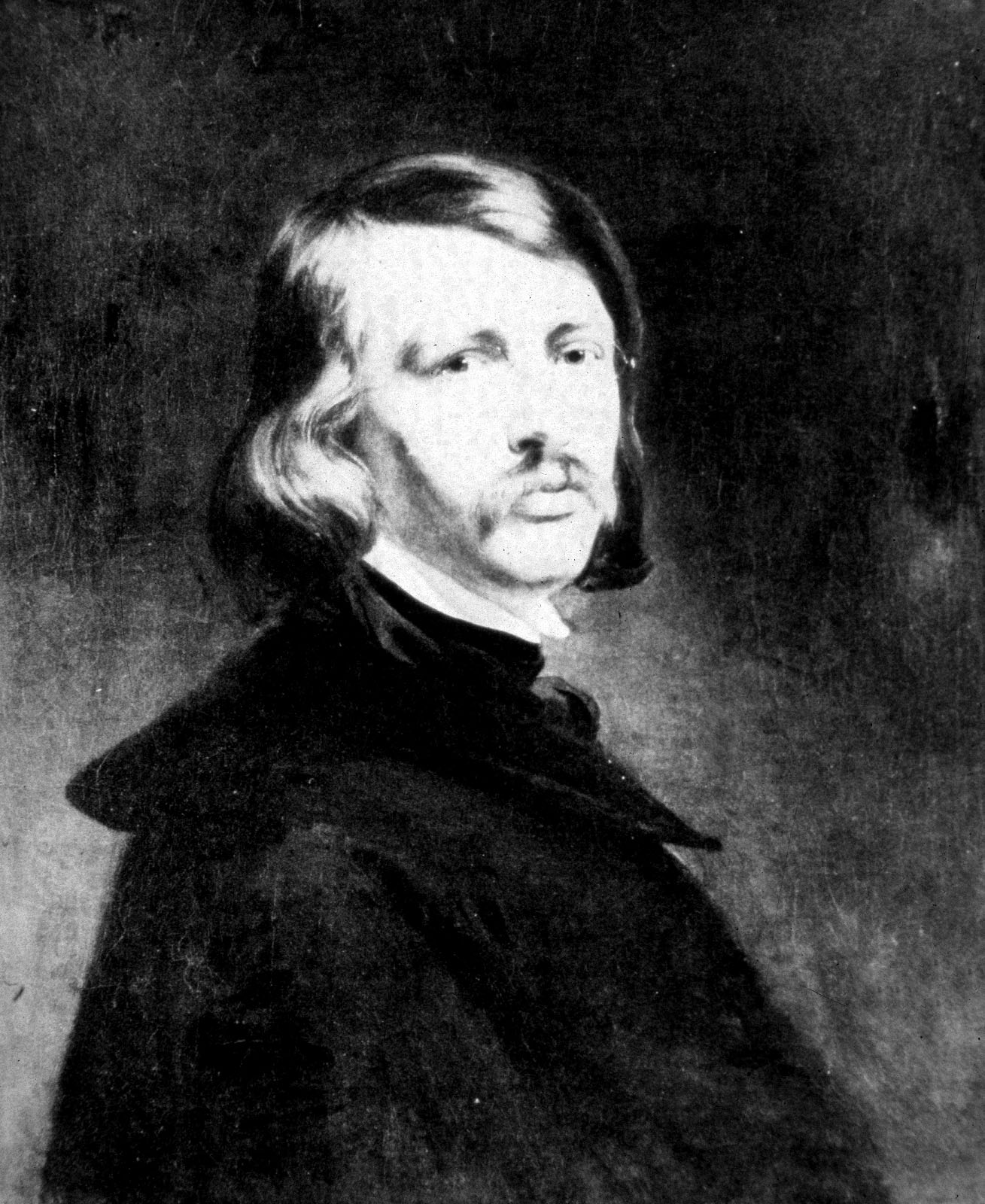
Emanuel Leutze is the German-American history painter who turned political events into public images built to be read at a glance. Born in Germany, raised in Philadelphia, and trained in Dusseldorf, he stands at a transatlantic crossing of nineteenth-century art and politics. He believed history painting could do civic work: organize an event, heighten it, and return it to viewers as national memory. That is why his career matters beyond one celebrated canvas, even if Washington Crossing the Delaware remains the most famous proof of the method.
From Philadelphia to Dusseldorf
Leutze was born in 1816 in Schwabisch Gmund in what is now Germany and immigrated with his family to Philadelphia in 1825. He first worked in the United States as a portraitist and studied with John Rubens Smith before leaving for Europe in 1840. At the Royal Art Academy in Dusseldorf, he trained with Wilhelm Schadow and Karl Lessing, absorbing a version of history painting built on finish, narrative clarity, and large public ambition.
That training matters because Leutze never paints history as loose anecdote. Even when his subject is full of movement, the image stays tightly organized. Figures read quickly, symbolic centers are easy to find, and the whole canvas is built to hold public attention. His career structure explains the result: American subject matter passing through German academic discipline and returning as national image.
History painting as democratic persuasion
Leutze's family had left Germany as political refugees, and the artist himself remained deeply interested in democratic politics. Smithsonian materials stress how strongly he identified with American government and how openly he supported the German uprising of 1848. That political position helps explain why he turned to history painting. He was not looking for private lyricism. He wanted scenes capable of persuading a public.
This is why Leutze belongs naturally in the orbit of Romanticism. He shares the movement's taste for heightened atmosphere, political emotion, and morally charged central figures. But his ambition is especially civic. He wants history to become legible as national will. His paintings ask not only what happened, but how an event should look when a people turns it into a usable memory.
National history at monumental scale
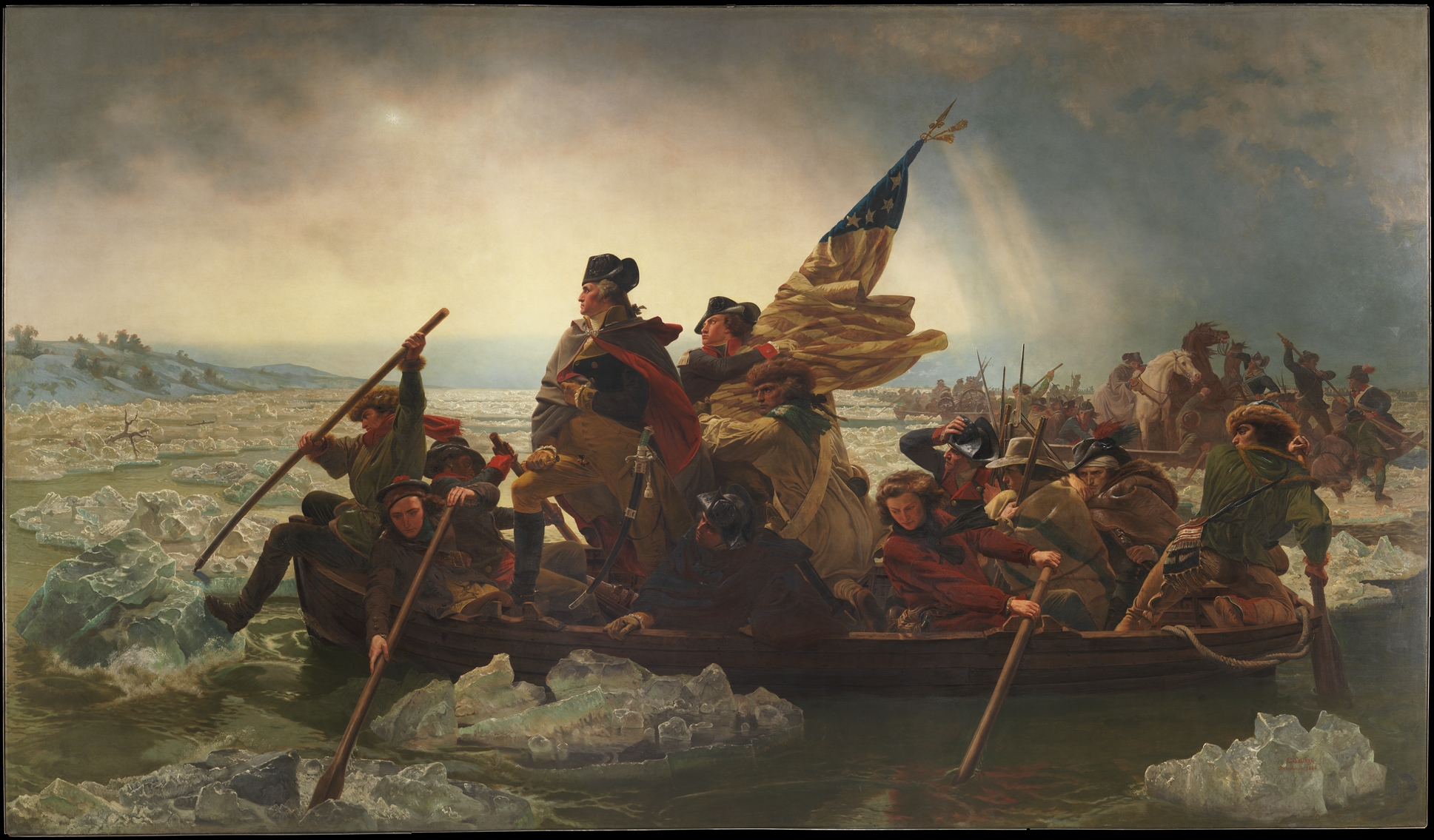
Leutze kept returning to subjects large enough to carry public meaning. In Washington Crossing the Delaware, his best-known canvas, he takes a Revolutionary War episode and rebuilds it as civic theater. Washington stands higher than strict realism would allow because the figure has to function immediately as leader, emblem, and moral center. The crew becomes a miniature nation, the river an ordeal, and the whole event a visual statement about democratic perseverance.
Beside The Oath of the Horatii, Leutze's position inside history painting becomes clearer. Jacques-Louis David builds public virtue through severe geometry and civic restraint. Leutze keeps the public ambition but adds weather, movement, flag, and spectacle. The result is less neoclassical discipline than Romantic surge, yet the underlying aim is similar: use composition to make political meaning immediately visible.
Public walls, public memory
Leutze's career did not stop with the Delaware. He exhibited the famous canvas in New York and Washington to major acclaim, petitioned Congress for mural work, and later painted Westward the Course of Empire Takes Its Way for the U.S. Capitol. That trajectory matters because it shows the scale of his ambition. He was not just a studio painter of patriotic scenes. He wanted his work to enter public buildings and help furnish the visual language of the republic.
The Capitol connection also shows how well his art fit institutional ambition. His pictures are built for collective viewing. They read clearly at scale, they simplify without collapsing, and they offer large symbolic narratives that governments and publics can reuse. Even when modern viewers find them heavy-handed, that heaviness is part of the point. Leutze paints for civic display, not intimate ambiguity.
Legacy beyond one icon
Leutze's reputation still rests heavily on a single image, but his larger importance lies in the kind of painter he was. He belongs to the nineteenth-century attempt to turn history painting into a public language for democratic nationhood. Few artists made political memory so legible, so staged, and so ready for collective reuse.
At the same time, his work shows the limits of patriotic image-making. National myth gains force by simplifying complexity. Leutze's paintings make politics legible, but they also smooth over contradiction in order to do so. That tension is worth keeping in view. It is the reason his work remains useful: not only as patriotic spectacle, but as evidence of how modern nations learn to picture themselves.
Continue with Emanuel Leutze
Then try the art quiz.