
Neoclassical Artist
Jacques-Louis David
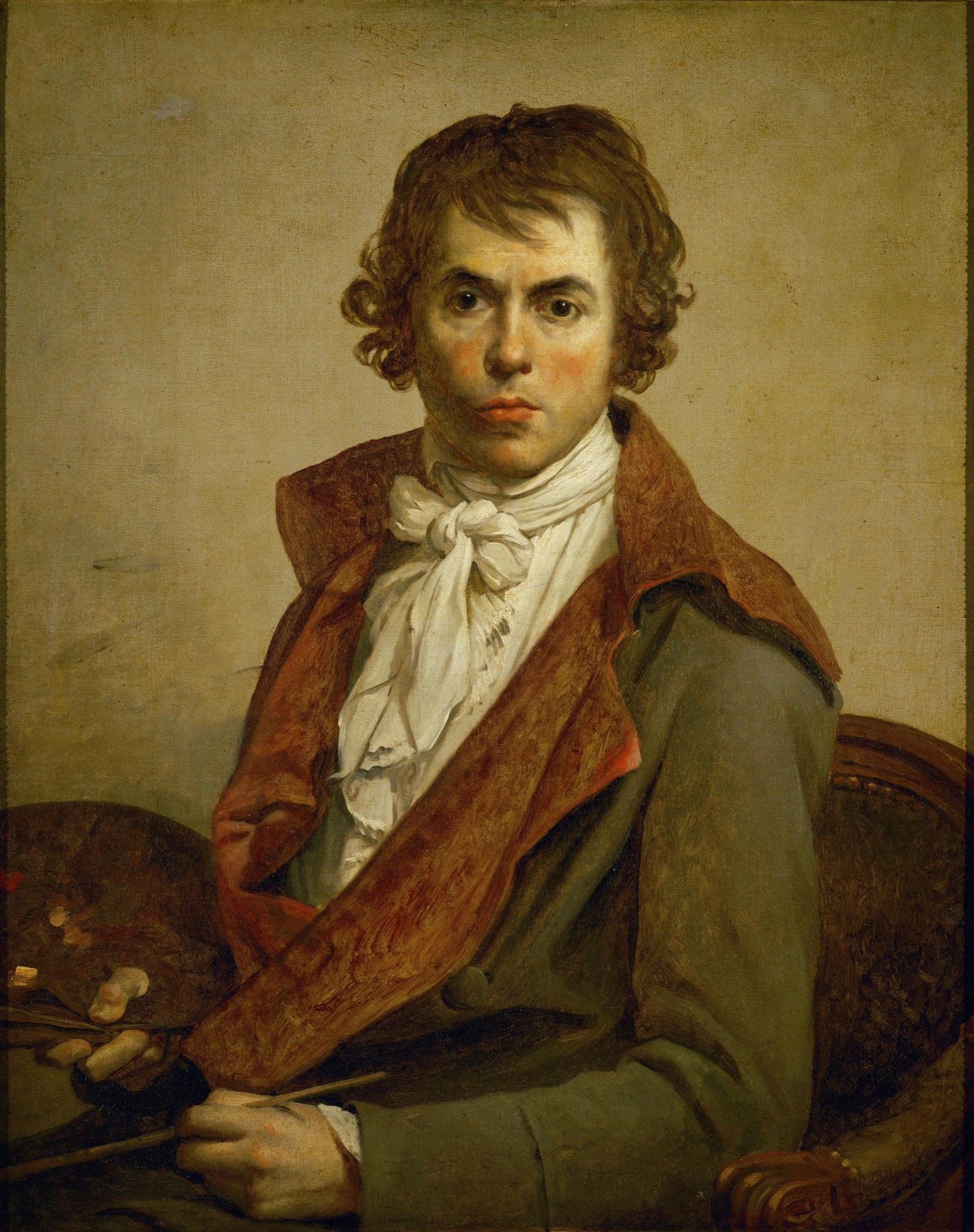
Jacques-Louis David is the French painter who turned Roman history, the Revolution, and imperial power into a new language of public painting. His images are clear, firm, and built to project authority. In Neoclassicism, he does not just define a style. He gives painting a way to make duty, sacrifice, and state power immediately legible.
Rome, the antique, and the discipline of form
Born in Paris in 1748, David trained inside the French academic system, studied with Joseph-Marie Vien, and won the Prix de Rome. That Roman formation matters because it sharpened two commitments that stayed with him for life: the authority of antiquity and the authority of structure. For David, ancient art was not a decorative sourcebook. It was a test of seriousness.
His best paintings feel stripped down because he wants contours to read cleanly, gestures to carry argument, and architecture to hold moral meaning in place. The result is often described as severe or cold, but David is not removing feeling. He is forcing feeling into a public form.
Horatii sets the method
Start with The Oath of the Horatii. There, David turns an ancient Roman story into a decisive image of duty. The brothers advance as one, the father becomes the hinge of authority, and the women register the grief that civic resolve tries to silence. Nothing is left vague by accident.
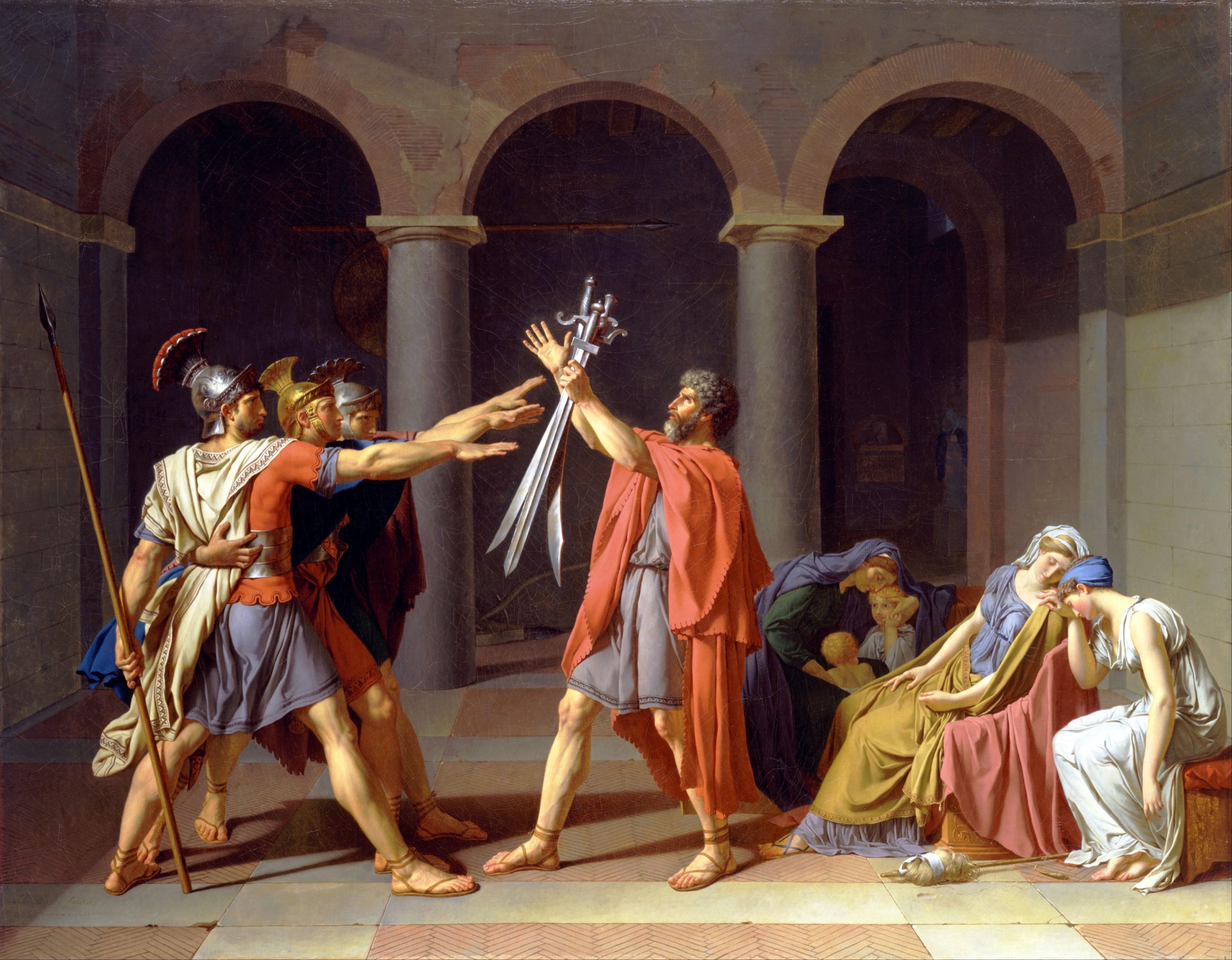
The painting shows that order itself can become dramatic. There is no smoke, no chromatic chaos, no unstable Romantic surge. Yet the image still exerts enormous pressure because everything is directed toward one binding decision.
A second David: conviction at the edge of death
The Death of Socrates shows the same discipline under a different kind of pressure. Instead of brothers swearing before a father, David stages a philosopher reaching for the hemlock while still teaching. The scene is quieter, tighter, and more inward, but it is just as public in meaning. David makes reason look physical through posture, contour, and restraint.
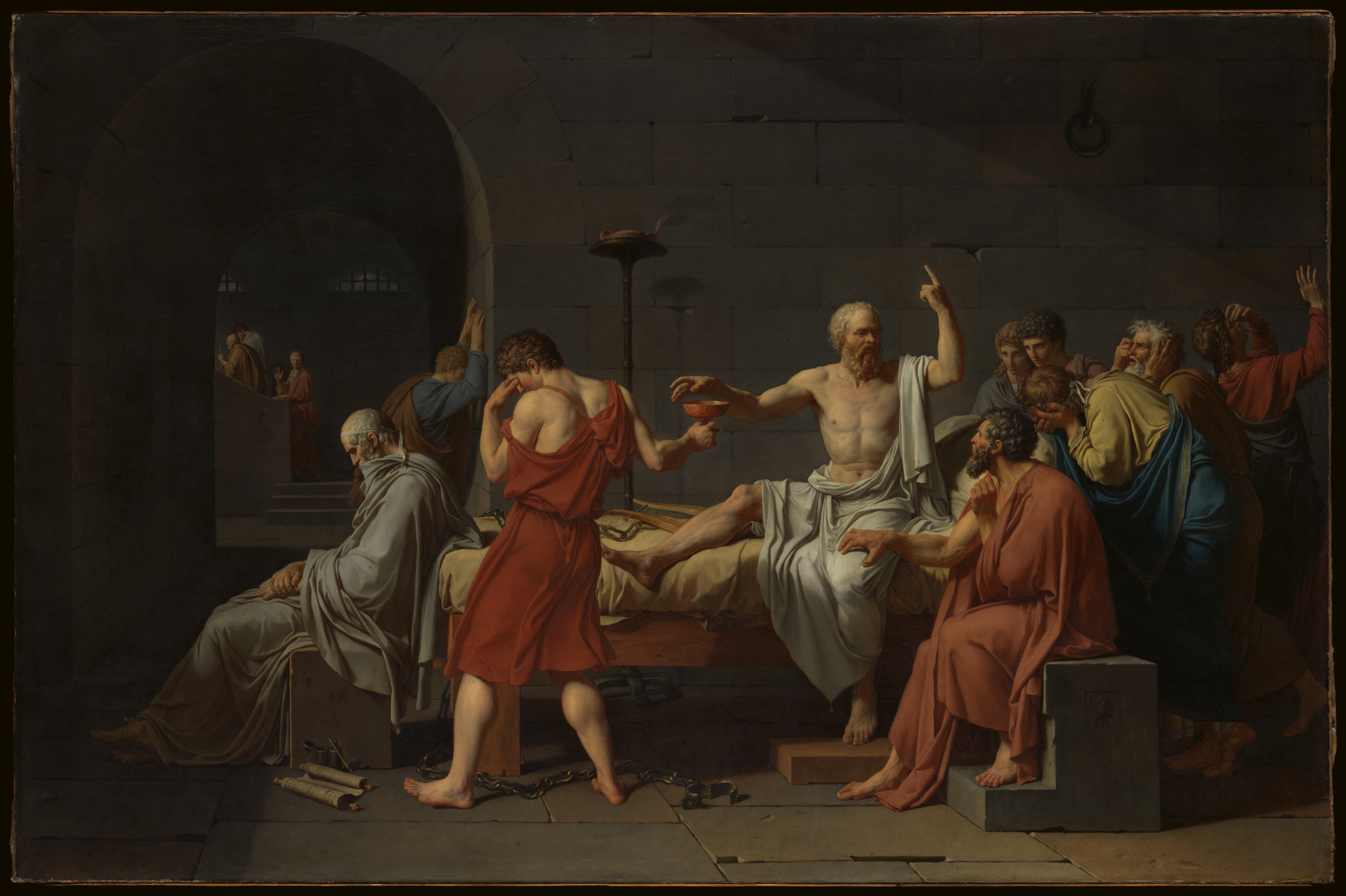
Taken together, the two paintings show why David cannot be reduced to antique costume or civic rhetoric. He can build public seriousness through oath, gesture, and family structure, but also through stillness, argument, and chosen death. The constant is his method: simplify, sharpen, and make conviction visible.
Then revolution enters the image
The Death of Marat shows what happens when David turns the same discipline onto a contemporary political body. Marat lies murdered in his bath, the pen still in his hand, and almost everything not essential has been removed. The antique exemplar disappears, but the public gravity remains. David turns a fresh assassination into a stripped martyr image by reducing the event to body, wound, letter, and writing box.
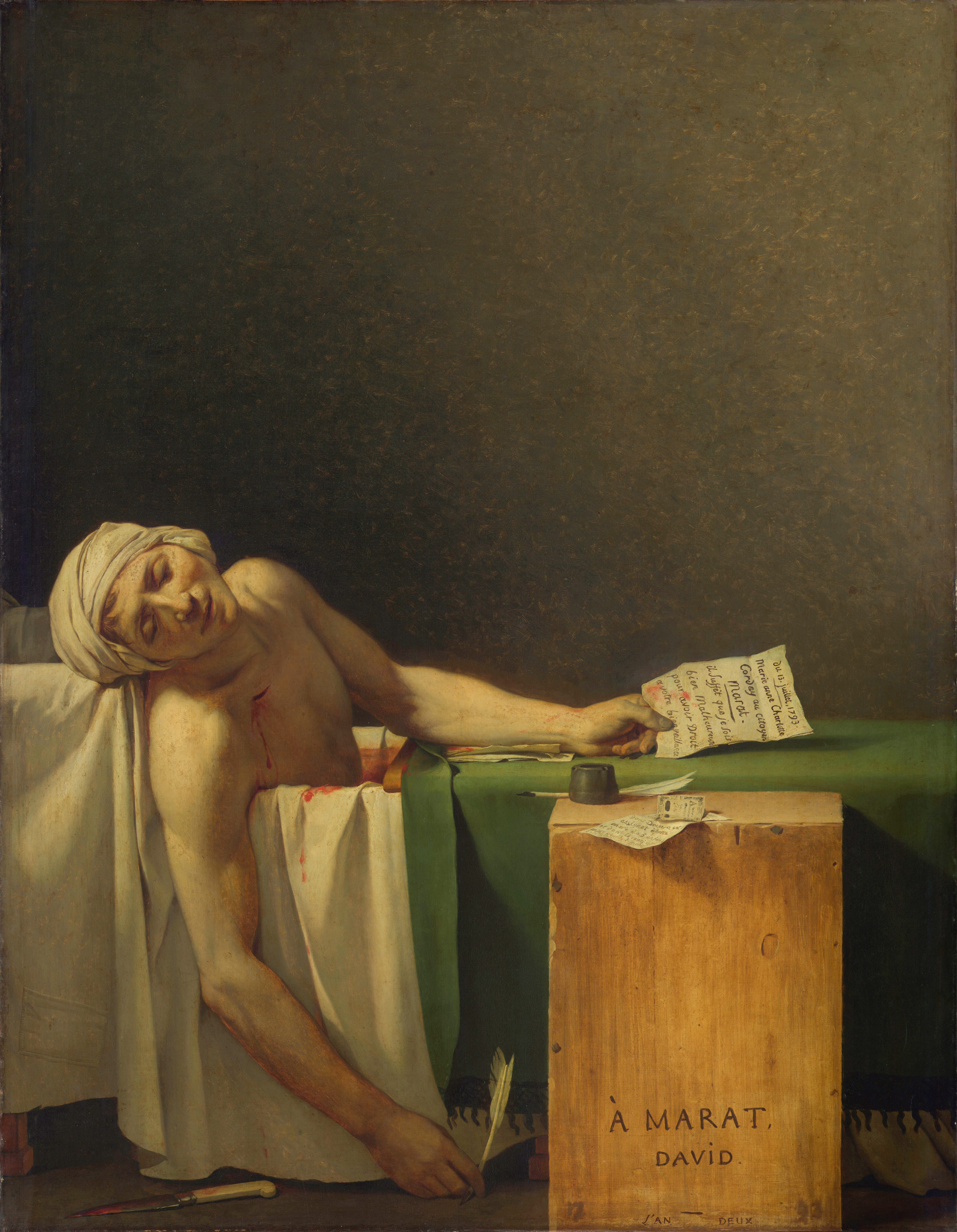
David proves that neoclassical clarity can shape a modern event directly, without Roman armor or Greek philosophy as intermediary. Public painting moves from antique virtue to revolutionary memory, but it keeps the same trust in contour, simplification, and controlled feeling.
From civic virtue to revolutionary image-making
David's career becomes even more important once the French Revolution begins. He does not remain the painter of antique exempla alone. He becomes a painter working inside modern political rupture, helping invent how revolutionary seriousness might look. His art can serve republican virtue, collective sacrifice, and later imperial power, all while preserving the same demand for legibility and control.
David is not just the painter of noble restraint. He shows how a formally disciplined image can move between monarchy, revolution, and empire without losing its public force. The consistency lies less in ideology than in method: simplified structure, emphatic gesture, and a refusal of ornamental drift.
Do not mistake clarity for neutrality
Because David is so lucid, people sometimes read him as if he were merely illustrating ideas that already exist elsewhere. In fact, his clarity is an intervention. He stages hierarchy, duty, sacrifice, and authority in ways that make them appear not only intelligible but necessary. The painting tells viewers where seriousness resides.
Later artists inherit that intervention whether they accept or reject him. Delacroix is inconceivable without David precisely because Romanticism defines part of itself against neoclassical firmness. Once David has made political painting look so ordered, later painters can choose either to continue that severity or to break it open through movement, atmosphere, and instability.
Legacy, influence, and reaction
David's legacy is not limited to his own canvases. He shaped academic training, historical painting, and the visual culture of public seriousness far beyond revolutionary France. His influence passes through students, institutions, and later debates about what large painting ought to do. That afterlife shows how deeply Neoclassicism entered the grammar of European public art.
His importance also lies in the reactions he provoked. Painters who move away from him still define themselves in relation to him. Romantic instability, Realist skepticism, and even later museum culture all inherit a problem David made inescapable: how can an image carry public meaning without collapsing into either propaganda or decoration? That question keeps his work historically active.
Reading paths from David
Read The Oath of the Horatii, then The Death of Socrates, then The Death of Marat, then Neoclassicism before comparing David's public clarity with Delacroix. Then try the art quiz.
Primary sources
- Louvre collections: The Oath of the Horatii
- Encyclopaedia Britannica: Jacques-Louis David
- Smarthistory: Jacques-Louis David, The Oath of the Horatii
- The Metropolitan Museum of Art: The Death of Socrates
- Smarthistory: Jacques-Louis David's The Death of Socrates
- Royal Museums of Fine Arts of Belgium: The death of Marat exhibition
- Khan Academy / Smarthistory: David and The Death of Marat
- Encyclopaedia Britannica: Neoclassicism
- Wikimedia portrait file metadata