
Romantic Artist
J. M. W. Turner
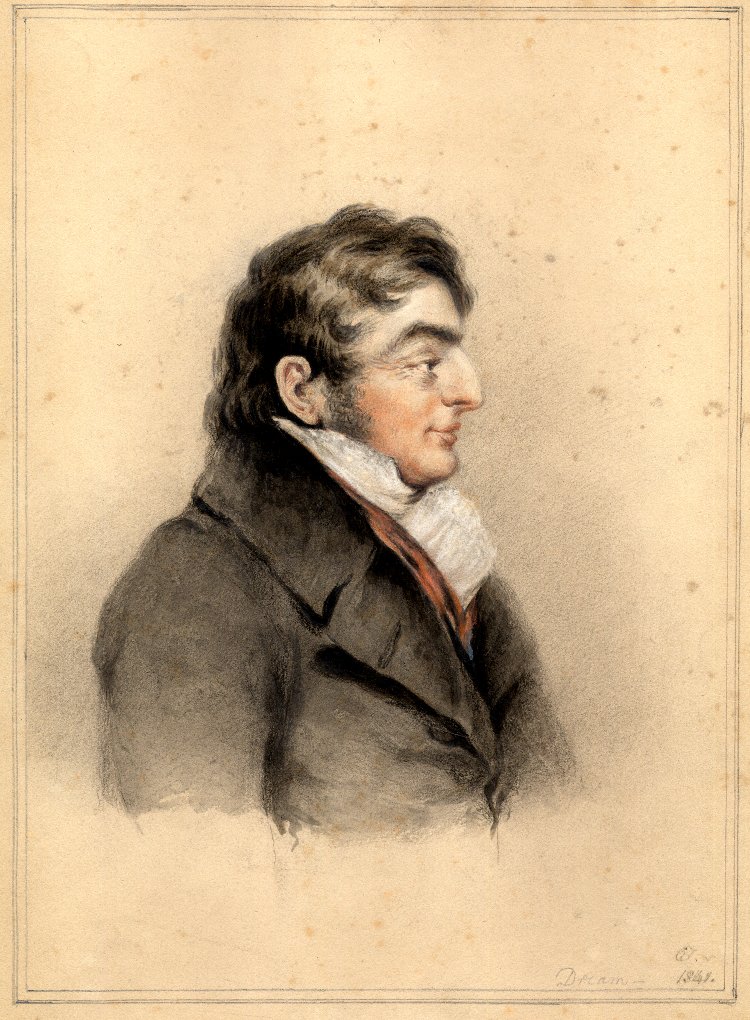
With Turner, landscape stops being background and starts behaving like an event. Storm, fire, fog, sea, river light, and later even the railway all become ways of measuring a world under pressure. He remains one of the defining painters of Romanticism, but he also points beyond it. Few nineteenth-century artists stand more clearly on the road to Monet and later modern painting.
From London prodigy to Royal Academy star
Joseph Mallord William Turner was born in London in 1775 and trained early through drawing, watercolor, and topographical study. He entered the Royal Academy Schools as a teenager, learned how to work from architecture and landscape with unusual discipline, and quickly became known for the ambition of his exhibition pieces. That formation matters because it corrects a lazy myth about Turner as a purely intuitive painter of effects. He was experimental, but he was never casual.
Travel mattered just as much as training. Turner filled sketchbooks across England, Wales, Scotland, France, Italy, Switzerland, and the Low Countries. He kept returning to direct observation, then reworked what he had seen into paintings that were more compressed, atmospheric, and formally daring than the original view. The result is one of the century's most unusual combinations: rigorous preparation on one side, radical visual freedom on the other.
Why Turner changes Romanticism from within
Turner belongs fully to Romanticism because he takes weather, light, danger, and historical upheaval seriously. But he widens the movement. In other artists, the sublime often arrives through mountains, shipwrecks, ruins, or revolutionary violence. Turner can use those subjects, yet he also discovers the sublime in modern circulation itself: harbors, rivers, fire, industrial smoke, and changing atmosphere. He makes the visible world feel unstable without ever letting it become formless.
His art keeps moving at several levels at once. It can be historical, because it responds to war, empire, and the Industrial Revolution. It can be technical, because his handling of watercolor and oil continually tests what paint can do. And it can be perceptual, because Turner repeatedly asks how far painting can go in rendering glare, mist, reflection, turbulence, and speed.
Two Turner routes on Explainary
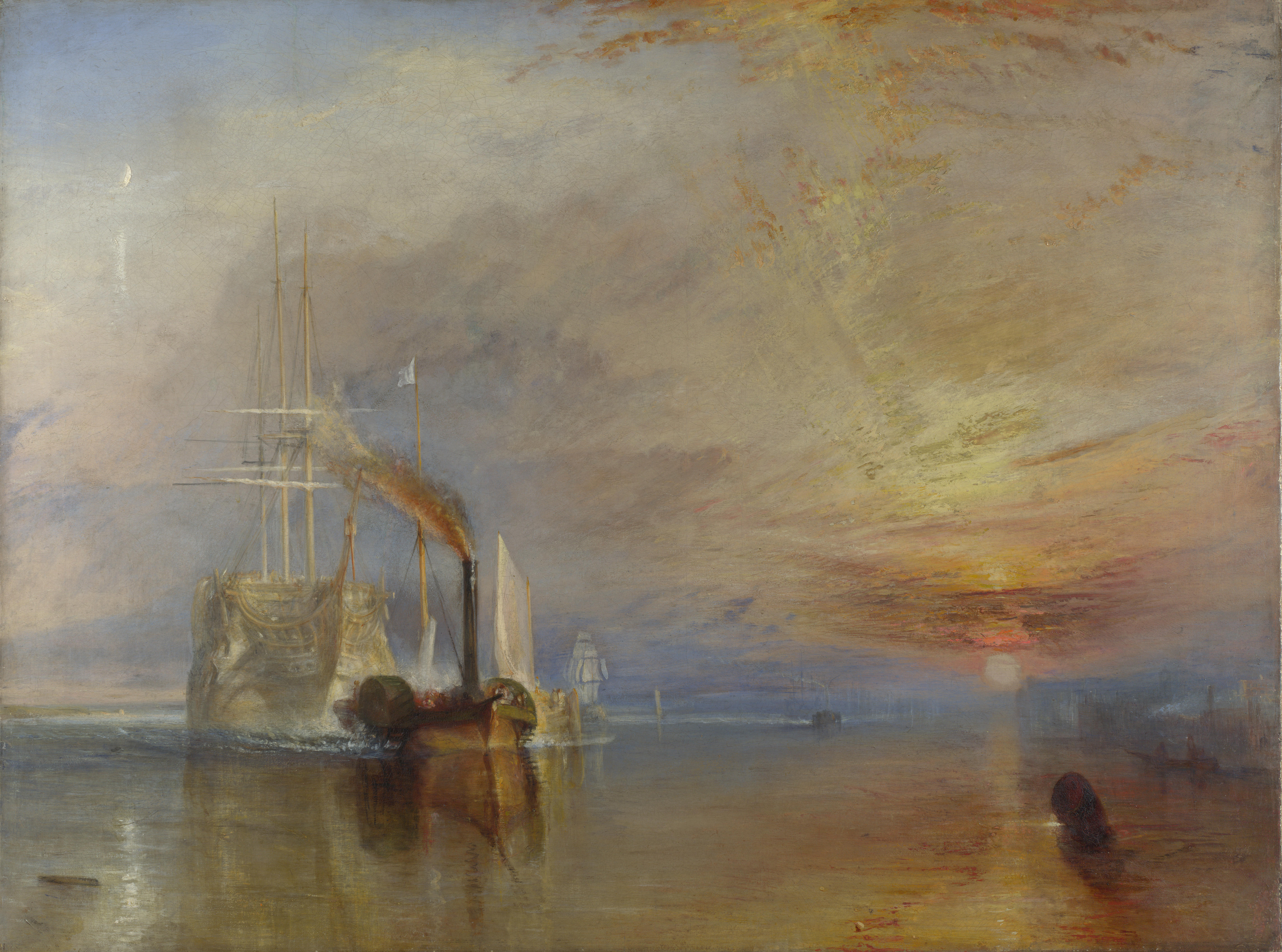
The Fighting Temeraire shows Turner's elegiac side. A famous Trafalgar warship glows like a pale memory while a dark steam tug pulls it toward dismantling. The painting is not a simple lament for the past. It makes industrial transition visible as a relation between two forces: naval grandeur and mechanical work.
Rain, Steam, and Speed takes the same historical pressure into the railway age. Turner refuses to present the train as a neat machine portrait. Train, bridge, river, rain, and vapor press into one another, so industry appears not as a static object but as a new condition of motion and perception.
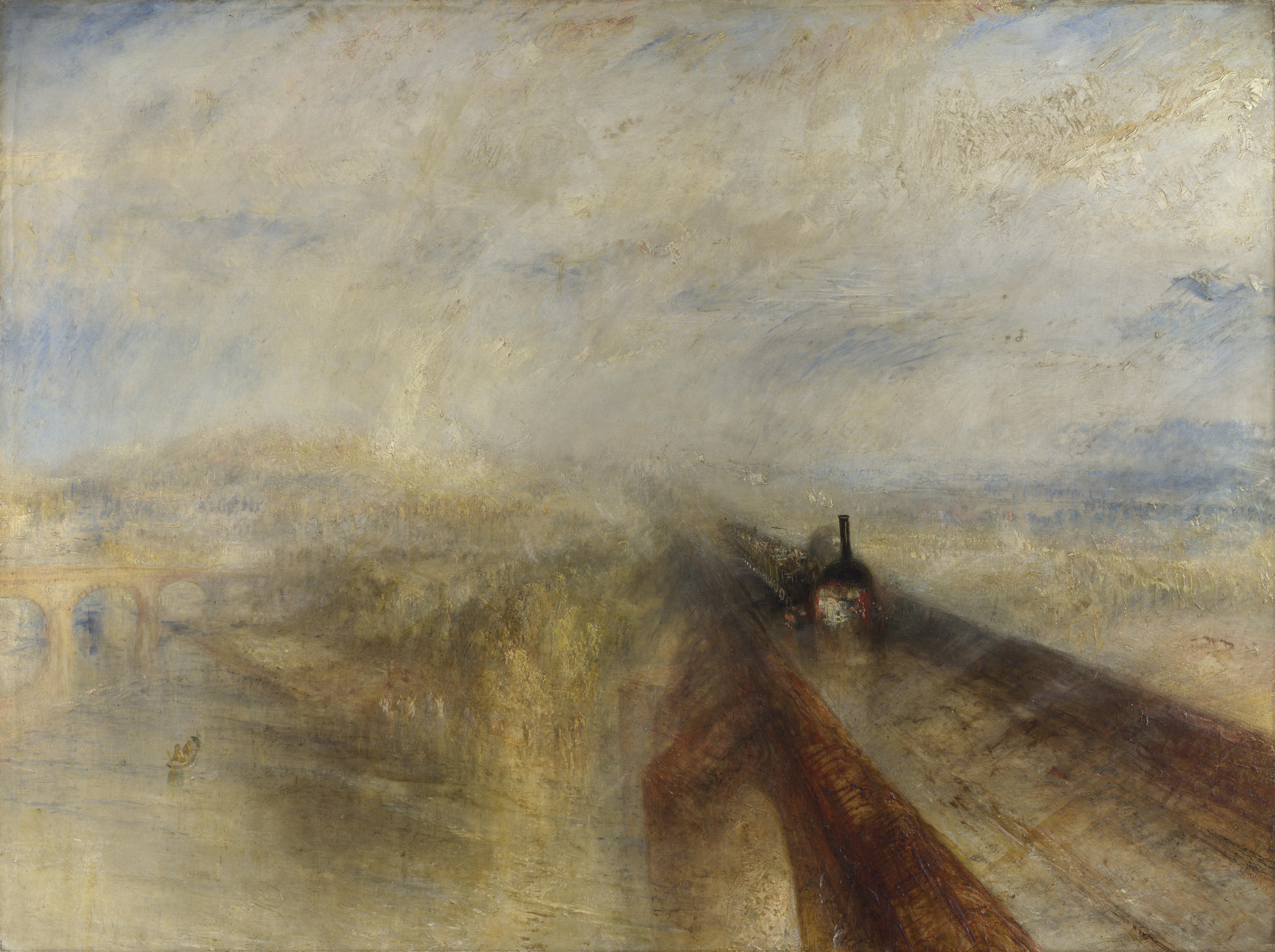
Placed together, the two works show how Turner changes the reach of landscape painting. An old ship pulled by steam, then a train cutting through rain, become enough to carry the pressure of a historical moment. The gesture is Romantic, but it also prepares later art for the modern city, the factory, and the station.
From Turner to Impressionism
The route to Impressionism runs through Turner more often than casual surveys admit. Later painters could look at him and see that atmosphere was not just decorative atmosphere. It could organize the whole picture. That is crucial for understanding the gap and the continuity between Turner and Monet. Turner remains more turbulent, more dramatic, and more invested in the Romantic sublime. Monet is quieter, cooler, and less apocalyptic. But both give paint permission to hold light and instability together.
Read Impression, Sunrise beside Turner's railway picture and Monet's harbor finds its nineteenth-century ground. It does not emerge from nowhere. It belongs to a broader struggle over how painting could register atmosphere, movement, and changing conditions of sight.
Legacy after Turner
Turner's legacy is wider than one school or one set of followers. John Ruskin helped defend and preserve his reputation, but the deeper legacy is pictorial. After Turner, later painters could treat light, atmosphere, and unstable form as structural elements rather than as decorative additions. That mattered for Impressionism, but also for later artists who wanted painting to carry sensation, turbulence, and abstraction without giving up seriousness.
He did not invent modern painting alone, and he should not be flattened into a simple proto-abstract hero. What he did do was make it easier to imagine that a major picture could be built from glare, mist, reflection, smoke, and motion. That remains one of the decisive openings in nineteenth-century art.
Reading paths from Turner
Read The Fighting Temeraire for Turner's elegiac industrial drama, then Rain, Steam, and Speed for the railway as perception under pressure. From there, move to Romanticism, compare Turner with Monet and Friedrich, then try the art quiz.
Primary sources
- The National Gallery: Joseph Mallord William Turner
- The Met: Joseph Mallord William Turner (1775-1851)
- National Gallery of Art: Joseph Mallord William Turner
- Art UK: J. M. W. Turner, the shining star of English art
- The National Gallery: The Fighting Temeraire
- The National Gallery catalogue entry: Rain, Steam, and Speed - The Great Western Railway
- Wikimedia Commons: Turner portrait file metadata