
Impressionist Artist
Edgar Degas
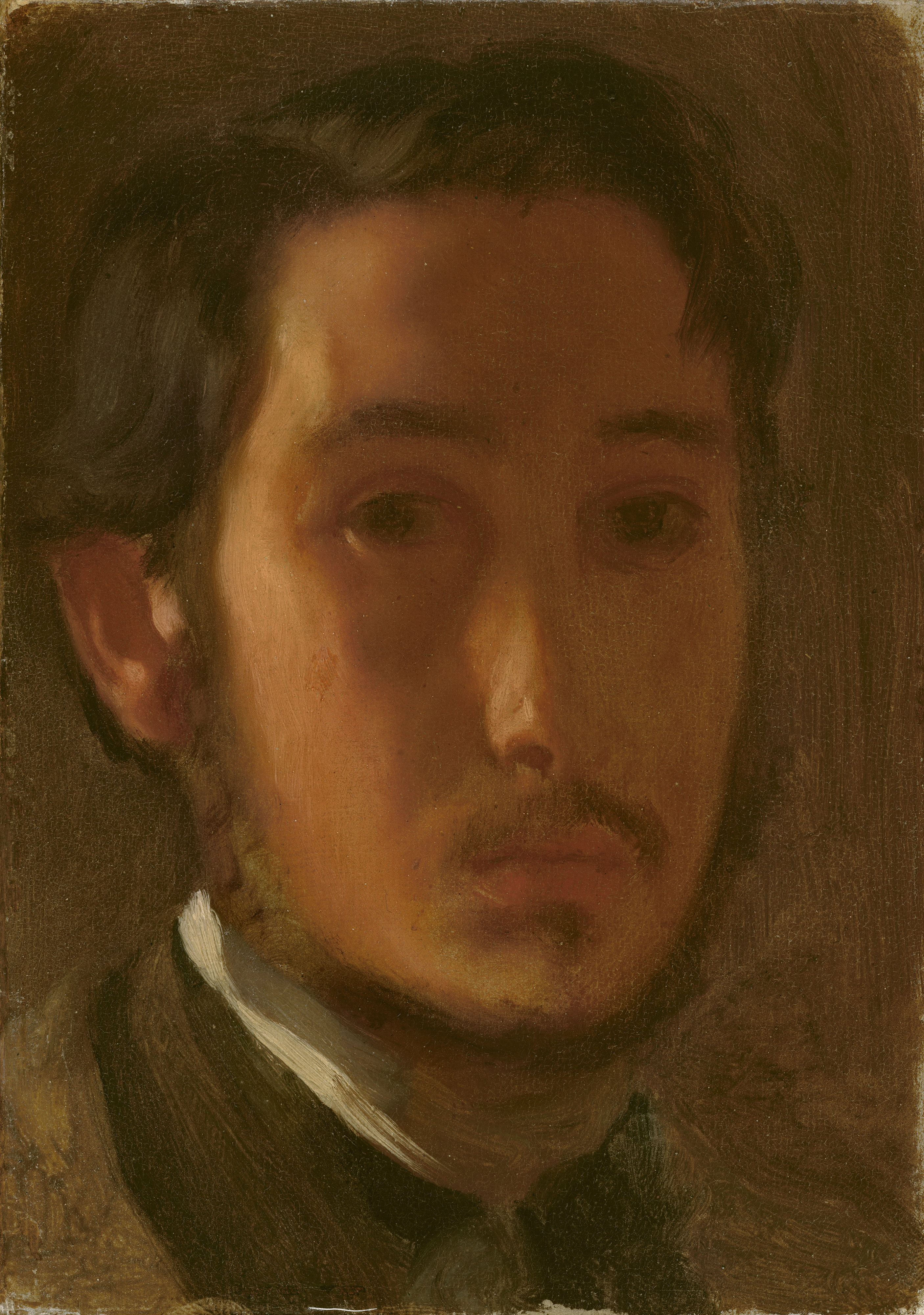
With Degas, modern life appears from the side: cropped, repeated, and always under observation. He belongs to Impressionism, but never in the most predictable way. Where Monet tests weather and Renoir tests sociability, Degas repeatedly turns toward rehearsal rooms, racecourses, milliners, laundresses, bathers, and cafe interiors. He is drawn to bodies at work, bodies under routine, and bodies seen when performance gives way to effort.
From academic training to modern Paris
Edgar Degas was born in Paris in 1834 into a cultivated bourgeois family and received a serious classical training. He studied drawing intensely, copied old masters, and spent time in Italy working through Renaissance models. That foundation matters because it explains what is so unusual about his later art: he never rejects structure or draftsmanship, but he redirects them toward modern subjects that academic history painting had little idea how to handle.
That is why Degas sits awkwardly but decisively inside Impressionism. He exhibited with the group and shared its refusal of Salon authority, yet he did not define modern painting mainly through plein-air landscape. He wanted the city, the theater, the training room, the partial view, the slice of space that looks casual but has been composed with ruthless care.
Not just ballet: the modern world as routine
Ballet is the subject most people associate with Degas, and for good reason. He returned again and again to dancers at rehearsal, backstage, and in moments of preparation rather than triumphant display. But that focus is only one part of a wider habit. Racehorses, women ironing, singers, milliners, and bathers all attracted him for similar reasons: they let him study repetition, fatigue, social role, and the body under pressure.
This gives his work a special kind of modernity. Degas does not need the boulevard crowd or the harbor at dawn to feel contemporary. He finds modern life in routines, institutions, and professional gestures. The result is often sharper than a simple image of leisure. Modernity, in his hands, is not just speed or novelty. It is disciplined behavior observed at close range.
A key case: The Dance Class
On Explainary, the clearest entry point is The Dance Class. There Degas turns a ballet lesson into a structure of waiting, correction, and hierarchy. The room matters as much as the dancers. Empty floor space, cut-off figures, and uneven attention make the painting feel less like a show than like a system of training.
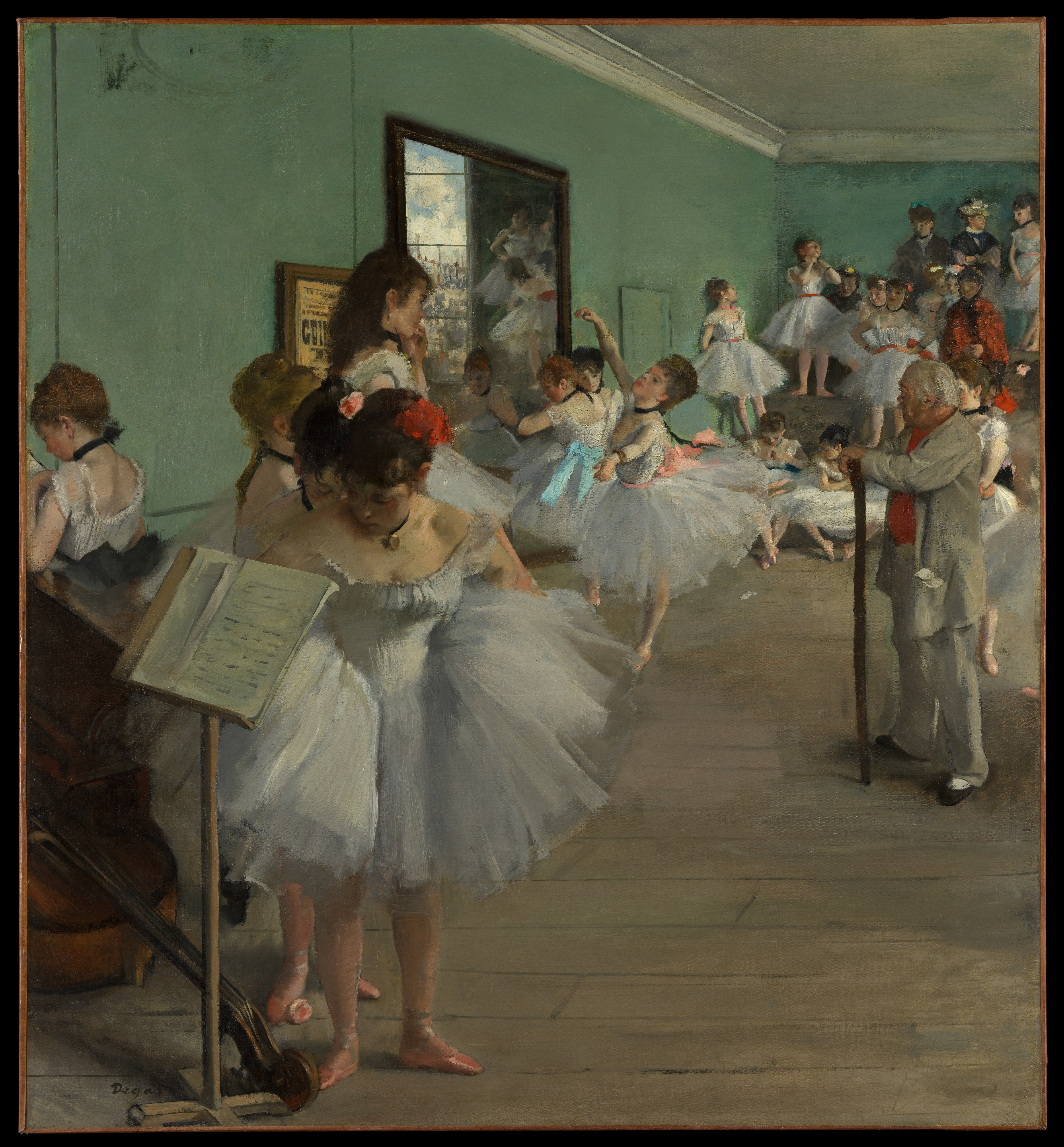
That painting also clarifies why Degas matters beyond ballet as a theme. He shows that a serious picture can be built out of intervals: waiting, stretching, correcting, pausing, watching others. Instead of chasing climactic action, he makes structure out of what usually sits before or behind the event.
How Degas changes Impressionism from within
Degas matters because he proves that Impressionism does not have to mean only open air, flickering river light, or suburban leisure. He carries the movement indoors and into institutions. Gaslit rooms, rehearsal halls, and controlled environments can be as modern and unstable as harbors or boulevards. The same attention to the fleeting is still there, but it passes through framing, interruption, and bodily routine rather than through weather alone.
He also widens what later artists can learn from the movement. Cropping, asymmetry, oblique viewpoints, and the sense of an image cut from a larger flow all become central to later modern art. Painters and printmakers after Degas do not simply borrow his dancers. They borrow his way of organizing looking itself.
Legacy after Impressionism
Degas's legacy reaches far beyond ballet as an iconographic theme. Later painters, printmakers, photographers, and filmmakers inherit his cropped framing, oblique viewpoints, and fascination with bodies observed between actions rather than only at climactic moments. His influence matters because he shows that modern art can build intensity out of rehearsal, routine, and interruption, not only out of grand events.
Reading paths from Degas
A strong route is simple: start with The Dance Class, then move outward to Impressionism, then compare Degas's rehearsal room with Renoir's public pleasure and Caillebotte's urban distance. Then try the art quiz.