
Romantic Landscape Painter
John Constable
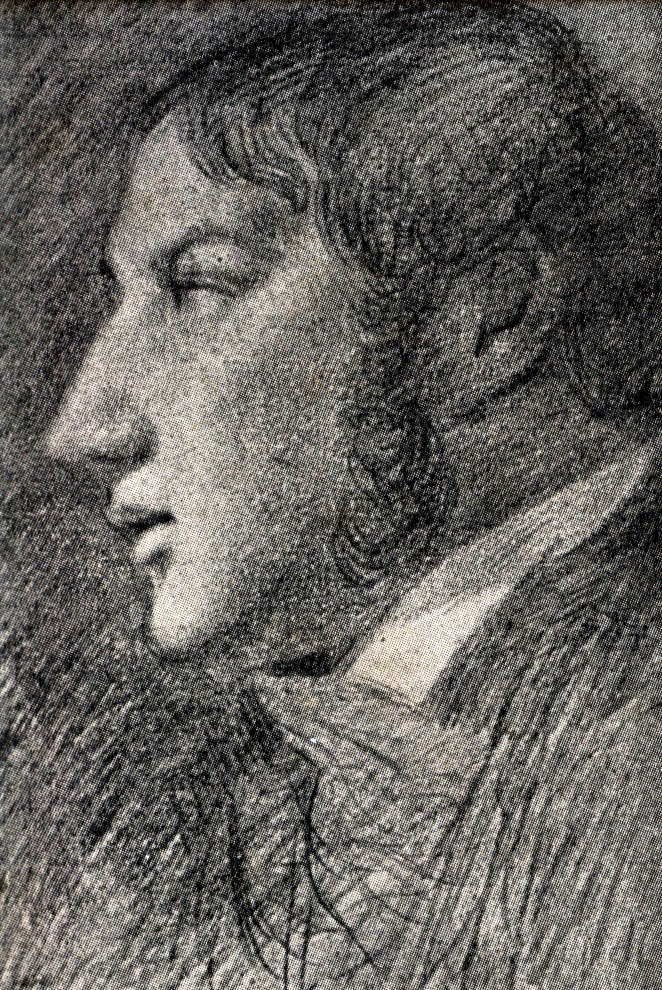
John Constable is the English painter who made familiar countryside large enough for major art. He did not build his reputation on ancient ruins, classical legend, or spectacular disaster. He worked from mills, lanes, rivers, meadows, churches, hedges, and above all from weather. That choice changed landscape painting. Constable showed that close knowledge of one place could carry as much artistic seriousness as the grandest historical subject.
Suffolk before fame
Constable was born in 1776 at East Bergholt in Suffolk, the son of a prosperous miller and grain merchant. The River Stour valley was not only a childhood memory for him; it was the texture of family life and rural work. He entered the Royal Academy Schools in 1799, but his imagination never drifted far from that world. Rather than chasing the most celebrated picturesque destinations, he kept returning to the landscapes he knew from the inside.
That attachment gave his painting unusual density. He understood roads, water, carts, weather, trees, and farm buildings not as interchangeable motifs but as parts of a lived environment. When he later wrote that he should paint his own places best, he was stating a method as much as a sentiment. Place for Constable was not a backdrop. It was the condition of truthful painting.
Clouds, leaves, and "natural painting"
Constable matters partly because he changed how landscape could be observed. He worked from drawings and oil studies made outdoors, paying close attention to cloud formations, shifting light, wet surfaces, and the way leaves break up color. This is why his pictures never feel entirely still, even when nothing dramatic is happening. Weather is not added afterward as mood. It is built into the structure of the scene.
That approach made him central to a quieter branch of Romanticism. He shares with Turner a deep interest in atmosphere, but the result is different. Turner often drives atmosphere toward collision and speed. Constable slows it into observation. He lets the sky press on ordinary land until ordinary land becomes newly difficult to ignore.
The large canvases changed the scale of landscape
Constable did not keep these observations at sketch size. In the late 1810s and early 1820s, he began exhibiting large Stour Valley paintings later nicknamed his "six-footers." These canvases gave local English scenery a scale that viewers associated with ambitious public painting. In The Hay Wain, a wagon crossing, a cottage, labor in a field, and a cloud-thick sky become enough to hold a major canvas.
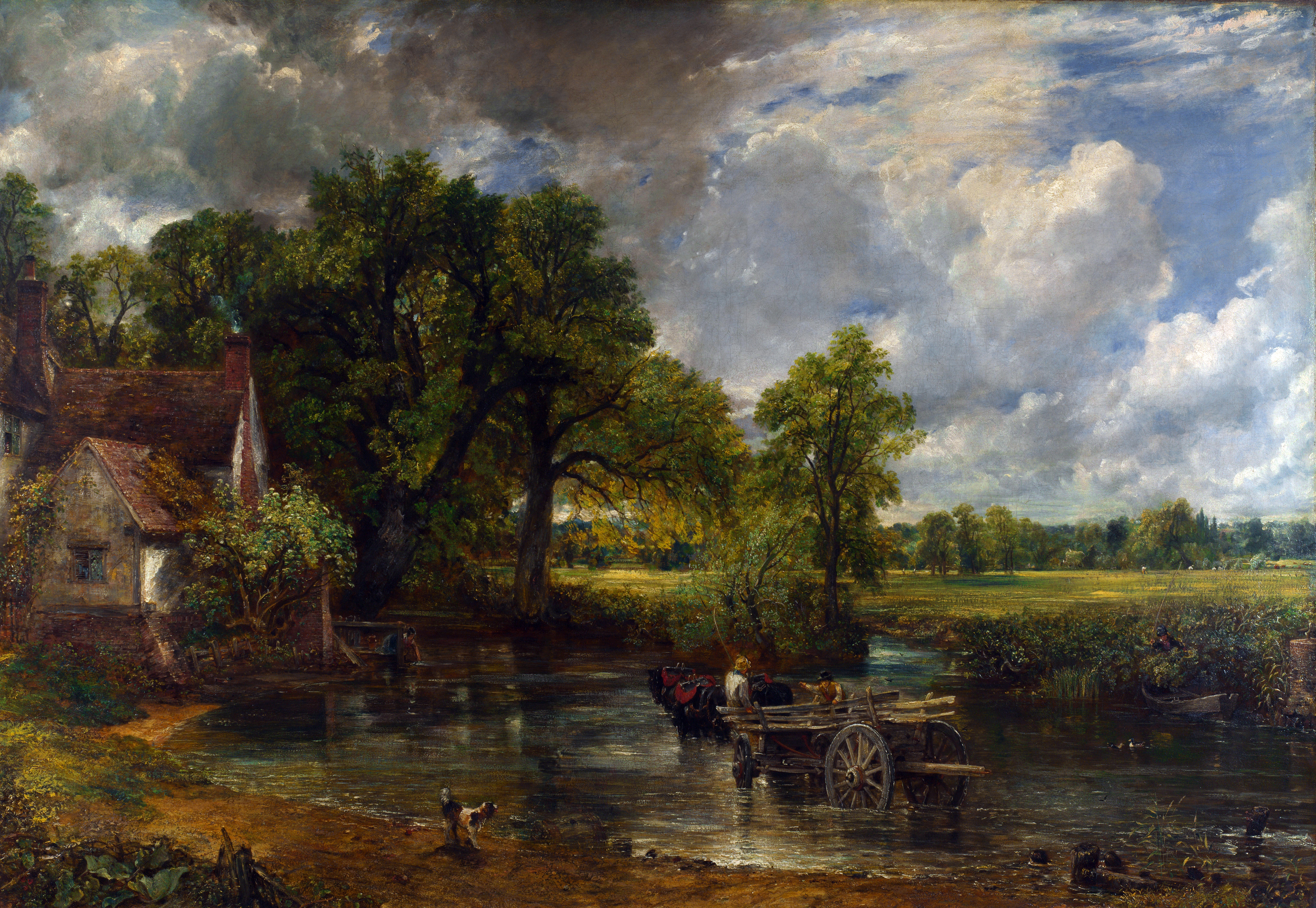
That shift was decisive. Landscape had long been admired, but it had not always been granted the same public ambition as history painting. Constable helped change that balance. He did so not by making landscape theatrical, but by making it exact, expansive, and physically alive.
Legacy and influence
Recognition in England was gradual. Constable exhibited regularly at the Royal Academy and built his reputation step by step rather than through instant triumph. His breakthrough abroad came in 1824, when The Hay Wain was shown in Paris and received a gold medal. French viewers saw in his handling of atmosphere and broken color something unexpectedly fresh.
Constable's legacy is not limited to a national English story. His art helped open later nineteenth-century landscape toward a more direct, atmospheric naturalism. Even when later painters moved away from his exact world, they inherited the idea that sky, light, and surface could be studied in their own right rather than subordinated to an inherited formula.
Why Constable matters inside Romanticism
Constable broadens what Romantic landscape can be. Romanticism is often remembered through shipwreck, revolution, nightmare, or solitary confrontation with the sublime. Constable keeps the movement closer to the ground. He shows that a field, a towpath, a millpond, or a church spire can carry just as much pressure when weather, memory, and historical change are allowed to stay visible.
He still matters because he did not simply idealize the countryside. He taught painters and viewers to treat local landscape as something observed, constructed, and historically charged. After Constable, rural calm could no longer mean pictorial simplicity.
Continue with John Constable
Then try the art quiz.