
Romanticism
The Hay Wain
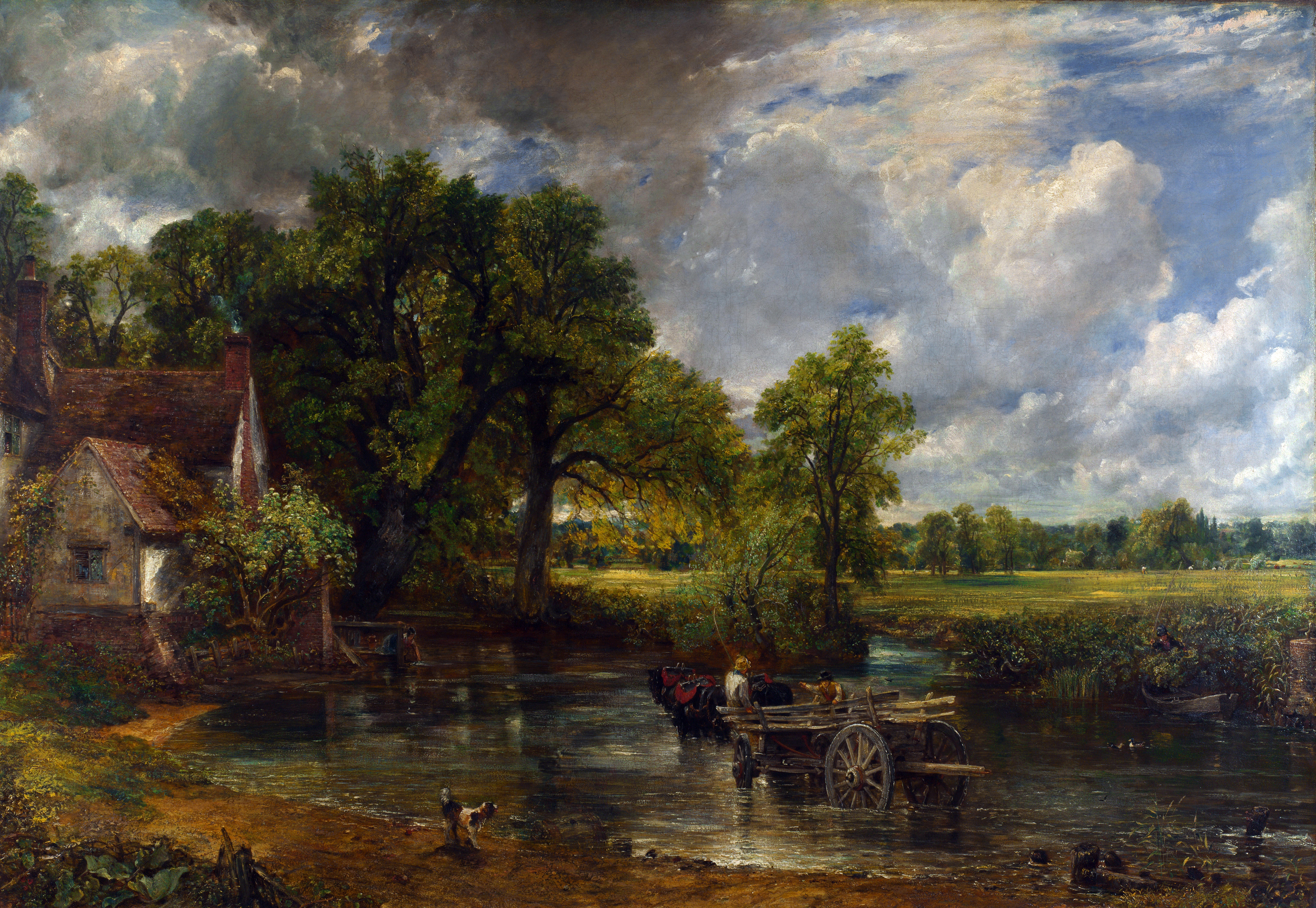
John Constable turns an ordinary wagon crossing in Suffolk into a large painting about labor, weather, and attachment to place. The Hay Wain looks tranquil at first glance: a cart in shallow water, a farmhouse, trees, clouds, a dog by the bank. Yet the picture is more deliberate than pastoral nostalgia suggests. Painted in 1821 and shown on a six-foot canvas at the Royal Academy, it gives rural life the scale of major art without converting it into myth, battle, or heroic anecdote.
Flatford, not a generic countryside
The scene is specific. Constable is painting the millpond at Flatford on the River Stour, close to the world of his childhood in Suffolk. Willy Lott's cottage sits on the left. The hay wagon moves through the water toward the meadow beyond. On the far side, laborers are already at work in the field. A woman bends toward the water outside the house, and a small dog stands watch on the bank. This is Suffolk remembered at close range, not a generic pastoral invention.
Constable did not want landscape to feel interchangeable. He painted the places he knew best, and he wanted that knowledge to stay visible. The buildings, the course of the water, the wagon, the red harness fringes, the line of trees, and the cloud bank all carry the weight of repeated looking. The calm of the scene is actually highly composed local memory.
A working landscape, not untouched nature
Nothing in the painting is monumental in the academic sense. There are no ancient ruins, no mythological figures, no storm-tossed shipwreck, no Alpine precipice. Yet the scene is not empty of tension. The wagon is empty because it is on its way to collect hay. The distant workers make the agricultural cycle explicit. The house, the ford, the boat, and the laboring bodies place the scene inside a rural economy rather than outside history.
Constable does not pretend the countryside is untouched. He shows a cultivated landscape shaped by use, habit, and work. The peace of the image depends on labor. Its beauty depends on a managed environment. That balance keeps the painting from collapsing into pure idyll.
How Constable paints weather
Constable is not trying to idealize the countryside into a timeless pastoral emblem. He wants weather, moisture, leaf movement, and changing light to make the place feel physically true. That intention explains his greatest innovation: the way he paints atmosphere. The huge sky is active, full of moving cloud and broken light. Leaves do not sit on the canvas as decorative green masses; they flicker. Water does not become a polished mirror; it carries reflection, muddiness, and movement. Constable had spent years making oil sketches outdoors, studying clouds and changing weather directly. The Hay Wain was finished in the London studio, but it keeps the freshness of field observation.
Without that freshness, the scene would tip into sentimentality. Instead, the sky presses downward and keeps the landscape alive. Constable lets ordinary rural life remain ordinary, but he gives it pictorial pressure through light, cloud, and surface.
From the London studio to the Paris Salon
Although the scene belongs to Suffolk, the final canvas was made in London. Constable built it from drawings, oil studies, and repeated returns to the site. He was not painting on the spot in one burst. He was using local observation to support a large exhibition picture. The result belongs to the series of big Stour landscapes later nicknamed his "six-footers."
The painting did not instantly become an English national icon. Its international breakthrough came when it was shown in Paris in 1824. There it received a gold medal from Charles X and helped make Constable's handling of color and atmosphere look unexpectedly fresh to French viewers. The image that now reads as settled rural England first arrived as something startlingly new.
Romanticism without shipwreck
Set The Hay Wain beside Rain, Steam, and Speed and two different Romantic landscapes appear at once. Turner builds velocity, collision, and atmospheric overwhelm. Constable slows the whole experience down. His pressure comes from weather passing over worked land and from the feeling that a familiar place has been studied hard enough to become inexhaustible.
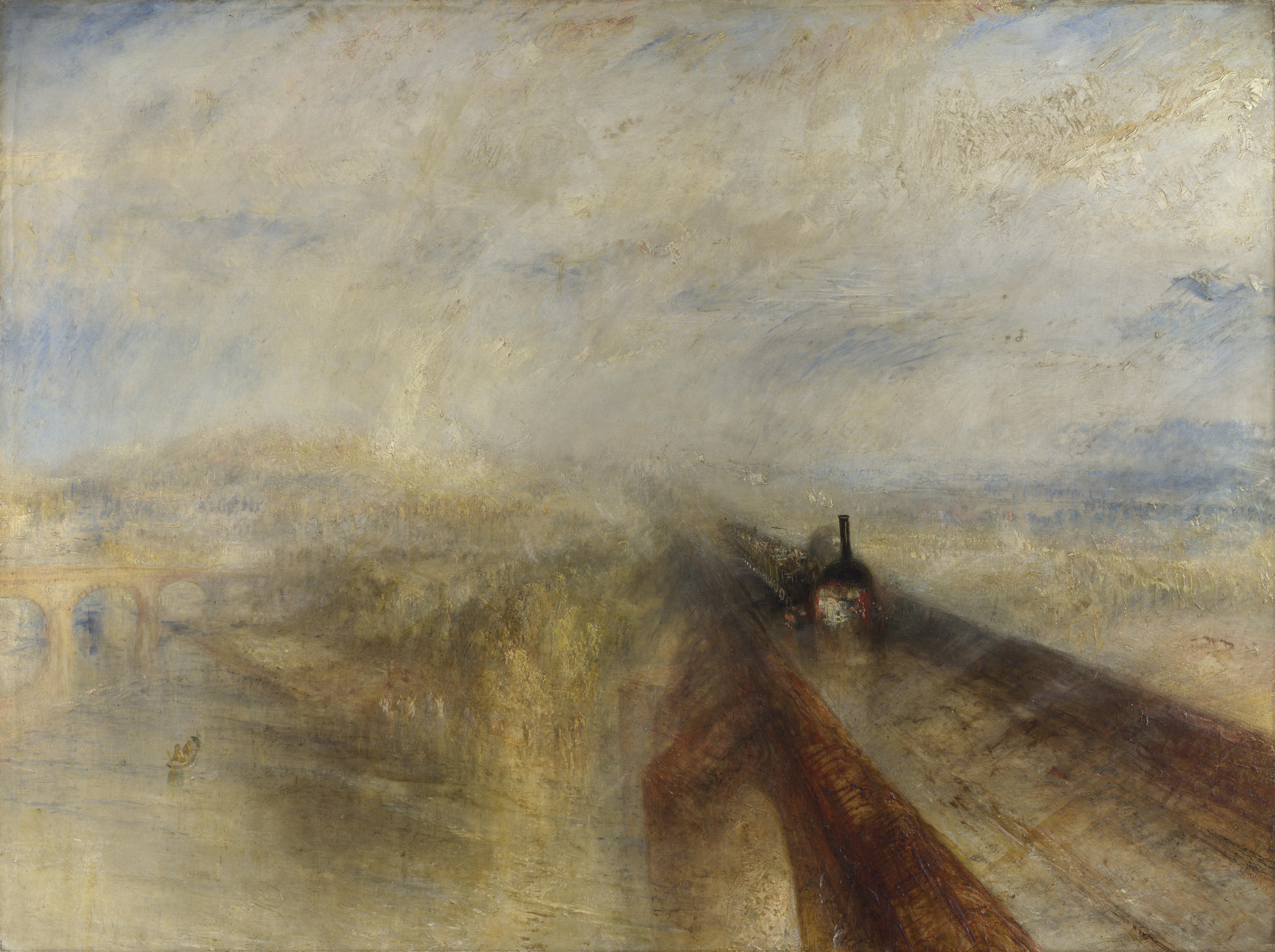
Constable shows that Romantic landscape does not need shipwreck, ruins, or visionary solitude to feel serious. A wagon, a ford, a sky, and a field can be enough, provided the painter knows how to make weather, work, and place carry real weight.
Related works
Test yourself with the quiz
Then try the art quiz.
Primary sources
Frequently asked questions
It shows an empty hay wagon crossing shallow water near Flatford Mill in Suffolk, with Willy Lott's cottage on the left, farm labor in the distance, and a sky full of active cloud.
It became Constable's best-known painting and gained major attention when it was shown in Paris in 1824, where it received a gold medal and helped spread his reputation abroad.
No. The picture looks calm, but it is built around agricultural labor, changing weather, and a rural world already shadowed by economic and social change.