
Hudson River School
The Oxbow
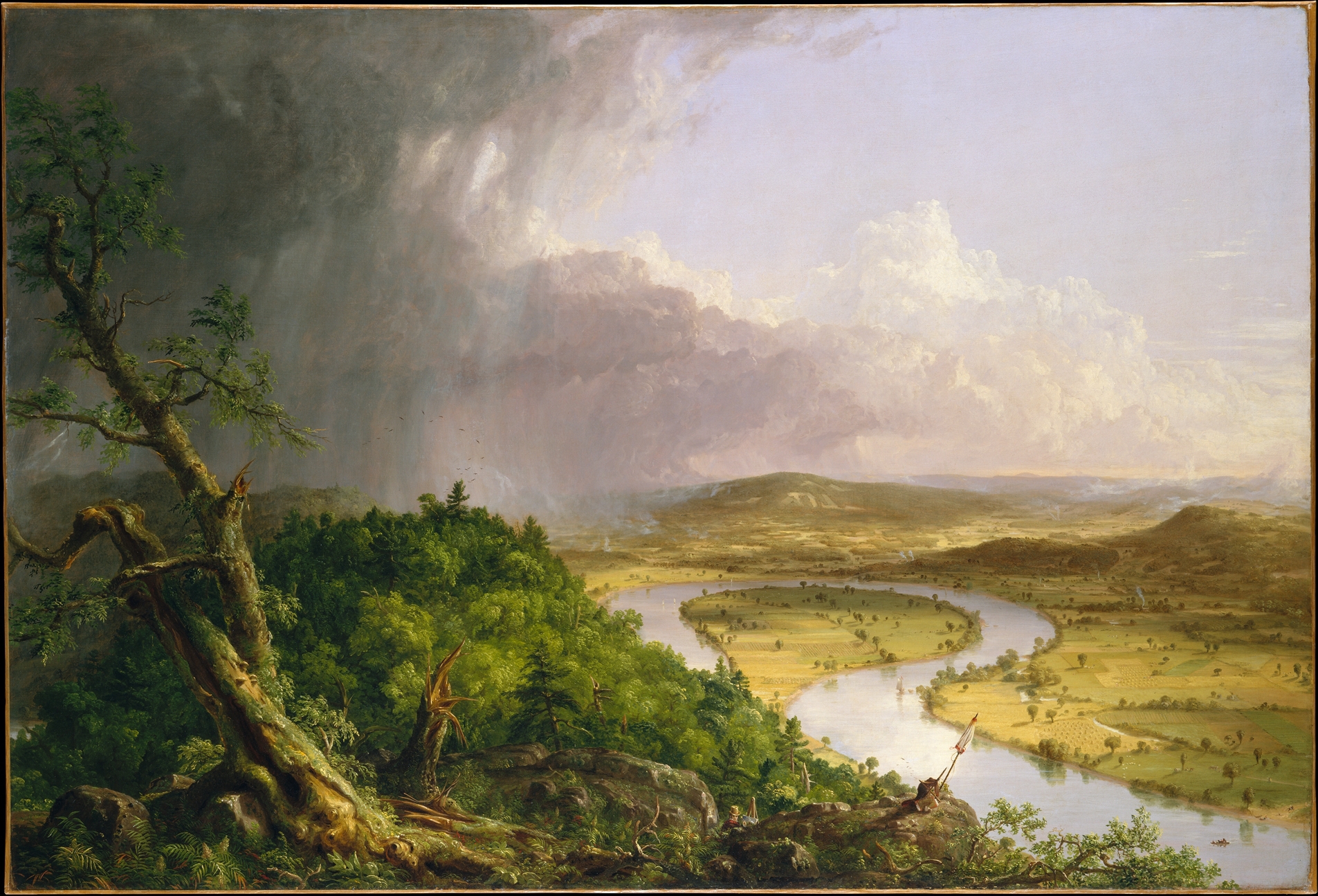
Thomas Cole splits one American landscape between storm-dark wilderness on one side and cultivated river valley on the other. That division gives The Oxbow its force. Its full title, View from Mount Holyoke, Northampton, Massachusetts, after a Thunderstorm—The Oxbow, sounds descriptive. The picture is not. Painted in 1836, it turns a Massachusetts view into an argument about what American land means, who gets to shape it, and whether “improvement” is really the same thing as progress.
One panorama, two futures
The painting first works through division. On the left, broken trees, steep brush, and storm clouds build a scene of raw force. On the right, the sky opens and the Connecticut River loops through fields, roads, and orderly cultivation. The river bend, the oxbow itself, sits near the center as if the whole landscape were turning between two states.
Cole makes the contrast legible at a glance, but he does not make it simple. The wilderness side is dramatic and hard to master. The cultivated side is brighter and calmer, yet it is also full of cuts, parcels, and managed land. The painting does not give one side all the beauty and the other all the value. It keeps both visions active at once.
Cole paints himself into the middle
At the lower center, Thomas Cole includes a tiny self-portrait. He pauses beside his easel and looks back toward the viewer. The landscape now reads as something interpreted rather than merely admired. Cole wants to show that this scene has to be read. The artist is not outside it. He stands inside it, between wilderness and settlement, and turns the act of painting into part of the subject.
That self-portrait also changes the scale of the picture. Without it, the landscape might read as overwhelming panorama alone. With it, the canvas becomes a landscape under judgment, one in which a human observer tries to decide what this new nation should admire, preserve, exploit, or fear.
What Thomas Cole is trying to make visible
Cole is not painting a neutral topographical record. He wants American scenery to carry moral and national force. His method is to organize the picture so that weather, terrain, and cultivation become visible ideas rather than passive details. The left side gathers sublime threat; the right side gathers settlement and agricultural order. The viewer has to read the relation between them.
That intention places the painting squarely inside the emerging Hudson River School. Cole is helping invent an American landscape art grand enough to rival European history painting, but he does so without abandoning tension. The land is presented as beautiful, immense, and nationally meaningful, yet never fully resolved into a single message.
Nature, settlement, and what the painting leaves out
For a long time, viewers read The Oxbow mainly as a dramatic contrast between wilderness and civilization. That remains part of the painting, but more recent readings push further. The picture presents land as if its main alternatives were untouched nature or productive settlement. That framing is already political. It belongs to a settler society deciding how to see, divide, and justify possession of the land.
Cole does not simply endorse that process. The storm-dark left side keeps too much force for that. But he does not escape it either. The painting's depth comes partly from the fact that its beauty and its ideology are inseparable. It is a masterpiece of landscape, and also a record of how landscape can be made to serve national imagination.
An American answer to Romantic landscape
Set The Oxbow beside Wanderer above the Sea of Fog and another branch of Romanticism comes into view. Caspar David Friedrich places a lone figure before uncertainty and lets inward reflection dominate. Cole works more publicly. His painting is less about private consciousness than about the future of a national landscape.
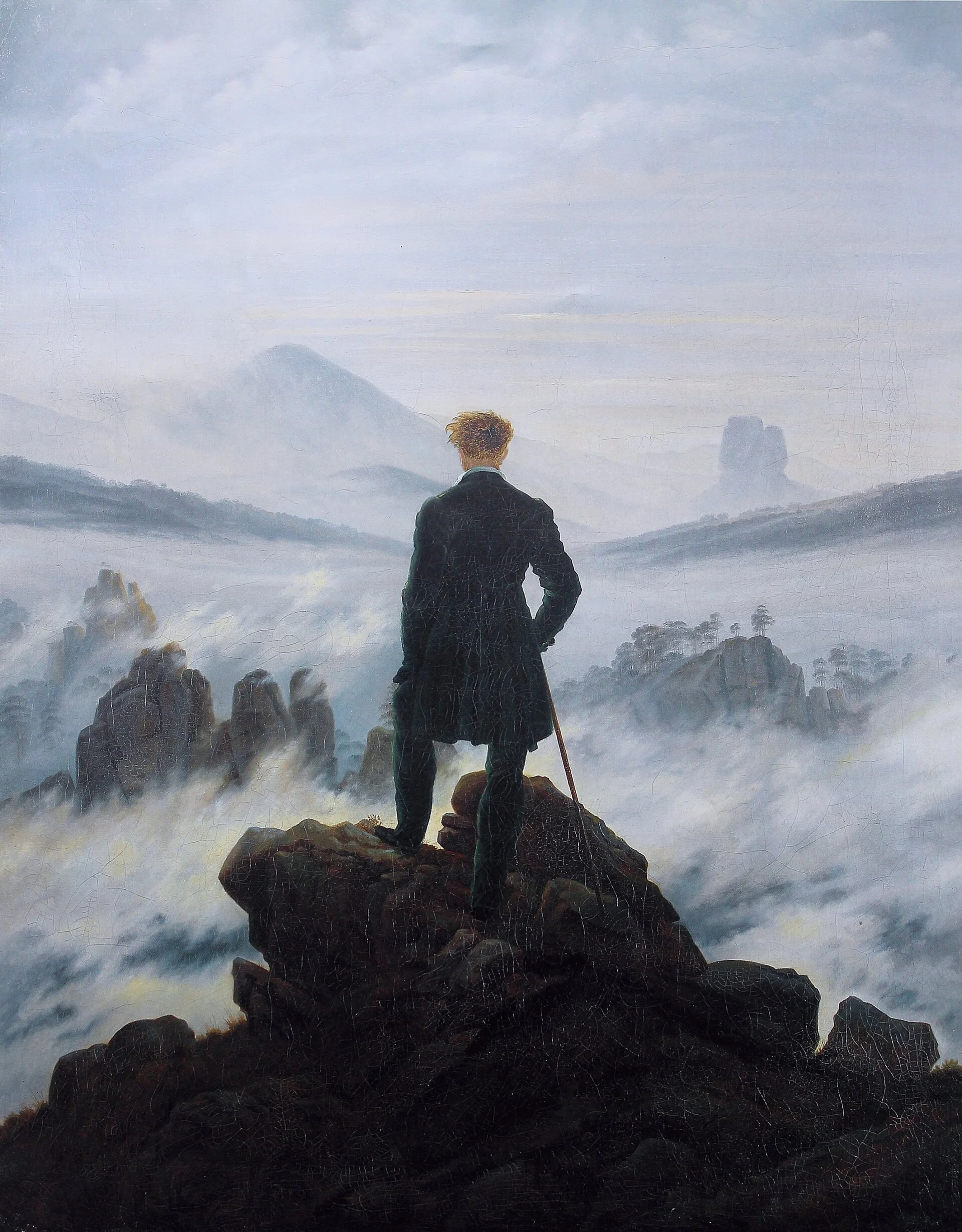
That difference explains why Cole matters so much in American art. He brings Romantic scale and weather into an environment shaped by expansion, improvement, and national identity. In his hands, landscape is not only sublime scenery. It becomes a civic proposition.
From The Oxbow to later American landscape
The Oxbow matters partly because it sets terms other American painters would keep reworking. Later artists in the Hudson River School expanded the panoramic view, the luminous distance, and the sense that national meaning could be carried by rivers, mountains, storms, and skies. Cole does not end that story. He starts it.
The painting still holds because it does not let the American landscape settle into postcard beauty. It remains divided, unstable, and argued over. That is why it feels larger than a view, and why its short title, The Oxbow, is enough to name one of the key problems of nineteenth-century American art.
Related works
Test yourself with the quiz
Then try the art quiz.
Primary sources
- The Met: View from Mount Holyoke, Northampton, Massachusetts, after a Thunderstorm—The Oxbow
- The Met Perspectives: Reexamining the Wilderness Aesthetic
- Thomas Cole National Historic Site: Learn about the Hudson River School
- Encyclopaedia Britannica: Thomas Cole
- National Gallery of Art: Thomas Cole
- Wikimedia Commons: public-domain file record
Frequently asked questions
It shows a panoramic view from Mount Holyoke after a thunderstorm, with dark wilderness on the left and sunlit, cultivated land along the Connecticut River on the right.
The short title comes from the U-shaped bend of the Connecticut River visible in the painting. The full title is View from Mount Holyoke, Northampton, Massachusetts, after a Thunderstorm—The Oxbow.
Not simply. Cole contrasts cultivated land with storm-dark wilderness, but the painting does not resolve that contrast into a straightforward victory of settlement over nature.