
Pre-Raphaelite Artist
John Everett Millais
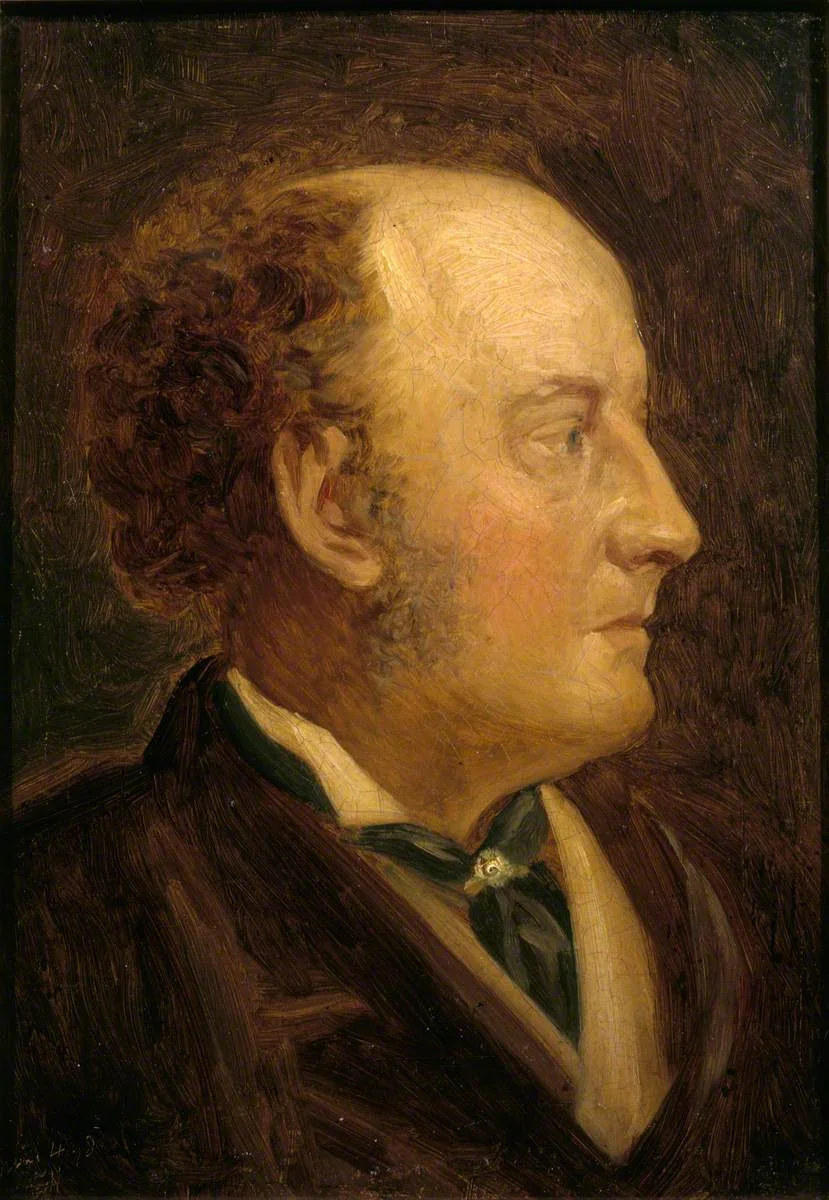
Millais turns technical finish into narrative pressure. In his strongest works, precision is never neutral decoration: it is the device that binds beauty to danger, lyricism to unease, and literary source to material evidence. That combination is why his paintings still feel intellectually active rather than merely “Victorian.”
Training, Brotherhood rupture, and public stakes
John Everett Millais was admitted to the Royal Academy Schools at an exceptionally young age, which means his later Pre-Raphaelite break was not an outsider gesture but an internal critique of academic habit. In 1848, with Hunt and Rossetti, he helped found the Pre-Raphaelite Brotherhood at the very moment British art institutions were debating truth-to-nature, moral seriousness, and historical painting. Their challenge was formal and cultural: reject generalized studio formulas, return to sharp observation, and rebuild narrative credibility through exact visual decisions.
Millais quickly became the movement's most technically forceful painter. Bright chromatic clarity, hard-edged articulation, and dense natural detail were not style effects for their own sake. They were a strategy for making viewers slow down and read. This is where his relevance begins: he turns finish into argument.
Ophelia: beauty, suspension, and irreversible time
In Ophelia, Millais constructs one of the nineteenth century's sharpest balances between seduction and catastrophe. The scene appears calm, but every structural choice points toward irreversible loss: lateral drift, botanical saturation, and the figure's suspended threshold between voice and disappearance. Landscape is not backdrop; it is a timing system.
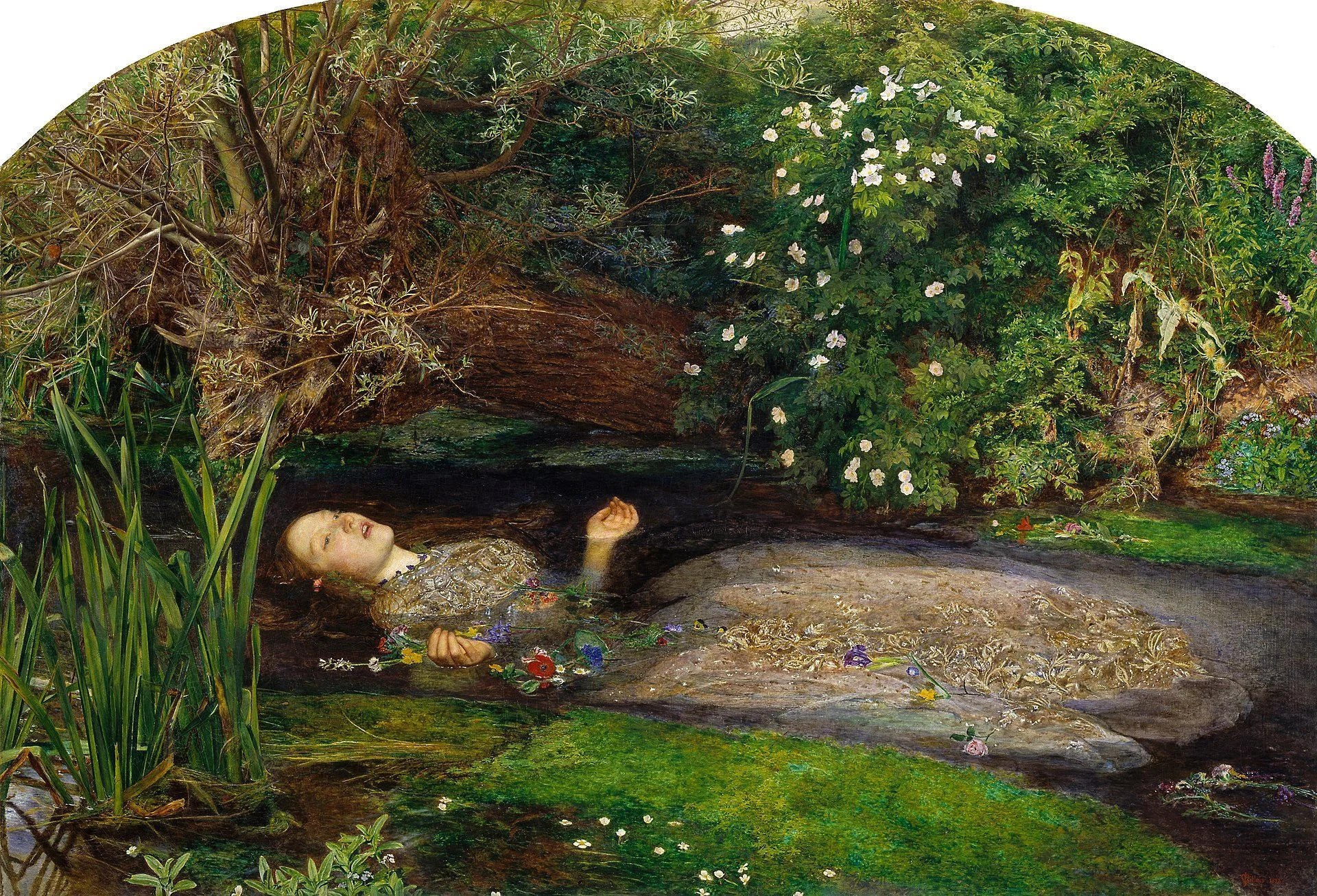
A concrete anecdote clarifies the method: Millais painted the riverbank from direct observation over extended outdoor sessions before integrating the figure in studio work. That split production process matters because it generates a productive tension between observed continuity and human interruption. The painting's emotional force comes from this mismatch in pictorial time.
Career shifts, critical backlash, and lasting legacy
Millais did not remain a fixed rebel. His later career moved toward institutional prominence, portrait commissions, and broader public acceptance, which complicates simplistic Brotherhood mythology. The shift is historically useful: it shows how radical procedures can be absorbed by mainstream culture without entirely losing analytical power. For readers, this is not a decline narrative but a map of how style, market, and institutions interact.
His legacy sits exactly there. Millais helped re-legitimize close observation and narrative ambition at a time when academic rhetoric was hardening into routine. Compare him with William Morris for material attention, with Romanticism for emotional contrast, and with later image economies where “high finish” often signals authenticity. In 2026, his work remains a practical reference for anyone trying to hold together craft rigor and conceptual tension.
A concrete production anecdote deepens this reading. For the figure in Ophelia, Elizabeth Siddal posed in a studio bath while Millais pursued exact control of drapery and gesture. The story has often been romanticized, but its methodological value is clear: Pre-Raphaelite “truth” was achieved through constructed conditions, repeated adjustments, and long studio labor, not spontaneous realism. This complicates the cliché that Millais simply copied nature. He designed nature effects across different production stages.
His long career also includes a significant institutional arc: eventual Royal Academy leadership and broad Victorian visibility. Rather than cancelling early radicalism, that trajectory shows how technical innovation migrates into cultural authority. This is one reason Millais remains important for contemporary readers: he helps explain how disruptive visual strategies become normalized, and what is lost or preserved in that transition. The question still applies today whenever bold visual languages enter mainstream media.
Key works in Explainary
Associated movements
Continue with the art quiz to validate recognition, context, and comparison.
Continue with the artwork library, movement pages, and essay comparisons to strengthen historical comparison.