
Pre-Raphaelite Brotherhood
Ophelia
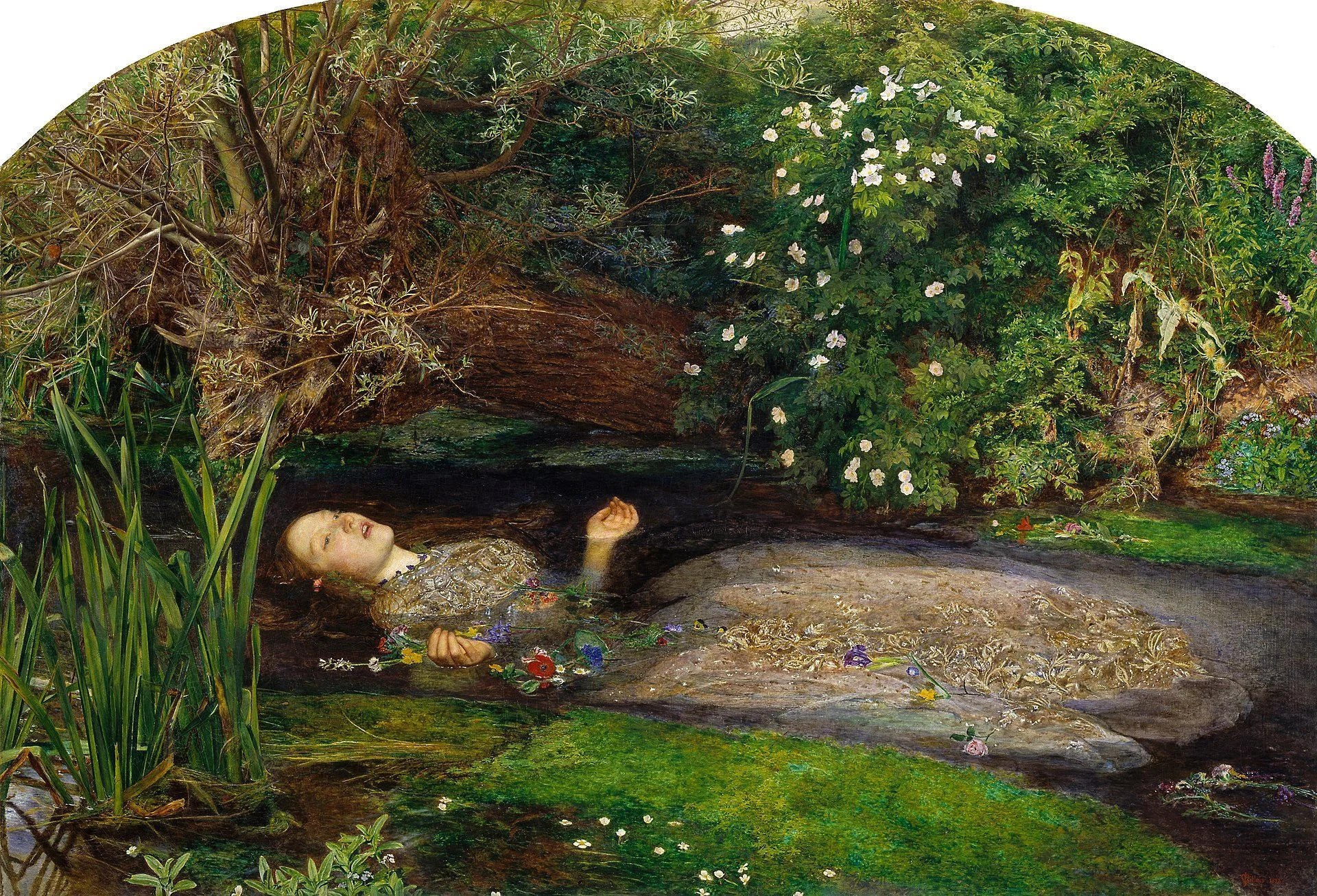
A Shakespearean death scene transformed into a hyper-detailed study of nature, fragility, and suspended time. John Everett Millais turns botanical exactitude into narrative pressure, so the painting reads at once as literary interpretation, Pre-Raphaelite technical manifesto, and uncomfortable lesson about spectatorship.
A river scene engineered as delayed catastrophe
Millais paints not the dramatic climax but the suspended interval just before narrative closure. Ophelia floats diagonally through the river, arms open, mouth parted, while the vegetation around her is rendered with almost forensic care. That decision is crucial: tragedy is slowed down by detail. Instead of consuming the scene in one emotional impulse, viewers are held in a prolonged state of looking.
This is why the painting remains difficult in productive ways. Beauty does not soften the event; it extends it. Millais turns visual pleasure into pressure, asking what it means to admire a surface that stages irreversible loss. The work is not just illustrative Shakespeare. It is an experiment in how form can control the ethics of attention.
Millais's method: field observation plus literary construction
The Pre-Raphaelite program rejected formulaic studio shorthand in favor of direct observation, chromatic intensity, and textual seriousness. In Ophelia, that program becomes technically explicit. Millais painted the riverbank from prolonged outdoor study, then integrated the figure under studio conditions. The result is neither pure naturalism nor pure symbol. It is a double system where empirical description and literary coding reinforce each other.
Floral specificity is therefore not decorative excess. Species, bloom states, and placements function as temporal and symbolic signals that thicken the moment. The painting runs on two clocks at once: the rapid clock of drowning and the slow clock of ecological detail. This dual tempo explains the work's unusual durability: it satisfies close visual analysis while staying open to broader debates about gender, spectatorship, and representation.
Making the image: labor, model, and risk
Production history deepens that reading. Millais worked for months outdoors near the Hogsmill River to establish the environment before completing Ophelia's body in the studio with Elizabeth Siddal as model. Contemporary accounts of cold sessions and physical discomfort around the sittings remind us that the painting's serenity was achieved through demanding labor conditions. The panel's visual stillness is built on process intensity.
That tension between calm result and strenuous making is not anecdotal trivia. It helps explain why the image feels overdetermined: every zone carries the mark of decision, from floral placement to tonal transitions in water and fabric. Ophelia is therefore both a literary scene and a document of Victorian studio discipline.
Victorian spectatorship, then and now
For a Victorian audience, the canvas translated Shakespeare into a modern language of moral feeling and optical precision. For current viewers, it often circulates as a mood image detached from context. That reduction misses what makes the work structurally strong. Read with Pre-Raphaelite Brotherhood and Millais's trajectory, the painting becomes a case study in controlled ambiguity: intimate yet theatrical, empathic yet distancing.
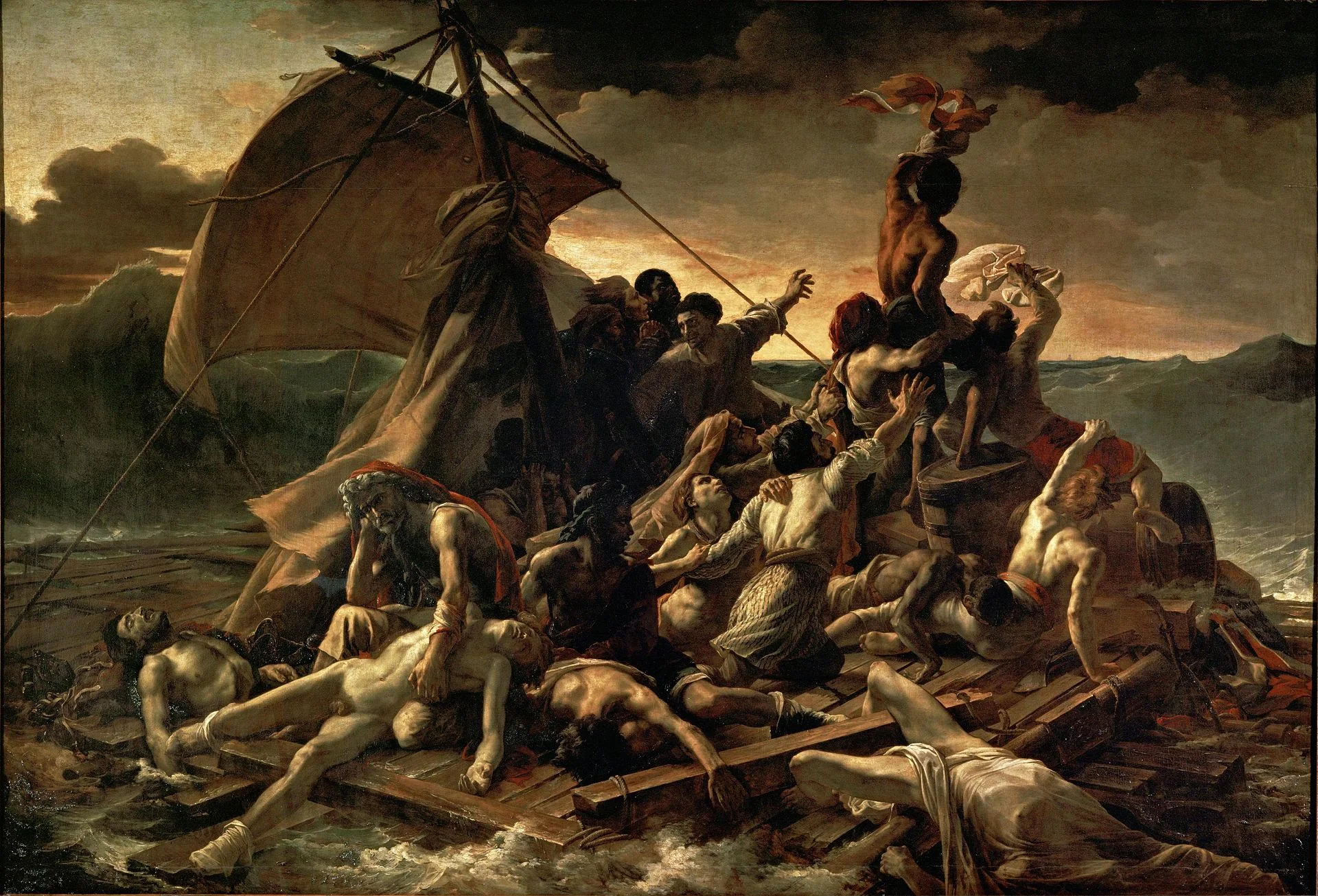
A useful test is comparison. The Raft of the Medusa externalizes catastrophe through group panic and bodily struggle; Ophelia internalizes catastrophe through near-stillness and concentrated detail. The difference clarifies Millais's wager: intensity through suspension rather than through spectacle.
Read this way, Ophelia is not passive Victorian nostalgia. It is an active test of whether painting can hold beauty, evidence, and ethical discomfort in the same frame without collapsing into sentimentality.
Ophelia is a tragedy painted at botanical resolution.
Explore more
Related works
If Ophelia is clearer now, try the art quiz and see whether you can spot works by John Everett Millais in seconds.