
Post-Impressionist Artist
Paul Cézanne
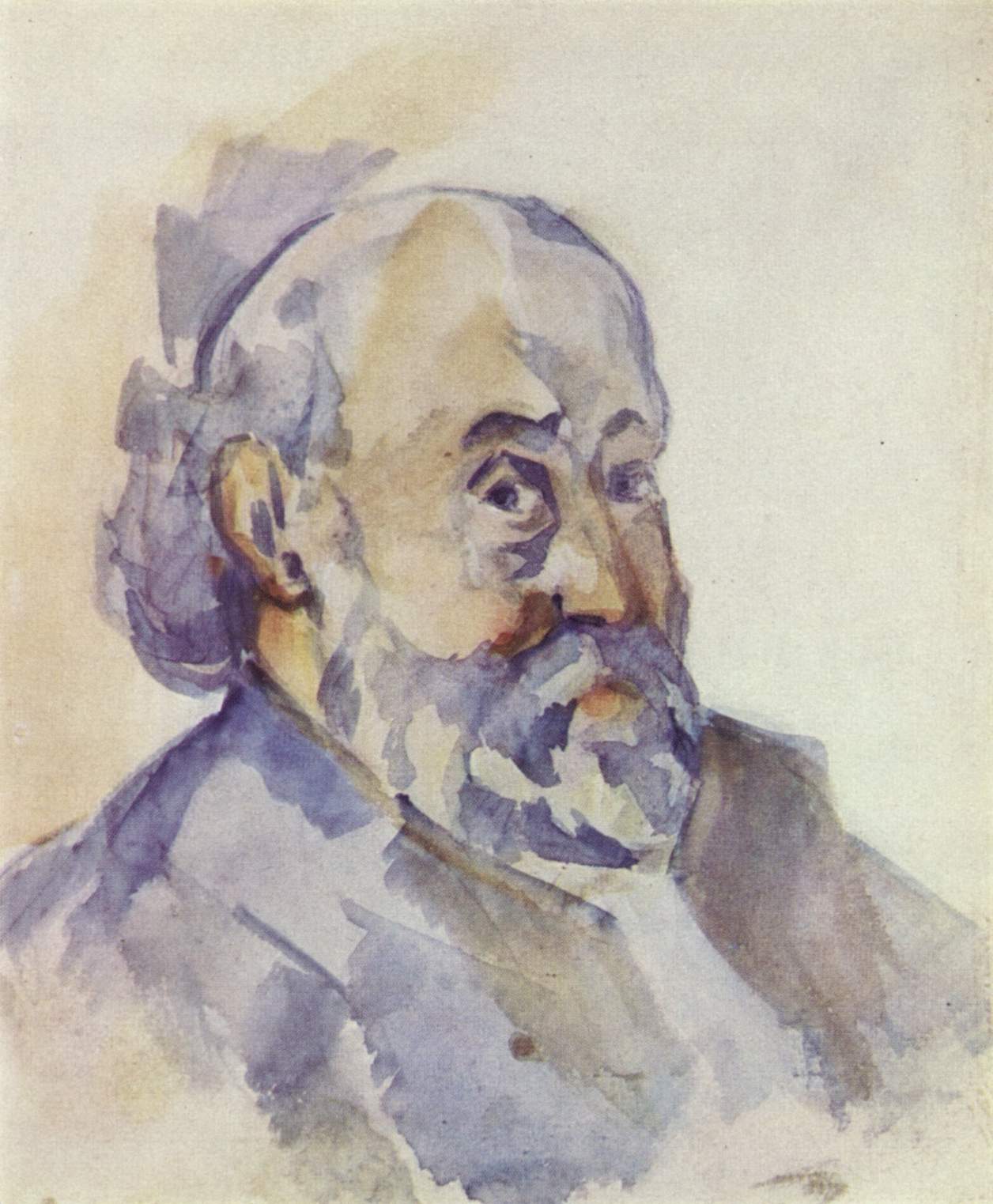
With Cézanne, nothing is casual: each plane, object, and color has to find its place. Where many nineteenth-century painters still treated the canvas as a place to record appearance, Paul Cézanne increasingly treated it as a place to rebuild relations: between color patches, between planes, between objects, and between the eye and the motif. He begins near Impressionism, but he becomes one of the decisive forces inside Post-Impressionism because he asks a harder question: how can a painting stay faithful to looking while also becoming an autonomous construction?
From Aix to the Impressionist circle
Paul Cézanne was born in Aix-en-Provence in 1839, the son of a wealthy banker. That social background gave him material stability, but not artistic ease. His early path ran through provincial education, a brief period of legal study, then repeated returns between Aix and Paris while he tried to become a painter. The friendship with Emile Zola belongs to this early formation, as does the larger struggle of entering the Paris art world without fully belonging to its official systems.
When Cézanne moved closer to the Impressionist circle in the 1870s, especially through contact with Camille Pissarro, something crucial changed. His palette lightened, his surfaces opened, and his interest in direct observation intensified. Yet he never became a pure painter of passing light. Even at his most Impressionist, he is already testing how sensation can harden into structure. That double position explains why he is both central to the story and permanently awkward inside tidy labels.
Painting as construction, not mere appearance
The strongest way to understand Cézanne is through method rather than myth. He does not seek polished illusion. He builds form through adjacent touches of color that behave like decisions in space. A table edge may tilt. A bowl may hold together without academic contour. A mountain may emerge through repeated patches rather than a single enclosing line. What matters is not exact transcription, but durable relation.
This method runs across his great motifs: still lifes, the Mont Sainte-Victoire paintings, bathers, portraits, and late genre scenes. He is rarely content with one solution. He revisits the same problem repeatedly, changing scale and emphasis until a structure begins to hold. That is why later painters found him so fertile. He offered them a way beyond both academic finish and Impressionist immediacy.
A key case: The Card Players
On Explainary, the clearest case is The Card Players. In that late series, Cézanne takes a subject long associated with anecdote, comedy, or moral warning and removes almost all theatrical noise. The Met version slows everything down: peasant figures, narrow table, compressed space, absorbed attention. What remains is not plot, but structure. The game becomes a way of testing how bodies occupy space and how a scene can be stabilized without becoming inert.
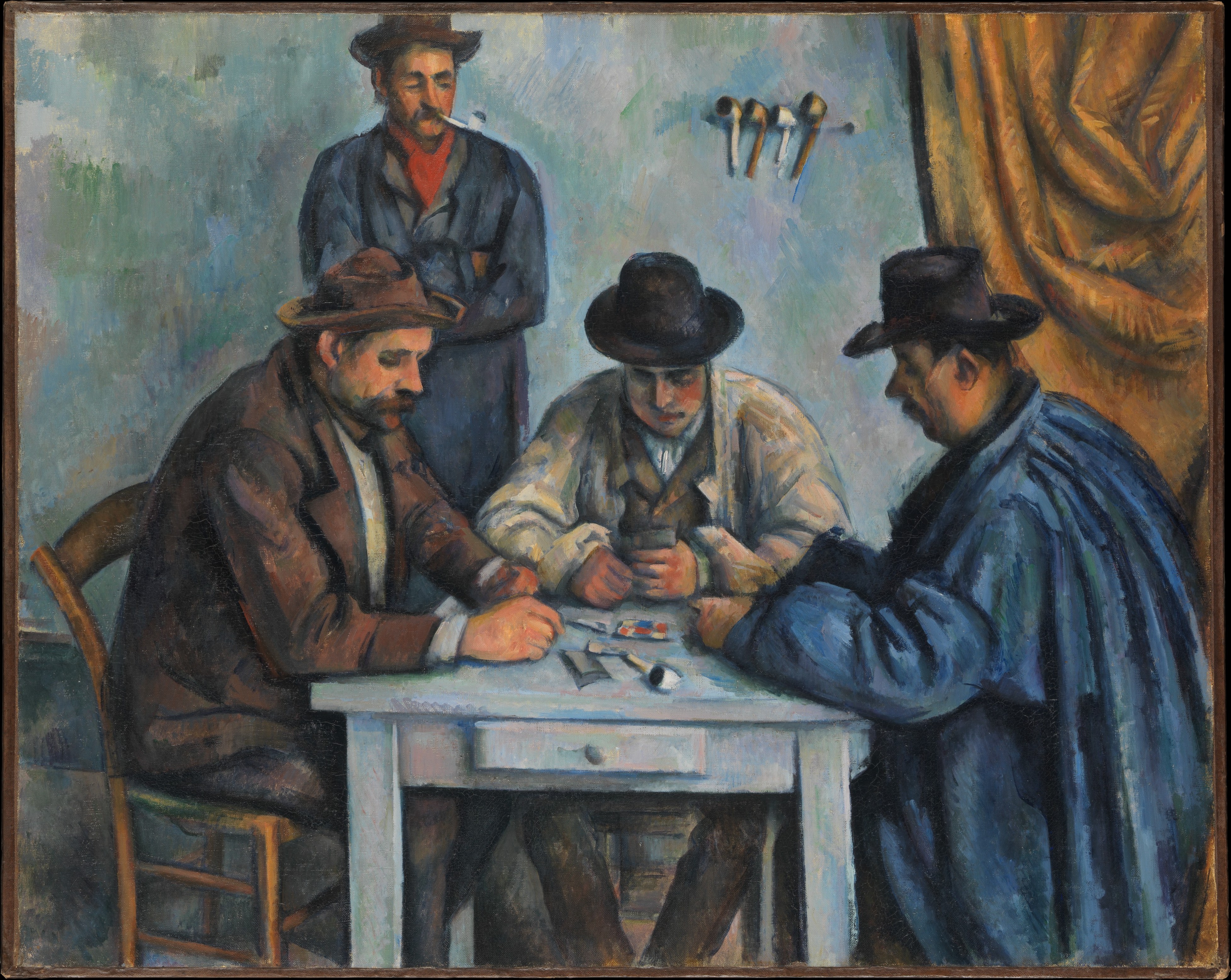
That late work also helps explain why Cézanne matters so much to twentieth-century painting. He shows that a painting can remain tied to observation while also asserting its own internal order. The scene is recognizable, but it is never merely reported. It has been rethought through pressure, interval, and revision.
Why Cézanne matters after Impressionism
Cézanne's legacy is often summarized too quickly as "a bridge to Cubism." The idea is true, but incomplete. His importance is not only that later painters borrowed geometric simplification from him. It is that he changed the ambition of painting itself. He made structure visible as an active problem. Color no longer serves only local description. Brushwork no longer serves only finish. The canvas becomes a field where looking is reorganized.
That is why artists as different as Picasso, Braque, Matisse, and later abstract painters could all treat him as foundational without painting like him. He does not hand down one style. He hands down a discipline of reconstruction. In that sense, his place inside Post-Impressionism is not secondary to more immediately dramatic figures such as Van Gogh. It is one of the movement's deepest structural poles.
Reading paths from Cézanne
A strong route is simple: start with The Card Players, then move outward to Post-Impressionism, then compare Cézanne's constructive patience with Seurat's system and Van Gogh's pressure. Then try the art quiz.