
Movement Guide
Post-Impressionism
Post-Impressionism is less a style than a turning point. Artists who admired Impressionism's freedom asked what comes next once light and atmosphere are no longer enough. Their answers diverged, but they shared one move: painting should organize perception, feeling, and thought, not only record optical impressions.
From roughly the 1880s to the early 1900s, painters across France and beyond retained modern subjects, brighter palettes, and visible brushwork, while rejecting the idea that a canvas should mimic a passing glance. Structure became more deliberate, color more symbolic, and composition more argumentative.
What defines Post-Impressionism
The movement is best understood through divergence. Some artists sought emotional intensity, others geometric order, others decorative pattern, others scientific systems of color. This plurality is its core strength. "Post-Impressionism" is a historical umbrella, not a school with fixed rules.
A practical test is this: if Impressionism asks, "What does this moment of light look like?", Post-Impressionism asks, "What formal decisions best express what this scene means?" That shift from appearance to interpretation sets the stage for twentieth-century modernism.
This is also why that umbrella needs to stay differentiated. Neo-Impressionism names one especially methodical branch inside the umbrella; Van Gogh pushes toward subjective pressure; Munch points toward Expressionism. Read comparatively and the category becomes much clearer.
Major pictorial experiments
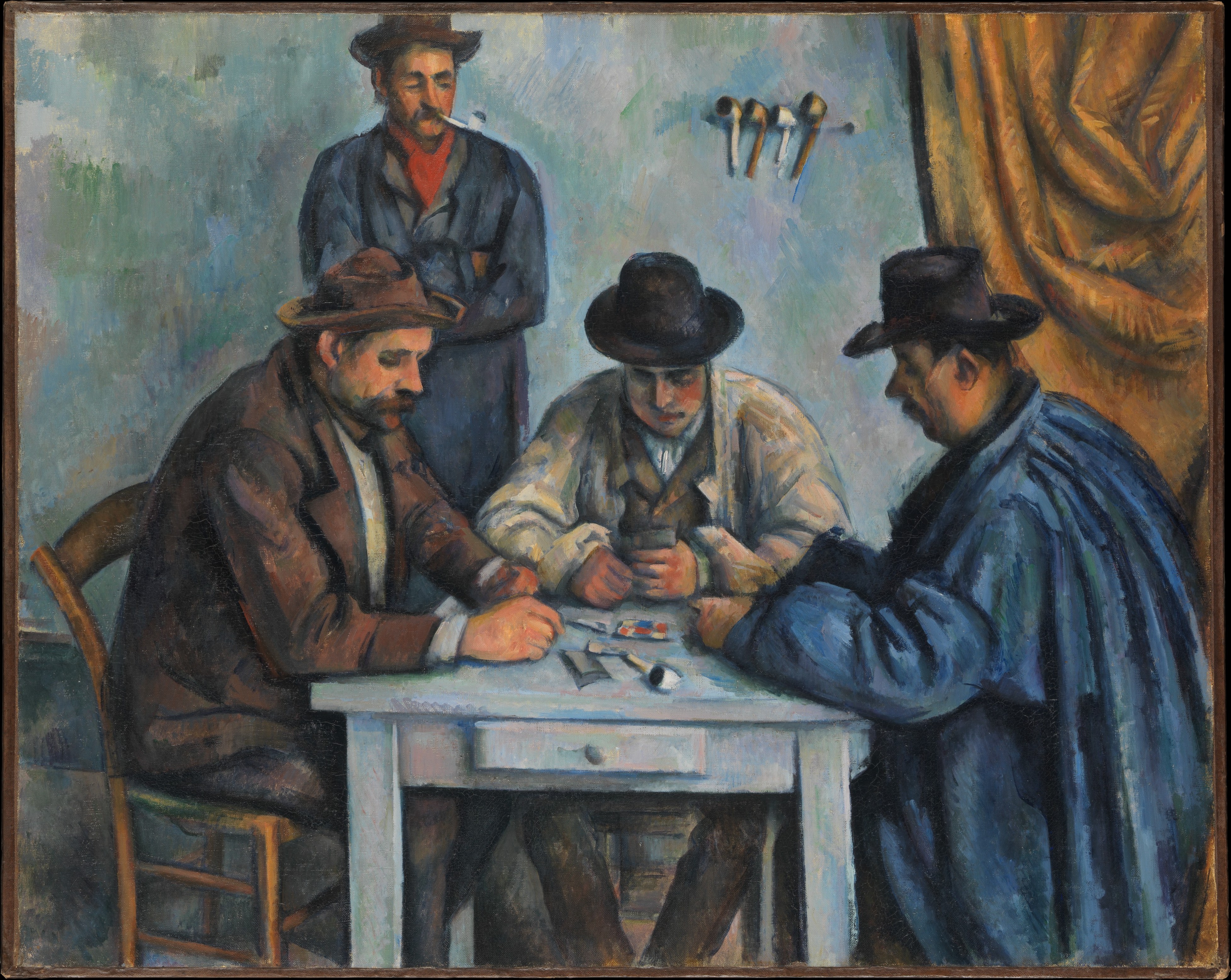
Paul Cézanne gives the movement one of its strongest structural poles. In The Card Players (Met version), repeated study, compressed space, and patient color patches turn an ordinary genre subject into a test of how painting can rebuild relation and weight. Cézanne matters here not because he leaves observation behind, but because he makes observation answer to construction.
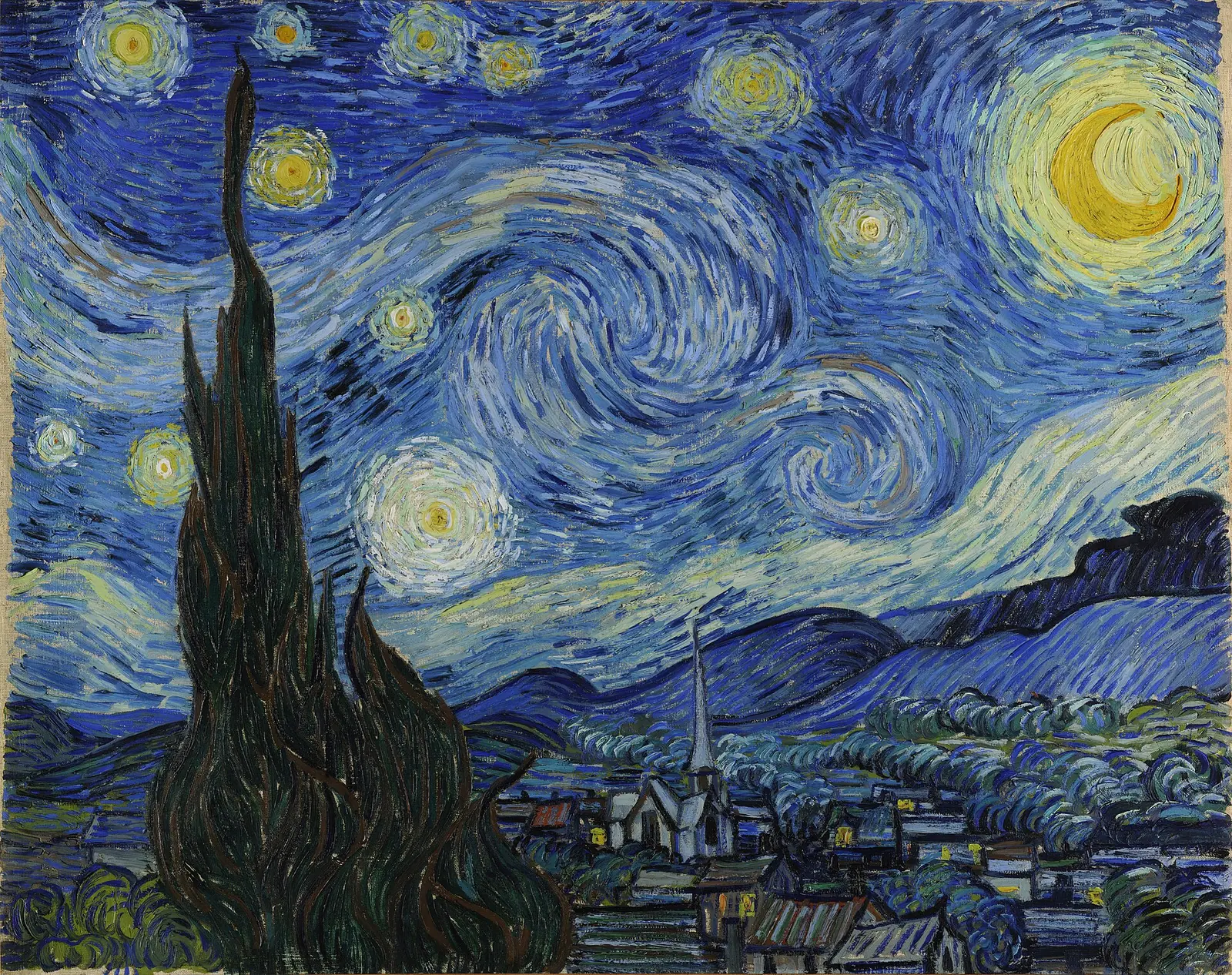
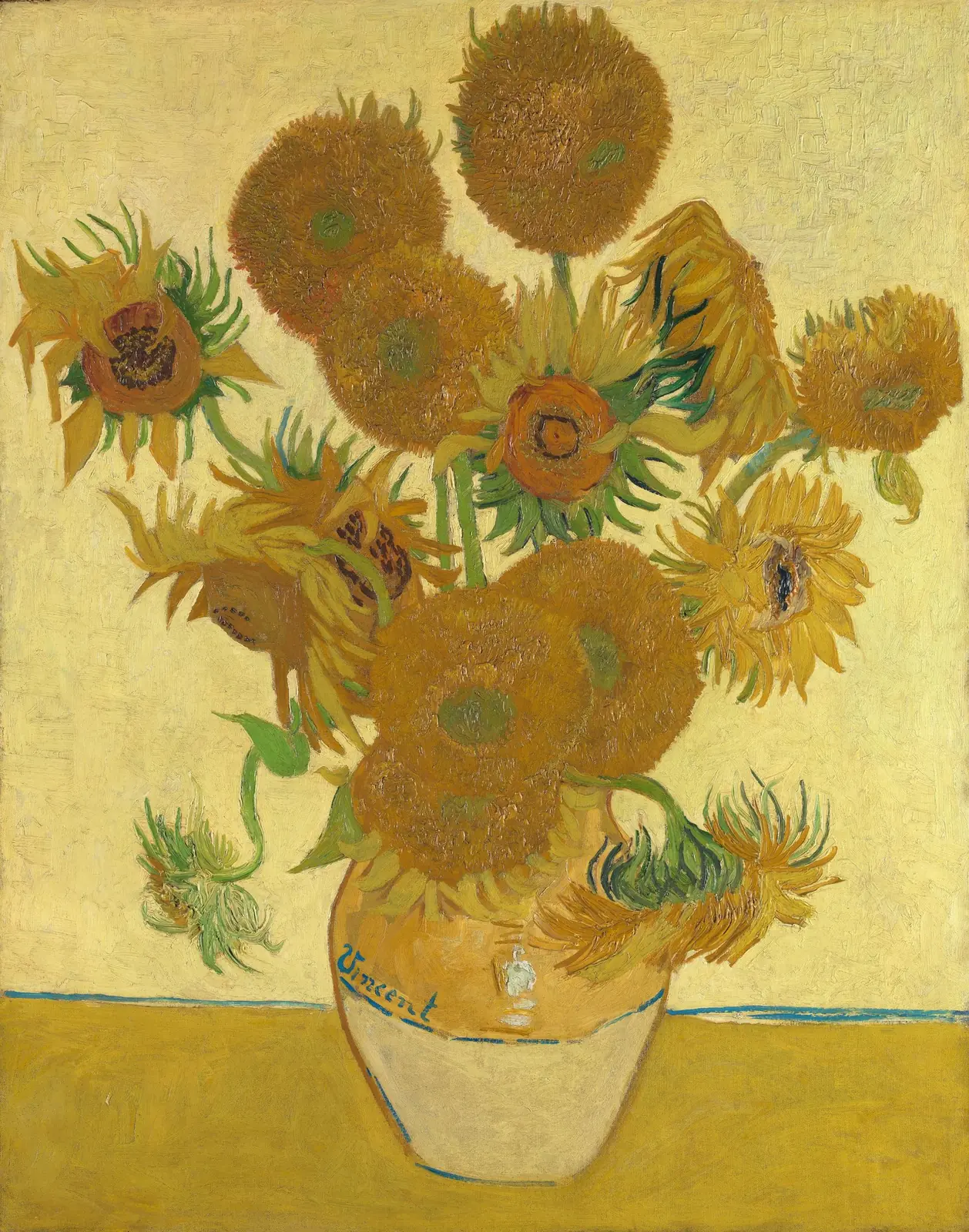
Vincent van Gogh pushes color and brushstroke toward psychological force. In The Starry Night and Sunflowers, paint thickness, directional marks, and non-natural color become expressive structure rather than descriptive effect.
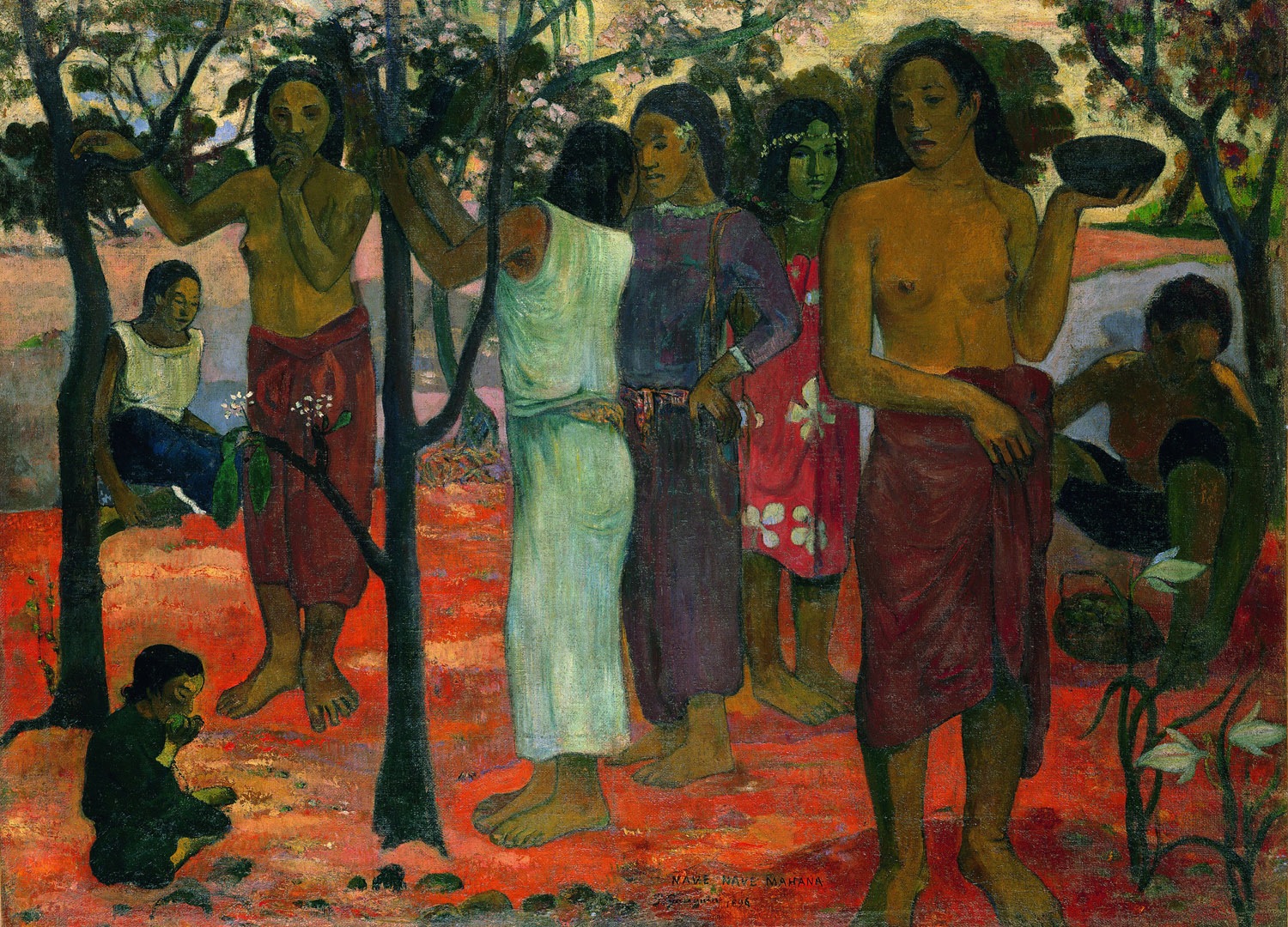
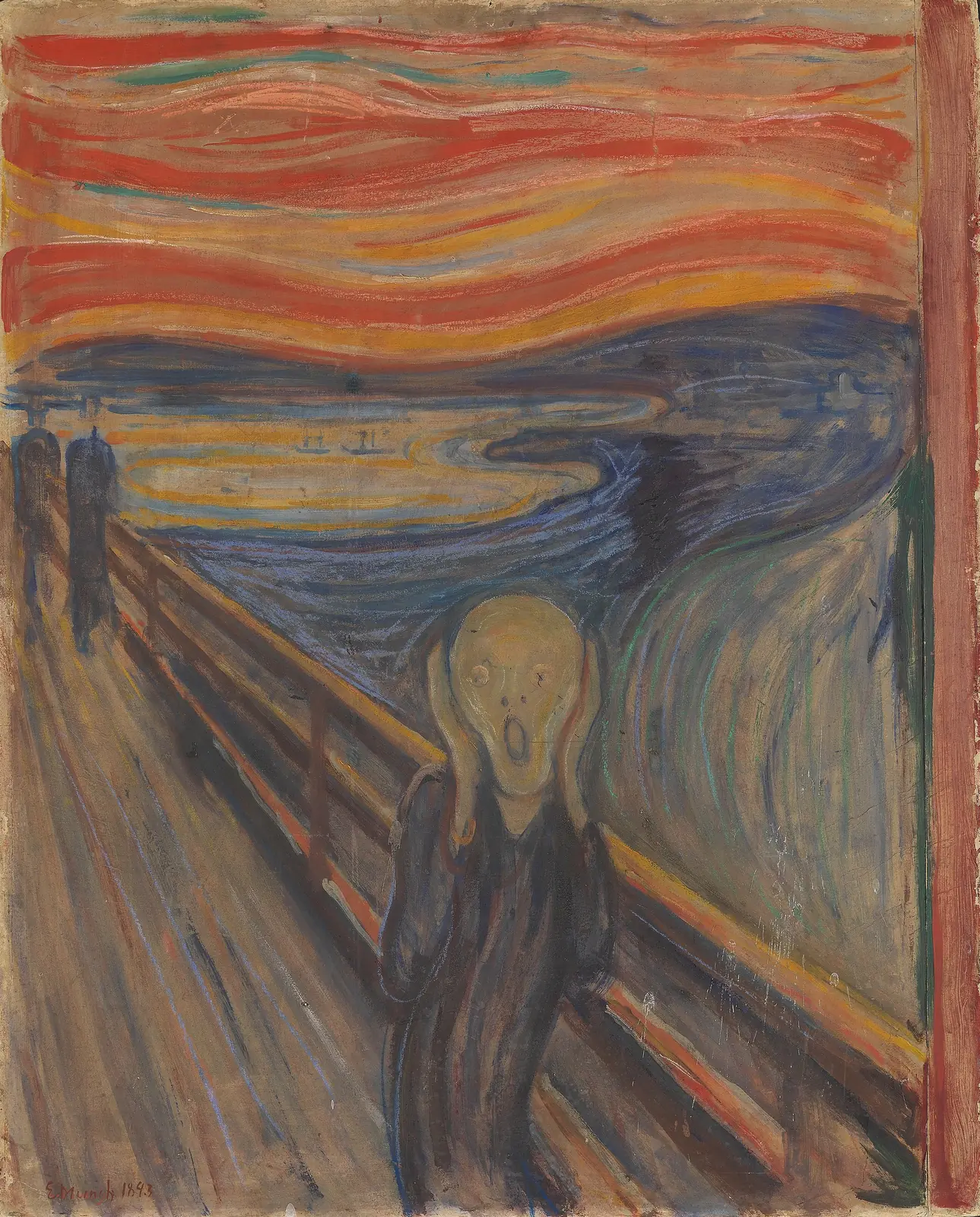
Paul Gauguin supplies another decisive pole. In Nave Nave Mahana, red ground, hard contour, and frieze-like figures turn Tahiti into a symbolic construction rather than a slice of seen life. In Where Do We Come From? What Are We? Where Are We Going?, the same logic becomes monumental and philosophical. Gauguin shows that Post-Impressionism can become synthetic without returning to academic history painting.
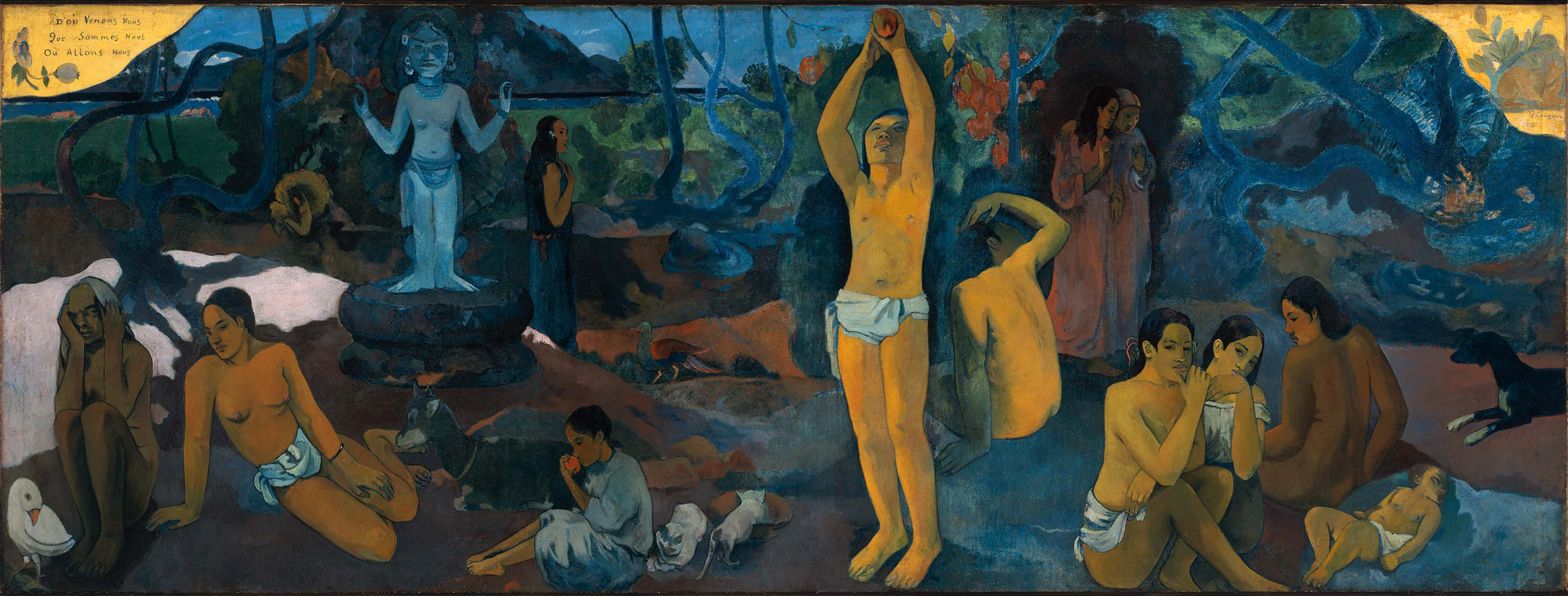
Henri Rousseau shows another answer altogether. In The Sleeping Gypsy, a lion, a sleeping body, and a moonlit desert are held together by hard contour and eerie calm. Rousseau proves that Post-Impressionism can intensify painting not only through agitation or system, but also through lucid unreality.
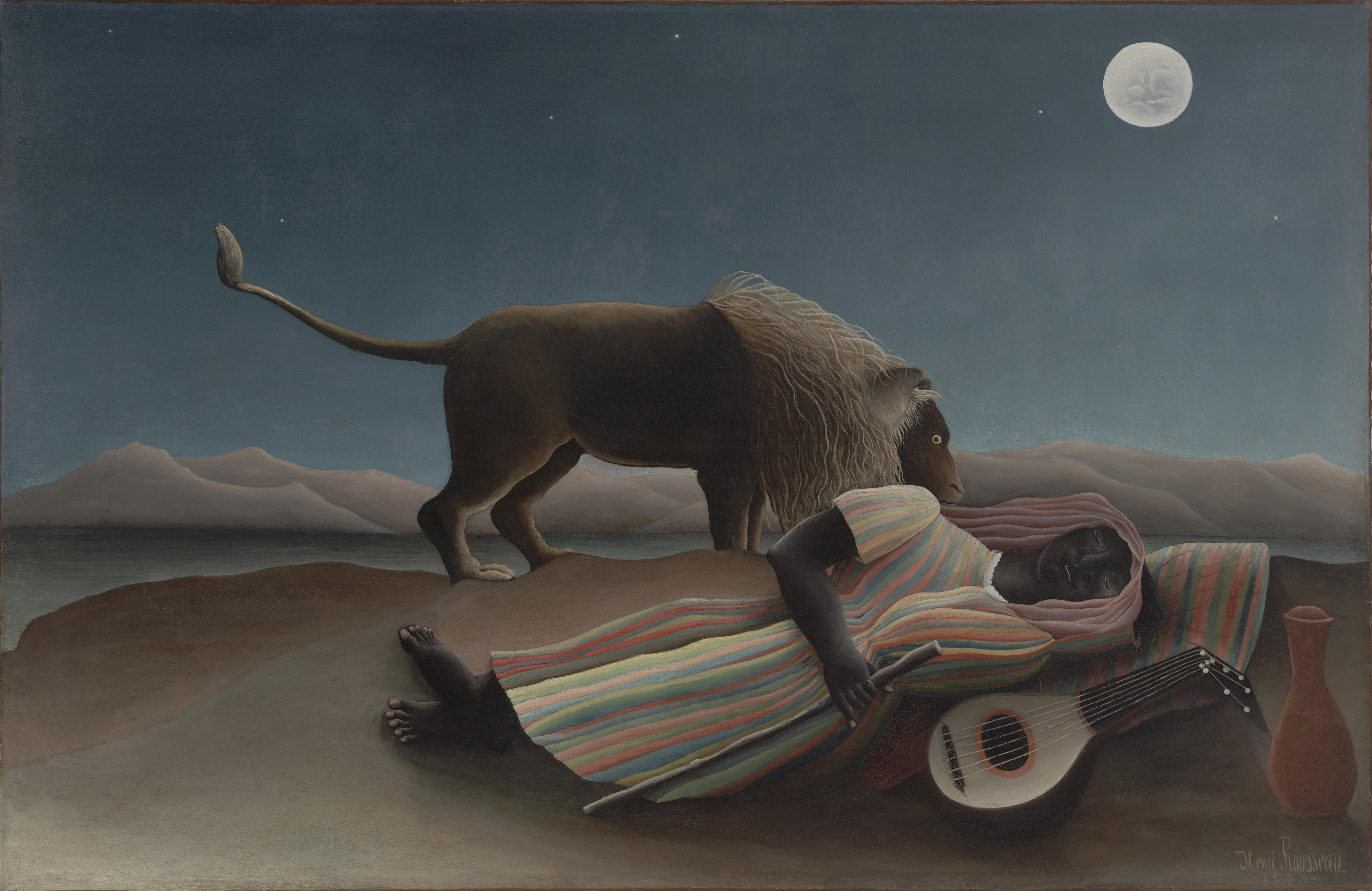
Georges Seurat, by contrast, seeks systematic control. In A Sunday on La Grande Jatte, small touches of color and measured composition produce a strangely suspended social scene. Compare his method with the broader profile on Georges Seurat to see how "scientific" color still yields ambiguity.
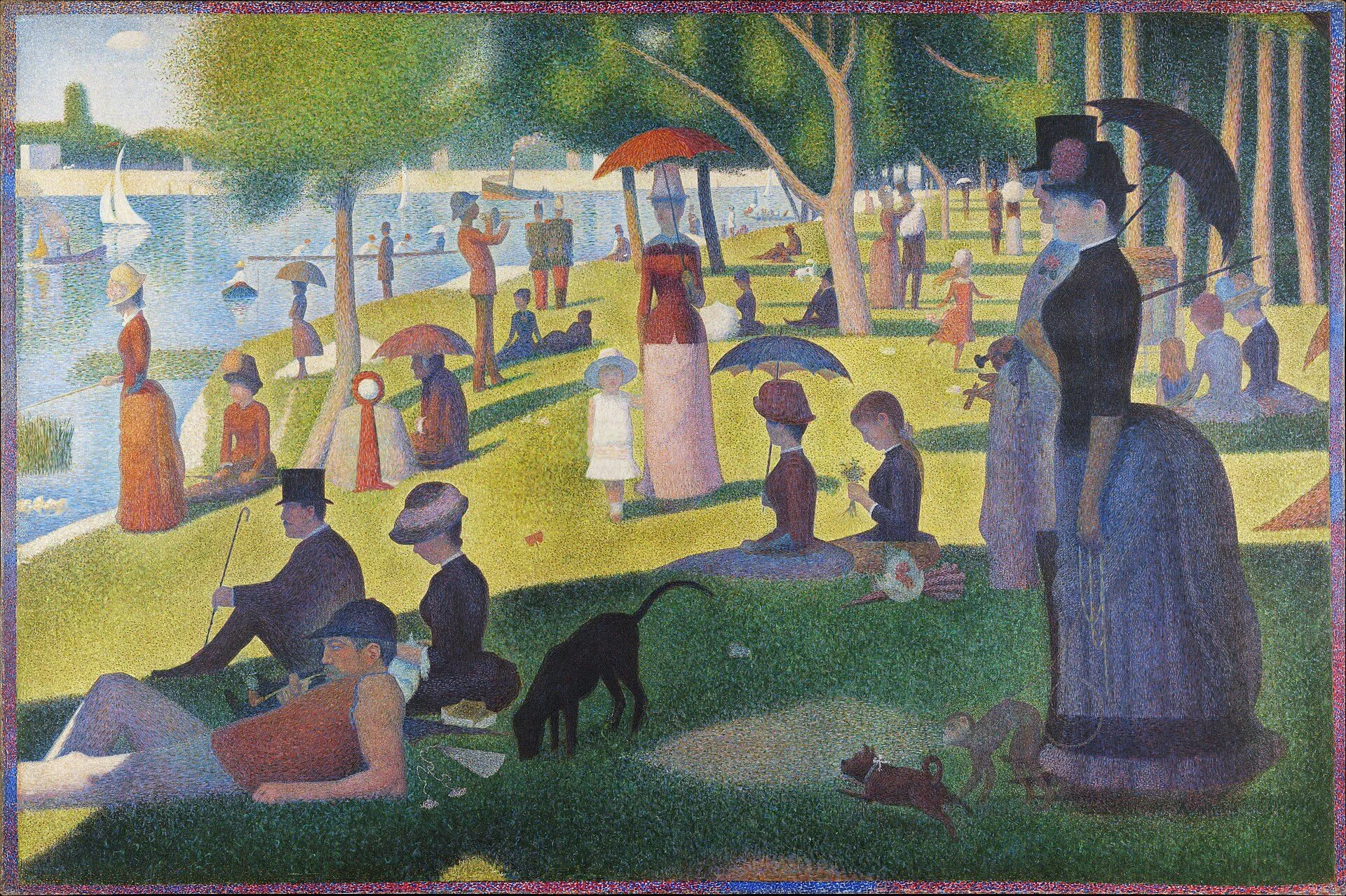
Edvard Munch is often placed at the edge of this field, but works like The Scream show why the label matters historically: Post-Impressionist freedom in line and color makes later existential and Expressionist intensity possible.
Techniques and visual logic
Key techniques include deliberate color distortion, serial experimentation, contour emphasis, and compositional simplification. Rather than matching local color, artists choose hues for relational impact. Rather than mimicking depth, they flatten or tilt space to increase surface tension.
Brushwork also changes status. It becomes evidence of decision, pace, and pressure. You can often "read" a painting as a record of choices: where the artist insisted, revised, accelerated, or held back. This material legibility is one reason Post-Impressionist works stay powerful in person.
Debates and limits
Because Post-Impressionism is a broad label, historians still debate its boundaries. Should it include only French artists after the Impressionist exhibitions, or also parallel experiments in Northern and Central Europe? Should it end around 1905, or remain active until movements like Fauvism and Cubism fully consolidate? The category is useful, but only if we remember it names a problem-space rather than a unified doctrine.
This ambiguity is productive for readers. It prevents simplistic timelines and encourages close comparison. Two paintings can both be "Post-Impressionist" while pursuing opposite goals: one may stabilize form through measured construction, another may destabilize vision through expressive distortion. The label should open inquiry, not close it.
From observation to constructed form
Post-Impressionism formalizes artistic authorship in modern terms. It treats a painting as a constructed proposition, not a transparent window. That model feeds directly into Fauvism, Cubism, and Expressionism, where form no longer serves realism by default.
It also shaped museum viewing habits. Curators now routinely invite viewers to read facture, palette, and compositional scaffolding as evidence of thought, not secondary craft. That pedagogical frame owes much to Post-Impressionist practice.
A concrete way to read the movement is comparatively: move between linked works, identify what each painter inherits from Impressionism, and note what each one breaks. The movement becomes clearer when seen as a laboratory of incompatible but productive solutions.
Key artists
Key works in Explainary
Its plurality is historical strength, not curatorial noise. Read Cezanne, Van Gogh, Gauguin, Seurat, Rousseau, and Munch together and the category stops looking vague.
Read Impressionism first, then Post-Impressionism, then the split toward Neo-Impressionism or Expressionism. Our essay Impressionism vs. Expressionism follows that comparative route through concrete works.
Continue with the art quiz to validate recognition, context, and comparison.
Primary sources
Frequently asked questions
Impressionism stays closer to fleeting optical experience. Post-Impressionism keeps that color freedom but pushes harder toward structure, symbolism, and subjective interpretation.
Yes. Neo-Impressionism is one more methodical branch inside the broader Post-Impressionist field, especially around Seurat and Signac.
Gauguin pushes the movement toward symbolic color, flattened form, and invented distance. Nave Nave Mahana shows that this can work as a compact Tahitian frieze; Where Do We Come From? What Are We? Where Are We Going? expands the method into a monumental philosophical field.
Rousseau belongs to the movement because he pushes painting away from optical transcription toward invention, symbolic stillness, and constructed dream space. The Sleeping Gypsy shows that Post-Impressionism can be calm and uncanny, not only agitated or systematic.
Not as a single straight line, but it does open major paths toward Expressionism by freeing color, brushwork, and form from strict natural description.