
Neo-Impressionist Artist
Paul Signac
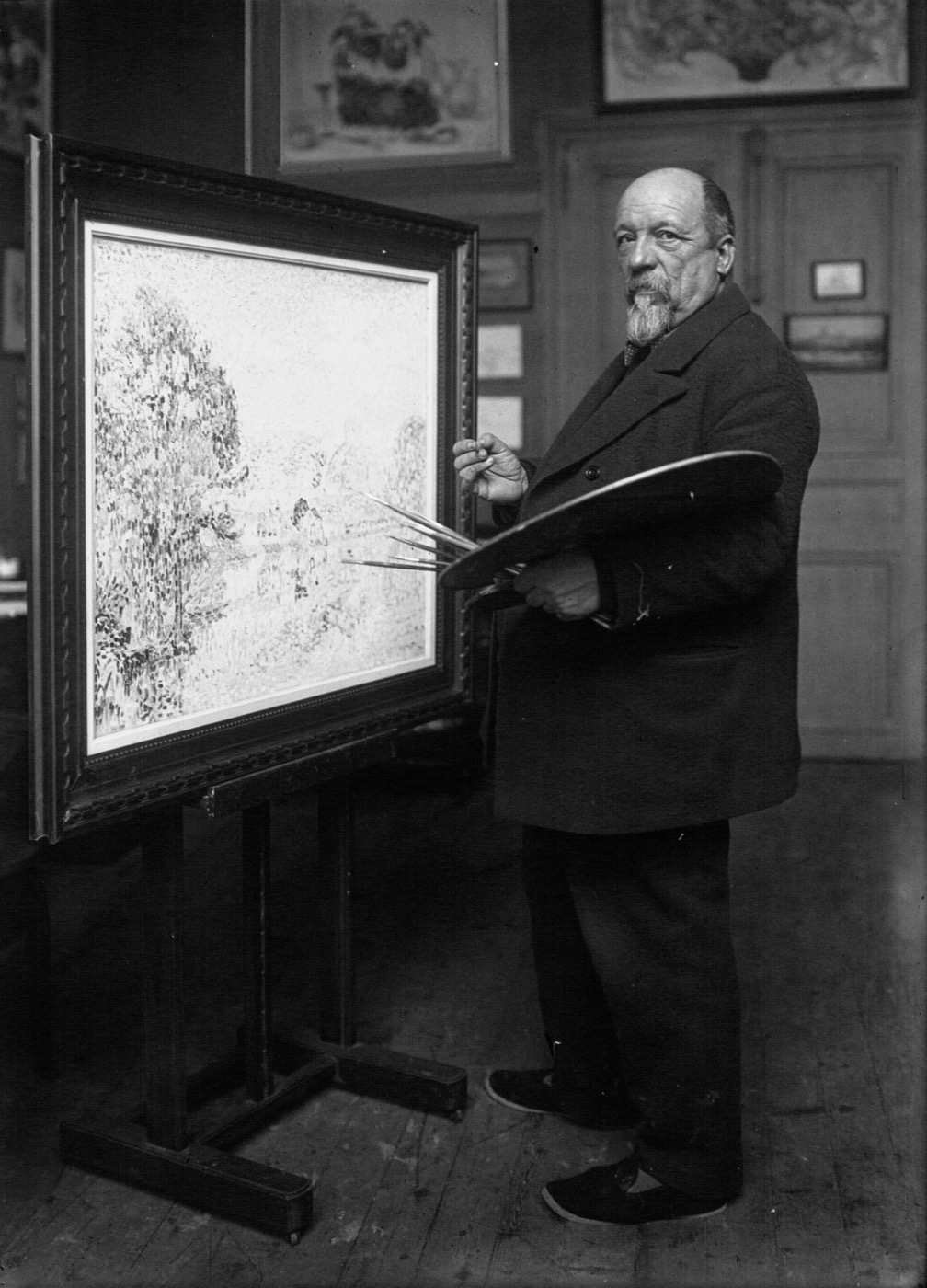
Signac turns the point into a route, not a prison. He begins beside Georges Seurat, helping shape the divided-color method that defines Neo-Impressionism, then pushes it toward harbors, travel, decorative rhythm, and a public theory of modern color.
He is often described as Seurat's follower, but that label is too small. Seurat gives the method its most concentrated authority. Signac gives it duration, networks, writing, and geographical range. Without him, pointillism would look more like a short experiment around a single genius. With him, it becomes a movement.
From Impressionist color to divided method
Born in Paris in 1863, Signac came to painting through modern color rather than academic obedience. He absorbed lessons from Impressionism, especially its outdoor light and chromatic freedom, but he wanted a firmer structure than spontaneous brushwork could provide. His meeting with Seurat in 1884 gave that search a system.
The two artists developed pointillism as a method of divided color, placing small touches of pigment so that the eye could organize the relation at a distance. The familiar story focuses on dots. Signac's career shows the larger issue: how can separate units of color build a whole image without losing brightness?
Opus 217 and the portrait as manifesto
Opus 217: Portrait of Félix Fénéon is the work that makes Signac's intelligence hardest to miss. Fénéon, the critic and anarchist who promoted avant-garde artists, stands before a whirling field of chromatic wedges. The painting treats a modern cultural mediator with the ceremony once reserved for aristocrats and saints.
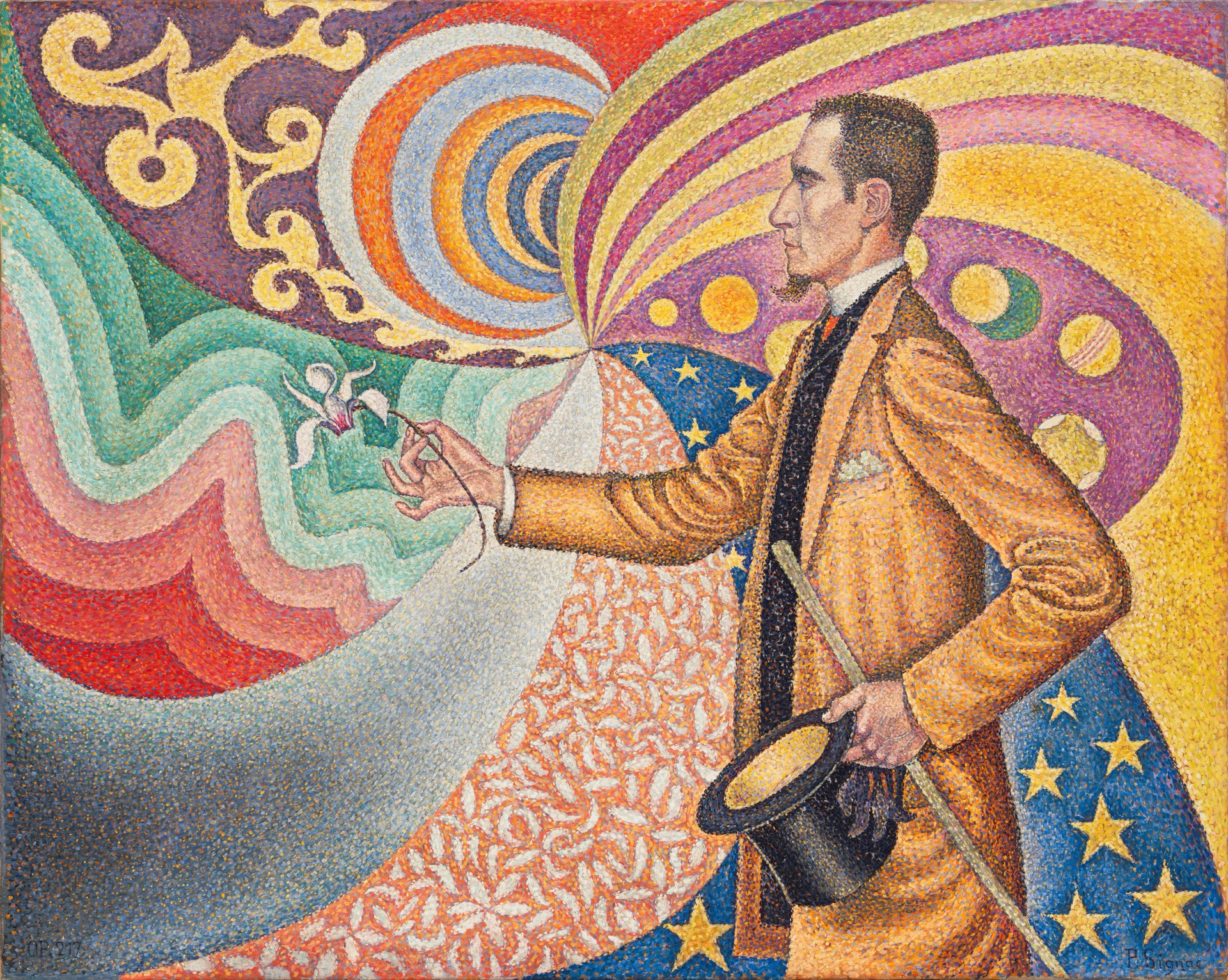
The portrait also reveals the difference between Signac and Seurat. Seurat often stabilizes. Signac often releases. The divided touch becomes centrifugal, ornamental, almost musical. His title even calls the painting an Opus, linking color to rhythm, measure, and performance.
The sea, the harbor, and the open route
Signac was a sailor, and the coast gave his method a natural field. Ports, sails, reflections, bridges, and water surfaces let him test color as atmosphere and structure at once. The harbor becomes a meeting place between geometry and weather: masts create intervals, sails catch intense light, water breaks the world into fragments.
This maritime orientation changes the emotional temperature of Neo-Impressionism. In Seurat, the method can feel strict, almost sealed. In Signac, it often opens outward. Travel, movement, and Mediterranean light loosen the system without abandoning its discipline.
Writing, politics, and the movement after Seurat
Signac did not only paint the method. He explained, defended, and circulated it. His writing, especially From Eugène Delacroix to Neo-Impressionism, helped give the movement a historical argument: modern color was not whim, but a serious continuation of earlier color thinking under new optical conditions.
His politics also matter. Signac moved in anarchist circles and believed artistic freedom could align with wider social freedom. His pictures rarely turn into slogans. Instead, they imagine harmony through relation: separate touches, separate colors, separate viewers brought into temporary order by perception.
A bridge toward Matisse and Delaunay
Signac's legacy becomes especially clear when placed between Seurat and later color modernism. La Grande Jatte shows the method at its most architectonic. Signac makes it more portable, brighter, and more decorative. That loosened version helps prepare the ground for Fauvist color, for the Mediterranean experiments around Henri Matisse, and for the chromatic systems of Robert Delaunay.
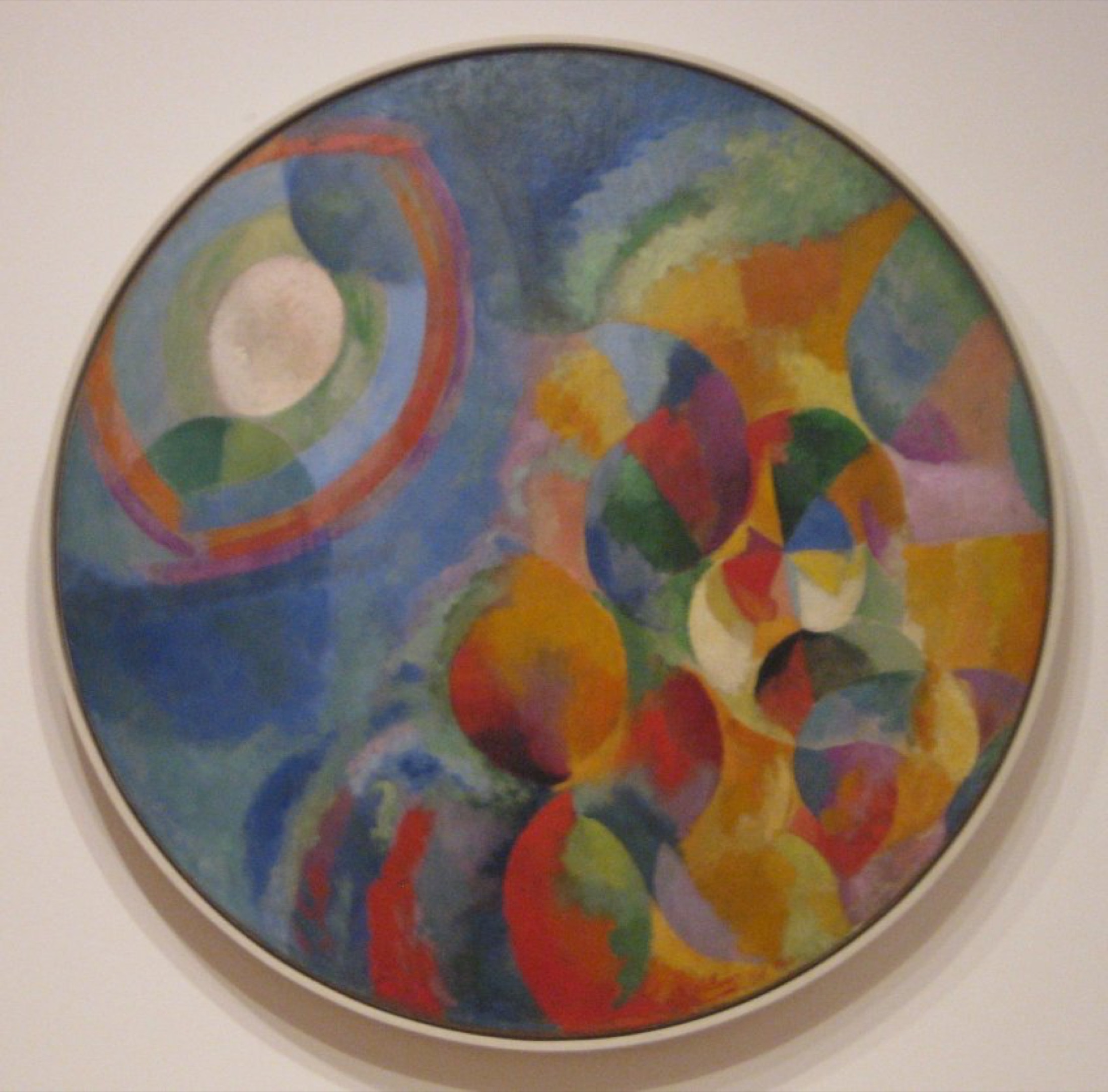
The path from Signac to Simultaneous Contrasts: Sun and Moon is not direct imitation. It is a shared problem. How can color become structure rather than filling? How can a surface be built from repeatable units and still feel alive? Signac keeps that question active after Seurat's early death.
How to read Signac
Read Signac by moving between discipline and pleasure. Close up, track the separated touches and their chromatic contrasts. From farther back, notice how those units become harbor, portrait, sail, facade, or reflection. Then look again for the decorative pattern that remains visible even when the scene is legible.
His best work does not ask you to choose between system and delight. It shows how planned color can carry social identity, travel, political hope, and sensory intensity. Signac is not merely the painter who survived Seurat. He is the artist who made Neo-Impressionism expansive enough to keep moving.
Continue with related pages
Then use the art quiz to test whether Signac's divided color reads differently from Seurat's stricter stillness and Delaunay's abstraction.