
Orphist Artist
Robert Delaunay
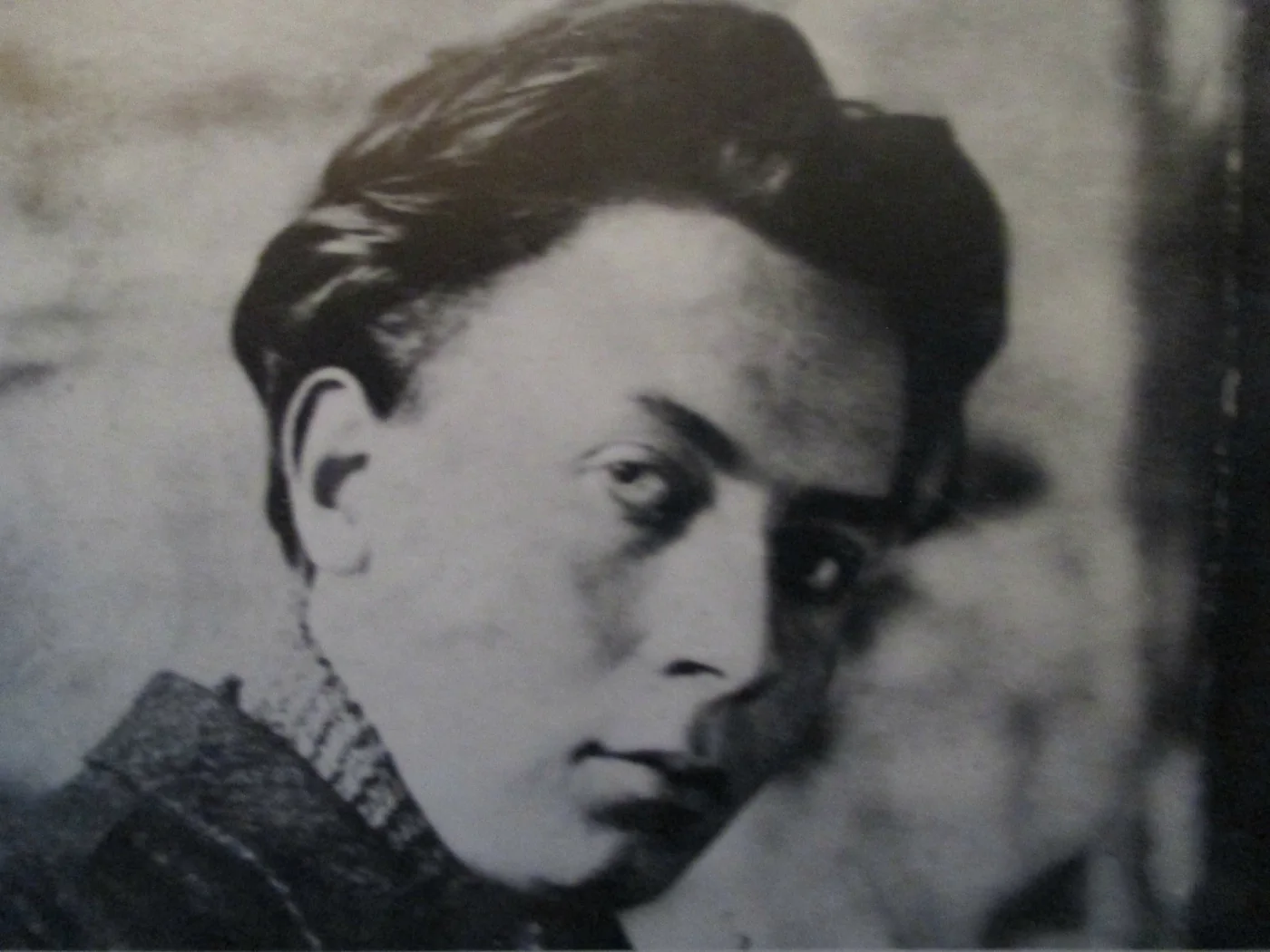
Robert Delaunay matters because he makes color carry the weight of structure. In his paintings, color does not arrive after drawing to fill forms in. It builds the forms, sets the rhythm, and turns modern vision into a field of movement.
Delaunay begins with Paris, the Eiffel Tower, windows, and city light, but he does not stay with description for long. He moves toward a painting in which chromatic contrast does the work that line and modeling used to do, which is why he stands at such a decisive point between Cubism, Orphism, and later abstract art.
Paris, early training, and a fast-moving career
Born in Paris in 1885, Delaunay does not come out of the heaviest academic route. He trains through decorative work and studio practice, which helps explain why surface, structure, and rhythm remain inseparable in his painting. Even before abstraction, he thinks less like a narrator than like a builder of visual pressure.
His career also moves quickly. Early post-impressionist and Cezannian experiments give way to the Eiffel Tower and Window series, then to the color research developed with Sonia Delaunay in the 1910s, and later to the large circular Rhythms and public commissions of the 1930s. Read in sequence, the career does not look scattered. It looks like a sustained effort to free color from a supporting role.
What Delaunay changes after Seurat and Cubism
One way to place Delaunay is to set him against Georges Seurat. Seurat had already shown that color relations could organize an image. Delaunay keeps that seriousness about perception, but he releases it from Seurat's stillness. The surface no longer stabilizes social distance. It begins to turn, pulse, and circulate.
The comparison with Cubism is just as important. Many analytical Cubists mute color so form can be dissected more clearly. Delaunay takes the opposite path. He asks whether color itself can become the architecture of the picture. That question gives his work its historical importance. He does not decorate Cubism; he redirects it.
The city becomes a laboratory
Delaunay's early modern motifs are not incidental. The Eiffel Tower, windows, streets, and broken urban viewpoints give him a world already full of acceleration, overlap, and visual interruption. Modern Paris is not just his subject. It is the condition that teaches him how unstable and layered vision has become.
The Eiffel Tower paintings matter here because they bend a familiar structure into motion. The Window paintings matter because they turn looking itself into a fractured act, split between interior and exterior, depth and surface, solid object and colored interval. Long before complete abstraction, Delaunay is already asking how a painting can feel simultaneous rather than sequential.
Simultaneity at full intensity
That shift is clearest in Simultaneous Contrasts: Sun and Moon. By that stage, the title still names celestial bodies, but the real event is optical. Adjacent colors intensify each other, arcs return like beats, and the whole canvas behaves less like a scene than like a rotating system.
That is what Delaunay means by simultaneity. A color is never isolated; it changes according to what sits beside it. He takes that principle from nineteenth-century color theory, including Chevreul, and turns it into painting. The result is not a scientific diagram. It is a pictorial machine for producing vibration.
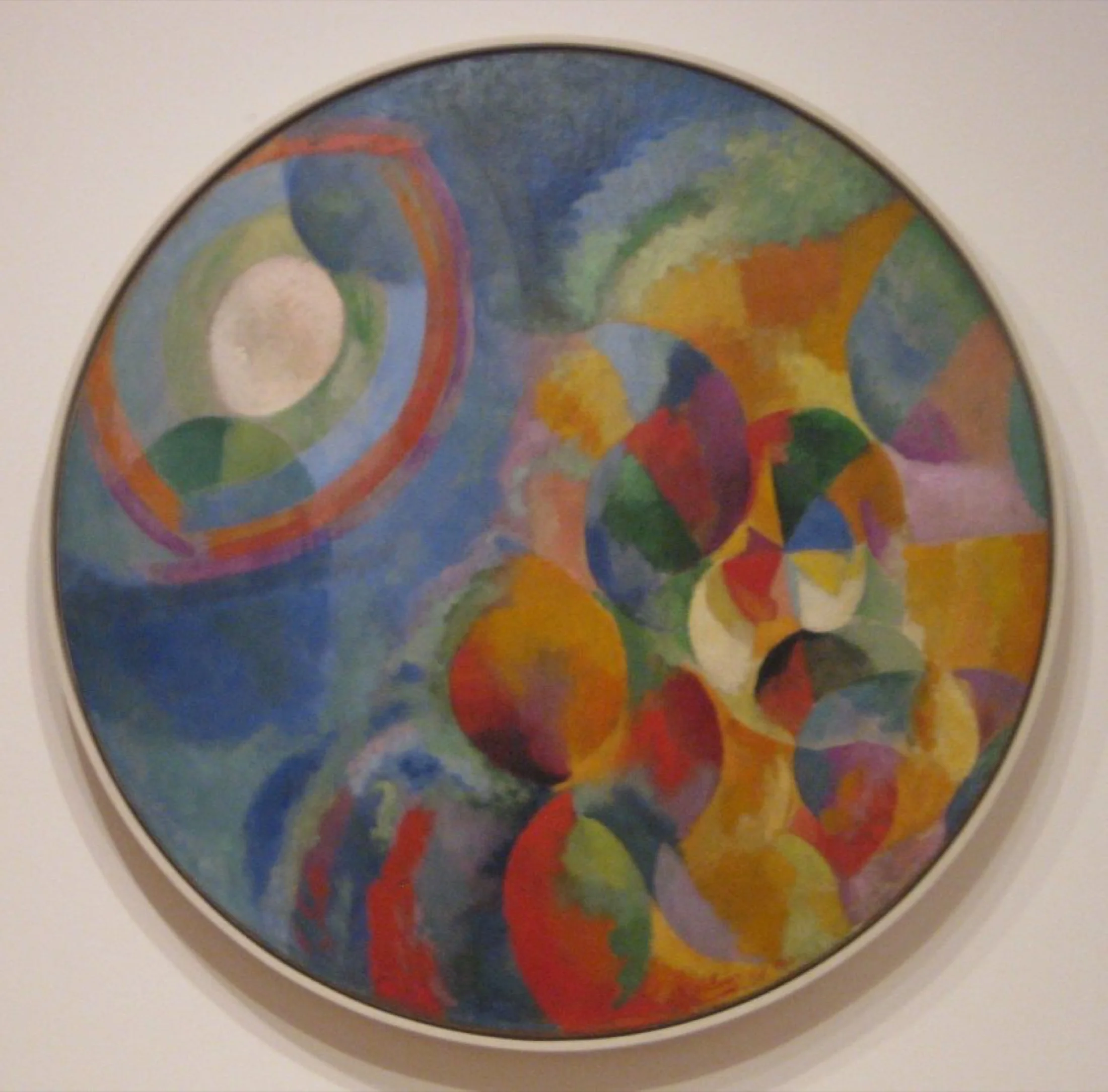
Structure has not disappeared. It has moved. Circular and segmented forms are tightly controlled, but line no longer dominates and color no longer obeys. They construct the image together.
Robert and Sonia Delaunay
Any strong reading of Robert Delaunay has to keep Sonia Delaunay in view. Their collaboration matters because simultaneity did not stay inside painting. It moved into textiles, books, fashion, stage design, and interiors. That expansion is not a side story. It proves that their color thinking belongs to design history as much as to easel painting.
It also changes how Robert's paintings should be read. They are not isolated formal experiments floating above life. They are part of a broader attempt to imagine a modern visual environment built from contrast, repetition, and rhythm. In that sense, the Delaunays treat abstraction as something that can enter everyday space.
Why Orphism is more than a label
Guillaume Apollinaire's term Orphism can sound lightweight if it is reduced to “colorful Cubism.” Delaunay gives it more weight than that. What matters is not brightness alone, but the idea that painting can behave like music through interval, return, and cadence. The surface moves without narrating an event.
This is also where the comparison with Wassily Kandinsky becomes useful. In Composition VII or Yellow-Red-Blue, Kandinsky often drives abstraction through clash, direction, and symbolic pressure. Delaunay is usually more architectural and orbital. He wants the eye to circulate, not to collide.
Legacy and afterlives
Delaunay still matters because he shows that color can think structurally. It can build space, set tempo, and guide attention without leaning on descriptive subject matter. That legacy runs forward into later abstraction, graphic design, exhibition design, and any visual practice that works through modular contrast and repeatable rhythm.
His place in modern art becomes clearer once the full arc is visible: modern Paris teaches him instability, Seurat shows that perception can be organized, Cubism sharpens the problem of structure, Sonia Delaunay broadens the field, and Orphism gives the result a name. Delaunay's route is neither purely geometric nor purely symbolic. It is fundamentally rhythmic.
Continue with related pages
Then use the art quiz to check whether you can separate Delaunay's rotating color from Kandinsky's turbulence, Seurat's stillness, and stricter geometric abstraction.
Sources
Frequently asked questions
Simultaneity means that colors act on each other when they are placed side by side. Delaunay uses those interactions to create vibration, rhythm, and apparent movement across the canvas.
Kandinsky often builds abstraction through symbolic tension and directional clash. Delaunay is usually more architectural and optical: color intervals, circular returns, and rhythmic balance do the work.
Sonia Delaunay helps turn simultaneity into a broader modern language. With textiles, books, fashion, and interiors, she shows that the Delaunays' color thinking belongs to design history as much as to easel painting.
No. He begins with city motifs such as the Eiffel Tower and windows, then gradually lets color and rhythm take over until the subject becomes secondary to the visual event.