
Belgian Neo-Impressionist Artist
Théo van Rysselberghe
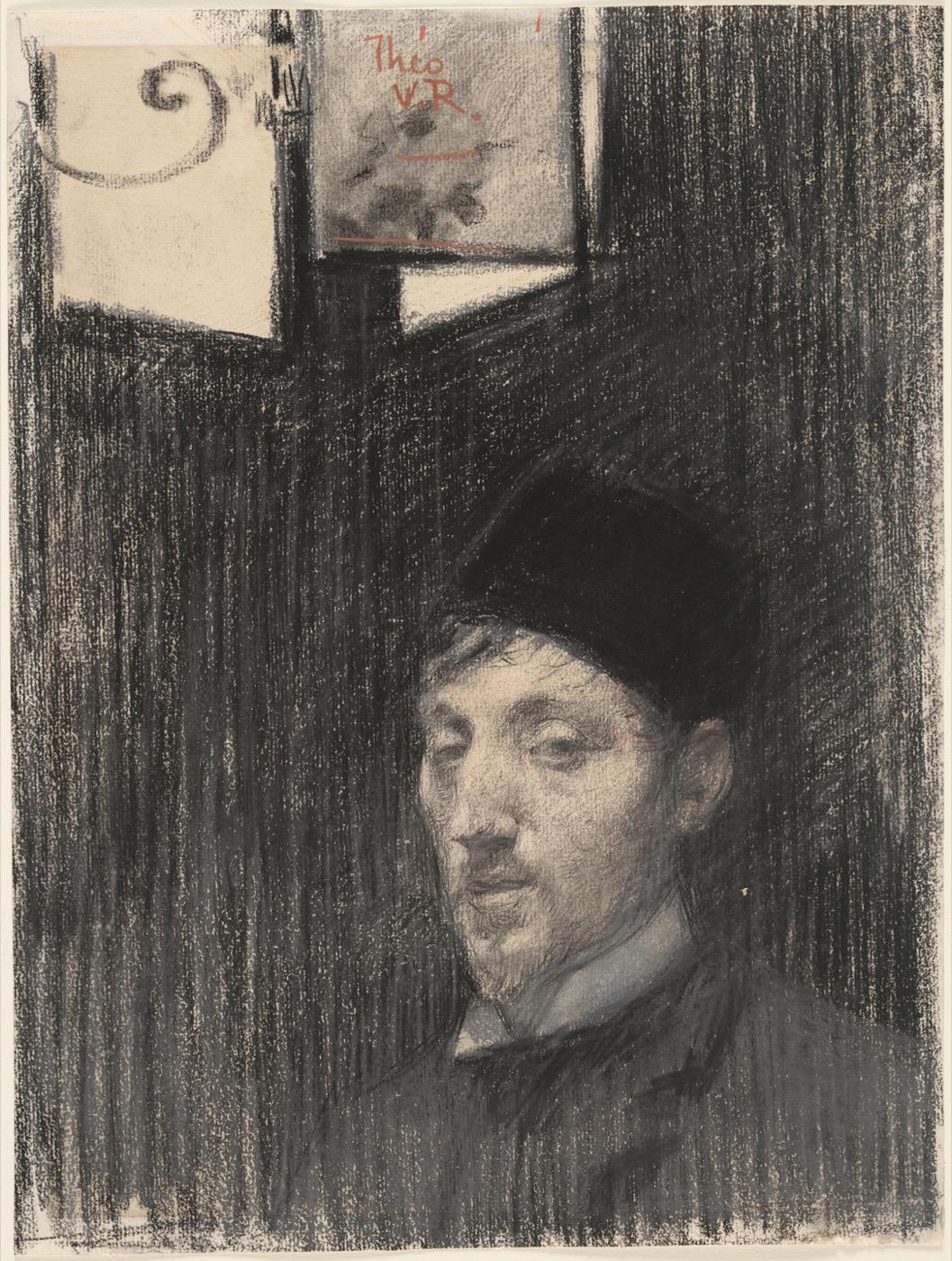
Van Rysselberghe makes pointillism feel less like a Parisian formula and more like a social language. Born in Ghent and active in Brussels, he brought divided color into portraiture, coastal scenes, domestic interiors, and the exhibition culture of Les XX, where Belgian modernism met the newest French experiments.
He matters because he changes the scale of Neo-Impressionism. Seurat gives the method its strict monumentality; Signac gives it mobility, writing, and Mediterranean expansion. Van Rysselberghe shows how the system can hold friendship, music, private concentration, and bourgeois modernity without losing optical rigor.
Ghent, Brussels, and Les XX
Théo van Rysselberghe was born in Ghent in 1862 and trained in a Belgian art world that was becoming unusually receptive to international modernism. Brussels mattered. Through Les XX, the group founded in 1883, Belgian artists, critics, collectors, and musicians encountered work by Seurat, Signac, James Ensor, Whistler, and many others in a dense exhibition culture.
That setting shaped his art. Van Rysselberghe was not simply importing a French technique. He was adapting it inside a network where portrait commissions, domestic music-making, print culture, and modern exhibition politics overlapped. His pointillism often feels social before it feels doctrinal.
Alice Sèthe and the pointillist interior
Portrait of Alice Sèthe is the page where his achievement becomes immediate. Alice sits at a harmonium, calm and absorbed, while the room shimmers with divided color. The painting does not imitate Seurat's public park logic. It transfers pointillist vibration into an interior where music, posture, and perception reinforce each other.
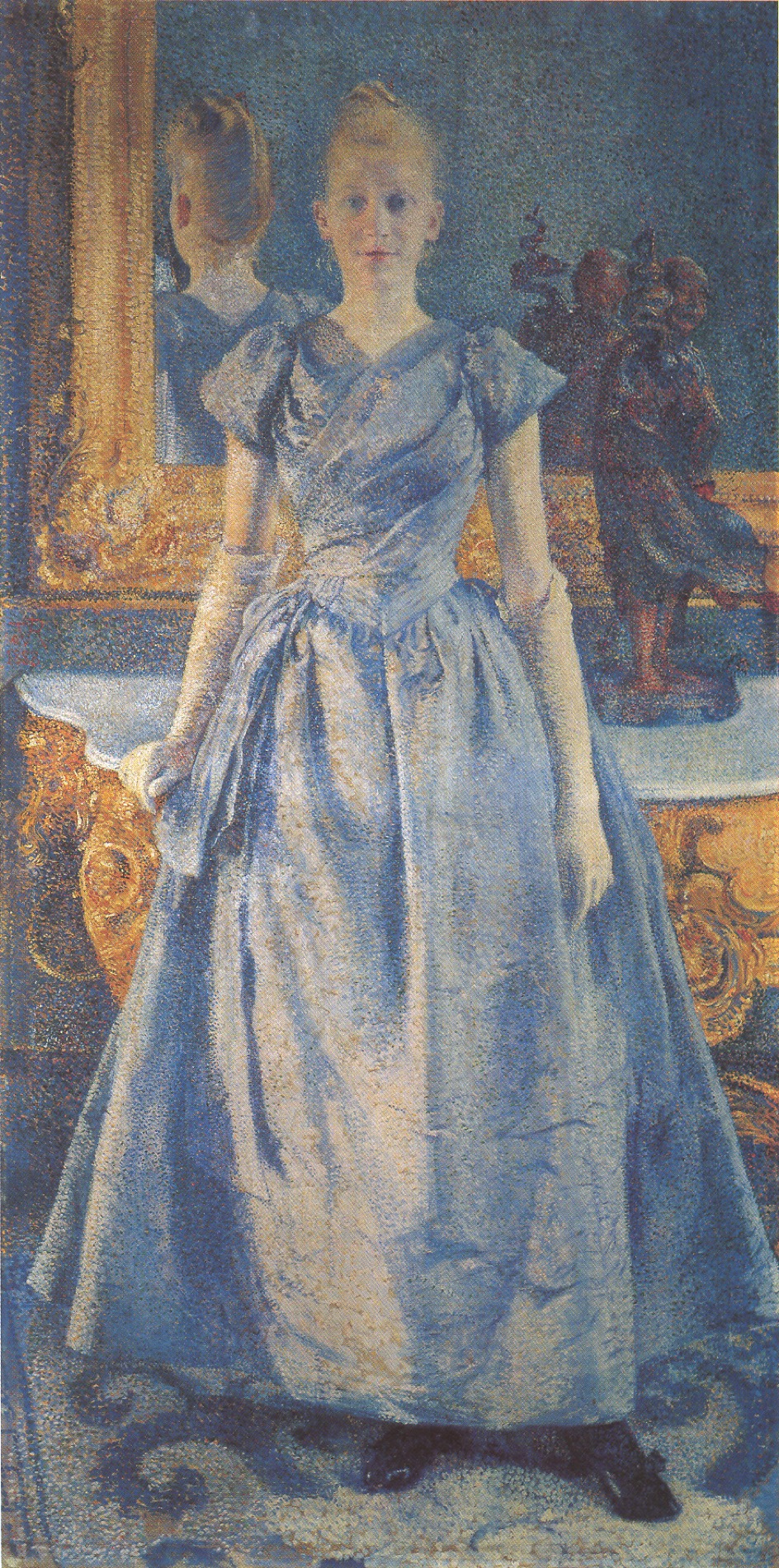
The portrait is also historically important because it demonstrates how quickly Neo-Impressionism could move beyond its first Parisian setting. The sitter belongs to a cultivated Belgian circle, and the painting makes that world visible through instrument, dress, decor, and chromatic pressure.
Portraiture without academic smoothness
Van Rysselberghe's portraits are among his sharpest contributions because they solve a difficult problem. A portrait has to keep a person's presence legible. Pointillism tends to break surfaces into separate units. He makes those units work for character rather than against it.
In the strongest portraits, the sitter remains firm while the surrounding field vibrates. Skin, clothing, walls, books, instruments, or furniture become color relations instead of inert descriptors. The person is not dissolved; the whole environment participates in how that person is perceived.
Coast, travel, and Mediterranean color
Like Signac, Van Rysselberghe was drawn to coastal light. Boats, beaches, rocks, and Mediterranean air gave him another way to test divided color. In these works, the method often becomes broader and more decorative, less bound to the exact dot and more open to rhythmic patches.
This coastal work matters for the later story of color modernism. Neo-Impressionist procedure begins in optical discipline, but it can become a bridge toward Fauvism and decorative modern painting. Van Rysselberghe helps make that bridge visible from a Belgian angle.
Between Seurat and Signac
The clearest reading path sets him between Seurat and Signac, not beneath them. La Grande Jatte shows pointillism as public order. Opus 217 shows it as graphic manifesto. Portrait of Alice Sèthe shows it as cultivated interior life.
That trio changes the movement. Neo-Impressionism becomes more than a method for making light shimmer. It becomes a way to organize society, identity, and attention through small repeatable units. Van Rysselberghe's place is strongest when that expansion is visible.
Legacy in Belgian modernism
Van Rysselberghe's legacy is not a single school founded in his name. It lies in the way he helped make Neo-Impressionism international, portable, and socially refined. Through Les XX and later Belgian exhibition culture, divided color moved through portraits, collectors, musicians, writers, and coastal subjects rather than remaining attached to one Parisian formula.
His influence is easiest to feel in the broader permission he creates. Color can be analytical without becoming dry; portraiture can be modern without abandoning likeness; a domestic room can carry the same optical seriousness as a park or harbor. That position makes him one of the clearest artists for seeing how pointillism traveled from method into culture.
How to read Van Rysselberghe
Start with the surface, then widen the frame. Close up, look at how separate touches build temperature, texture, and edge. From farther back, ask what kind of world those marks are making: a room of listening, a portrait of friendship, a coast shaped by light, or a social circle refined by modern taste.
His best paintings are not flashy departures from Neo-Impressionism. They are subtle expansions of it. He keeps the discipline of divided color but turns it toward human presence. That makes him essential for understanding pointillism as an international language, not a single Parisian experiment.
Continue with related pages
Then use the art quiz to test whether Van Rysselberghe's intimate divisionism reads differently from Seurat's social geometry and Signac's graphic spectacle.