
Neo-Impressionism
Portrait of Alice Sèthe
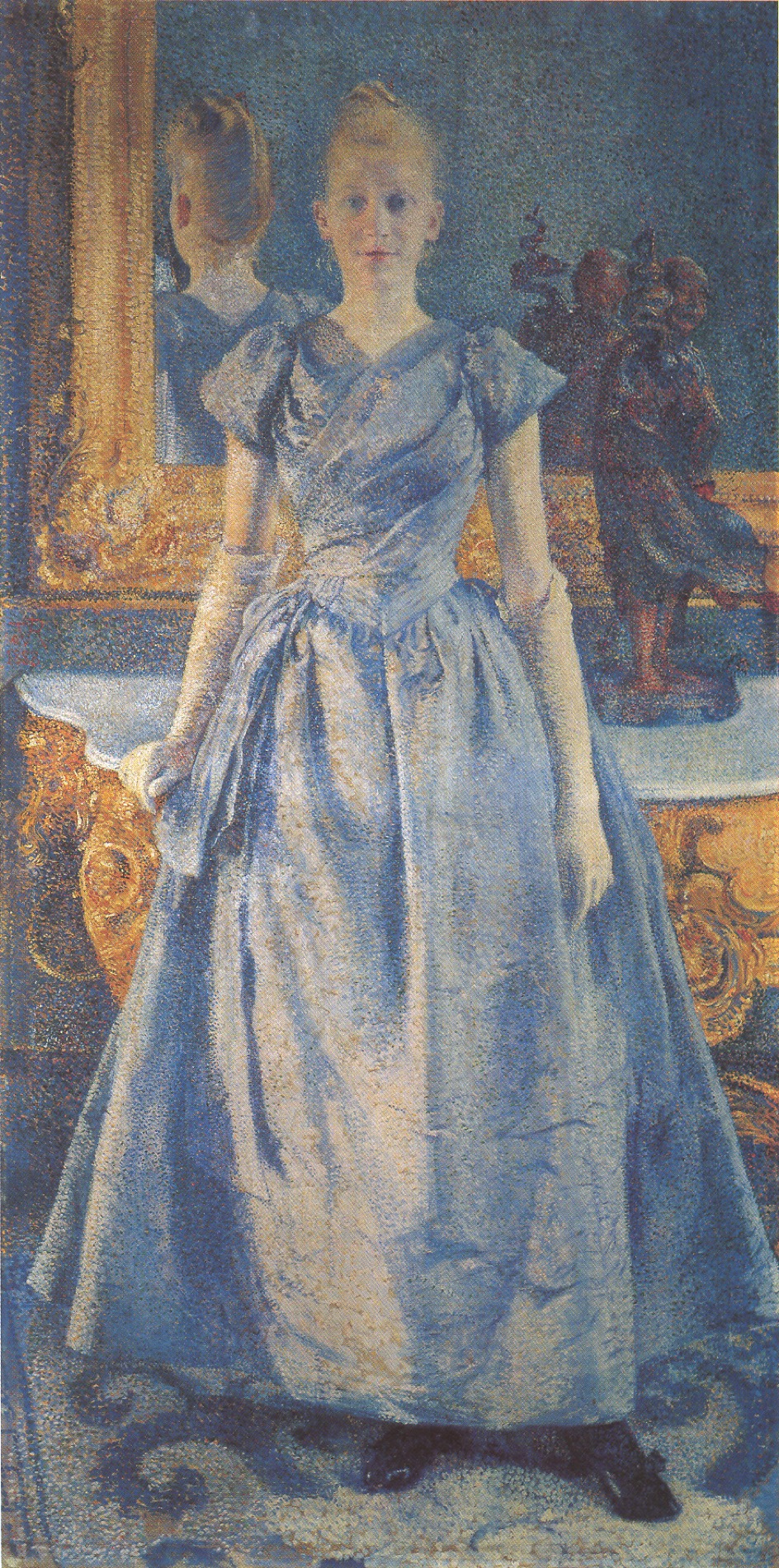
Alice Sèthe sits at a harmonium, her profile held still while the wall, dress, floor, and instrument tremble with separate touches of color. Théo van Rysselberghe's 1888 portrait takes a method often associated with open air and public leisure and brings it indoors, where pointillism becomes a language for concentration, music, and private modern life.
The painting expands the Neo-Impressionist map beyond Paris. Seurat had made divided color monumental in La Grande Jatte. Signac would make it graphic and public in Opus 217. Van Rysselberghe shows that the same method could also hold a psychological portrait together.
A Belgian portrait inside a French method
Van Rysselberghe was one of the central artists of the Belgian group Les XX, a Brussels-based exhibition society that connected Belgian modernism to the newest work from France. He encountered Seurat's method in the second half of the 1880s and quickly understood that pointillism was not limited to landscapes, harbors, or crowds. It could structure a portrait without flattening the sitter into a technical demonstration.
Alice Sèthe was part of a cultivated Belgian milieu where music, collecting, and avant-garde art overlapped. The harmonium is therefore not a prop chosen at random. It turns the portrait into an image of attention. Her body is quiet, but the surface is active, as if sound and color were both being held in suspension.
Color as atmosphere, not costume
The divided touch makes the portrait feel alive without requiring dramatic gesture. The dark dress is not a flat mass. It is built from small chromatic shifts that let black absorb and release color. The wall does not sit behind Alice like neutral wallpaper. It vibrates around her, making the still room feel charged rather than silent.
That optical activity changes how the sitter is read. Alice does not confront the viewer like Manet's modern figures, and she does not dissolve into atmosphere like a Monet motif. She is present through inwardness. The method turns the room into a field of sensation while the figure remains self-contained.
A different path from Seurat
The comparison with A Sunday Afternoon on the Island of La Grande Jatte is useful because both works rely on divided color, but their ambitions diverge. Seurat organizes a public crowd into social geometry. Van Rysselberghe organizes a private sitter into tonal pressure and musical stillness. The method moves from park to interior, from public display to concentrated listening.
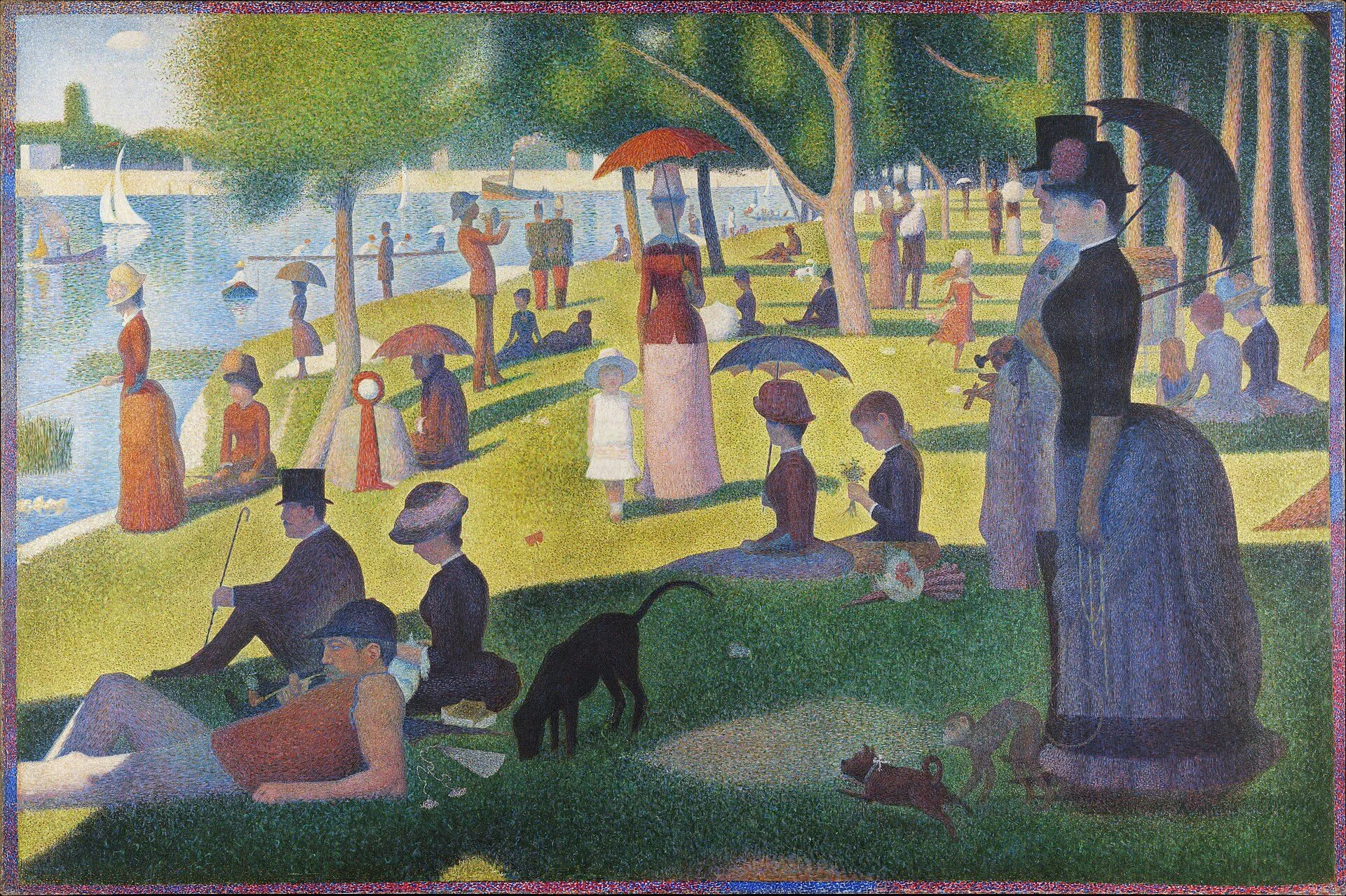
The Belgian painter also loosens the emotional register. Seurat's forms can feel impersonal, almost ceremonial. Here the structured touch creates intimacy. The portrait has discipline, but its discipline protects the sitter's interiority rather than exposing her as a social type.
Music, silence, and the modern interior
The harmonium matters because it gives the picture a second rhythm. Pointillism already asks the eye to assemble separate marks into a larger vibration. Music asks the ear to assemble separate tones into duration. Van Rysselberghe aligns the two experiences. Alice becomes a listener, a performer, and an image of modern sensibility at once.
This makes the portrait more than a likeness. It is a study of a cultivated interior, where identity appears through posture, concentration, and surroundings. The flowers, patterned floor, and instrument do not simply fill space. They create a measured environment around a sitter whose presence is quiet but not weak.
Why this portrait belongs in the pointillist canon
Portrait of Alice Sèthe belongs beside Seurat and Signac because it proves that pointillism could do more than regulate outdoor light. It could build a modern portrait without returning to academic smoothness. It could keep a person legible while making the entire surface participate in perception.
The painting also helps readers see Neo-Impressionism as a network rather than a single Parisian formula. Brussels, collectors, musicians, and exhibition groups all matter. The method travels, and as it travels it changes. In Van Rysselberghe's hands, pointillism becomes less a public theory of modern crowds than a refined instrument for private presence.
Van Rysselberghe makes pointillism listen.
Explore more
Related works
Then use the art quiz to test whether you can separate Van Rysselberghe's intimate pointillism from Seurat's public geometry and Signac's graphic force.