
Art Movement
Carolingian Art
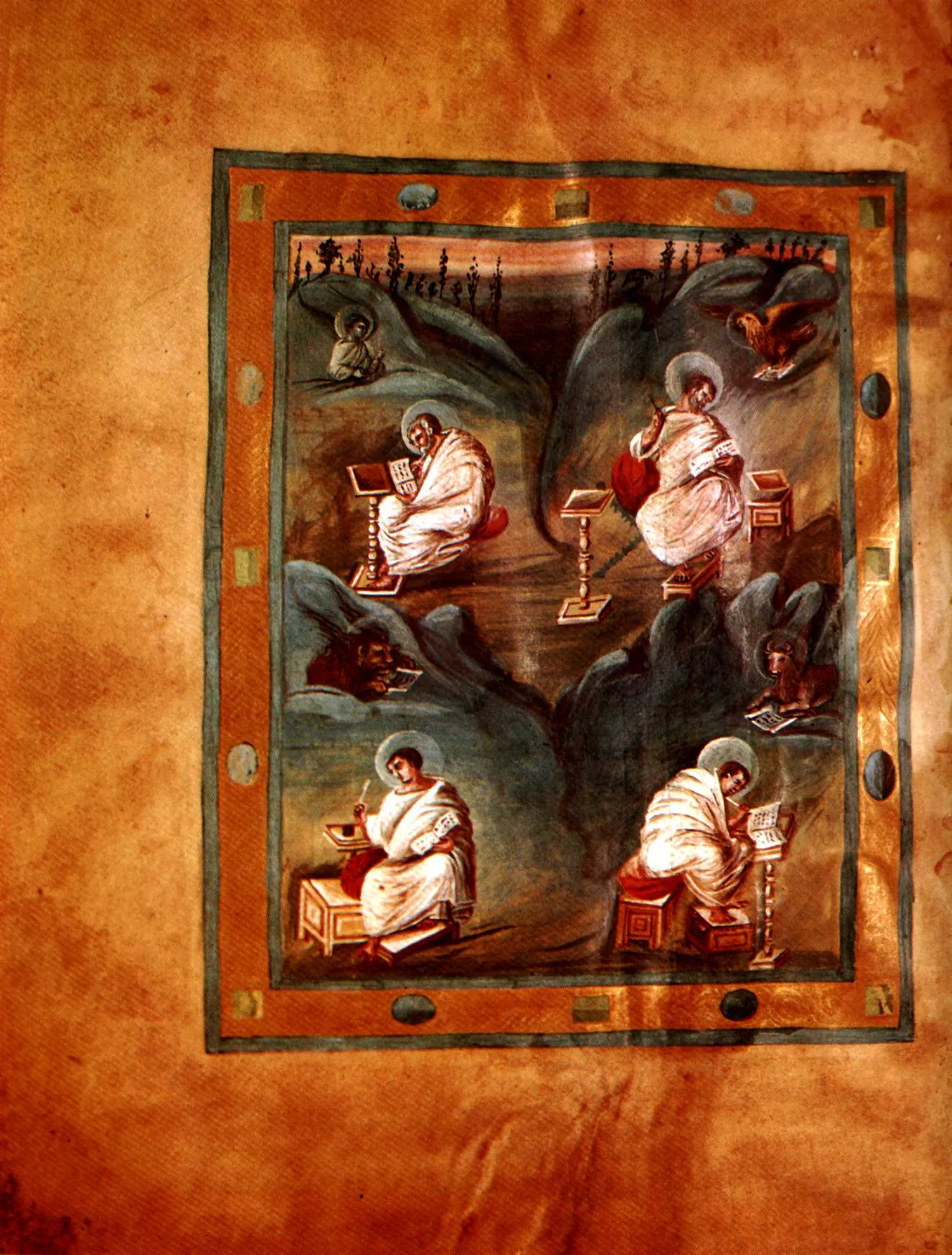
Carolingian art is the visual culture of imperial reform that took shape around Charlemagne and his successors in the late eighth and ninth centuries. It joins court patronage, monastic learning, and a deliberate revival of Roman and early Christian models in order to give Christian rule a more legible visual language.
Empire, reform, and the recovery of authority
The Carolingian world was not producing art for private delight alone. It was trying to stabilize doctrine, standardize books, reform monasteries, and present imperial power as intellectually and spiritually legitimate. Art therefore served government as well as devotion. Images, manuscripts, architecture, and script were all asked to make authority visible.
That is why Carolingian art repeatedly turns to late antique and early Christian precedents. This is not simple imitation. Artists and patrons selected older models because they carried prestige, clarity, and a sense of continuity with Christian Rome. The result is a style that often favors readable structure, solid figures, and deliberate hierarchy over ornamental overload.
Manuscripts and the return of readable space
Manuscripts are the clearest place to see this ambition. In Carolingian Gospel books, evangelists are often placed in architectural settings, modeled by light and shadow, with drapery that suggests weight and bodily presence. The page breathes more than many earlier medieval pages. Frames, initials, and ornament still matter, but they are less likely to absorb the whole surface.
This change is not only stylistic. It reflects a culture that cared intensely about copying, correcting, and transmitting texts across a large political space. A clearer page is easier to read, easier to teach from, and easier to align with reforming religious institutions. Carolingian art is therefore closely tied to the history of books as instruments of order.
Court workshops, monastic production, and major media
Although illuminated manuscripts are the best-known examples, the movement was broader than book painting. Court and monastic workshops also produced ivories, metalwork, liturgical objects, and major buildings. The same values recur across these media: balance, authority, disciplined ornament, and a desire to make sacred and political order feel stable.
Architecture makes that especially visible. Buildings such as the Palatine Chapel at Aachen translate imperial Christianity into stone through centralized planning, clear massing, and the reuse of Roman forms. In these contexts, Carolingian art is not merely decorative. It is part of a program that binds rulership, worship, and historical memory together.
How to recognize Carolingian art
The quickest signs are clarity and control. Figures are more volumetric, space is more stable, and page layouts are easier to parse than in many other early medieval traditions. Decorative framing remains important, but it usually supports readability rather than overwhelming it. Even when the brushwork becomes energetic, as in the Ebbo Gospels, the page still aims at intelligible structure.
A useful comparison is Insular art, which often organizes attention through dense pattern and extended looking. Carolingian art usually prefers a more explicit separation between figure, text, and frame. The contrast should not be exaggerated, but it helps explain why Carolingian pages often feel closer to a restored classical order than to a meditative ornamental field.
Script reform and long afterlife
One of the movement's deepest legacies is Carolingian minuscule, the script standardized under Carolingian reform. Its regularity and legibility shaped medieval copying for centuries and, indirectly, the lowercase letterforms still used in modern typography. In that sense, Carolingian art changes not only what Europe sees, but also how Europe reads.
Its broader afterlife runs into the Romanesque world, where monumentality, ecclesiastical authority, and structured image systems expand on a larger architectural scale. Carolingian art matters because it creates a durable model of visual order: one that connects empire, liturgy, scholarship, and design.
Primary Sources
- The Metropolitan Museum of Art — Carolingian Art
- Encyclopaedia Britannica — Carolingian Art
- Musée du Louvre — Carolingian Art