
Movement Guide
Romanesque
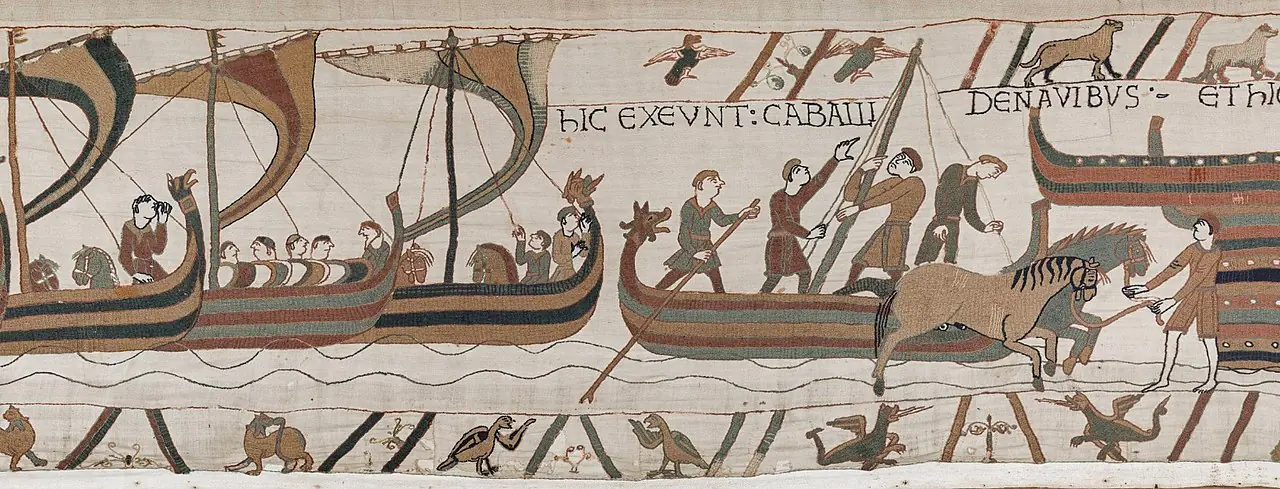
Romanesque art favors clarity, rhythm, and symbolic force. It is designed to communicate stories and doctrine across shared public spaces. From portal relief to long textile narrative, it organizes collective reading through repetition, scale shifts, and emphatic contour.
In 11th- and 12th-century Europe, churches, monasteries, and pilgrimage routes generated large visual programs for mixed audiences with uneven literacy. Romanesque form answers that condition directly: emphatic contour, sequential structure, and repeated motifs make narrative legible at scale.
What defines it
- Linear storytelling with bold outlines that keeps action readable from a distance.
- Rhythmic repetition of figures and motifs to support memory and narrative continuity.
- Hieratic scale and symbolic emphasis over naturalistic illusion.
- Integration of architecture, sculpture, and decorative cycles into one didactic system.
Techniques and innovations
- Monumental portals, capitals, and wall cycles designed for collective interpretation.
- Visual hierarchies that mark theological priority and moral turning points.
- Pattern systems that aid recall in ritual and teaching contexts.
- Portable and textile media that extend narrative beyond the church interior.
Narrative as infrastructure
Romanesque art is often described as "stylized," but the stronger term is "functional." Bodies bend, scale shifts, and spacing compresses because readability and rhetorical force matter more than optical realism. The aim is efficient transmission of story, doctrine, and authority across movement-heavy spaces.
The Bayeux Tapestry is a decisive example. It turns political history into a long visual sequence where borders, inscriptions, and recurring motifs guide interpretation. You do not consume it as one static image; you read it as processional narrative.
How to look at Romanesque works
First map site and function. Is the image on a portal, in an apse, in a cloister, or in a manuscript? Placement determines audience behavior. A tympanum over an entrance frames moral threshold; a manuscript page shapes intimate, repeated reading; a textile can travel and perform political memory in different settings.
Then compare Romanesque strategies with neighboring traditions. Visually, Romanesque narrative readability contrasts sharply with the contemplative density of Insular art, as seen in the Lindisfarne Carpet Page crafted by Insular Monastic Workshops. Historically, Romanesque art is the heir to Carolingian Art, which first attempted to revive monumental classical forms before Romanesque builders spread them across the continent. Romanesque is a hinge linking these early medieval experiments to the later Gothic systems, not a primitive prelude.
- Relate imagery to location: portal, apse, cloister, or page.
- Track repetition as a memory technology, not mere decoration.
- Read proportion shifts as theological hierarchy.
- Follow inscriptions and borders as narrative control devices.
Why Romanesque still matters
Romanesque art demonstrates that strong visual communication does not require strict realism. It requires structural priorities: legibility, sequencing, emphasis, and audience choreography. Those priorities remain relevant to contemporary editorial design, interfaces, and information graphics.
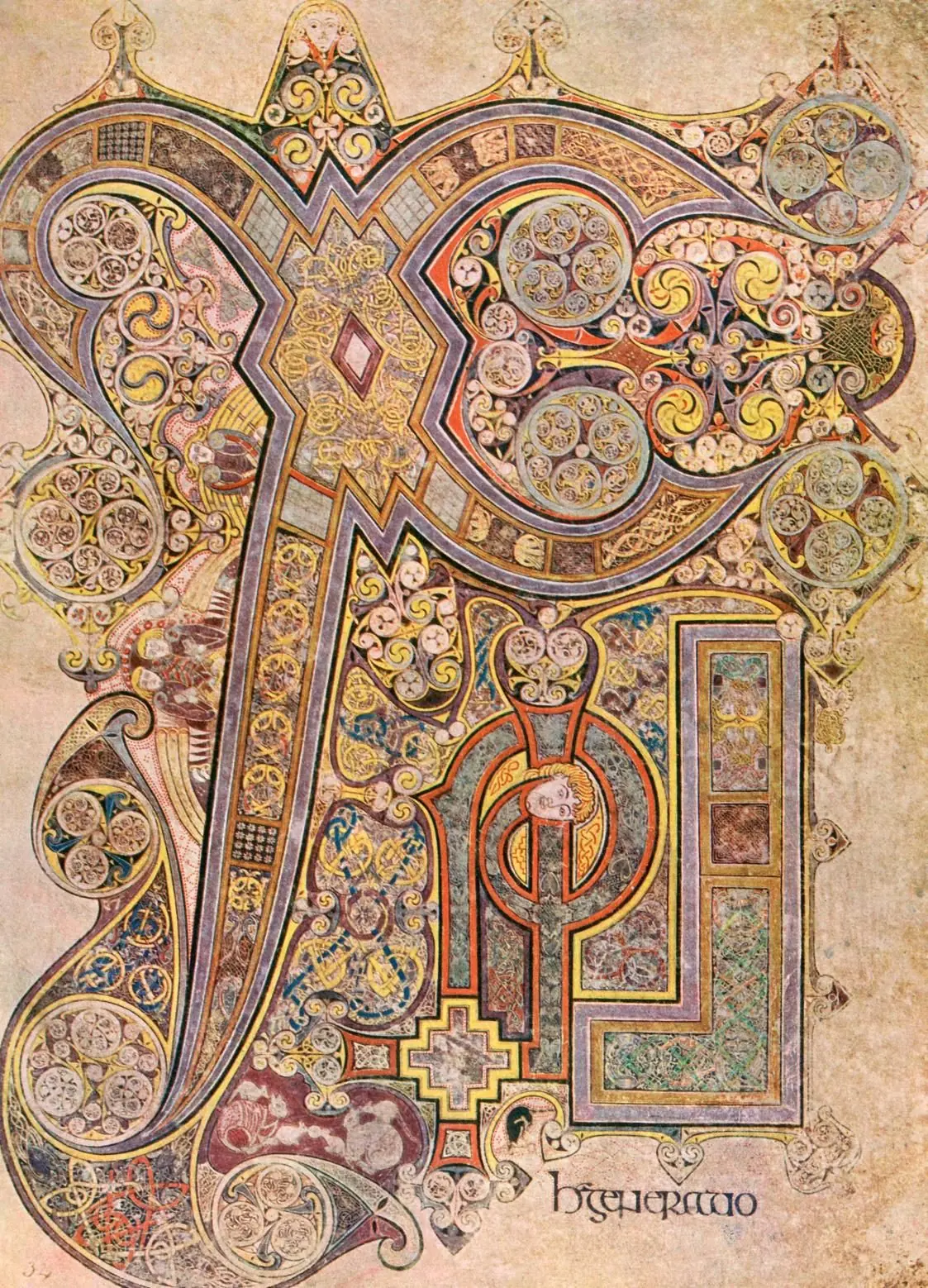
For Explainary, Romanesque pages also clarify continuity across media. By comparison, move from the Bayeux sequence to Book of Kells – Chi Rho Page, then to Early Renaissance: different technologies, same problem - how to make complex meaning durable and repeatable.
Pilgrimage networks and visual circulation
Romanesque art spread through routes, not isolated monuments. Pilgrimage traffic connected workshops, relic cults, and devotional economies across large distances. Motifs, compositional formulas, and theological themes moved with travelers, clerics, and copied manuscripts, producing recognizable visual families across regions.
Seen this way, Romanesque culture is both local and networked. A portal in one city could echo forms from another, while still addressing specific patrons and liturgical practices. The movement demonstrates how mobility and standardization can coexist in premodern image systems.
Romanesque analysis also improves when we treat audiences as active participants rather than passive recipients. Processions, sermons, chanting, and seasonal rituals changed how images were seen and remembered. The same carved form could carry different emphasis depending on feast day, local politics, or pilgrimage itinerary, which makes context indispensable.
Seen this way, Romanesque visual culture is an engineering of attention: where to look, what to remember, and how to connect image, doctrine, and place over time.
That analytical lens makes Romanesque art unexpectedly contemporary for anyone interested in visual systems and public pedagogy.
Key artists
Key works in Explainary
Continue with the art quiz to validate recognition, context, and comparison.