
Baroque Artist
Artemisia Gentileschi
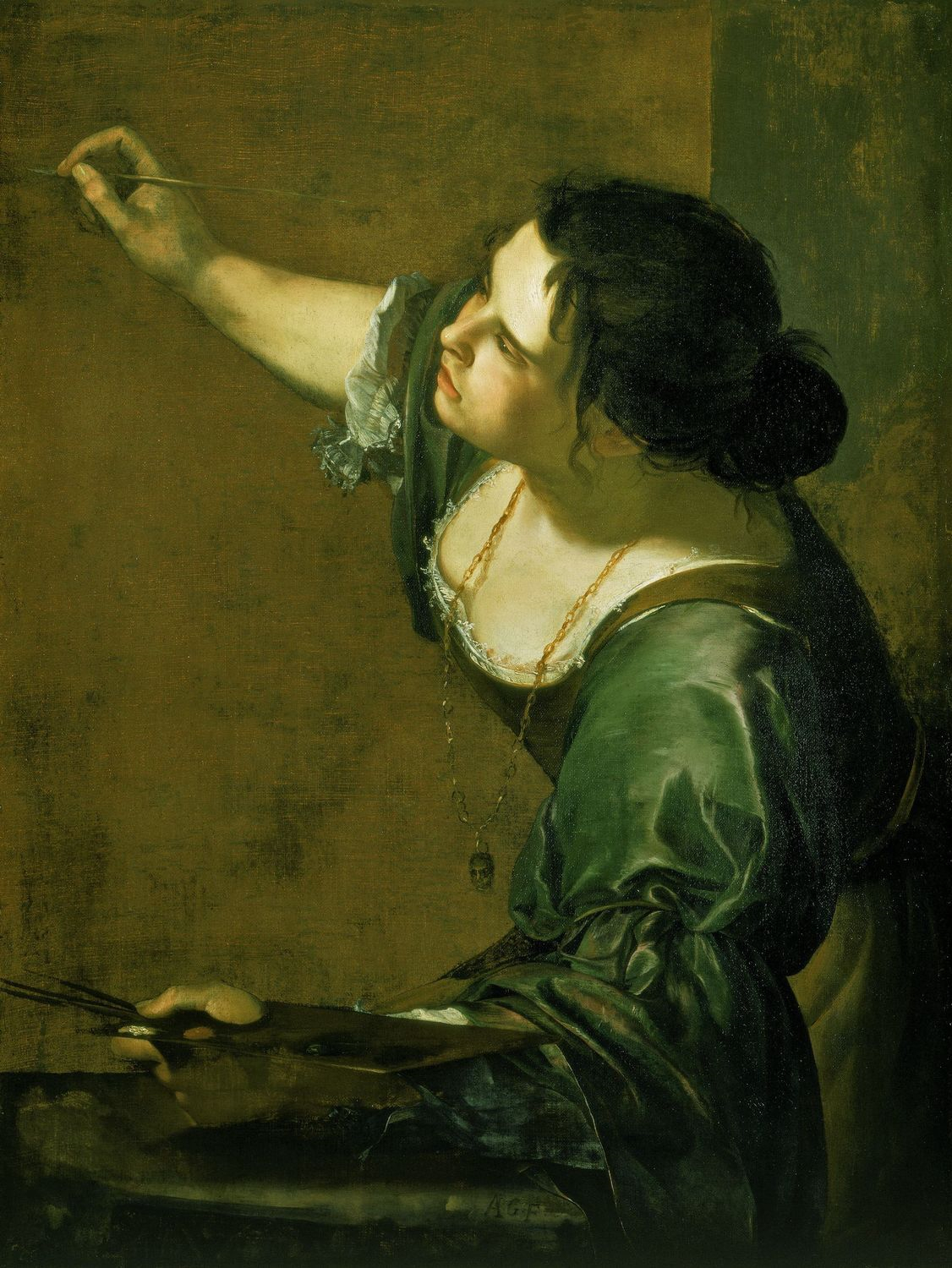
Calling Artemisia Gentileschi only a "woman painter" is too small. She is one of the toughest painters in the Baroque tradition: clearer than many of her peers, more physical than most of them, and unusually good at making action feel both legible and irreversible. In her best works, paint does not decorate drama. It builds pressure.
History painting was the point, not a side effect
Born in Rome in 1593, Artemisia trained first in the orbit of her father Orazio Gentileschi, but her career matters because she moved decisively beyond dependence and entered the most ambitious category of painting: history painting. That field carried the highest prestige in early modern Europe, which is precisely why Artemisia's success inside it still matters. She did not settle for portraiture or small devotional work because those were thought more suitable. She claimed the hardest arena directly.
That claim was professional as well as pictorial. Artemisia worked across Rome, Florence, Venice, Naples, and later London. She dealt with courts, patrons, academies, and workshop systems that were not designed to welcome women as equals. The important point is not to treat her as a miraculous exception floating above those limits. It is to see how consistently she answered them with technical command, large-scale ambition, and a refusal of decorative softness.
Do not reduce the work to biography
Artemisia's life has often been read through the trauma of rape and trial, and that history is real and unavoidable. But stopping there weakens the art. It encourages viewers to treat every violent painting as direct confession. Her work asks for a harder standard. It should be read through composition, pressure, timing, and the inherited language of seventeenth-century painting, not just through retrospective psychology.
That stronger standard makes Artemisia more impressive, not less. She took a Caravaggesque language of close range, hard light, and abrupt action, then made it her own. Where Caravaggio often stages revelation or confrontation, Artemisia is especially good at staging sustained force: bodies holding, pushing, cutting, bracing, and refusing release.
The clearest case on Explainary
On Explainary, the best entry point is Judith Beheading Holofernes (Uffizi version). The painting makes Artemisia's method visible at once. Judith and Abra do not symbolize courage from a distance. They work together. Arms lock, weight shifts forward, the bed turns into a work surface, and blood confirms that this is an action already underway rather than an idea about action.
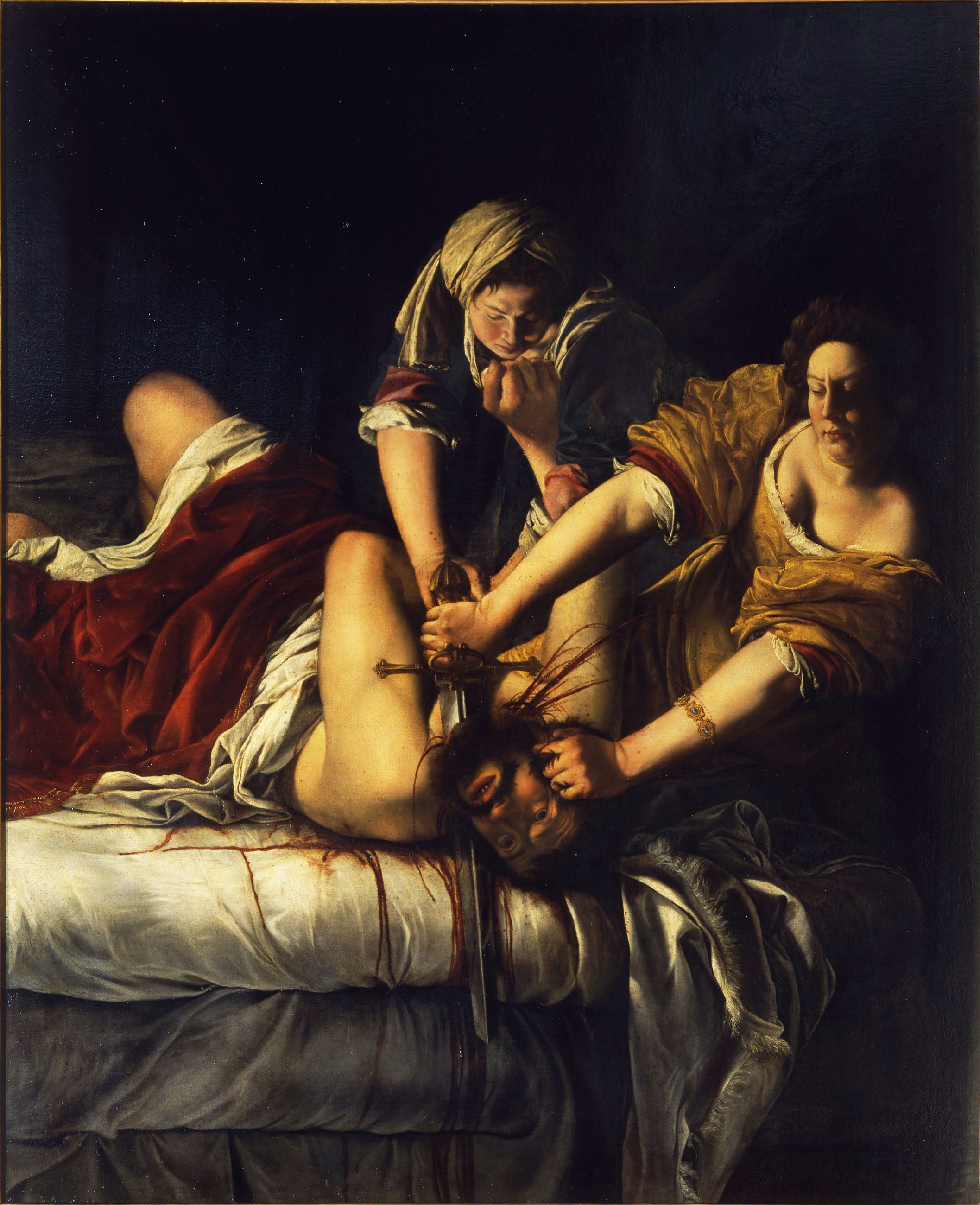
That painting is useful because it blocks two lazy readings at once. It blocks the idea that Baroque art is only decorative spectacle, and it blocks the idea that Artemisia's originality is merely sociological. Her real strength is formal. She knows how to place the viewer so that the scene reads immediately without becoming simple.
Personal identification matters here too. The point is not to claim that Judith is a disguised self-portrait. It is to notice how strongly Artemisia seems invested in Judith as an acting subject: a woman who occupies the center, directs force, and refuses ornamental passivity. That alignment helps explain why the painting feels claimed from within rather than merely observed from outside.
Women in action, not women as ornament
Artemisia repeatedly paints women as agents. That does not mean she paints manifestos in modern language. It means she redistributes energy inside scenes that earlier painters often arranged around passive beauty or delayed reaction. Judith acts. Susanna thinks and resists. Lucretia becomes an image of moral and bodily tension rather than polished vulnerability. The change is visible in posture, muscle, gaze, and timing before it becomes thematic.
That is why her paintings keep rewarding close reading. They do not merely substitute female protagonists into old formulas. They alter the formulas from inside. Bodies carry more weight, action has more resistance, and the emotional stakes are clarified through work rather than through idealized display.
Self-portrait as professional argument
Her Self-Portrait as the Allegory of Painting matters because it is more than likeness. Artemisia identifies herself with Pittura, the personification of painting itself. That move is bold and strategic. She is not just saying "I paint." She is claiming the authority to stand for painting as an intellectual and manual practice. Few artist self-portraits make the professional argument so directly.
Taken together, the self-portrait and the Judith images show the same ambition from two sides. One declares authorship openly; the other proves it through execution. The result is a career that reads less like an exception to Baroque painting than like one of its sharpest internal tests.
Legacy, influence, and rediscovery
Artemisia's legacy did not travel in a straight line. She was admired in her own lifetime, then often reduced, misattributed, or treated as a secondary figure inside narratives built around male masters. That posthumous distortion matters because it shows how easily influence can disappear from the story even when the paintings remain unmistakably strong.
Her influence is clearer now because museums and scholars no longer approach her as a corrective footnote. They treat her as a major Baroque painter whose work changes how we read agency, pressure, and authorship inside history painting. That restored legacy is not charity. It is a better account of seventeenth-century art.
Reading paths from Artemisia
A strong route is to start with Judith Beheading Holofernes, then move to Baroque, then compare Artemisia's pressure to Caravaggio in The Calling of Saint Matthew. Then try the art quiz.