
Baroque
Judith Beheading Holofernes (Uffizi version)
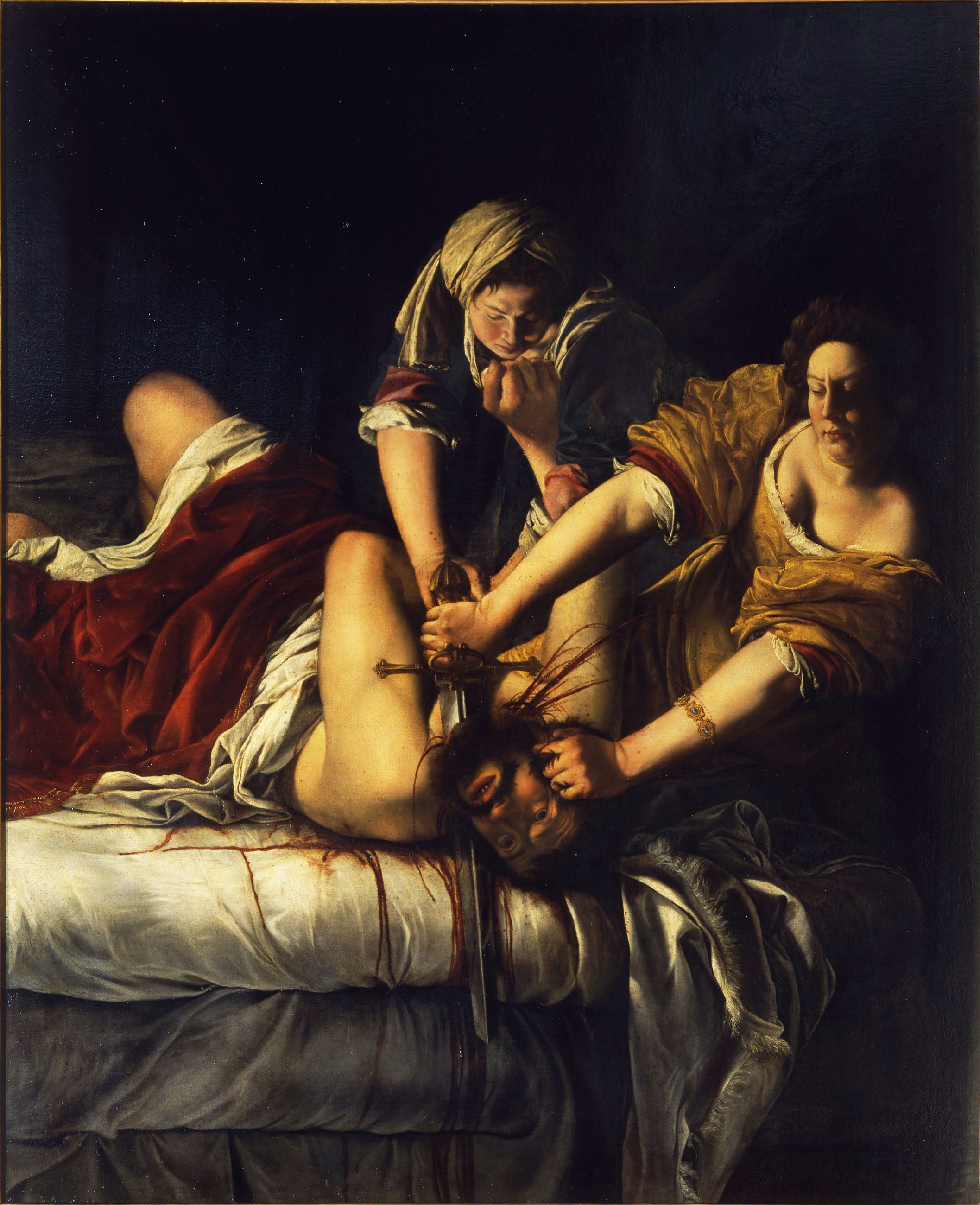
Artemisia Gentileschi painted Judith more than once, and the Uffizi version is the one that makes the killing feel most organized, physical, and inescapable. This is not a biblical illustration that politely reports violence from a distance. Judith leans in, Abra locks the body down, the sword enters, and blood runs across the sheets in thick red lines. The painting belongs fully to the logic of Baroque art, but it does something many Baroque images do not: it makes force look like work.
One subject, more than one Artemisia version
It matters to say at the start that this is one version among several. Artemisia returned more than once to the story of Judith and Holofernes, and those repetitions are not minor workshop variants. They let her test how far the same biblical episode could be pushed through changes in scale, proximity, and bodily pressure. Explainary focuses here on the Uffizi canvas because it is the version most likely to be confused with its neighbors while also being one of the clearest statements of her mature Baroque force.
That clarification changes the way you read the painting. You are not looking at a single iconic image floating free of its own history. You are looking at one solution inside a recurring Artemisia problem: how to make Judith's act feel decisive without turning it into melodrama or decorative horror.
What the Uffizi painting actually shows
The scene is brutally simple. Judith and her maid Abra pin Holofernes to the bed while the beheading is already underway. The general is awake, resisting, and too late. His body twists outward, one arm flings across the mattress, and the white sheets record the violence more clearly than any symbolic backdrop could. There is no narrative delay, no before-and-after sequence, and no ornamental relief. Artemisia chooses the worst possible second and keeps you there.
That decision is central to the work's force. Many artists preferred to show Judith either just before the strike or triumphantly after it, when the scene could still be made elegant. Artemisia paints the act itself. The result is not simply more shocking. It is more committed to the idea that history painting can carry weight through exact physical timing.
Violence as coordinated labor
The painting becomes clearer once you stop reading it as "Judith versus Holofernes" and start reading it as a problem of coordination. Judith is not isolated heroine and Abra is not passive witness. One woman grips, the other cuts. Sleeves are rolled, arms are braced, bodies lean with purpose. The composition is built around that collaboration, which is why the image feels so controlled despite the subject matter.
This is where Artemisia changes the story's temperature. The point is not simply that women occupy the center. It is that they occupy it with competence. Judith is neither dreamy nor ornamental. Abra is neither comic nor incidental. Together they turn the biblical episode into a study of planned action under pressure.
From Caravaggio's light to Artemisia's force
Caravaggio is unavoidable here, not because Artemisia merely repeats him, but because she takes a Caravaggesque language of close range, hard light, and dramatic timing and drives it somewhere tougher. In The Calling of Saint Matthew, light interrupts an ordinary room and converts it into moral theater. In Artemisia's Judith, light no longer announces a call. It reveals contact, resistance, and bodily effort.
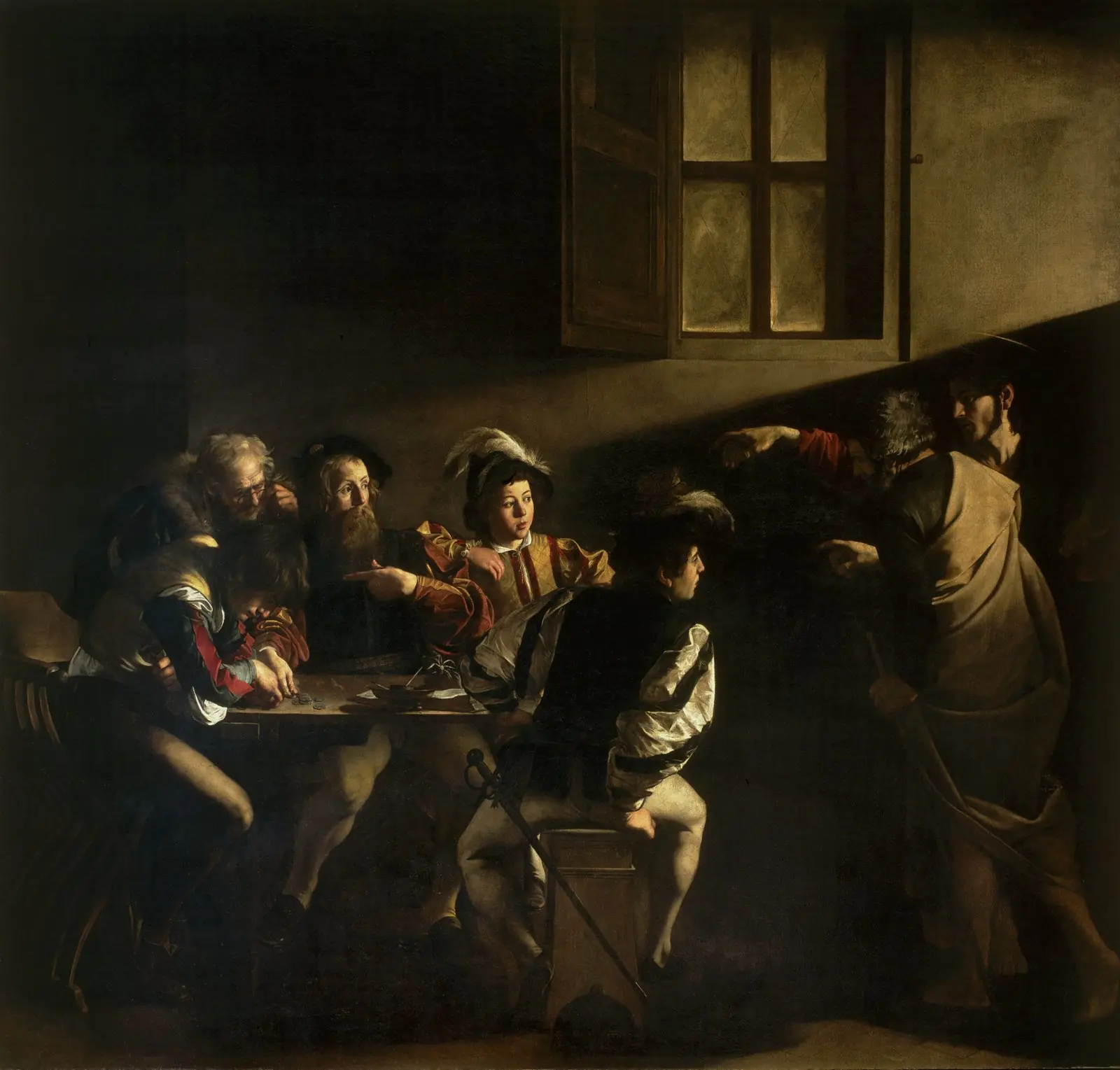
That difference matters because it keeps Artemisia from being reduced to biography or revenge myth. Her painting is intelligent at the level of form. The lighting isolates what matters, the bed functions like a stage and a trap at once, and the compressed space prevents any graceful escape route for the eye. Baroque immediacy remains, but the emotional register changes from revelation to execution.
Why the maid matters as much as Judith
One of the most radical features of the painting is the maid's role. In many Judith images, the servant is old, frightened, or secondary. Here she is an active accomplice who helps make the event possible. That shift changes the scene's politics. Artemisia does not give us a solitary exceptional heroine rising above her sex. She gives us female cooperation under extreme pressure.
That is one reason the painting has stayed so historically active. Modern viewers often come to it through feminist art history, and for good reason, but the work earns that reading through its structure rather than through slogans. The power comes from how the bodies are arranged, how labor is distributed, and how little room the image leaves for decorative distance.
Personal identification without turning the painting into confession
The question of personal identification belongs here too. It is hard to look at this Judith and feel that Artemisia stands outside the action in a neutral way. She gives Judith an unusual degree of seriousness, concentration, and authority from within the image. The viewpoint seems aligned with the women carrying the act through, not with an external spectator judging them from safety.
That does not mean the painting should be flattened into coded autobiography or treated as a disguised self-portrait. A better claim is narrower and stronger: Artemisia appears deeply invested in Judith as a figure of action. She identifies with a woman who occupies the center, applies force, and refuses ornamental passivity. That personal alignment sharpens the painting's formal intelligence rather than replacing it.
A Baroque painting that refuses distance
What finally makes the Uffizi Judith so memorable is not just blood or scandal. It is the refusal of safe spectatorship. You are kept close to the mattress, close to the hands, close to the moment when the scene is still unresolved but already irreversible. That is why the painting belongs so naturally beside major Baroque works on Explainary. It uses compression, directed light, and theatrical timing, but it directs those resources toward an unusually hard image of action.
Seen that way, Judith Beheading Holofernes is not a sensational outlier. It is one of the strongest proofs that Baroque painting could be physically convincing, formally disciplined, and intellectually sharp at the same time.
Related works
Test yourself with the quiz
Then try the art quiz.
Primary sources
Frequently asked questions
Artemisia Gentileschi painted more than one major Judith beheading scene. This page focuses on the Uffizi version so the reader knows exactly which composition, date range, and museum context are being discussed.
Look first at the triangle formed by Judith's arms, Abra's grip, and Holofernes's neck. That coordinated structure explains why the scene feels organized rather than chaotic.
Many readers think so, and the painting clearly invites that question. The important point is not to claim a literal self-portrait, but to notice how strongly Artemisia aligns the image with Judith's concentration, authority, and right to act.