
Artist Analysis
Caravaggio
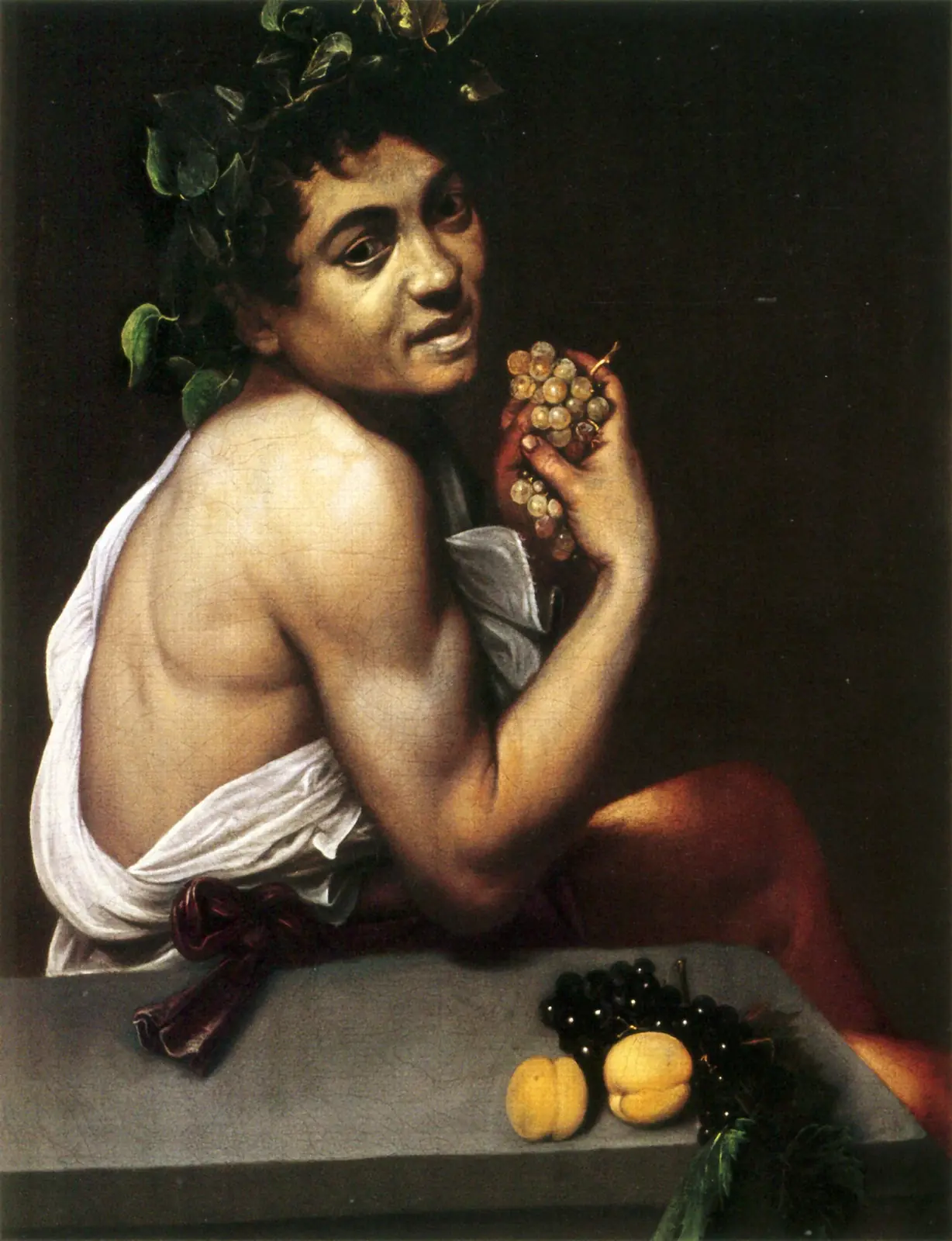
Caravaggio turns light into judgment. In works such as The Calling of Saint Matthew, illumination is not atmosphere but argument: it isolates decision, compresses time, and places the viewer inside the moral stakes of the scene. As a result, sacred narrative becomes immediate public theater.
Counter-Reformation Rome and the demand for persuasive images
Born in 1571 and active mainly in Rome, Naples, Malta, and Sicily, Caravaggio worked in the decades after the Council of Trent, when Catholic patrons wanted images that were clear, emotionally direct, and persuasive. He met that demand with unusual force. His commissions for chapels and elite collectors show an artist who understood not only paint, but audience psychology: where a viewer stands, what they notice first, and how quickly a narrative must become legible.
His biography is famously turbulent—duels, legal trouble, exile—but the core point is methodological. Caravaggio did not invent drama by accident. He built it through repeatable choices: compressed space, hard light, ordinary faces, and decisive gesture. Therefore the same structural grammar appears across very different subjects, from conversion stories to martyrdom scenes.
Light as verdict, realism as strategy
The cliché is "chiaroscuro," but that term is only the entry point. In Caravaggio, light is not atmospheric; it is juridical. It isolates a moral hinge in the scene and turns time into a before/after split. Darkness is not empty backdrop either. It withholds context so the selected action hits harder, faster, and with less interpretive noise.
His realism works the same way. Dirt under fingernails, worn cloth, wrinkled skin, and tired hands are not documentary decoration. They collapse social and theological distance. The sacred enters the contemporary world without costume drama. That collapse is precisely what made his paintings controversial and unforgettable.
A transferable toolkit across Europe
Caravaggio changed European painting at three levels. First, he reset narrative clarity: complex religious episodes could be condensed into one high-stakes instant. Second, he made light a compositional engine rather than a finishing effect. Third, he legitimized a tougher realism that later artists could adapt for court portraiture, civic history, and genre scenes far outside church commissions.
The diffusion was rapid. Caravaggisti across Italy, Spain, the Dutch Republic, and France absorbed parts of his method. Some borrowed tonal violence, some borrowed figure proximity, others borrowed the moral theater of illumination. His influence on Rembrandt, Velazquez, and later realism is not a straight line, but a durable toolkit.
The Calling of Saint Matthew as decisive-time painting
Start with The Calling of Saint Matthew. Do not begin with iconography; begin with vectors. Where does the light enter? Which hand or face does it authorize? Which figures remain in uncertainty? Once the geometry of attention is clear, then decode the story.
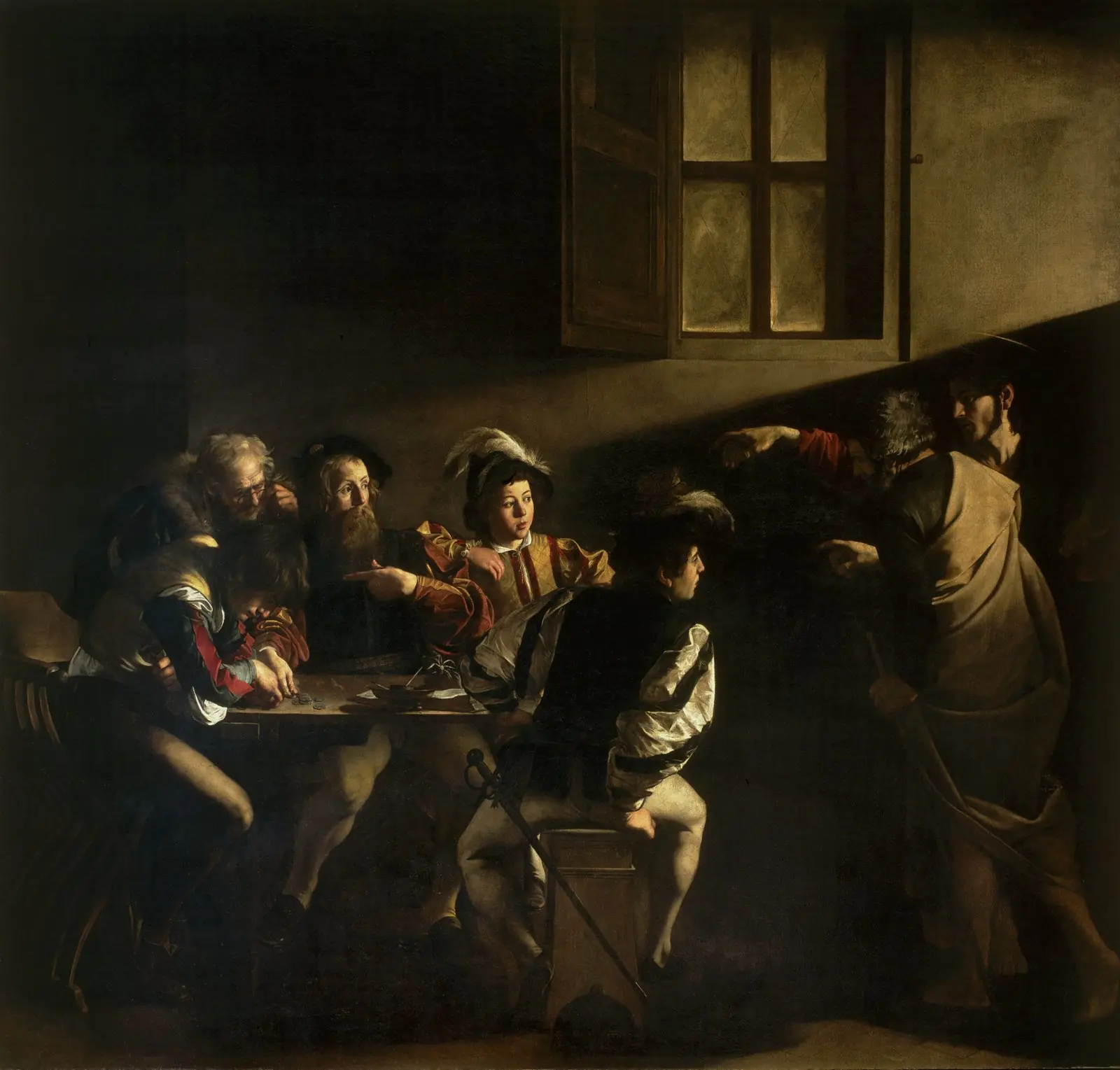
Next, examine distance. Caravaggio pushes figures toward the picture plane so viewers feel physically implicated. This is why the paintings can seem "cinematic" before cinema: they stage proximity, interruption, and consequential timing. Finally, compare with The Night Watch and Las Meninas to see how his solutions are transformed in different political and institutional settings.
A useful sequence is to treat light as narrative editing, gesture as decision, and realism as theological-social strategy; this keeps analysis structural instead of anecdotal.
Commissions, conflict, and control
Caravaggio's strongest works are contracts between patron demand and artistic control. Chapel programs required doctrinal legibility, but he retained formal autonomy by deciding where vision would concentrate and where it would fail. In other words, he accepted imposed subjects while controlling the epistemology of looking.
That tension explains his durability in 2026. We still recognize the core problem: institutions want clarity, artists want complexity, viewers want impact. Caravaggio's answer remains instructive—strip noise, intensify stakes, and let form carry argument. In turn, that model feeds later Realism and artists such as Manet.
One useful final comparison is with contemporary visual media. Caravaggio prefigures modern editing logic: isolate a decisive moment, tighten framing, and force the viewer into ethical proximity. His canvases are old, but his attention strategy is unmistakably current.
Key works in Explainary
Associated movements
For the broader shift that makes Caravaggio's violence of attention so legible, read Renaissance vs Baroque: What's the Difference in Art?. The essay places his dark rooms and hard light against Raphael's stable order and older Renaissance clarity.
Now test recall with the art quiz: can you recognize Caravaggio from visual cues in works like The Calling of Saint Matthew?