
Movement Guide
Baroque
Baroque begins when images stop asking for calm admiration and start engineering response. Light isolates, diagonals shove, ceilings break open, and the spectator no longer stands safely outside the scene. A Baroque image does not merely show a subject. It stages how you are meant to feel revelation, authority, danger, or wonder.
Baroque is not just ornament or excess. In the seventeenth century, churches, courts, and cities all need images that do work. Rome wants persuasive clarity after the Reformation, monarchies want visible power, and civic republics want collective presence. Across those different settings, Baroque art develops a common ambition: to turn looking into an event.
Baroque closes the distance between event and spectator
If Renaissance art often assumes a composed observer standing before a balanced world, and Mannerism already stretches that balance into stylized tension, Baroque art pushes the event toward the viewer. Diagonals replace stable symmetry, light carves the scene into zones of urgency, and space feels compressed or unstable. The spectator is no longer only a judge of form. The spectator becomes witness, believer, courtier, or participant.
This does not produce one uniform house style. Rome, Madrid, Amsterdam, and Naples ask different things from images. What unites them is a shared wager: painting, sculpture, and architecture can guide belief and emotion by controlling where the eye goes, when revelation happens, and how the body is made to imagine its own place in the scene.
Caravaggio brings revelation down to table height
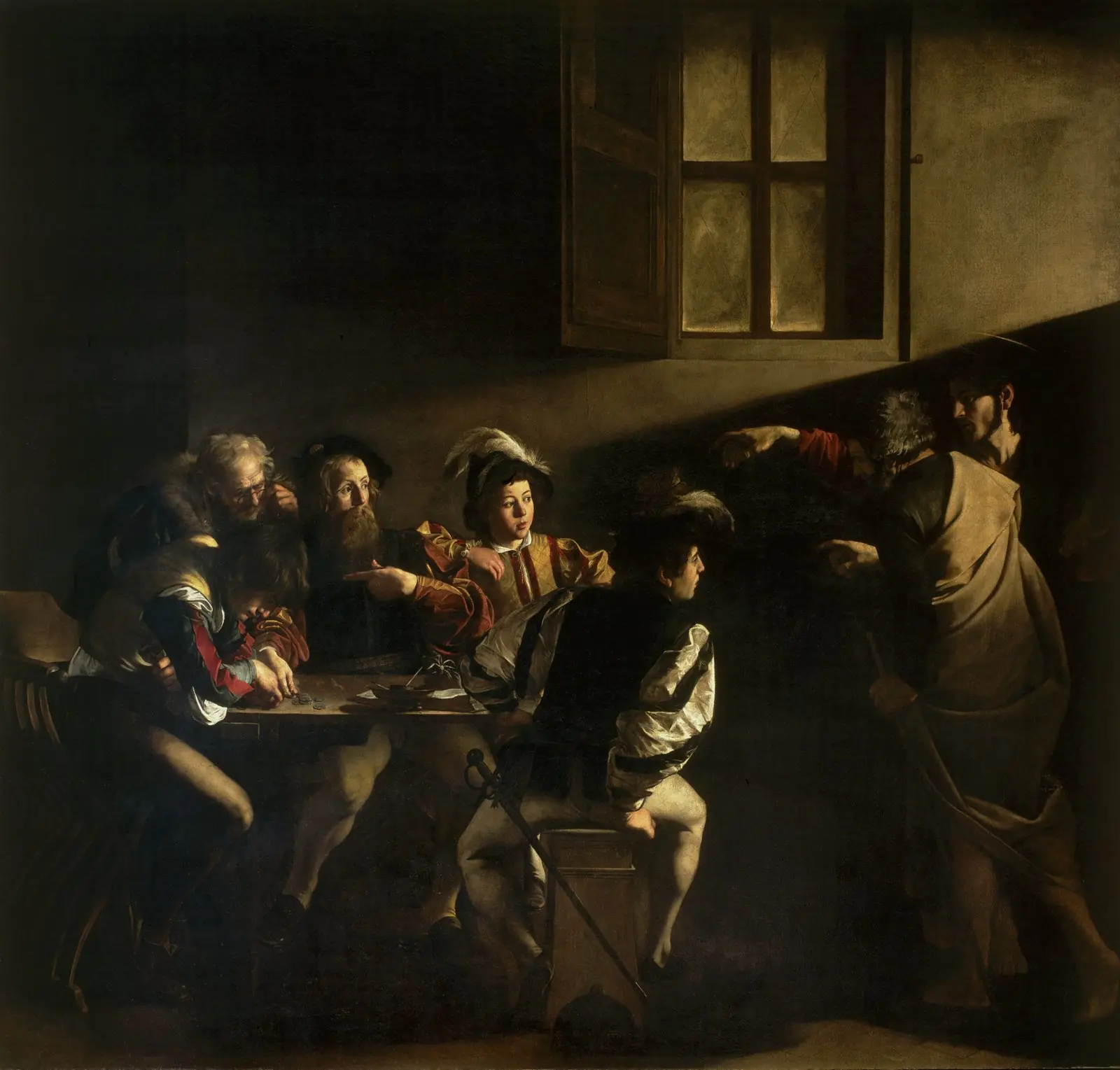
With Caravaggio, the movement becomes immediately legible. In The Calling of Saint Matthew, sacred history does not unfold at an ideal distance. It interrupts ordinary life. Christ enters from the side, the beam cuts through the room, and one uncertain gesture turns a tavern-like interior into a moral crossroads.
That solution matters in Counter-Reformation Rome, where religious images are expected to be legible, immediate, and emotionally direct. Caravaggio answers that demand without flattening the scene. The painting hits quickly, but it does not close interpretation. That balance between instant force and lasting ambiguity becomes one of Baroque art's defining strengths.
Artemisia turns Baroque drama into bodily force
Artemisia Gentileschi shows that Baroque persuasion is not limited to revelation or devotional shock. In Judith Beheading Holofernes (Uffizi version), the scene is organized as coordinated labor. Judith and Abra hold, push, and cut. The bed becomes a work surface, the blood confirms that the action is already underway, and the viewer is kept uncomfortably close to the mechanics of force.
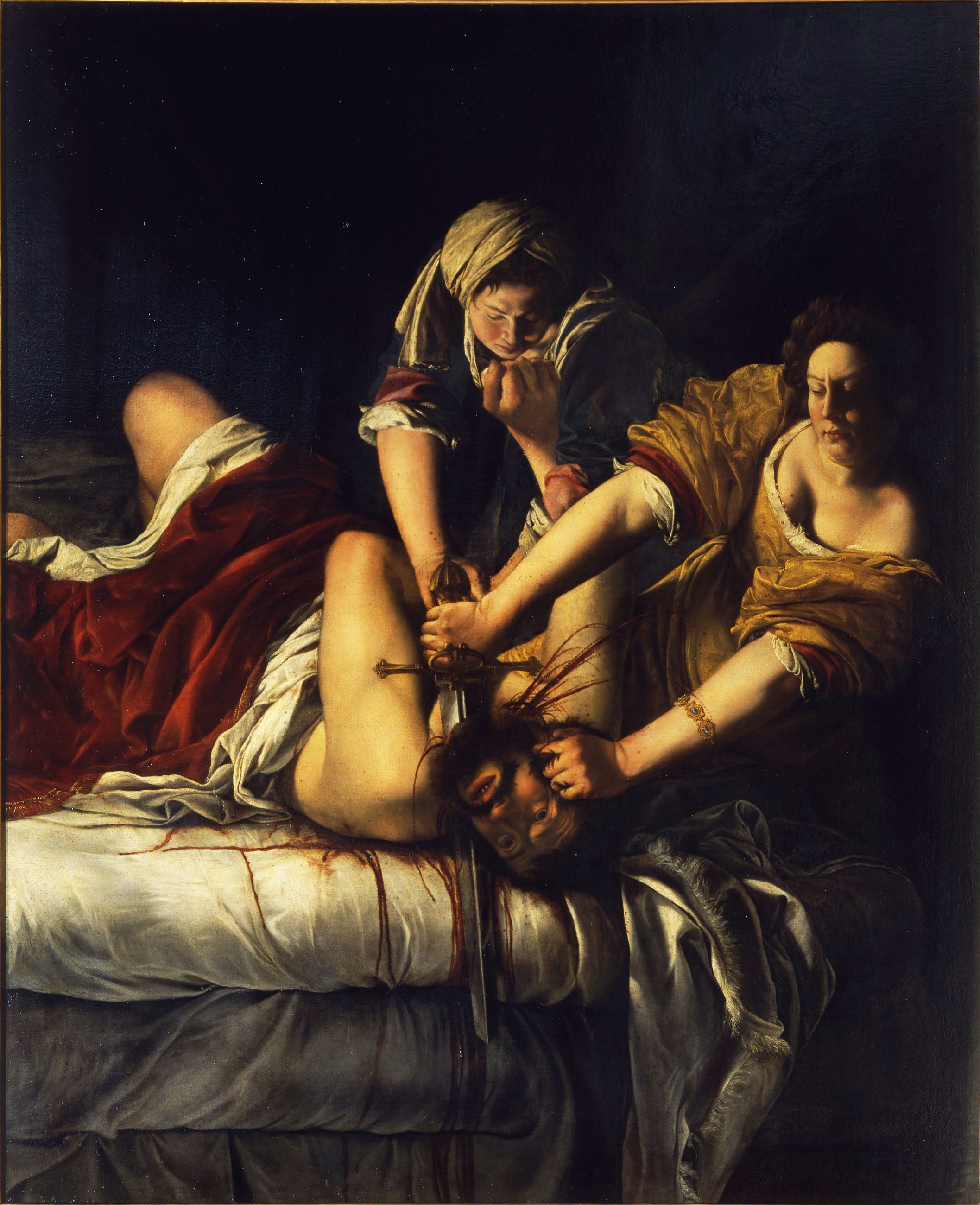
Artemisia gives Baroque drama the force of identification, not spectacle alone. She seems aligned with Judith's authority rather than neutrally observing her from outside. Compressed space, directed light, and theatrical timing produce a harder image of agency.
Rubens makes Baroque movement monumental
Peter Paul Rubens proves that Baroque art does not have to choose between grandeur and readability. In The Descent from the Cross (Antwerp triptych), the scene is large, public, and immediately legible. Christ's body comes down through a bright white shroud, several figures share the work of lowering and receiving it, and the whole altarpiece turns doctrine into controlled collective motion.
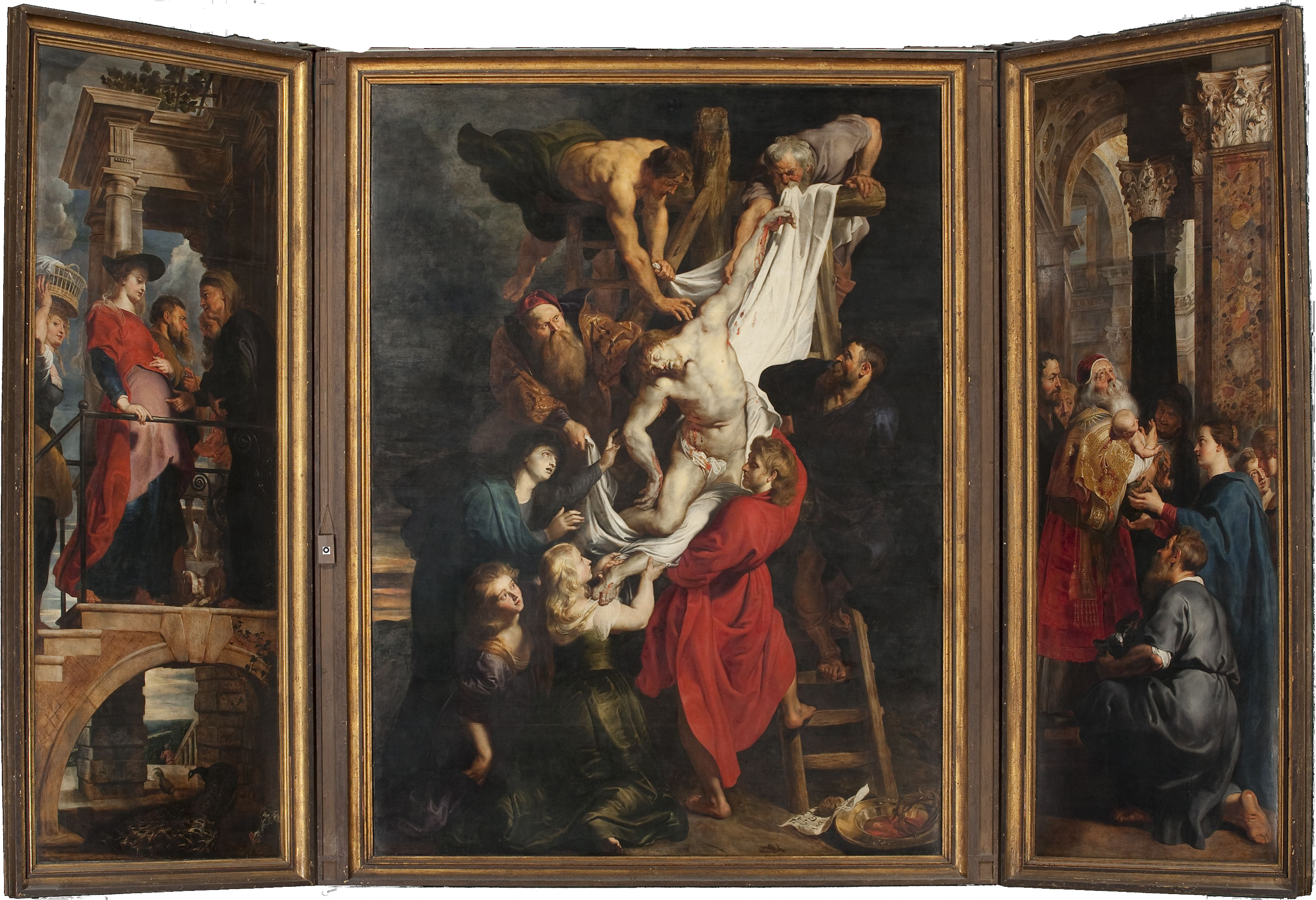
Rubens widens the definition of the movement. Baroque is not only revelation in a dark room or violence at close range. In Antwerp, it becomes an altarpiece that can carry across a cathedral while staying physically convincing. Rubens keeps diagonals, emotional immediacy, and spectator involvement, but distributes them over a much larger field.
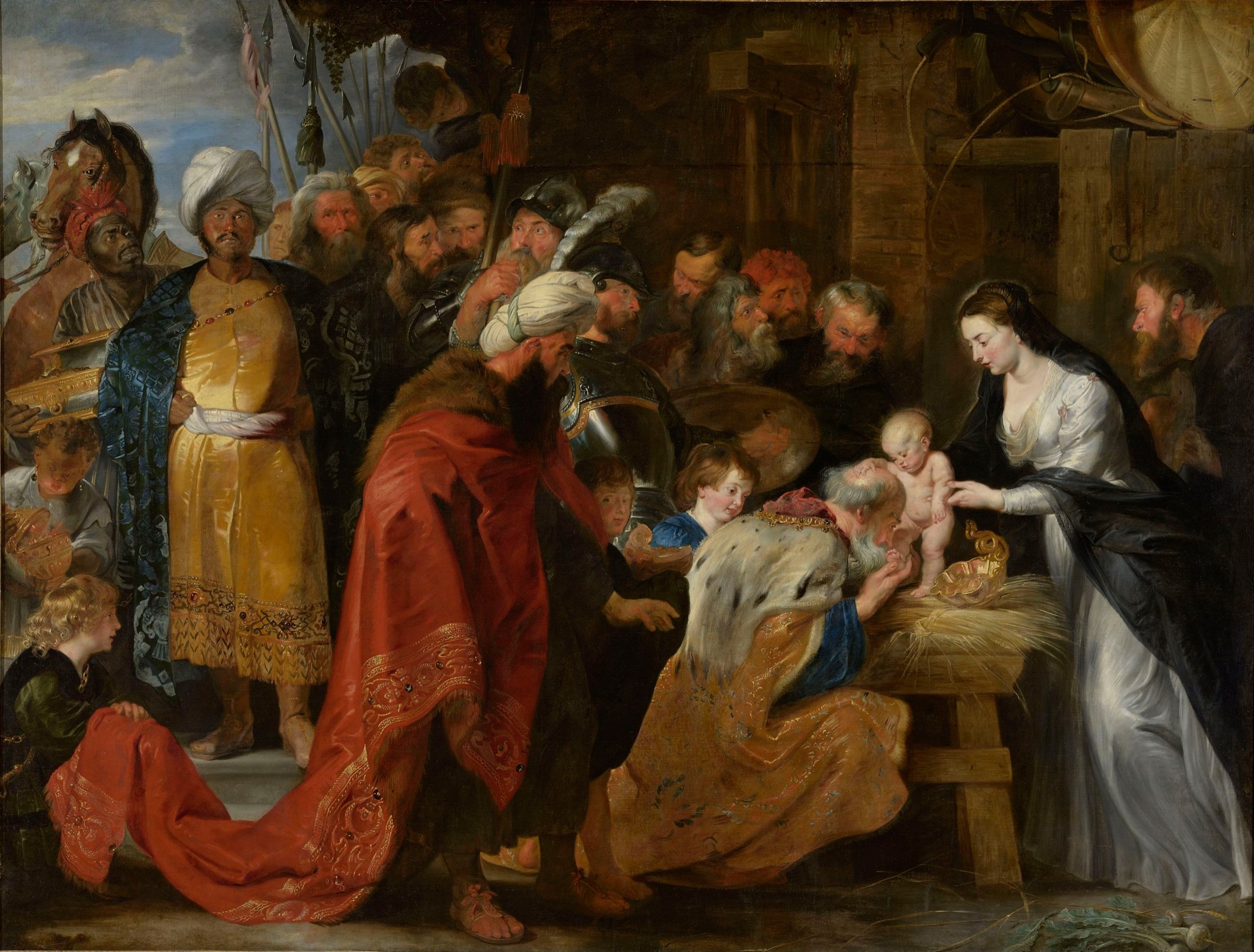
The Lyon Adoration of the Magi shows Rubens's scale outside an altarpiece. In a horizontal format, he organizes gifts, servants, soldiers, fabric, animals, and crowd around the contact between the Christ Child and the kneeling king. Baroque persuasion is not only descent and grief; it can also be arrival, recognition, and abundance made readable.
Poussin proves Baroque can also be classical
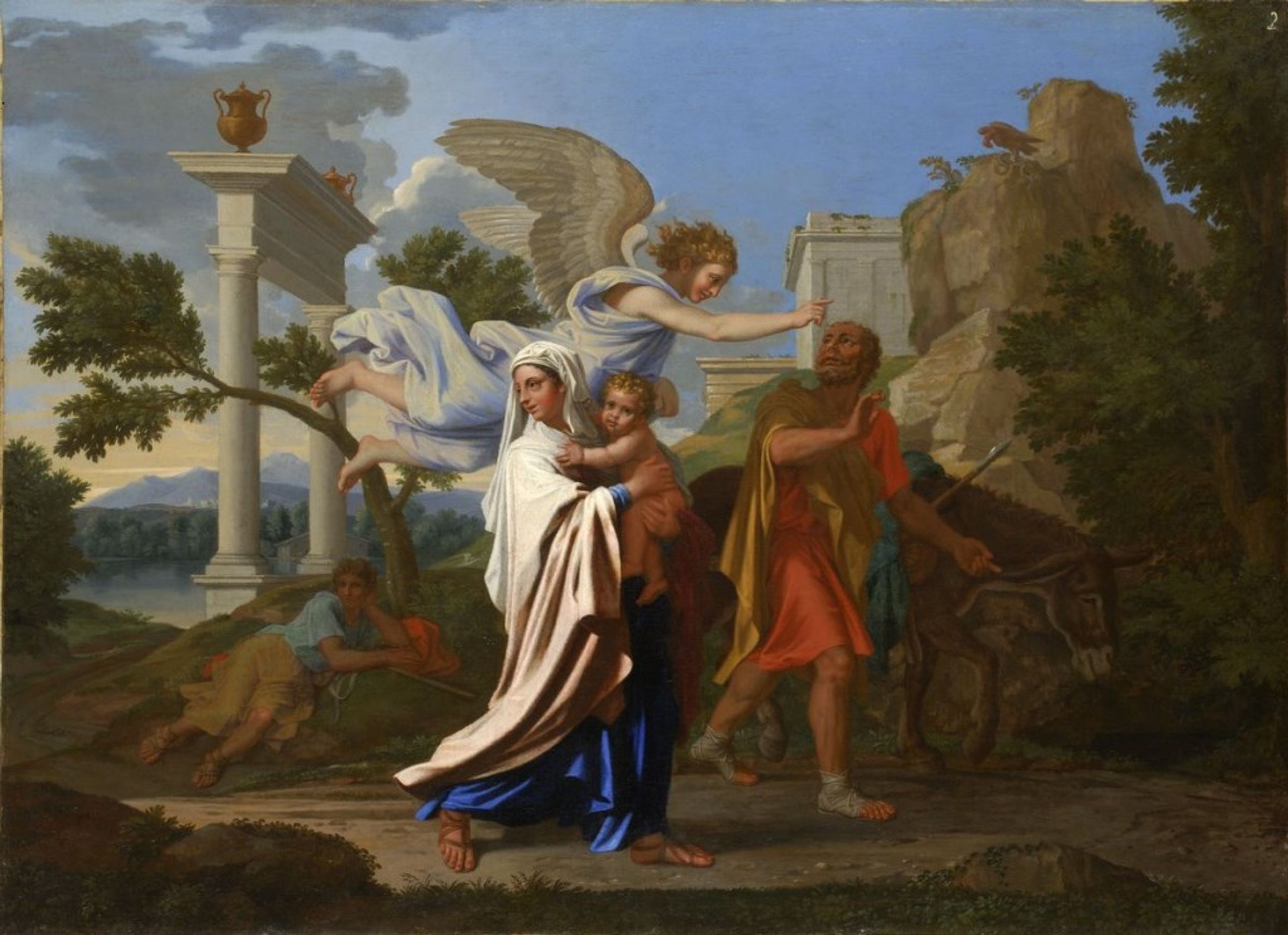
Nicolas Poussin belongs fully to the seventeenth century without sharing Caravaggio's darkness or Rubens's expansion. In The Flight into Egypt, biblical danger is held inside clear direction, antique memory, and measured landscape. This classical branch of Baroque slows attention without weakening it.
Velazquez makes power persuasive by making it unstable
At court, the movement changes register. Diego Velazquez does not ask for Caravaggio's sudden conversion. In Las Meninas, he turns spectatorship itself into the subject. Rank, reflection, paint handling, and point of view are fused into one system, so the viewer is never fully sure where authority sits or from where the image is being organized.
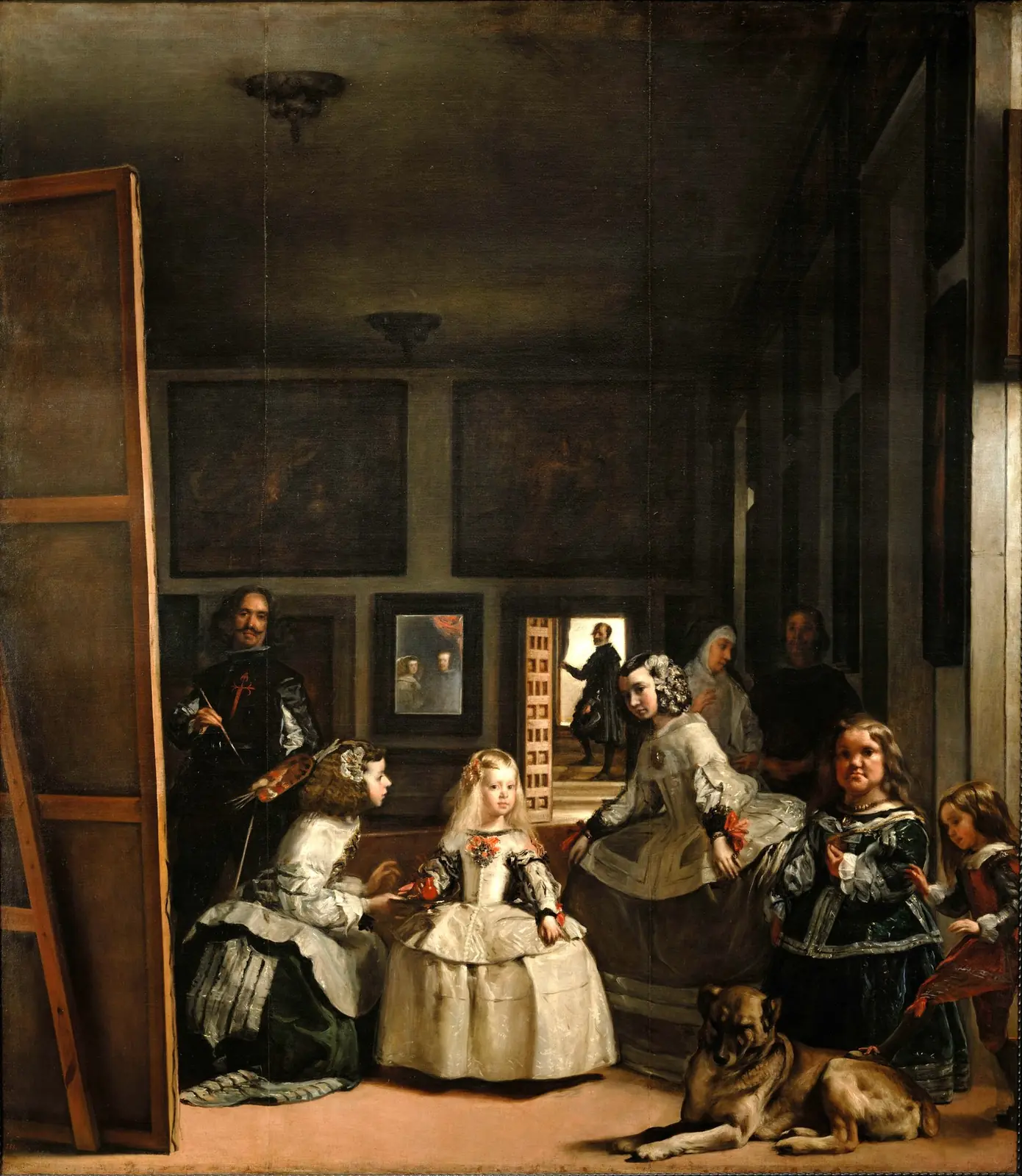
Baroque should not be confused with one emotional tone. Roman urgency, court intelligence, and staged uncertainty all belong to the same larger logic. Velazquez shows that an image can dominate not only by overwhelming the eye, but by making the eye work inside a hierarchy it cannot quite master.
Rembrandt gives civic life Baroque momentum
The Dutch case blocks any simple equation between Baroque and Catholic spectacle. In the Dutch Republic, the movement overlaps with the public culture of the Dutch Golden Age. Militias, merchants, and urban institutions need images that make collective identity visible without relying on court ritual or Counter-Reformation devotion.
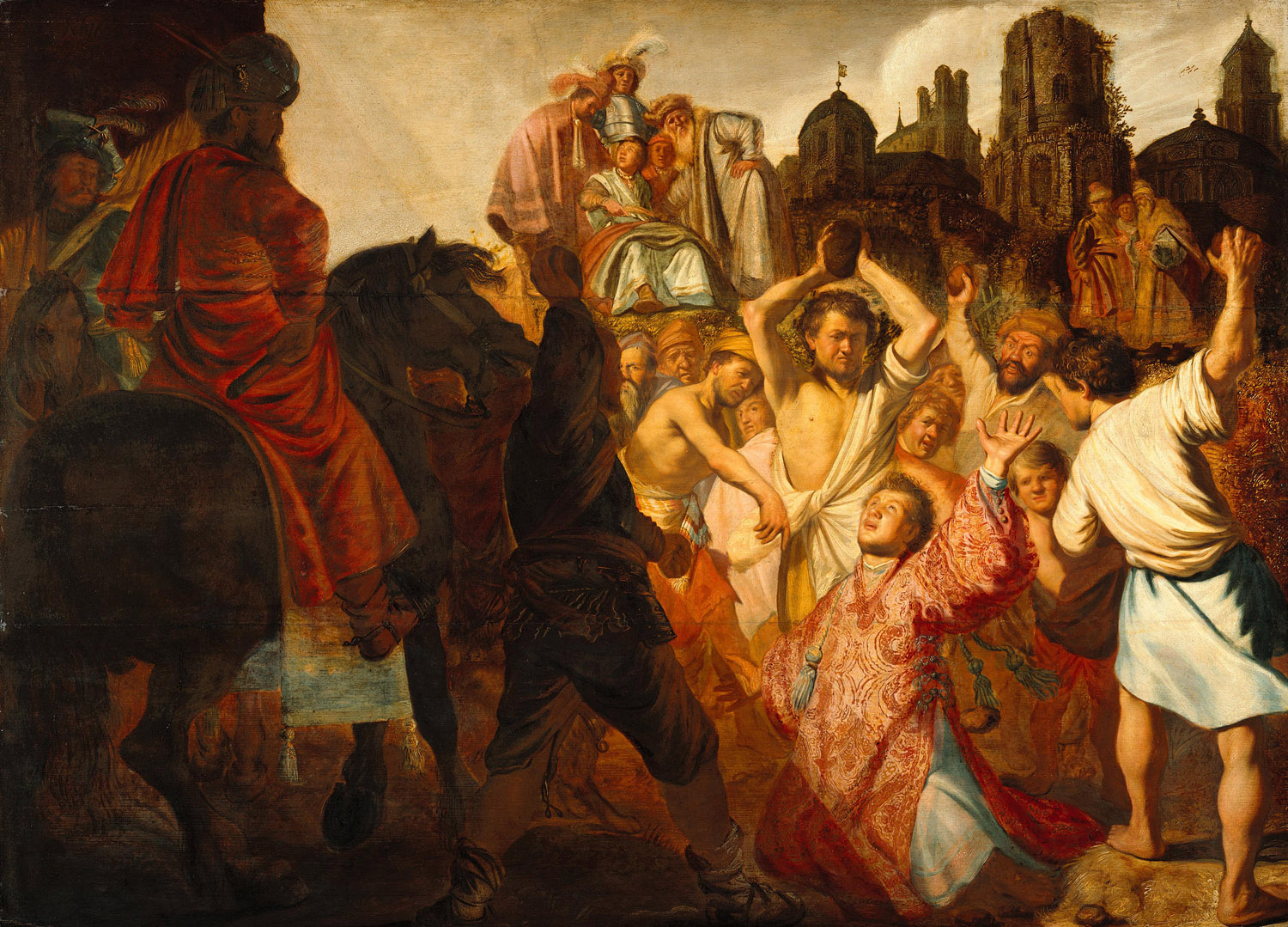
Rembrandt's Baroque pressure begins before the great civic commissions. In The Stoning of Saint Stephen, painted in 1625 and now in the Musée des Beaux-Arts de Lyon, the young painter splits martyrdom with a severe beam of light. The crowd is violent, the saint is calm, and the spectator is forced into the position of witness.
Rembrandt van Rijn answers that problem in The Night Watch by turning a group portrait into an event. Light does not simply describe faces. It activates a chain of action, pulling one captain forward, scattering attention across weapons, drum, gesture, and shadow, and making the company feel caught mid-motion rather than arranged for static inspection.
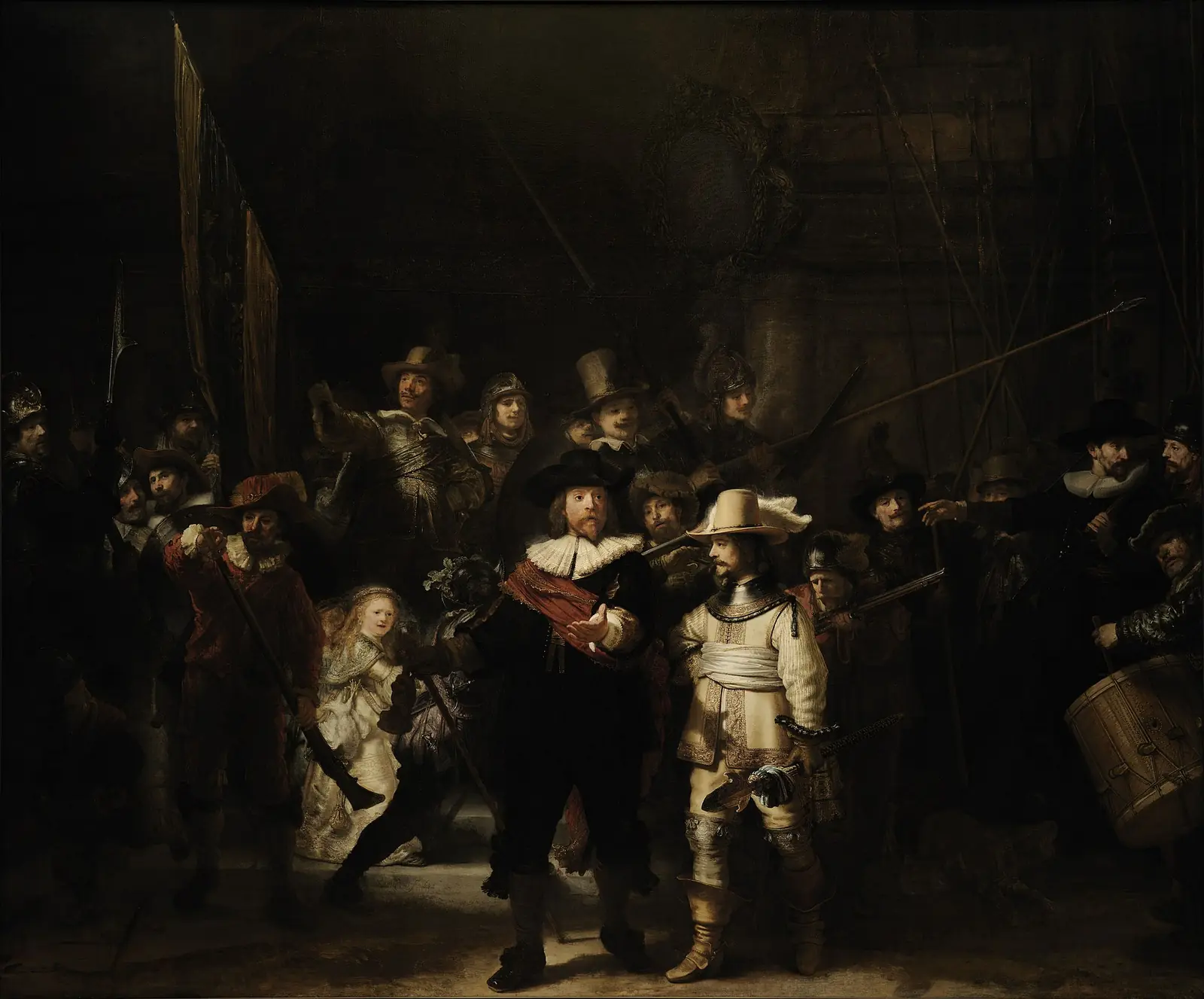
Seen beside Caravaggio, Artemisia, Rubens, Poussin, and Velazquez, Rembrandt clarifies the range of Baroque art. It is not one iconography or one regime. It is a family of attention strategies adapted to different institutions of power.
Read Baroque through church, court, and city
- Church: look for revelation, emotional legibility, and images designed to move belief quickly.
- Court: track mirrors, rank, ceremony, and unstable viewpoint; power often works by controlling who sees whom.
- City: watch how group identity is dramatized through spotlight, motion, and staged collective action.
- Across all three: follow diagonals, light, compressed space, and the spectator's assigned position.
This is also why Baroque thrives beyond isolated canvases. In chapels, palace interiors, and ceremonial spaces, painting is part of a larger environment that scripts movement, delay, revelation, and hierarchy. The spectator is not simply looking at art. The spectator is being positioned by it.
Baroque survives as a grammar of persuasion
Baroque does not disappear when the seventeenth century ends. Its afterlife continues in Rococo, in museum staging, in political imagery, and in modern media that understand spectacle as directed attention rather than mere noise. The vocabulary changes, but the underlying lesson holds.
Baroque leaves behind a durable claim: visual form can manage belief, rank, emotional timing, and bodily response at once. Once that becomes clear, the movement stops looking like historical excess and starts looking like one of Europe's most powerful inventions for organizing attention.
Six artists that open the movement
Eight works that make Baroque legible
A revealing sequence runs from The Calling of Saint Matthew to Rembrandt's The Stoning of Saint Stephen and Judith Beheading Holofernes, then broadens through Rubens's The Descent from the Cross, his Lyon Adoration of the Magi, and Poussin's The Flight into Egypt before reaching Las Meninas and The Night Watch. Institutions and subjects change; directed light, compressed space, and spectator placement keep returning.
For a direct side-by-side reading with the world Baroque is pushing against, read Renaissance vs Baroque: What's the Difference in Art?. The essay sets stable Renaissance order against Baroque event, light, and pressure in one visual sequence.
For the later shift in tone, read Baroque vs Rococo: What's the Difference in Art?. It follows how Baroque pressure gives way to Rococo intimacy, ornament, pale color, and social play in Watteau and Fragonard.
Then try the art quiz.
Primary sources
- The Met: Baroque art in Rome
- Britannica: Baroque art and architecture
- Khan Academy: Baroque overview
- Musée des Beaux-Arts de Lyon: Rembrandt, The Stoning of Saint Stephen
- Musée des Beaux-Arts de Lyon: Nicolas Poussin, The Flight into Egypt
- Uffizi: Judith Beheading Holofernes
- Cathedral of Our Lady Antwerp: The Descent from the Cross
- Musée des Beaux-Arts de Lyon: Rubens, The Adoration of the Magi
- Rijksmuseum: The Night Watch
- Museo del Prado: Las Meninas
Frequently asked questions
No. Counter-Reformation Rome is central to Baroque history, but the movement also develops in royal courts and in the Dutch Republic. What stays consistent is not one doctrine but a way of directing attention through movement, light, and staged immediacy.
Renaissance art often privileges stable balance, measured clarity, and a composed viewing position. Baroque pushes harder toward event, urgency, and spectator involvement through diagonals, sharp light, unstable space, and emotional timing.
Because Baroque adapts to different institutions. In Rome it often serves religious persuasion, at court it organizes rank and spectatorship, and in Dutch civic culture it stages collective identity. What stays constant is directed attention, not identical subject matter.