
Romantic Artist
Henry Fuseli
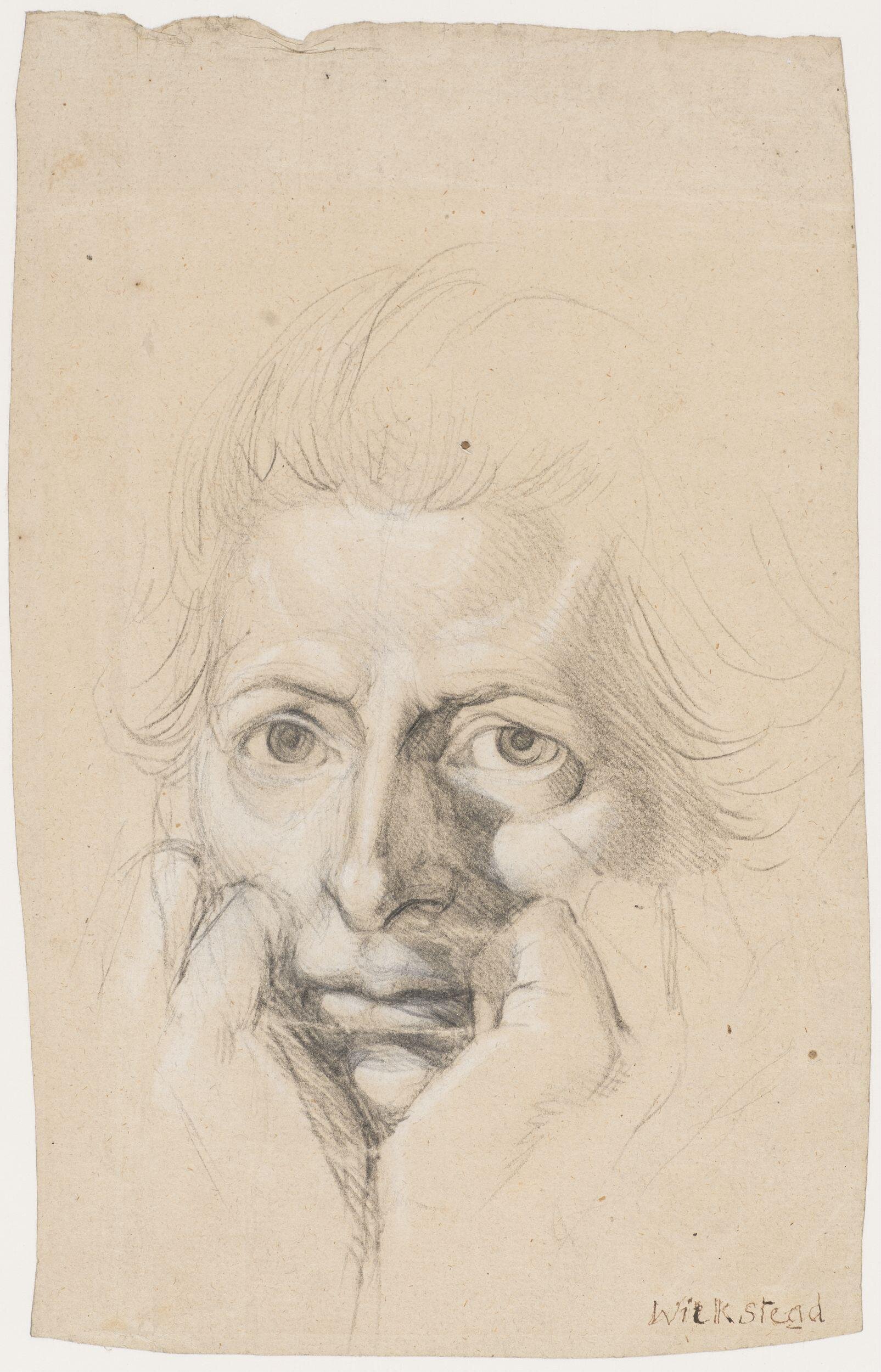
Henry Fuseli is the painter who gave nightmare, theatrical fantasy, and strained bodies a lasting place in European art. Swiss-born and active in Britain, he helped Romantic painting move away from calm classical decorum and toward dream, excess, and psychological tension. With Fuseli, the image often feels as if it has been seized by an inner force.
From theology to visionary painting
Born Johann Heinrich Fussli in Zurich in 1741, Fuseli was educated for the church before turning decisively toward art. He reached London in the 1760s, was encouraged by Sir Joshua Reynolds, and then spent the 1770s in Italy. That Roman formation matters because it gave him two things that stayed with him for life: a profound admiration for Michelangelo and a conviction that the body could carry extreme mental states.
He was not a painter of ordinary observation. Literary subjects, Shakespeare, Milton, myth, and visionary scenes suited him better than stable domestic or civic clarity. His figures stretch, twist, and brace themselves with a pressure that is as intellectual as it is physical. Fuseli does not abandon drawing. He makes drawing feverish.
The painting that made him unavoidable
The Nightmare remains the clearest way into his world. A sleeping woman, an incubus on her chest, and a horse's head emerging from the curtain are enough to show what he is after. Fuseli paints not a coherent external event, but the felt logic of dread. The image behaves like a stage invaded by the unconscious.
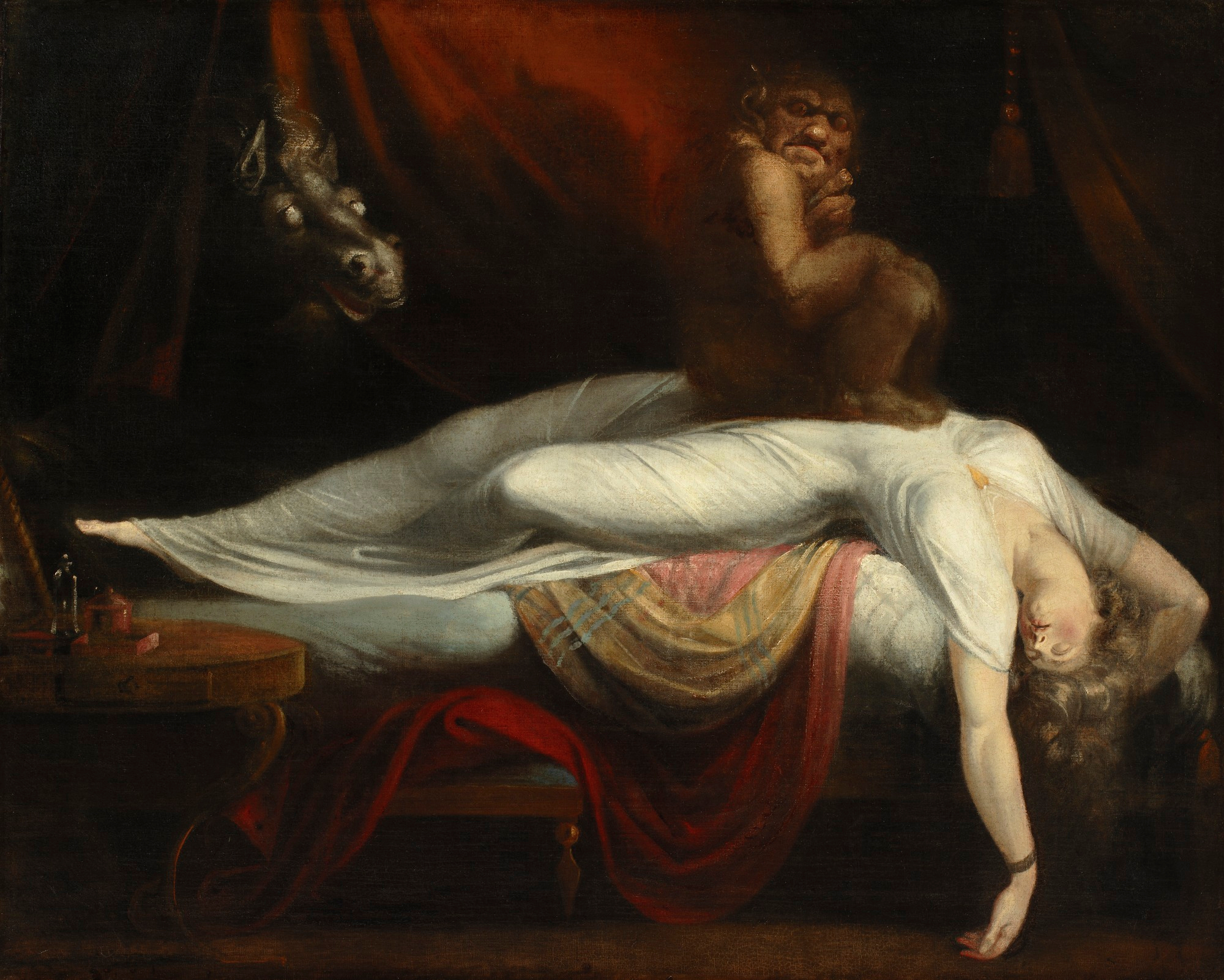
That single painting shows how later art could give form to an intangible state rather than merely represent an action or person. The shock comes not from narrative complexity, but from the exact arrangement of pose, darkness, and irrational apparition.
Why Fuseli belongs to Romanticism
Fuseli stands near the beginning of a Romantic turn in British art. He shares with later Romantic painters an interest in intensity, extremity, and the limits of classical balance. But his branch is not primarily landscape or political upheaval. It is dream, literature, spectacle, and the body's vulnerability to what reason cannot fully govern.
That makes him especially useful inside Romanticism. Beside Friedrich, Turner, or Delacroix, he shows another path the movement could take. Romanticism is not only mountain fog, revolution, or storm. It is also the bedroom turned into a theater of panic.
Literature, theatre, and the body under strain
Fuseli's career also helps explain how literary culture enters painting. He was deeply committed to Shakespeare and Milton, and many of his most memorable images feel less like windows onto reality than like condensed scenes from a drama already under way. Gesture matters enormously to him, but it is a theatrical gesture sharpened into pictorial design.
This is why his influence reaches beyond Romanticism in the narrow sense. Later Symbolist, Gothic, and even Surrealist traditions all inherit something from his willingness to make irrational pressure visible. He does not paint the unconscious in a modern psychological sense, but he clears space for image-making that no longer needs to stay within polite reality.
He also mattered inside the institutions of British art. Fuseli became Professor of Painting and later Keeper at the Royal Academy, which means his imagination was not operating from the margins alone. The artist of nightmare and visionary strain was also shaping students, lectures, and academic expectations. That combination helps explain his long reach: he made disturbing images, but he did so from a position of visible authority.
Reading paths from Fuseli
Read The Nightmare, then Romanticism, then compare Fuseli's staged panic with Saturn Devouring His Son and Goya. Then try the art quiz.