
Romantic Painting
The Nightmare
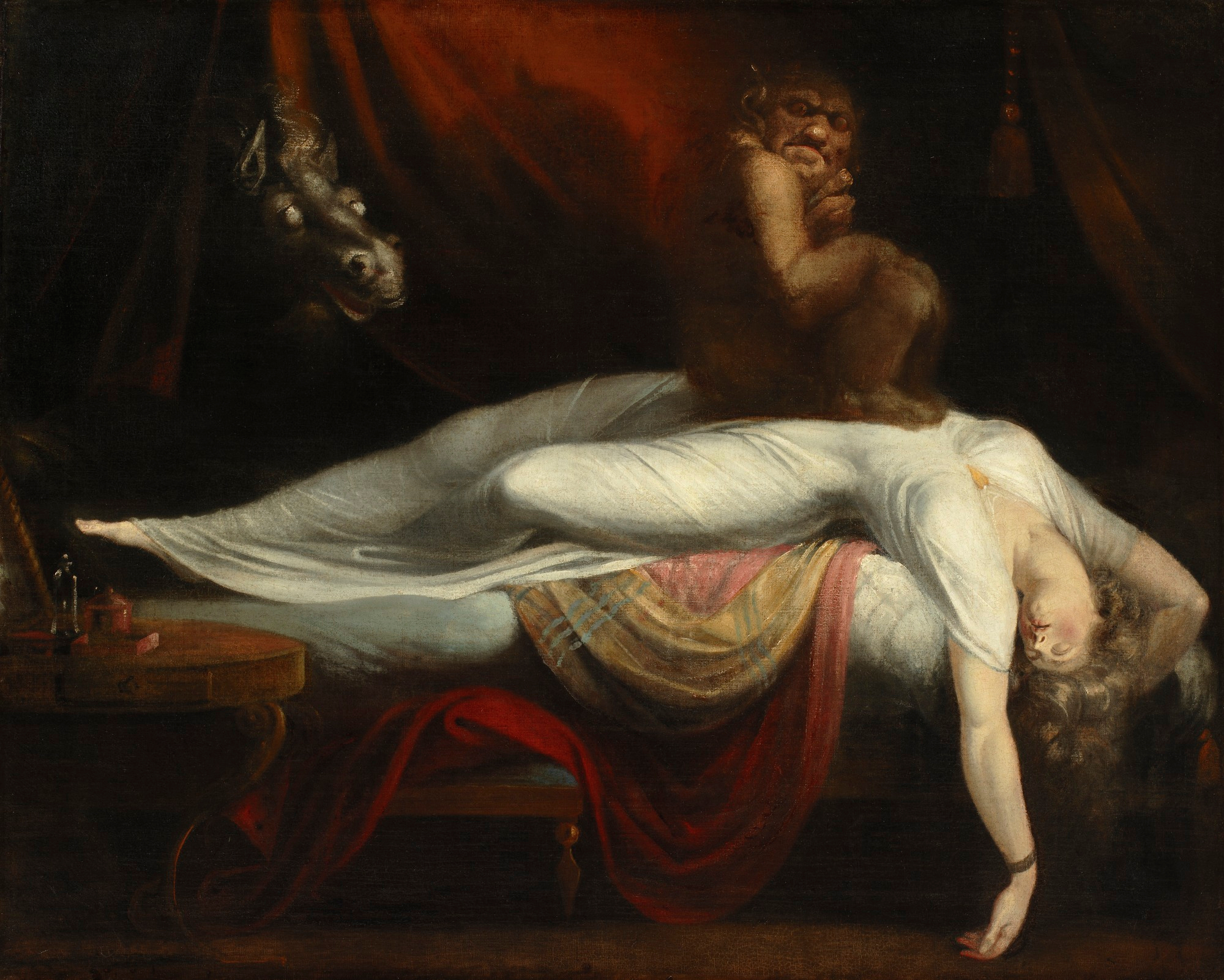
A woman sprawls across the bed, an incubus presses on her chest, and a horse's head pushes through the curtain. In The Nightmare, Henry Fuseli does not paint a story unfolding in ordinary time. He paints the pressure of a bad dream as if it had suddenly become visible in the room.
1781: not a legend, but a state of mind
When Fuseli exhibited the painting in London in 1782, viewers could recognize parts of its imagery from folklore, demonology, and theatrical fantasy. But the picture did something more unsettling than simply illustrating a tale. It offered one of the first major paintings of an inner condition: suffocation, dread, sexual unease, and helplessness translated into visible form.
The painting is not built around a historical event, a biblical scene, or a mythological action unfolding step by step. It feels immediate because it paints what nightmare feels like rather than what a sleeper would rationally see. Fuseli turns the invisible into an event on the canvas.
Three elements make the shock
The picture is simple enough to remember at once. First, there is the woman's body, thrown backward with a theatrical abandon that makes sleep look dangerously exposed rather than peaceful. Second, there is the incubus crouching on her torso, compact, heavy, and ugly. Third, there is the horse's head emerging from the dark opening in the curtain, absurd and terrifying at the same time. The painting becomes unforgettable because it keeps those three elements in violent tension.
In early modern demonology, an incubus was a male demon believed to visit sleepers at night, press on the body, and turn sleep into a scene of suffocation or sexual threat. Fuseli does not ask the viewer to accept that creature literally. He uses a figure his audience would recognize in order to give nightmare a visible shape.
Fuseli does not explain the scene away. He arranges it. The woman's pale body catches the light, the creature sits like a weight, and the horse appears at the edge between curtain and darkness. Nothing is crowded by accident. The whole image works like a stage on which panic has already taken form.
What Fuseli is trying to do
Fuseli's intention is not naturalism. He is not asking whether a sleeping body, a demon, and a horse could plausibly occupy the same room. He wants to give nightmare a pictorial body. His method is to combine theatrical pose, sharp contrast, and irrational intrusion so that dream pressure becomes more convincing than ordinary reality.
That is why the picture feels both theatrical and intimate. It belongs to the world of staged drama, but it also invades a private bedroom. The bed is not a neutral setting. It turns vulnerability into the subject. Fuseli makes terror physical by putting it where the sleeper should be safest.
Erotic anxiety, not just horror
The painting would lose much of its force if it were only macabre. The body on the bed is arranged in a way that also introduces erotic discomfort. Her posture is exposed, her throat open, her arms fallen away from control. The incubus does not simply threaten from a distance; it sits on her. The result is not just fear, but fear mixed with violation, passivity, and bodily unease.
This is one reason the image has remained so active in modern culture. It touches something broader than gothic taste. It suggests that the mind's terrors and the body's vulnerability can appear in the same image without being neatly separated.
Romanticism turns inward
Set the painting beside Goya's Saturn Devouring His Son and a useful distinction appears. Goya paints nightmare as devouring violence and raw psychic collapse. Fuseli is more staged, more literary, and more erotic. But both works show Romanticism turning away from smooth classical decorum toward inner disturbance.
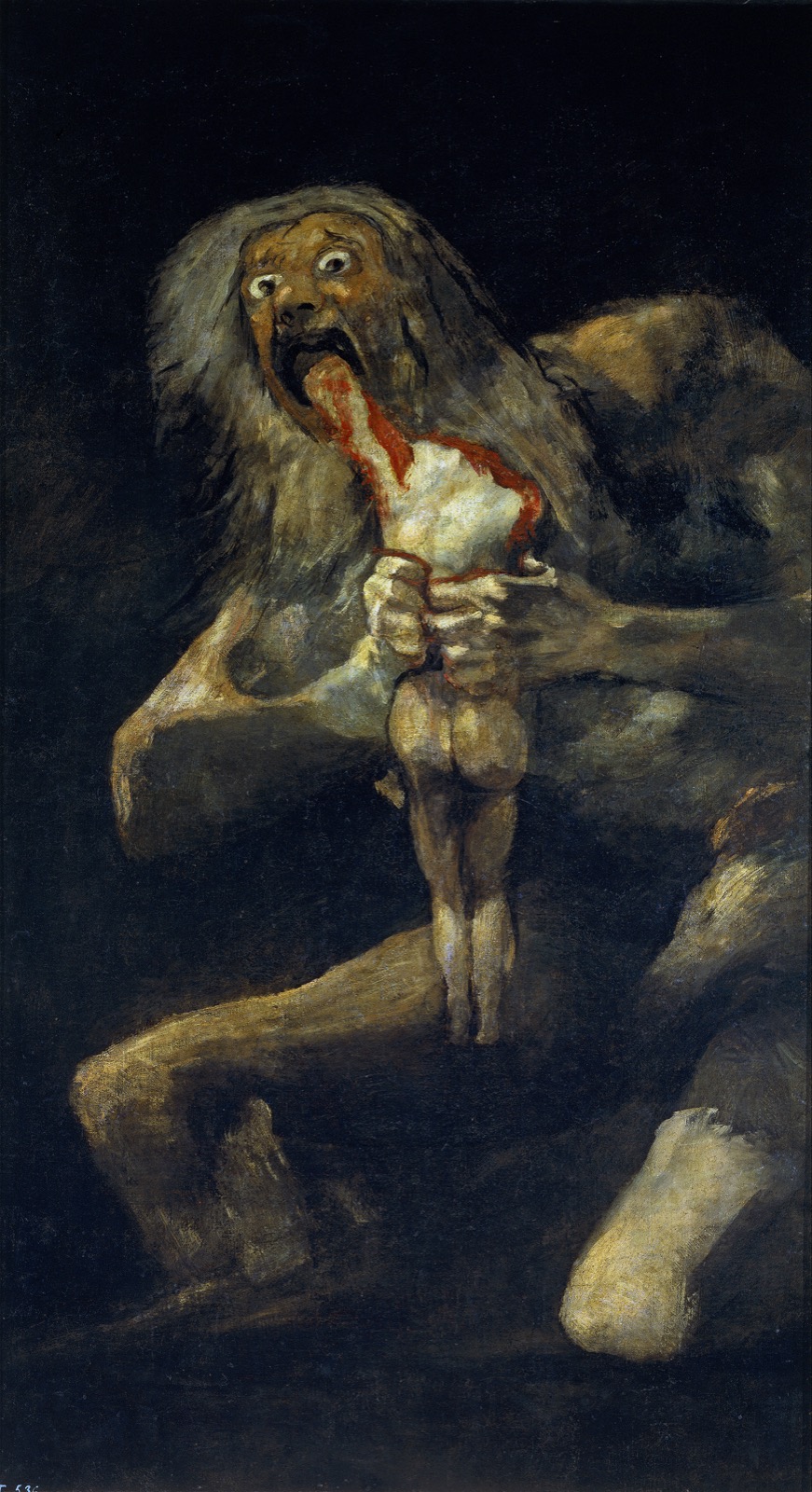
That comparison also shows why Fuseli matters historically. He helps make room for images that are not mainly about public action or sublime landscape. The dream, the irrational, and the psychologically charged interior become legitimate subjects in their own right.
Explore more
Then try the art quiz.
Primary sources
Frequently asked questions
An incubus is a male demon from older folklore and demonology, associated with oppressive or sexually threatening night visitations. In The Nightmare, Fuseli uses that figure to give bad dream pressure a visible body.
The horse plays on the word "nightmare" and on older folklore linking horses to nocturnal disturbance. It makes the scene both ridiculous and frightening, which is part of its power.
Because it treats inner terror, sexual unease, and irrational image-making as serious subjects for painting. It shows Romanticism turning toward the dream and the psyche.