
Artist Guide
Michelangelo
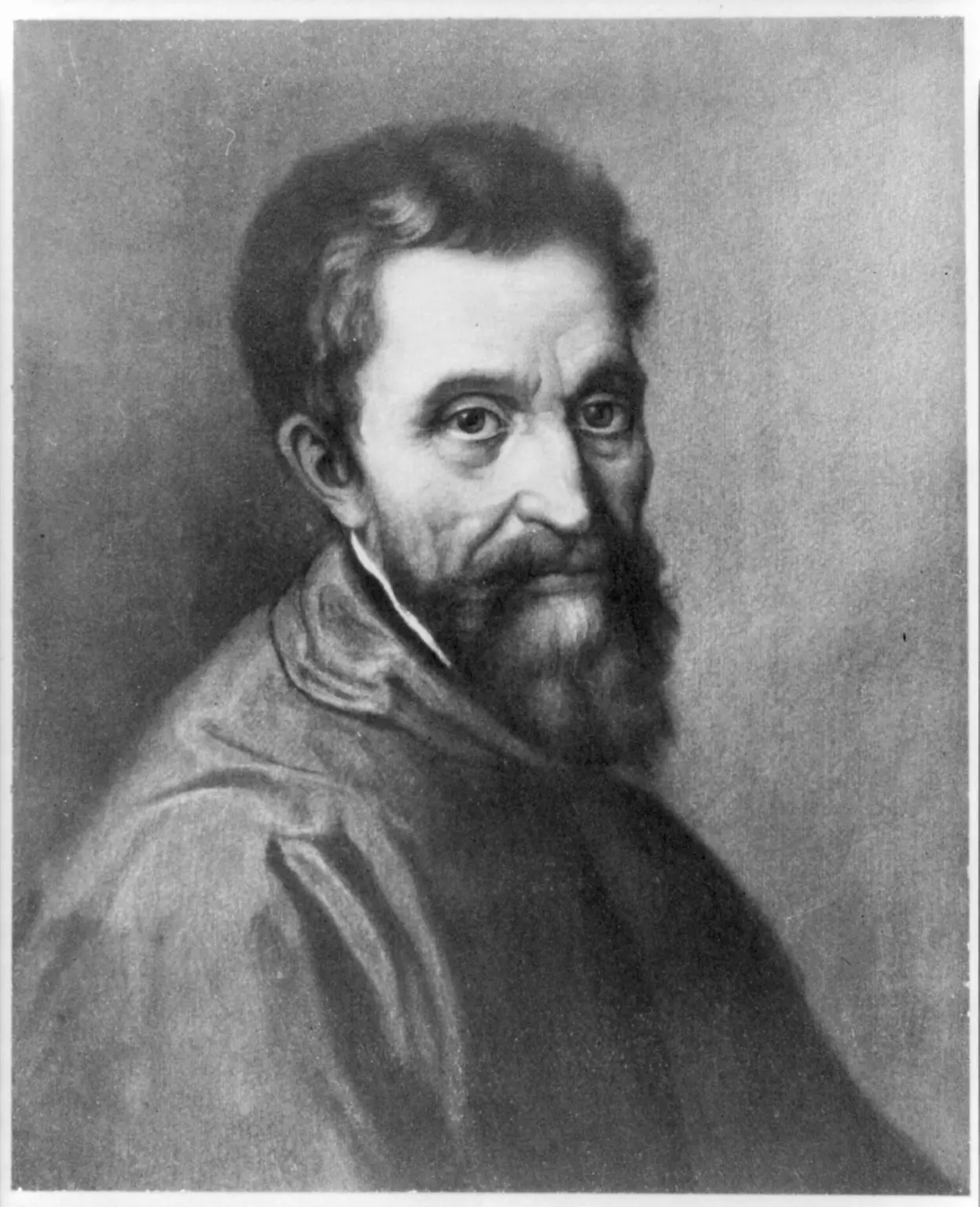
Michelangelo made the human body a structural engine for historical and spiritual drama. Even in still poses, his figures feel charged with pressure and potential movement. His images hold conviction and fracture in the same anatomy, which is why they still read as arguments rather than monuments.
Florence training, Roman patrons, and a career under pressure
Born in 1475, Michelangelo trained in Florence in workshops shaped by Medici patronage, humanist debate, and rivalry between major masters. From the start, sculpture and drawing structured his thinking. Even when he later worked in painting and architecture, he approached form as mass under tension rather than surface decoration.
His Roman career shows how biography and politics intersect. Pope Julius II first hired him for a monumental tomb in 1505, then redirected him to the Sistine ceiling in 1508. That switch is one of the most revealing episodes in Renaissance art: Michelangelo did not "abandon" sculpture so much as transfer sculptural force into painted architecture on an unprecedented scale.
Body as theology: why The Creation of Adam still works
In The Creation of Adam, meaning is carried by anatomy, spacing, and gesture before symbolism is named. The almost-touch between the two hands is famous, but the deeper intelligence is structural: divine energy is compressed into a tiny interval, and the entire fresco pivots around that measured distance.
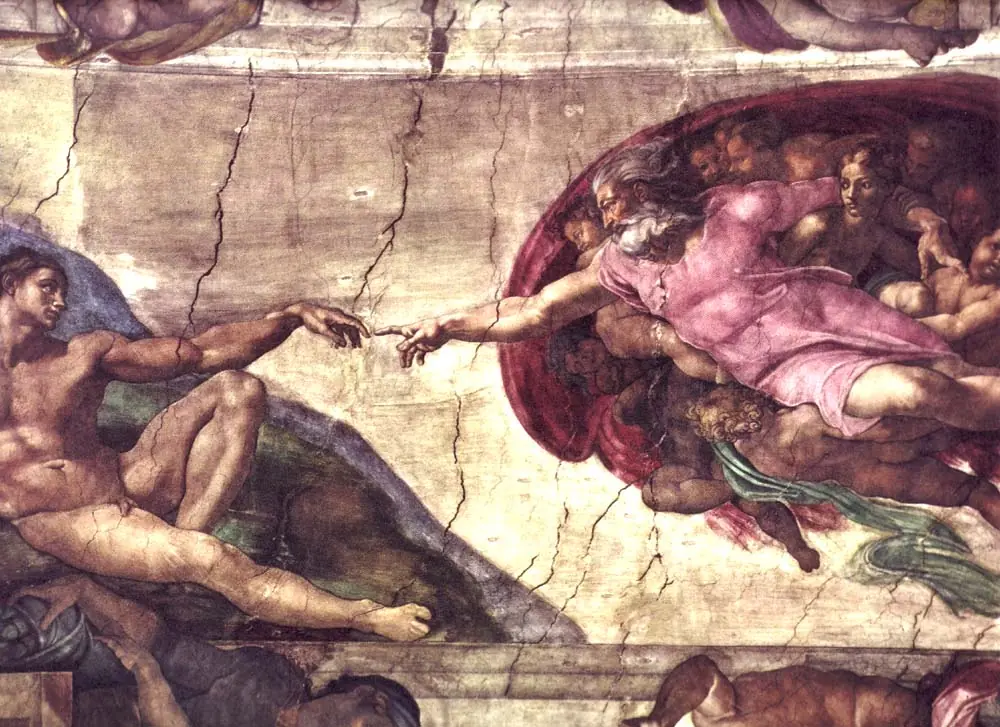
This is Michelangelo's method in general: shoulders rotate, torsos twist, and limbs stretch to make abstract stakes physically immediate. He treats contour as pressure. Once you read that grammar, even crowded compositions become legible because each figure functions as a hinge in a larger argument.
From High Renaissance balance to later instability
Michelangelo belongs to the High Renaissance, but he also pushes beyond its equilibrium. In later works, especially under the religious and political tensions of the mid-sixteenth century, bodies become more strained and less classically resolved. This shift helps explain why he is central to both Renaissance synthesis and the emergence of Mannerist and Baroque intensities.
Read The Creation of Adam alongside Raphael's ordered clarity and then against Baroque staging. Michelangelo sits in the middle of that sequence: he preserves structure, but loads it with pressure that later artists amplify into spectacle.
Legacy and influence
Michelangelo's legacy is not only technical virtuosity. His influence comes from a durable proposition: the human body can carry historical, spiritual, and political conflict without losing formal coherence. That proposition still shapes modern visual language, from academic training to contemporary figurative painting.
For a high-contrast comparison inside Explainary, pair Michelangelo with Goya's The Third of May 1808. Both artists load bodies with historical meaning, but Michelangelo compresses toward heroic form while Goya exposes ethical rupture. The distance between them clarifies the depth of Michelangelo's long afterlife.
Workshop discipline, unfinished projects, and long-term method
Michelangelo is also crucial for understanding process, not just masterpieces. The long, repeatedly revised tomb project for Julius II and his habit of leaving some sculptures in a non-finito state show an artist who treated completion as a strategic choice rather than an automatic endpoint. This working logic links drawing, carving, and planning in a single continuum of decision-making.
That procedural rigor helped define later studio education. Students and followers learned to think in phases: anatomical study, structural block-in, pressure distribution, and final emphasis. In this sense Michelangelo's influence is pedagogical as much as stylistic. He did not simply produce iconic works; he modeled a way of building complex images that could survive scale, theology, politics, and time.
This is also why his pages in Explainary reward slow reading: each work records decisions, revisions, and technical bets that remain visible centuries later.
Key works in Explainary
Associated movements
Continue with the art quiz to validate recognition, context, and comparison.