
Neoclassical Artist
Jean-Auguste-Dominique Ingres
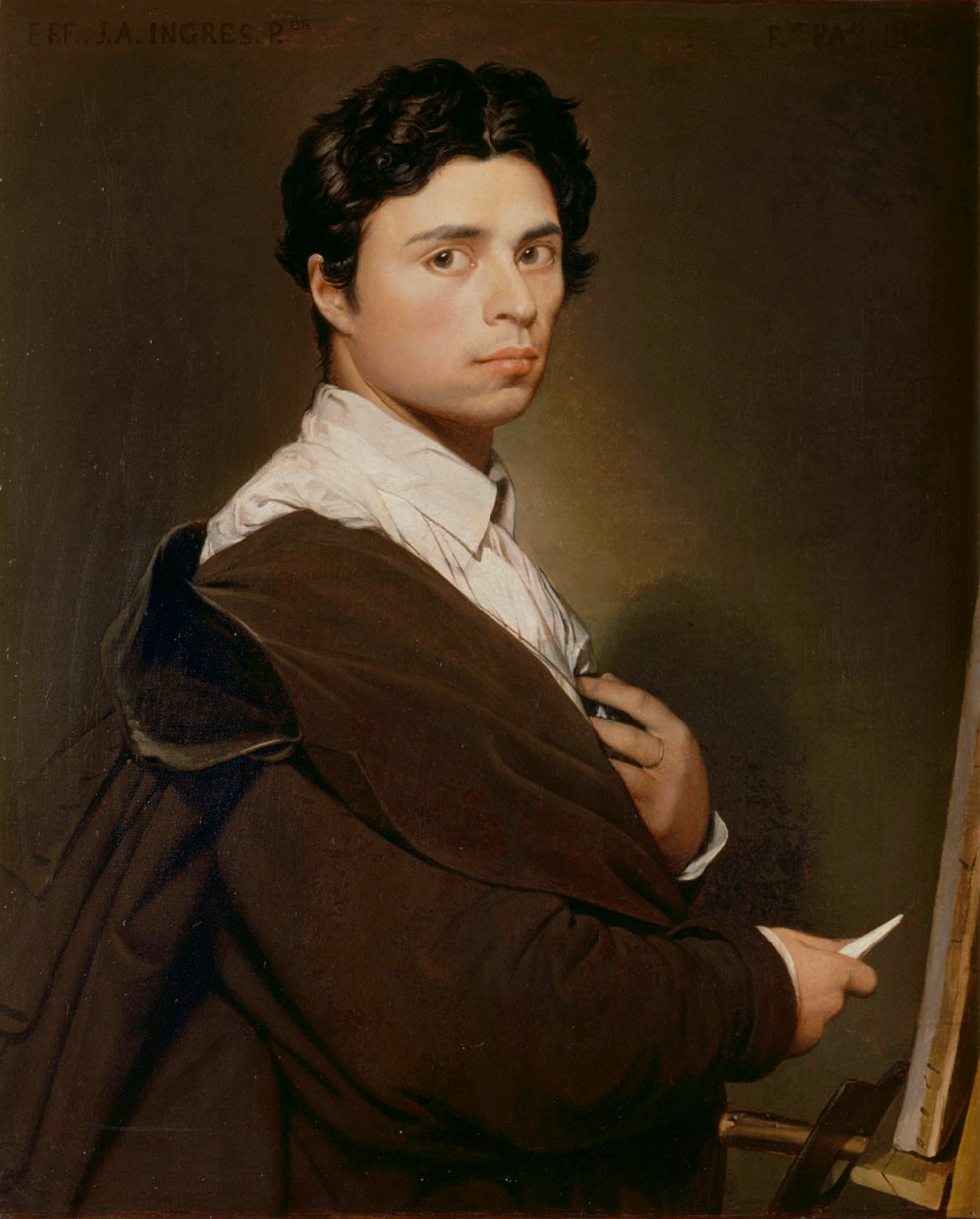
Jean-Auguste-Dominique Ingres is the French painter who turns line into a governing force across history painting, portraiture, and the nude. He inherits the discipline of David and becomes one of the central figures of Neoclassicism, but his art is never only public severity. He is also a portraitist of rank, an academic authority, and a painter whose ideal beauty can become unnervingly unreal.
From David's studio to his own classicism
Born in Montauban in 1780, Ingres trained first under his father, then in Toulouse, before entering David's studio in Paris. He won the Prix de Rome in 1801 and spent formative years in Italy, where Raphael, antiquity, and academic ambition all mattered deeply to him. That formation stayed central for life. Ingres never stopped believing that line, order, and ideal form were the highest tests of painting.
Yet he was never a simple continuation of David. David tends to turn painting toward public example, civic decision, and moral firmness. Ingres can do that, but he is equally drawn to bodies, fabrics, portraits, and fantasies that no public oath can explain. He takes classicism inward, toward style itself, while keeping one foot in public ambition, institutional prestige, and the hierarchy of high art.
For Ingres, drawing is not preparation. It is rule.
Ingres trusted line more than painterly atmosphere. Contour fixes identity, stabilizes form, and tells the eye where to move. That preference makes his art look severe at first, but it is not dry. The smooth surfaces, cool flesh, and tightly controlled transitions create another kind of intensity, one based on precision rather than visible brushwork.
The result is severe, tactile, and unmistakably designed.
This is also why his distortions matter. Ingres knows anatomy perfectly well, but he is willing to override it when proportion gets in the way of elegance. The ideal body in his paintings is often less believable than the bodies of other artists and more exacting as design. That contradiction is one of the main reasons he stayed historically active for later painters.
He paints rank, hierarchy, and public culture
Ingres is larger than one famous nude. He paints history paintings, religious commissions, and portraits of social authority, and in each case he wants the image to look ruled rather than improvised. In a public work such as The Apotheosis of Homer, classical order becomes cultural hierarchy. In portraits, the same discipline fixes rank through posture, fabric, stillness, and surface finish. He is a painter of hierarchy as much as of beauty.
That also explains his place inside French academic culture. Ingres does not simply survive the institution. He helps define what high painting should look like: drawing before looseness, order before accident, and finish before painterly improvisation. Even when later artists reject that standard, they are still reacting to one of the clearest versions of it.
Grande Odalisque is one answer, not the whole artist
In Grande Odalisque, Neoclassical line, orientalist fantasy, and deliberate anatomical impossibility lock together. The figure's back is too long, the hip slips, the limbs are elongated, and none of this is accidental. Ingres makes the body obey a visual idea of beauty before it obeys human proportion.
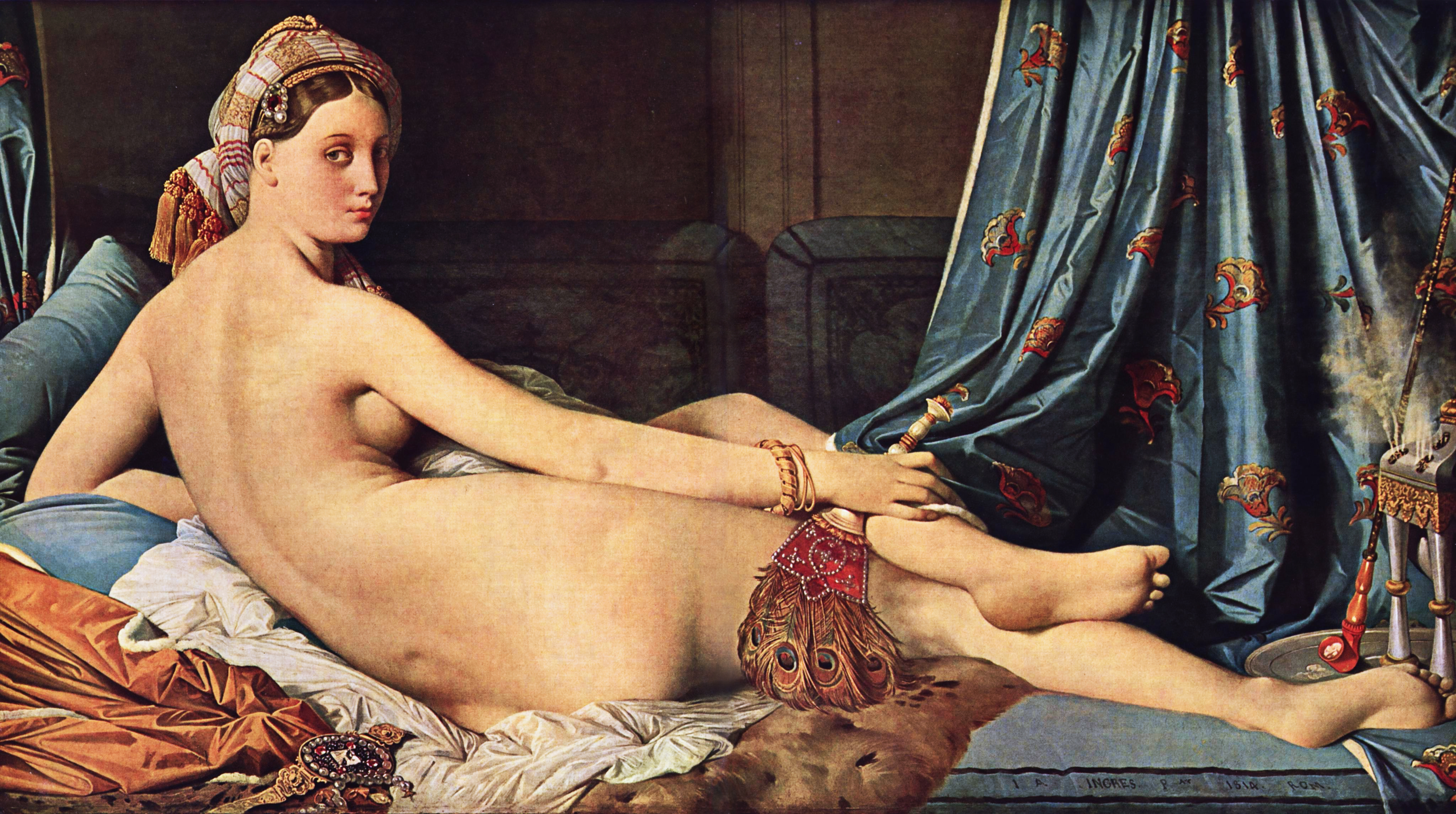
That painting helps explain why Ingres cannot be contained by the label conservative. He is conservative in declared allegiance, in his worship of Raphael, and in his defense of drawing. But he is also radical in the way he lets ideal beauty override natural structure. The same artist who can stabilize public rank can also make the body drift away from ordinary anatomy.
Legacy and long afterlife
Ingres became a dominant academic figure in France, painted major portraits, and turned polished surface into a language of social authority. Faces, gloved hands, satin, mirrors, chairs, and curtains all become ways of holding rank in place. Even when he paints private individuals, the image feels ruled by standards larger than personality alone.
His legacy is unusually wide. Nineteenth-century admirers see a defender of classical order. Later painters see something else as well: a master of elongation, stylization, and unnervingly controlled fiction. One line runs from Titian's Venus of Urbino through Grande Odalisque to Olympia, but that is only one strand of his importance. He also matters because he shows how drawing, hierarchy, and finish can govern public images, portraits, and ideal bodies with the same authority.
Routes from Ingres on Explainary
Then try the art quiz.