
Neoclassicism
Grande Odalisque
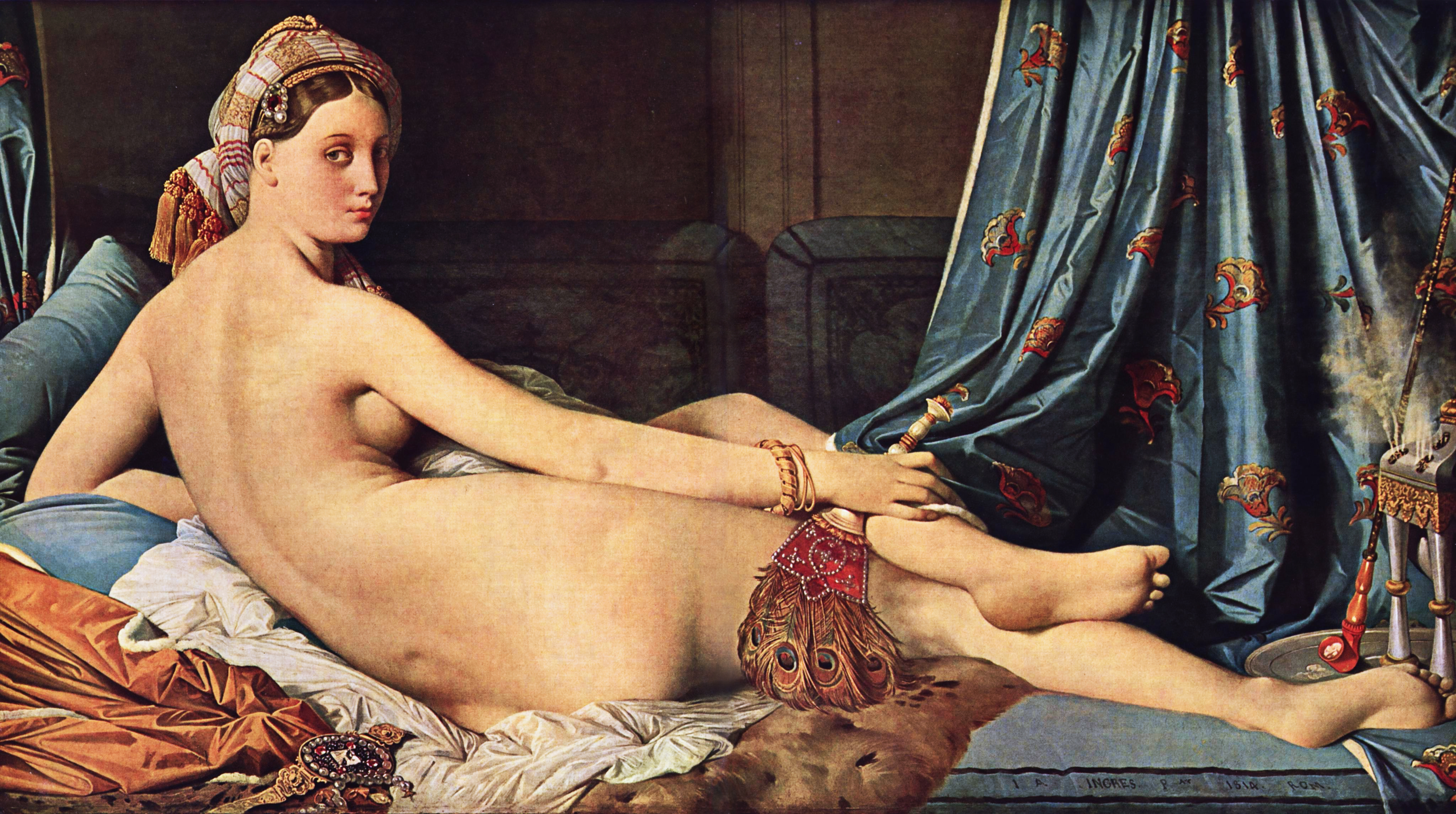
Ingres paints a reclining nude whose body is deliberately impossible: the back lengthens, the hips slip, and ideal beauty is built through distortion rather than anatomy. Commissioned in 1814 for Caroline Murat, then shown at the Salon of 1819, Grande Odalisque keeps the hard contour and polished surface of Neoclassicism while turning them toward sensual fantasy. The result sits between the antique nude, Ottoman decor imagined from afar, and a strangely modern refusal of natural proportion.
A body made longer than life
The first thing to register is not the harem setting but the body itself. The figure lies with her back toward us and turns her head over her shoulder, but the turn only works because Ingres stretches almost every proportional rule. The spine seems to carry extra vertebrae, the pelvis slides too far, and the left leg does not attach in a way a real body could sustain. The anatomy is not broken by accident. It has been redesigned so that the line can flow without interruption from neck to shoulder, from shoulder to back, from back to thigh.
This changes how beauty operates in the painting. Ingres is not searching for realism, and he is not making a simple academic study of the nude. He wants the eye to accept a body that no skeleton could support because the continuity of the line matters more here than anatomical truth. The coolness of the flesh, the near-invisible brushwork, and the blue textiles around her all help that fiction hold.
What the word odalisque adds
The title does not name a goddess. It names a fantasy. In nineteenth-century France, an odalisque was imagined as a woman of an Ottoman harem, a figure of distance, luxury, erotic availability, and controlled seclusion. Ingres had never visited the Ottoman world. He builds the setting from accessories and European fantasy: the turban, the peacock-feather fan, the hookah, the blue drapery, the jeweled details.
That distance changes the image's moral temperature. Titling the picture Grande Odalisque lets the nude appear exotic rather than immediate, displaced rather than social. The painting offers the viewer a body that looks close, polished, and tactile while placing that body inside a setting designed to remain unavailable and far away. Its eroticism depends on that double move.
David's line, turned away from civic severity
Ingres came out of the studio of Jacques-Louis David, and the training still shows. The contour is hard, the surface is smoothed down, and the composition insists on deliberate order. Yet the purpose is no longer civic virtue, oath, or philosophical resolve. In David, line often disciplines feeling into public example. In Ingres, line can make the body more elegant, cooler, and less natural than nature itself.
Grande Odalisque widens Neoclassicism. The movement is no longer limited to Roman seriousness and public duty. The same commitment to line and idealization can also generate artifice, sensuality, and fantasy. Once Ingres enters the picture, Neoclassicism stops looking like one severe language spoken only by David.
From Titian's bedroom to Manet's hard reply
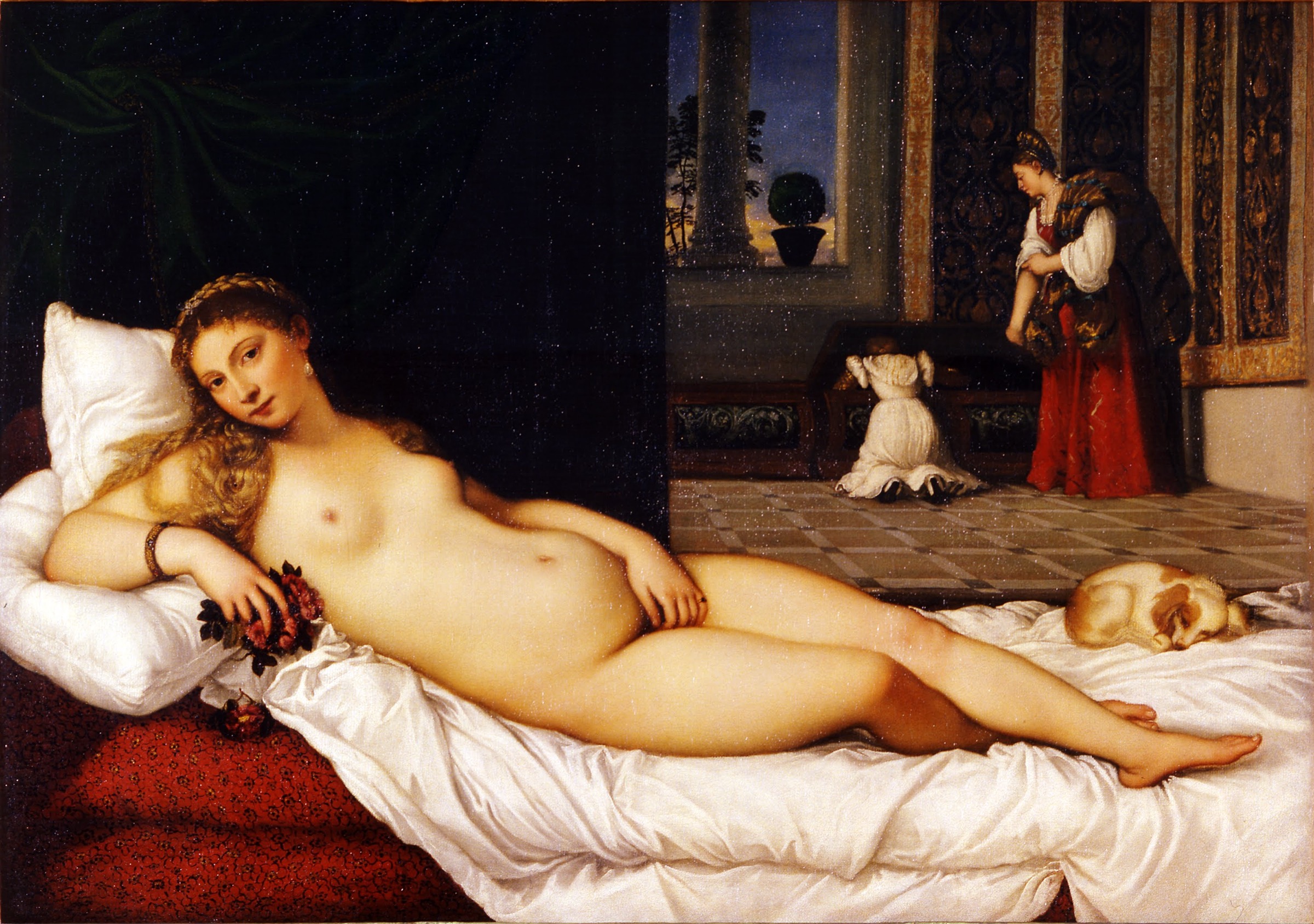
The earlier turning point is Venus of Urbino. Titian had already shown how a reclining nude in an interior could hold myth, sensuality, and domestic space together. Ingres keeps the recumbent format and the turned head, but the body is now colder, more stretched, and less tied to a believable room. He is after idealized line rather than Venetian atmosphere.
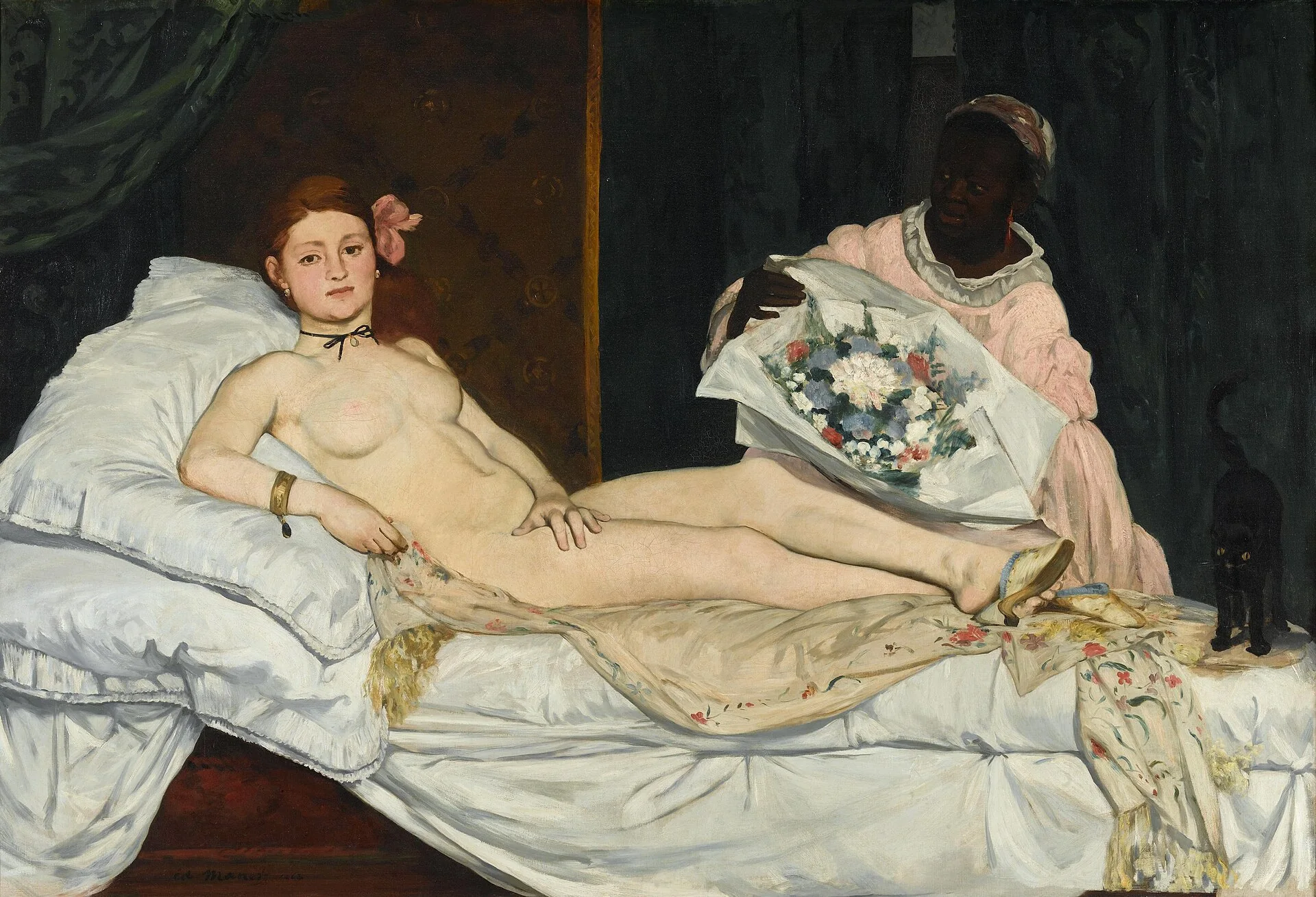
Later, Olympia makes that whole lineage impossible to see innocently. Manet inherits the reclining format, the direct address, and the history of the painted nude, then removes the polished fiction that kept earlier versions at a distance. Seen in that chain, Grande Odalisque is not just a famous academic nude. It is one of the major nineteenth-century steps between Renaissance idealization and modern confrontation.
The painting shows how one image can remain classically disciplined, erotically charged, geographically invented, and formally strange all at once. Its calm surface never cancels the fact that the body has been rebuilt to satisfy a visual idea rather than a human one.
Continue from Ingres
Before and after Ingres
Then try the art quiz.
Primary sources
Frequently asked questions
Ingres lengthens the back, shifts the hips, and stretches the limbs on purpose. He is not failing at anatomy. He is reshaping the body so line and elegance take priority over natural proportion.
An odalisque was imagined in nineteenth-century France as a woman from an Ottoman harem. Ingres uses that setting as a fantasy of distance and luxury, not as an observed scene from Ottoman life.
It belongs to Neoclassicism by training and method: hard contour, polished surface, and ideal ambition. But its exotic subject and sensual unreality also help explain why it stands so close to Romanticism.