
Venetian Renaissance / Color and Spectacle
Paolo Veronese
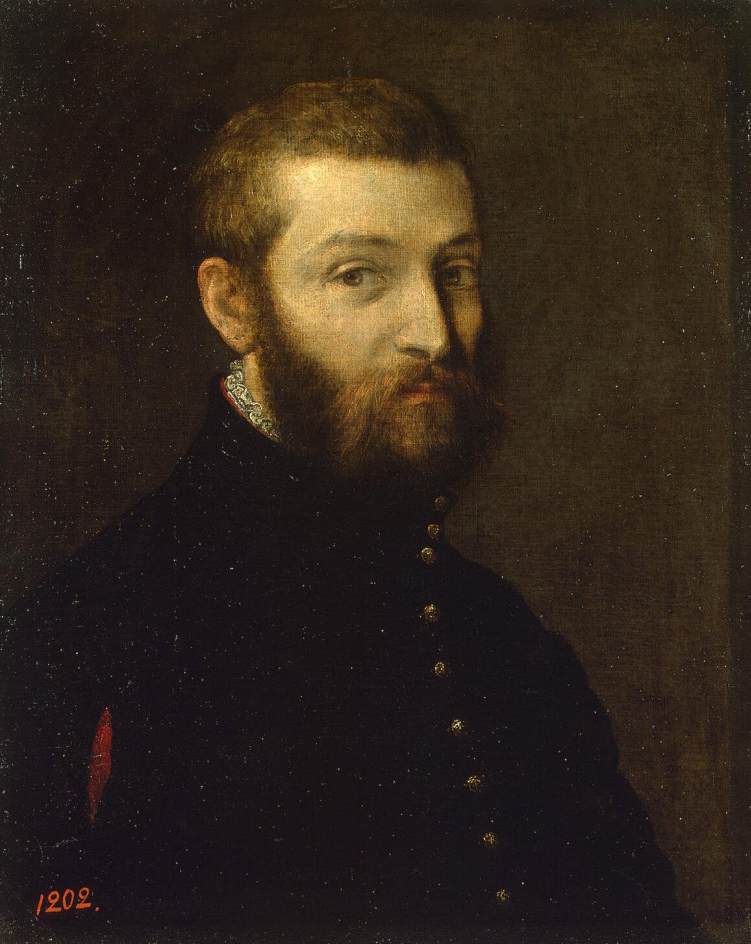
Paolo Veronese is the painter who made biblical history look like a Venetian public ceremony without draining it of danger. Born Paolo Caliari in Verona in 1528 and active mainly in Venice until his death in 1588, he turned architecture, silk, light, servants, musicians, courtiers, animals, and sacred figures into vast scenes of organized spectacle. In his work, color is not decorative luxury. It is the system that tells the viewer where power, beauty, and social performance meet.
From Verona to Venice
Veronese trained in Verona before moving into the orbit of Venice, where he built the career that gave him his name. The city offered what his painting needed: palaces, churches, confraternities, civic ritual, and patrons who wanted images to work at scale. His background outside Venice mattered too. He arrived with a strong sense of drawing, perspective, and architectural framing, then absorbed the Venetian lesson that oil color could organize a picture as forcefully as line.
By the 1550s and 1560s, he was among the major painters of the Venetian world, alongside Titian and Tintoretto. Titian gave Venetian color its great authority; Tintoretto pushed space and movement toward speed and strain; Veronese made spectacle lucid. His paintings often look festive at first, then reveal how carefully each figure, column, fabric, and step has been placed.
Architecture is his stage
Veronese rarely lets figures float in empty space. He gives them terraces, staircases, colonnades, balconies, and tiled floors. Architecture makes his images readable, but it also gives social meaning to the action. Rank becomes visible through height, distance, clothing, and access. The viewer understands who approaches, who receives, who watches, and who is being watched.
His religious paintings can feel worldly without becoming shallow because the sacred scene is inserted into a world of ceremony, hospitality, display, and power. Veronese understood that public life in Venice was theatrical, and he made that theatricality a serious pictorial language.
The banquet painting as public intelligence
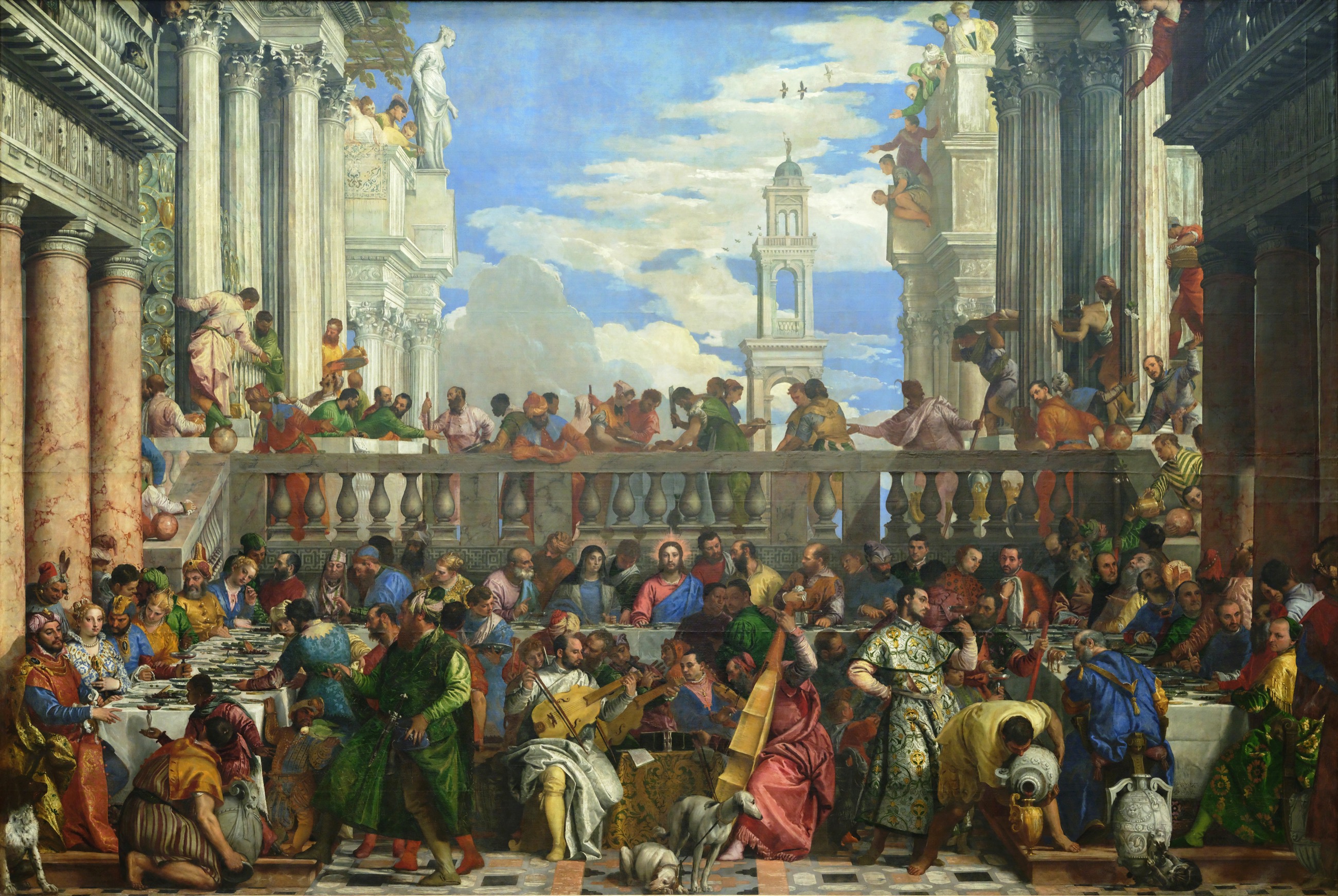
The Wedding at Cana, now in the Louvre, shows the full scale of that ambition. Christ's miracle is placed inside a vast architectural feast packed with guests, servants, musicians, vessels, dogs, and colored fabrics. The religious center is there, but it is not isolated from the crowd. Veronese makes the miracle visible inside social abundance, as if sacred meaning had to pass through the whole machinery of public life.
The famous 1573 inquiry by the Venetian Inquisition, connected to the painting later known as Feast in the House of Levi, clarifies the tension in his art. Officials questioned the presence of jesters, soldiers, Germans, dwarfs, and animals in a religious scene. Veronese defended the painter's freedom and retitled the work rather than repainting its world away. The episode shows how his splendor could be provocative: his biblical scenes did not behave like purified devotional diagrams.
Bathsheba Bathing in Lyon
Bathsheba Bathing, held by the Musée des Beaux-Arts de Lyon, gives that public language a more intimate charge. A young woman sits near water while a richly dressed older man approaches. The subject is traditionally Bathsheba, but the Lyon museum notes that the identification remains complex: the scene may also recall Susanna or another biblical heroine.
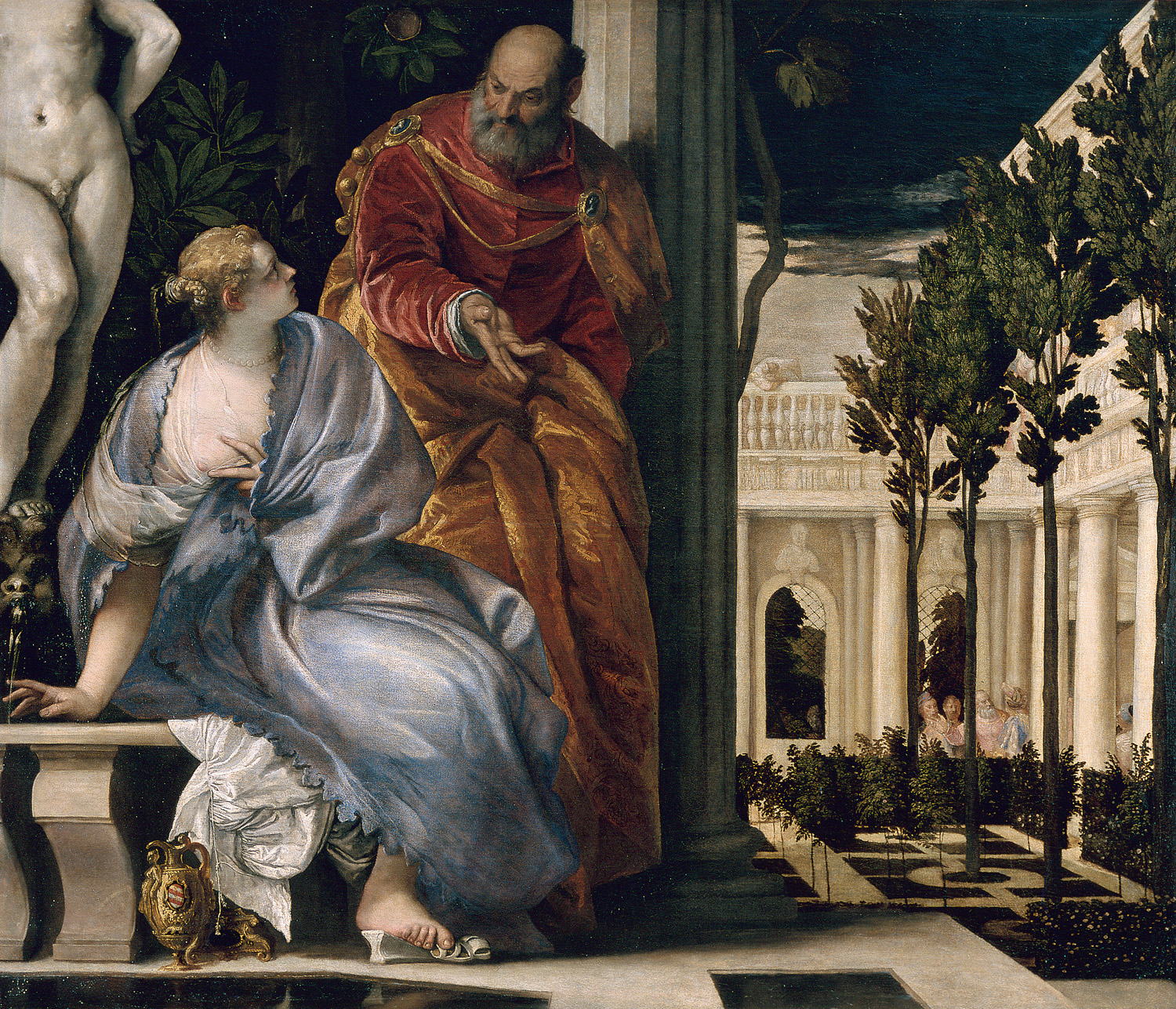
The Lyon painting is useful because it prevents a simple reading of Veronese as only festive. His color is brilliant, but it does not remove tension. The older man's status, the woman's exposure, the garden setting, and the uncertain biblical subject all show how Veronese can make splendor and unease occupy the same surface.
Legacy: the clarity of spectacle
Veronese's legacy lies in the dignity he gave to spectacle. Later painters could learn from him that a crowded scene does not have to become confusion, and that color can clarify a social world rather than merely decorate it. His influence runs through Baroque theater, court painting, grand decorative cycles, and any painting that tries to make public life visually intelligible.
On Explainary, he strengthens the Venetian branch of the High Renaissance. With Titian, color becomes authority; with Veronese, color becomes staging. His art teaches a direct museum habit: do not stop at splendor. Ask what the splendor is organizing.
Routes from Veronese on Explainary
Then try the art quiz.