
High Renaissance Artist
Titian
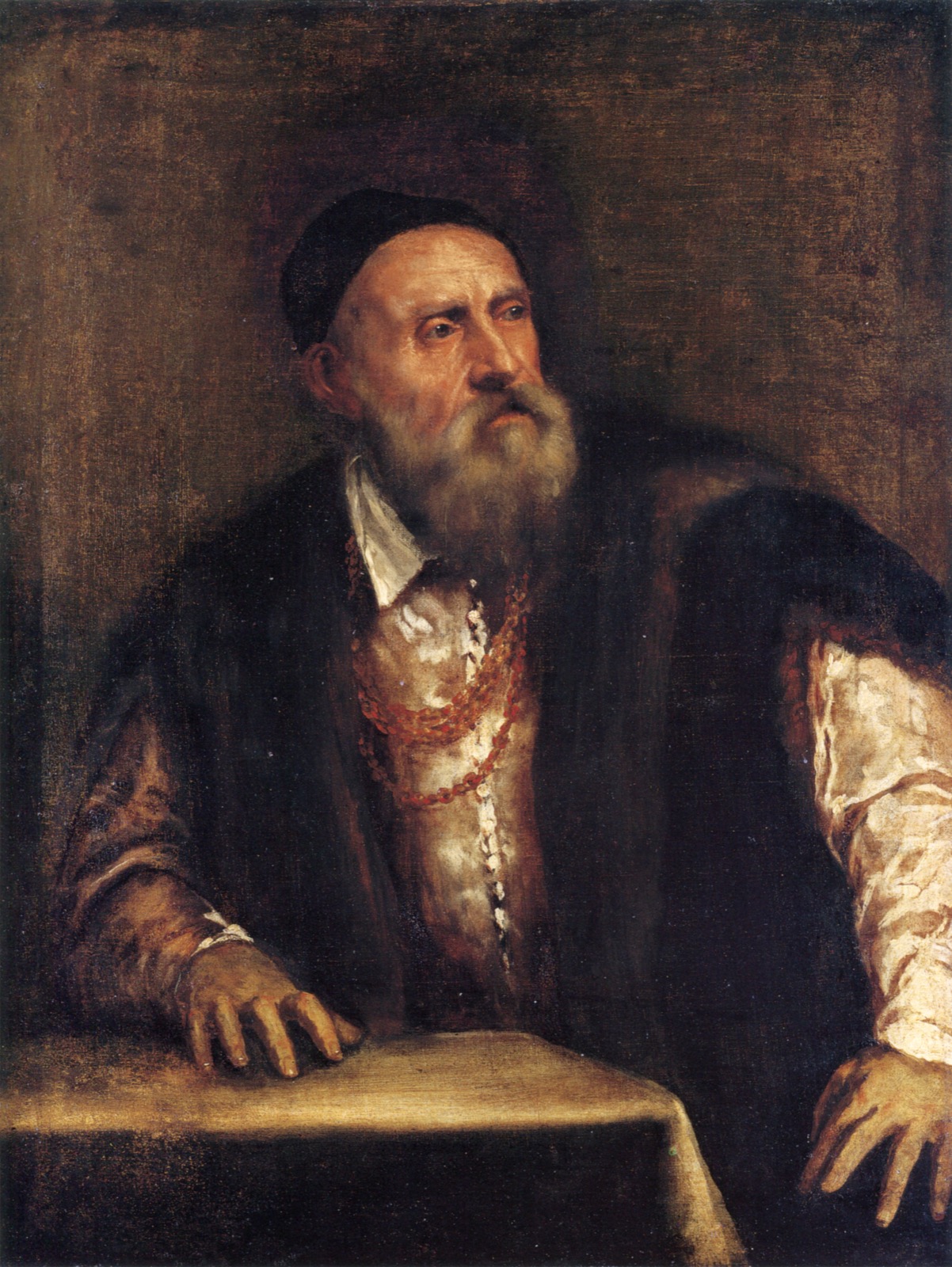
Titian is the Venetian painter of warm flesh, deep reds, and figures that seem to fill the room as soon as you see them. Within the High Renaissance, he proves that pictorial authority can come not only from design and anatomy, but from oil paint itself: color, surface, and atmosphere do as much work as drawing.
Training, career, and the road from Venice to Europe's courts
Titian, or Tiziano Vecellio, received his training in Venice and built a career that quickly outgrew the city. Rising after Bellini and Giorgione, he became the republic's dominant painter, then by the middle of the sixteenth century was working not only for Venetian patrons, but for courts across Europe, including Charles V and Philip II. Few painters moved so easily between altarpieces, mythological scenes, and portraits of rule.
That range explains his importance. Titian can paint a sacred image for a church, a sensual nude for a private interior, or a ruler whose authority seems to radiate through cloth, skin, and shadow. The subject changes; the pictorial intelligence does not. This is why he matters so much beyond Venice itself.
With Titian, color does not decorate
The usual shortcut is to say that Titian is "the painter of color." That is true, but incomplete. In Titian, color is not an ornamental addition laid over drawing. It is what organizes weight, distance, flesh, and mood. Reds open the space. Browns thicken it. White linen catches light and feeds it back into skin. Dark passages do not simply recede; they stabilize the whole field. That is why later painters kept studying him.
This is also where Titian changes the meaning of the High Renaissance. The movement is often reduced to Leonardo, Raphael, and Michelangelo in Florence and Rome. Titian forces a broader view. He shows that Renaissance synthesis can be built not only through architecture-like design, but also through the slower authority of oil paint, where form emerges through relation, saturation, and touch.
In Venus of Urbino, Titian brings grandeur into a room
Venus of Urbino shows that method inside a single bedroom. The picture is intimate in scale and subject, yet nothing about it is casual. The body, the sheets, the red mattress, the green curtain, the sleeping dog, and the servants in the background all belong to one system. Titian turns a reclining nude into an image where myth, domestic space, and sensual paint are inseparable.
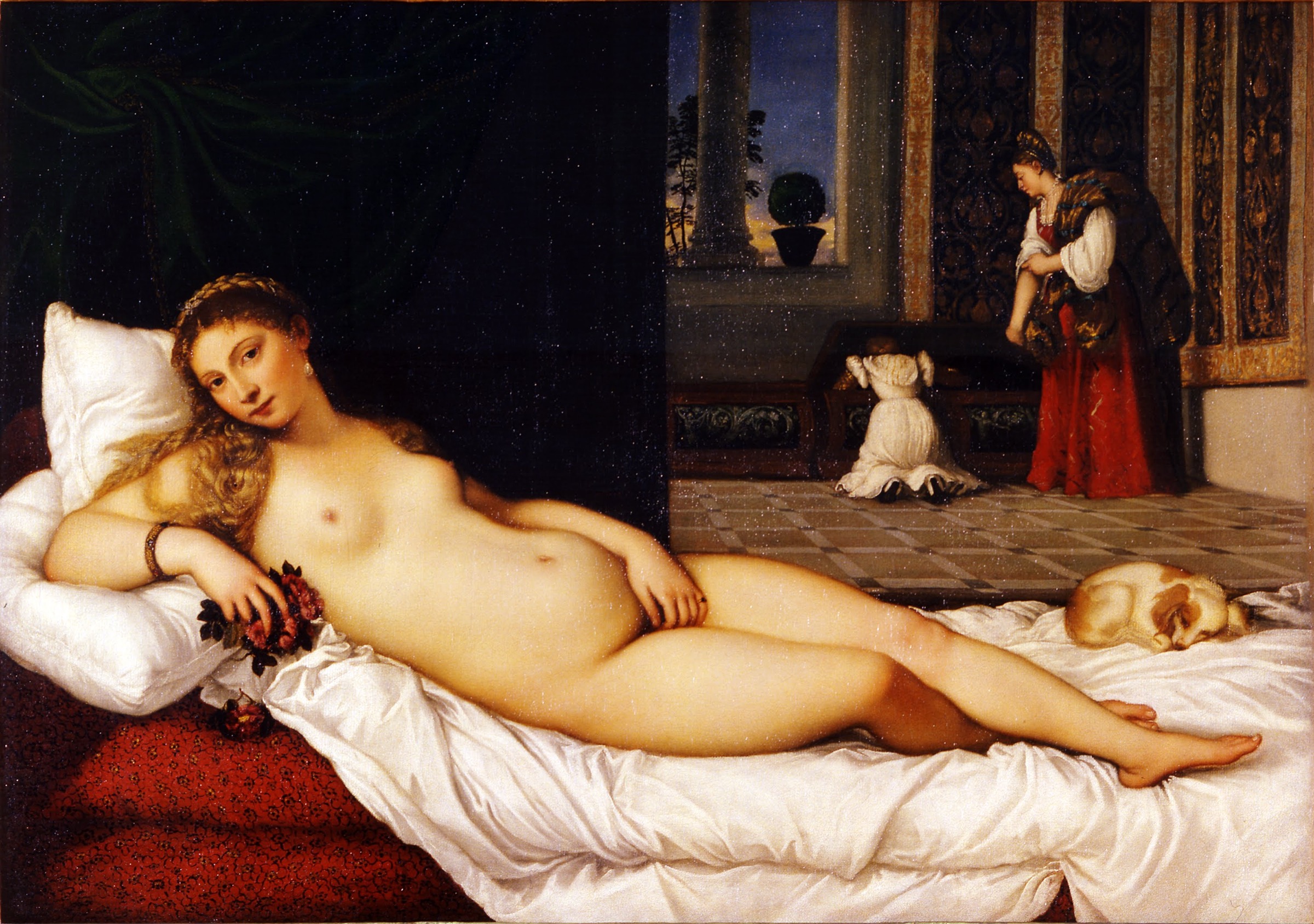
That painting also shows why Titian is so hard to reduce to one label. It is neither just mythological painting nor just erotic picture. It is both, and its power comes from refusing to settle cleanly. Titian does not simplify the image into one message. He keeps several functions alive at once, then makes paint itself hold them together.
Legacy and influence: from Rubens to Manet
Titian's legacy is enormous because later painters learned different lessons from him. Peter Paul Rubens studies how color can move bodies through space and turn flesh into public rhetoric. In Olympia, Manet studies something else: how Titian's reclining nude can be borrowed, stripped of its soft continuity, and made socially abrasive. Both inherit Titian, but neither repeats him.
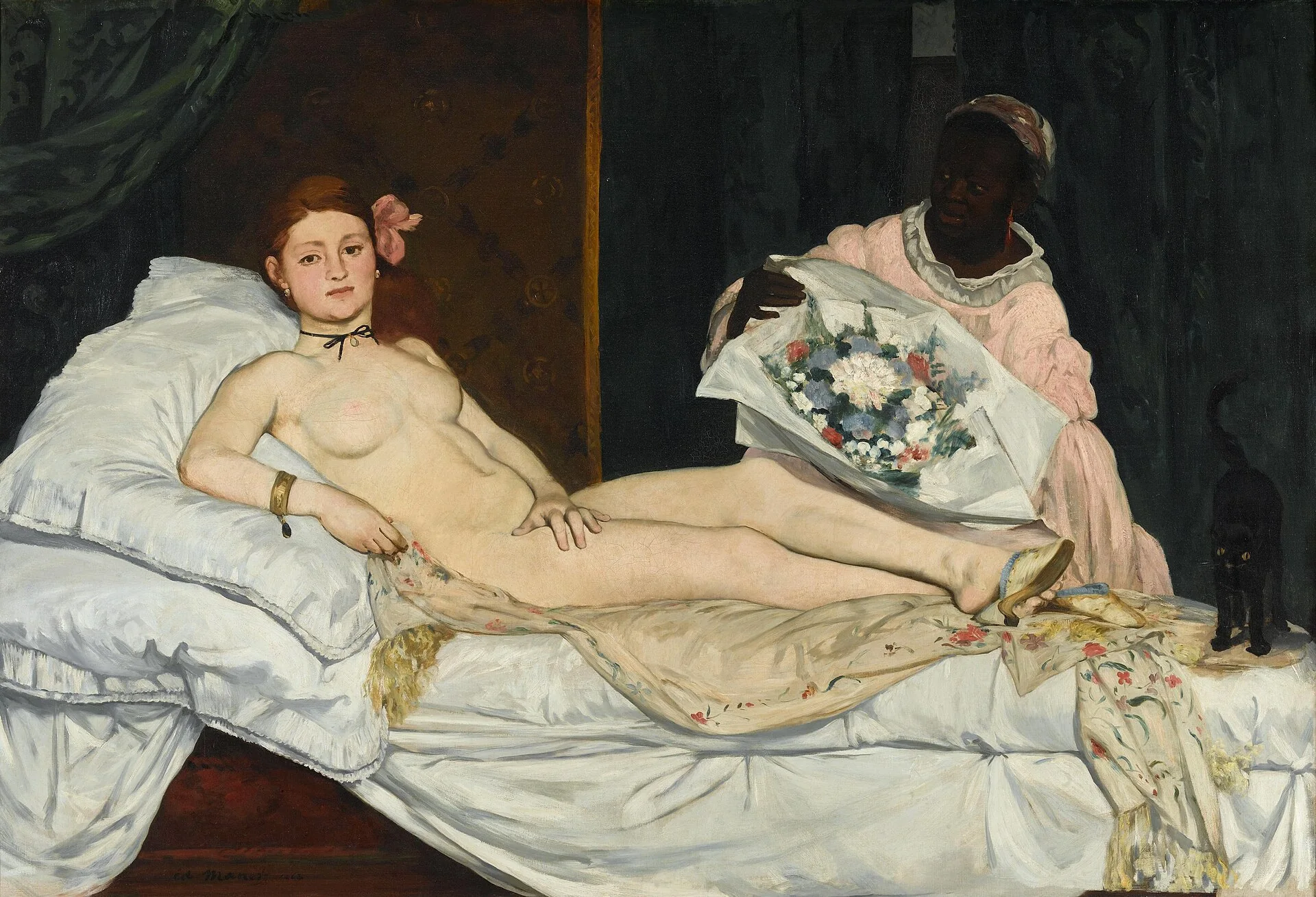
Titian remains indispensable because later painting keeps returning to him for different reasons. Rubens learns breadth and velocity from him. Velázquez studies the authority of painted surface. Manet turns his nude into a modern argument about class, sex, and looking. Once you see that line, Titian stops being a distant Renaissance name and becomes structurally active across centuries.
Routes from Titian on Explainary
Associated movements
Then try the art quiz.