
Northern Renaissance Artist
Pieter Bruegel the Elder
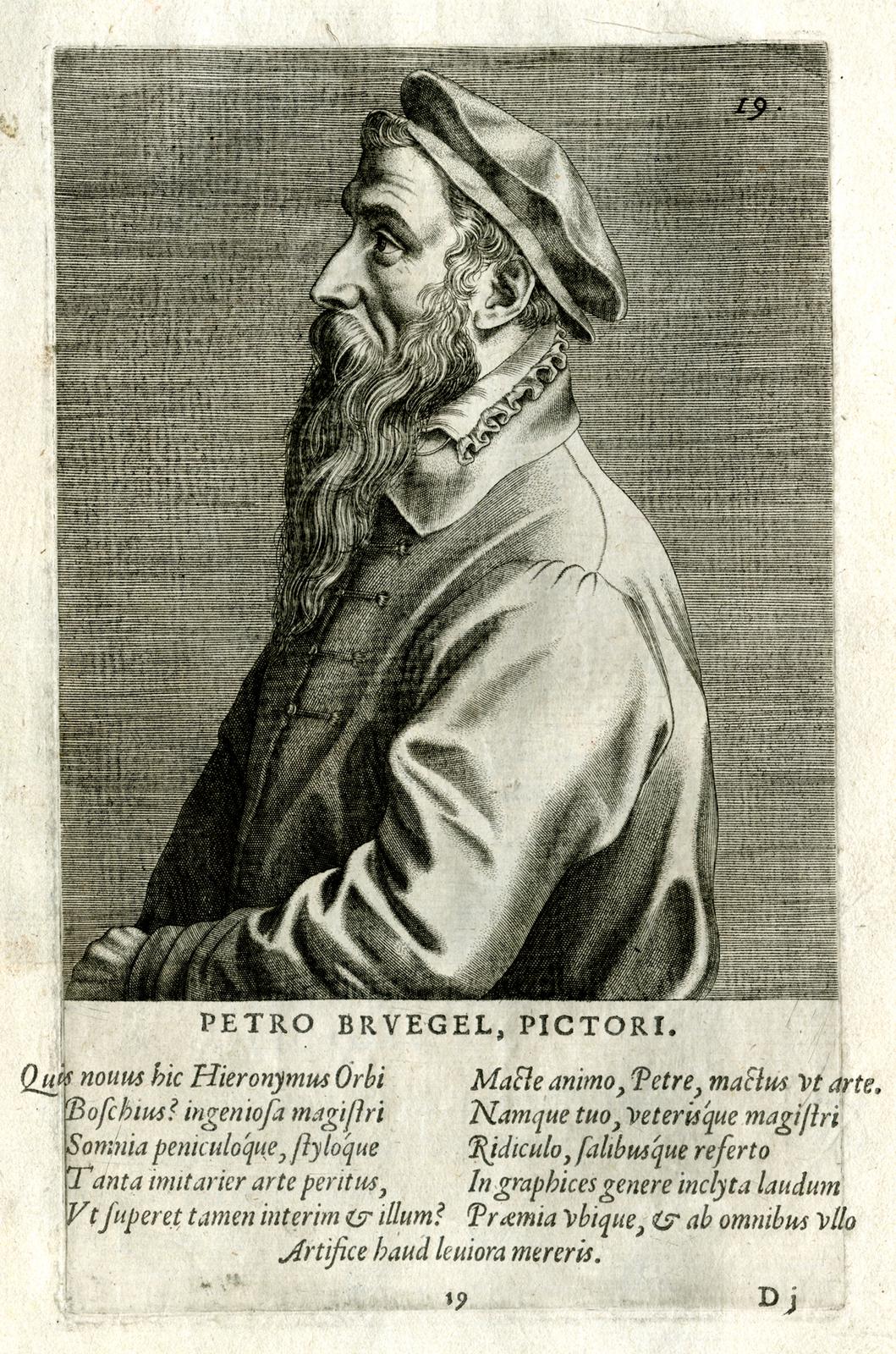
Pieter Bruegel the Elder is the painter of seasons, crowds, village routines, and whole landscapes seen at once. He is often introduced through peasant scenes, but that can shrink him too quickly. Bruegel's real achievement is structural: he shows how many lives fit inside one weather system, one ritual calendar, or one social field. That is why he remains such a strong bridge between Bosch's Northern density and later landscape painting.
From Antwerp print culture to painted panoramas
Bruegel worked in a sixteenth-century Netherlandish world shaped by trade, urban workshops, humanist learning, and print circulation. He was active in Antwerp, designed prints for the publisher Hieronymus Cock, traveled to Italy, and ended his career in Brussels. That sequence matters because it helps explain the unusual breadth of his pictorial intelligence. He is informed by print culture, by travel, by local observation, and by a market that could reward both learned satire and close attention to ordinary life.
This is also why Bruegel never looks provincial in the weak sense of the word. Village, road, harvest, or snowfall are never treated as narrow local curiosities. They are used to think at scale about work, ritual, folly, conflict, and collective behavior.
One winter scene shows the method
Start with Hunters in the Snow. The painting is one panel in Bruegel's 1565 cycle of the seasons, and it makes his method legible at once. A few weary hunters occupy the foreground, but the image quickly opens into skaters, villagers, smoke, frozen water, bare trees, and mountains. One task is visible, yet the real subject is a whole winter order.
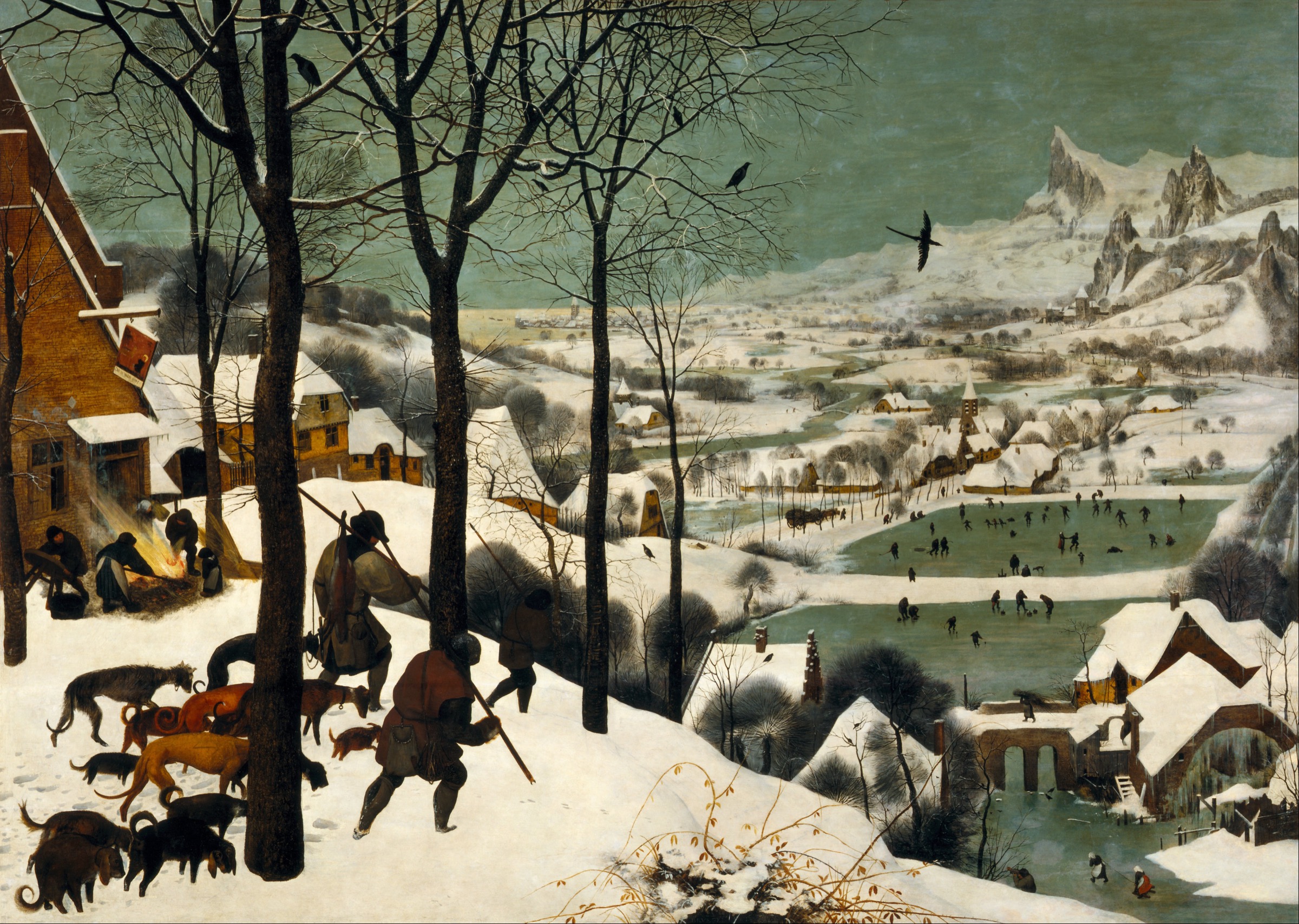
That corrects the lazy summary of Bruegel as merely "the peasant painter." He certainly paints rural work and common life, but he does so to understand scale: how local action sits inside climate, time, and group existence. His pictures are social before they are picturesque.
After Bosch, but in a cooler register
Bruegel is often discussed after Bosch, and the link is real. Both painters reward slow reading, distribute meaning widely across the surface, and trust viewers to move between micro incident and larger order. But Bruegel cools the temperature. Instead of Bosch's visionary pressure, he gives you observed environments, plausible bodies, and a stronger sense that people inhabit systems larger than themselves.
That shift matters historically. Bruegel keeps the Northern habit of dense looking, but he moves it toward landscape, crowd behavior, proverbs, seasonal cycles, and public ritual. The world feels less apocalyptic and more social, though never simple. His paintings can be comic, grim, observational, and analytical at the same time.
Crowds, overview, and the intelligence of distance
One of Bruegel's strongest inventions is distance itself. He repeatedly places the viewer high enough, or far enough back, to see many people together without losing the individuality of local actions. That is true in winter scenes, festival scenes, and moral allegories alike. The eye can roam, but the structure holds.
This makes Bruegel unusually modern to read. He understands that a society can be pictured not only through rulers, saints, or isolated heroes, but through repeated small actions spread across a large field. His paintings train viewers to scan, compare, and connect. They do not surrender meaning immediately, yet they never feel obscure for its own sake.
What Bruegel enlarges in painting
Bruegel matters because he enlarges what serious painting can include. Labor, weather, proverb culture, village life, children on ice, and distant travelers all become fit material for images of high ambition. His influence helps explain his long afterlife in landscape, genre painting, literature, and cinema.
He also remains useful for learning how to read images. Bruegel teaches readers how to move between part and whole without treating either as secondary. Few artists show so clearly how detail, overview, and social interpretation can coexist in a single frame.
Key works in Explainary
Associated movements
Then try the art quiz.