
Northern Renaissance
Hunters in the Snow
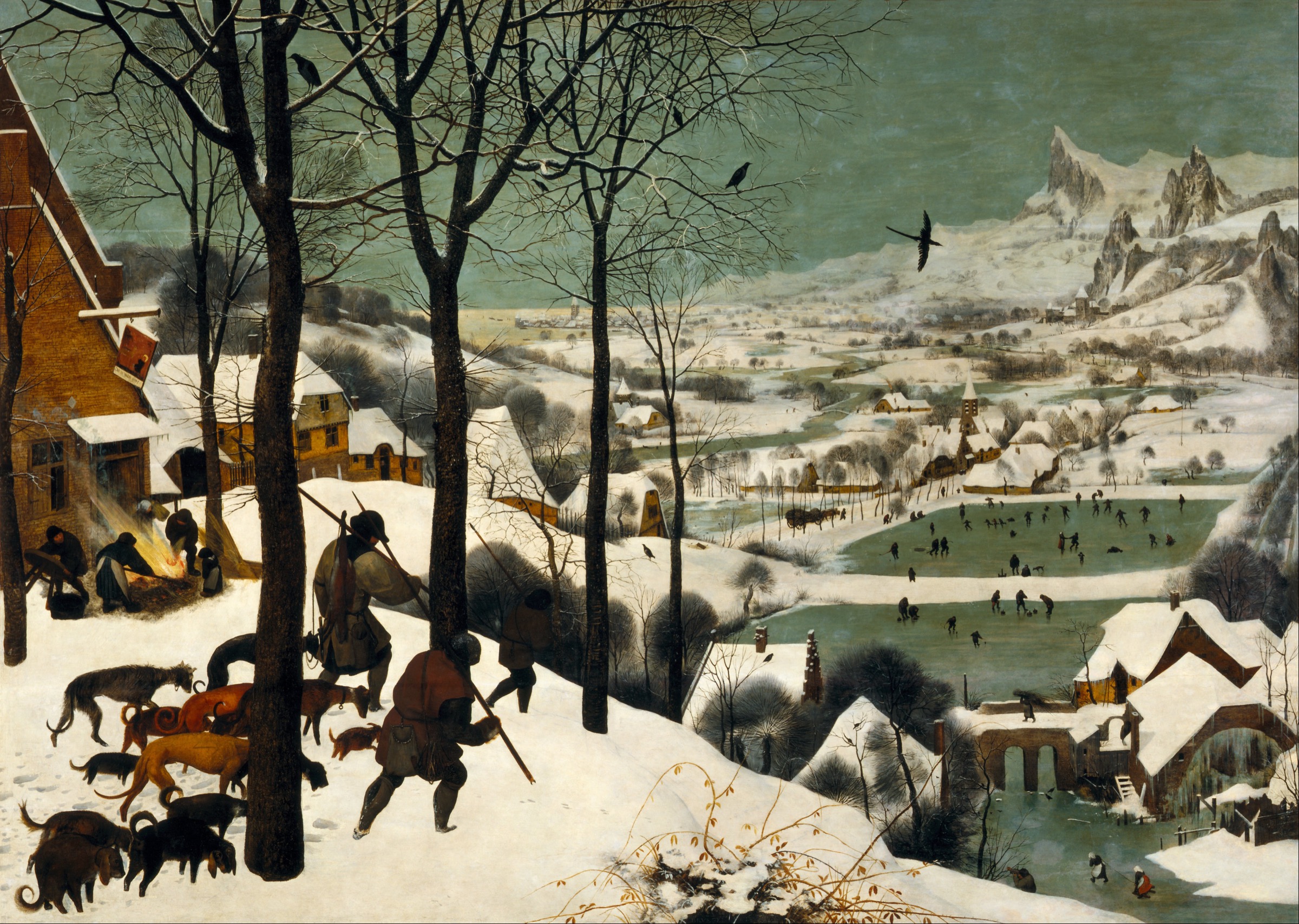
Three hunters and their dogs return down a dark slope while the whole valley opens below them in snow, ice, smoke, and distance. That contrast sets the painting's logic. Hunters in the Snow is one panel in Pieter Bruegel the Elder's 1565 seasonal cycle, usually discussed as the Months or Labors of the Months, and it works by holding one hard foreground task against an entire winter world. The painting is not only about the hunters. It is about how a season organizes work, play, travel, and survival all at once.
One winter panel in a larger seasonal project
The painting was made for the Antwerp merchant Niclaes Jongelinck, who commissioned a group of large panels on the seasons. That context changes the reading immediately. Bruegel is not producing an isolated anecdote about sport or peasant life. He is building one part of a larger system in which each season has its own rhythm, labor, and atmosphere.
That is why winter is described so broadly. The hunters are exhausted and carry almost nothing back, but the painting does not stop with their failure or hardship. It widens into a village, frozen ponds, birds, bare trees, fires, skaters, and distant mountain ridges. Winter here is not a backdrop. It is the condition that joins everything in the picture.
His aim is not to isolate the hunters as heroic protagonists. Bruegel's method is to start from one tired foreground action and open the image toward a much larger network of winter life, so the painting reads as social structure rather than hunting anecdote.
Foreground, middle distance, far distance
The composition is easy to grasp because Bruegel gives you three clear zones. In the foreground, the hunters and dogs move diagonally downward, heavy and dark against the snow. In the middle distance, villagers gather near an inn, a fire burns, and skaters animate the frozen water. In the far distance, the land opens into a vast white basin and then into jagged mountains under a cold sky.
That structure does more than make the picture readable. It changes what a landscape can do. Instead of presenting scenery for its own sake, Bruegel turns distance into social understanding. The foreground gives effort, the middle ground gives communal activity, and the background gives scale. You read the season by moving through those layers.
Winter as a social system
The painting's strongest idea is that winter organizes many lives at once. The hunters struggle. The skaters glide. People tend fire, move across the village, and continue ordinary routines in altered conditions. Bruegel therefore avoids both heroic hardship and decorative prettiness. He paints a season as shared structure.
That is why the painting still reads so clearly now. Environment is not a neutral setting here, but something that shapes labor, leisure, movement, and risk. The valley below is full of small incidents, but none of them feels random. Each one is a local answer to the same cold world.
Bruegel keeps Northern detail but opens it into landscape
Set the painting beside Bosch and the shift becomes obvious. Bruegel inherits Northern precision, small incident, and layered looking, but he gives them a different container. Instead of Bosch's visionary moral theater, he builds a world that feels observed, inhabited, and collective.
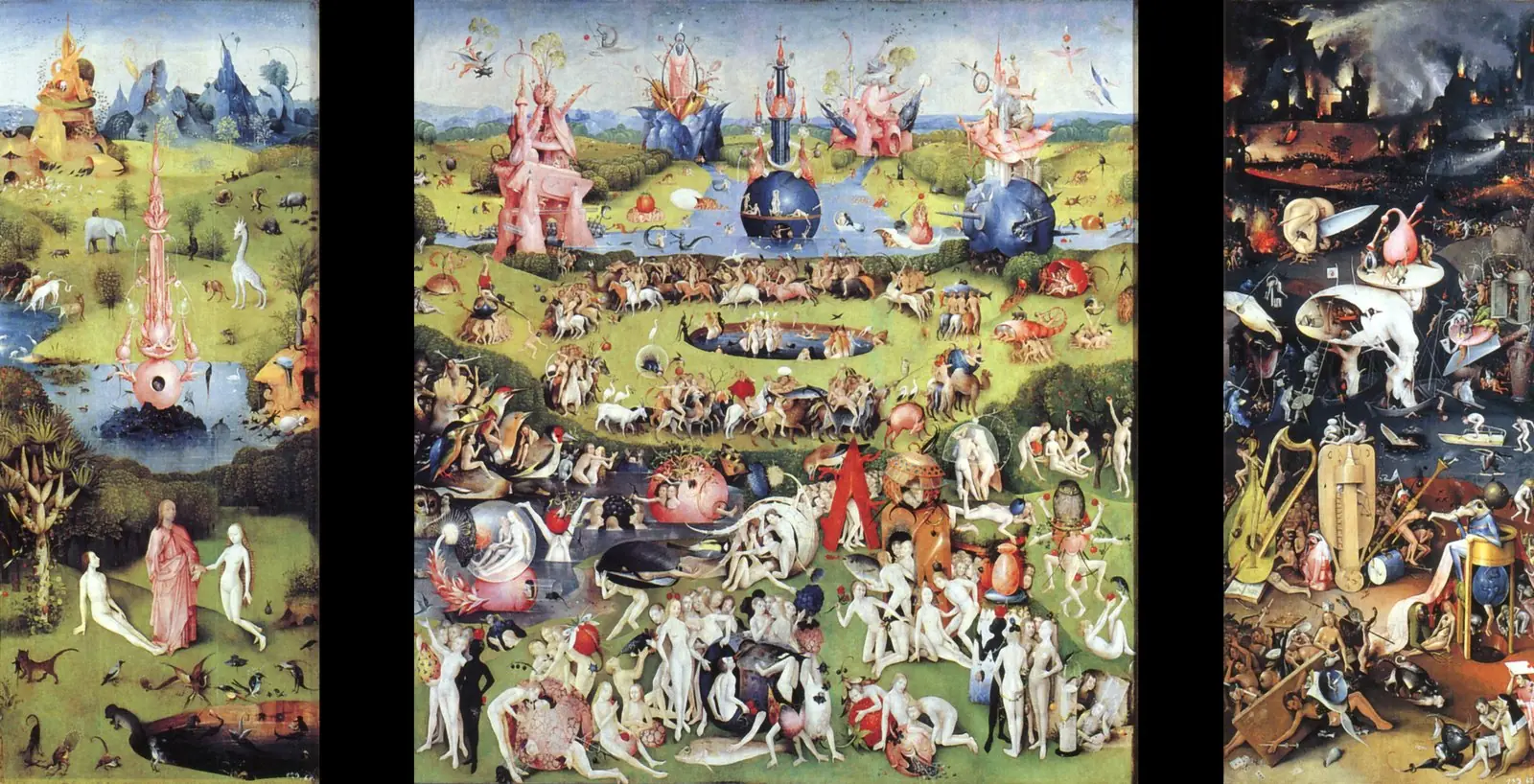
This is what makes Hunters in the Snow so important inside the Northern Renaissance. The picture keeps the Northern trust in detail, but it spreads that detail across weather, terrain, and collective life. Landscape becomes serious not because it excludes people, but because it shows how people are distributed inside a larger world.
How Bruegel keeps the panorama precise
Bruegel helped make seasonal landscape a durable subject, and this panel became one of the clearest proofs that a painting could be panoramic without becoming vague. It remains useful because it combines immediate readability with slow rewards. From across a room, you grasp winter. Up close, you see how each tiny action tightens that first impression.
That double effect explains its long afterlife. Artists, writers, and filmmakers keep returning to the painting because it solves a difficult problem elegantly: how do you show many lives at once without dissolving the whole image? Bruegel's answer is to make season itself the binding force.
Then try the art quiz.
Explore more
Related works
Primary sources
Frequently asked questions
It belongs to Bruegel's 1565 cycle of seasonal paintings, usually discussed as the Months or Labors of the Months. This panel is the winter image.
Bruegel makes winter social. The painting is not only about hunters in the foreground, but about how labor, weather, travel, play, and distance all fit into one shared landscape.
A strong next step is Northern Renaissance context and Bosch, to see how Bruegel keeps Northern density but opens it into seasonal landscape and collective life.