
Northern Renaissance
The Harvesters
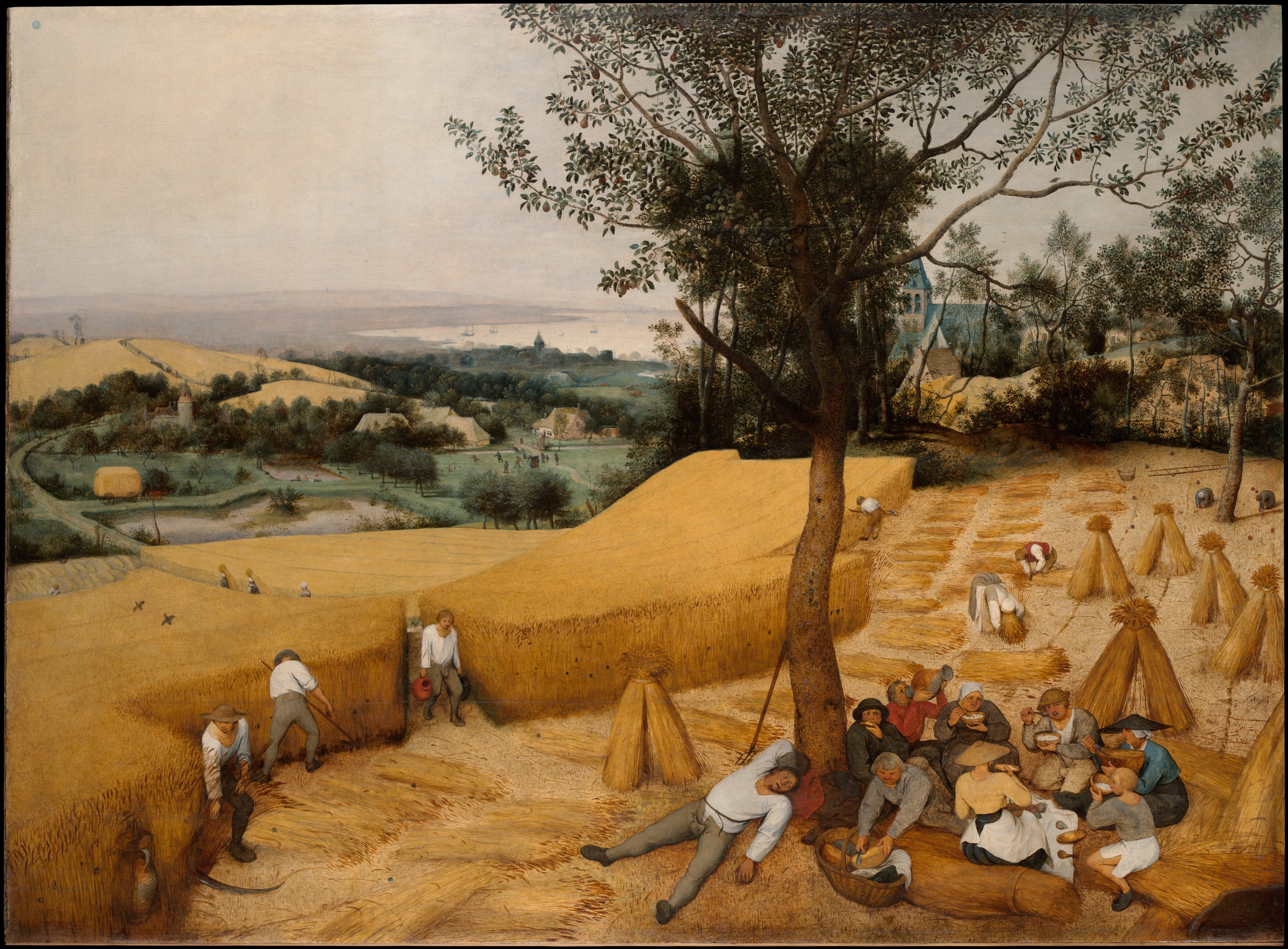
A man sleeps under a tree while wheat is cut, apples are gathered, and the whole countryside stretches out in summer heat. The Harvesters, painted by Pieter Bruegel the Elder in 1565 and now at The Metropolitan Museum of Art, turns a harvest into a complete social landscape. The subject is not only labor. It is the way work, rest, food, distance, and seasonal time hold together inside one broad field.
A summer panel from Bruegel's seasons
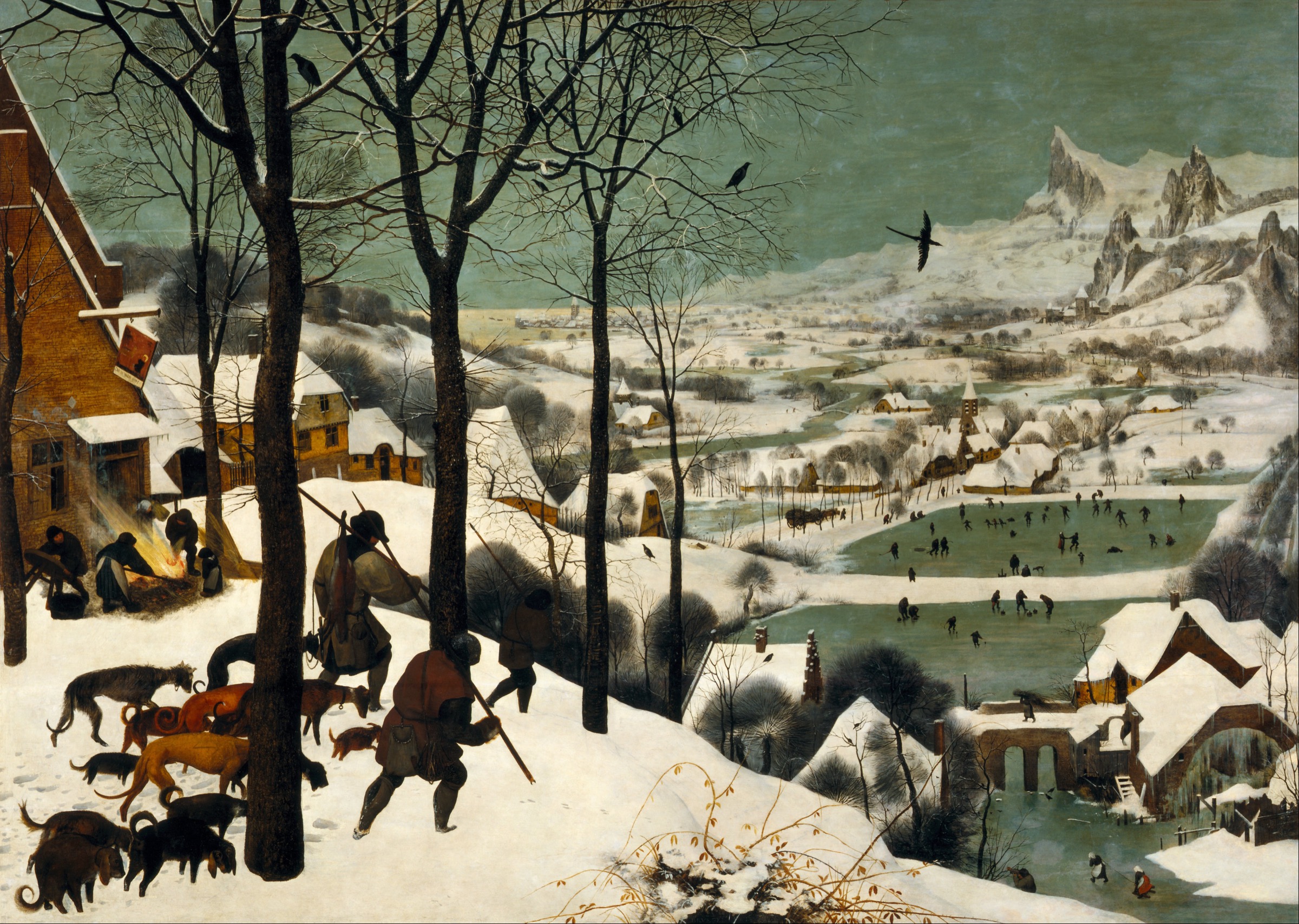
The Harvesters belongs to the same seasonal project as Hunters in the Snow. Bruegel made the cycle for the Antwerp merchant Niclaes Jongelinck, whose house received images of the year as large, ambitious paintings rather than small decorative scenes. The patronage shapes the view: rural labor appears before an urban elite viewer from a position of distance, ownership, and admiration.
The Met dates the picture to July or August, when cutting grain, eating in the shade, and gathering fruit all belong to the same seasonal rhythm. Bruegel does not freeze the harvest at one symbolic instant. He shows duration. Some bodies bend into work. Others pause. The field continues into a village, a road, a church, water, trees, and blue distance. Summer is visible as a system of tasks.
Work and rest share the foreground
The foreground is striking because Bruegel refuses a simple moral split between labor and idleness. The sleepers and eaters are not comic failures set against virtuous workers. Rest is part of the harvest. The man stretched beneath the tree, the group eating bread and cheese, and the reapers at work all belong to the same cycle of exertion, hunger, heat, and recovery.
The painting becomes unusually concrete. Bread appears inside a landscape of wheat. Food is not an abstract symbol of plenty; it is a social fact produced by labor and immediately consumed by workers. The wheel of cheese, the bowls, the shaded meal, and the standing grain make abundance visible, but Bruegel also keeps the bodies heavy, bent, and exposed to weather.
A landscape made for scanning
Bruegel's structure invites the eye to move slowly. The large tree anchors the foreground, the wheat creates a golden mass, and diagonal paths carry the view toward the village and the distant water. The painting feels wide because no single figure controls it. Instead, the image is built from distributed attention: harvesters, eaters, apple gatherers, walkers, buildings, fields, and horizon.
That distributed intelligence is central to the Northern Renaissance. Bruegel inherits the northern love of detail, but he uses it differently from Bosch. Bosch compresses the world into moral pressure. Bruegel opens it into landscape, where many local actions coexist without collapsing into one allegorical answer.
Abundance with a patron's distance
The scene looks generous, even peaceful, but it is not a transparent report from the fields. The painting was commissioned for a wealthy Antwerp patron, and the Met notes that Bruegel presents peasant labor in a sympathetic yet idealized way. The harvest is full, the bodies are solid, and the food is plentiful. The difficulty of agricultural work is present, but softened by harmony, distance, and the pleasures of looking.
That tension gives the painting its depth. It is neither a documentary image of hardship nor a simple celebration of rural innocence. It shows how sixteenth-century elite culture could admire the rhythms of labor while viewing them from outside. The picture lets us see rural work, but it also lets us see the conditions under which rural work became art for a collector's house.
A northern anchor for a Met route
The Harvesters is one of the strongest works for understanding the Met as more than a museum of famous individual masterpieces. It opens a path from European painting to food history, landscape, patronage, labor, and the politics of looking. It also gives a future Met route a necessary northern anchor beside works such as The Death of Socrates, Madame X, and Washington Crossing the Delaware.
Compare it with Hunters in the Snow and Bruegel's method becomes sharper. Winter is organized by cold, scarcity, and movement over ice. Summer is organized by heat, grain, food, and pause. Both paintings show that a season is not scenery. It is a structure that tells people what to do with their bodies.
Then try the art quiz.
Explore more
Related works
Primary sources
Frequently asked questions
The Harvesters is a 1565 oil-on-wood painting by Pieter Bruegel the Elder, now at The Metropolitan Museum of Art in New York. It belongs to Bruegel's seasonal cycle and shows harvest labor, rest, eating, and landscape in one panoramic summer image.
The painting is in The Metropolitan Museum of Art, New York, where it is part of the European Paintings collection.
The Harvesters is important because Bruegel turns landscape into social structure. The painting shows not only rural work but also rest, food, patronage, season, and collective life within one carefully organized field.