
Movement Guide
Northern Renaissance
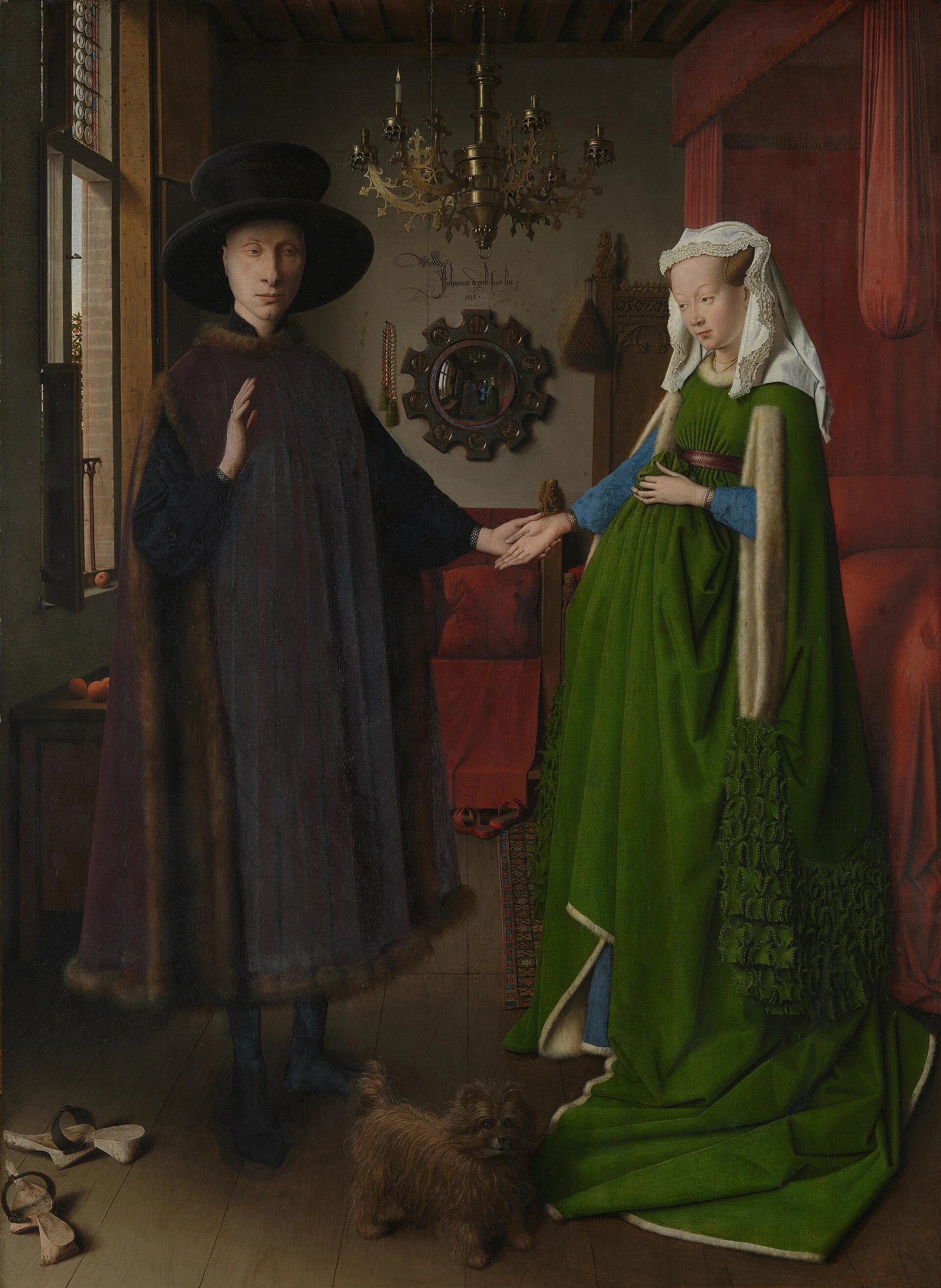
In Northern Renaissance art, a mirror, a fur cuff, a printed line, or a frozen pond can change the meaning of the whole image. Between the fifteenth and sixteenth centuries, artists in the Low Countries, the German lands, parts of present-day Belgium, the Netherlands, Germany, Switzerland, and neighboring regions use oil paint and print to make rooms, tools, bodies, and landscapes carry theology, trade, law, satire, and memory.
Northern Renaissance art does not simply describe the world carefully. It teaches viewers to read the world carefully. Surfaces, objects, and printed signs are not secondary decoration. They are where a large part of the argument happens.
Where it emerges, and why there
The movement is often introduced as if it were the Italian Renaissance repeated farther north. That misses the historical setting. Bruges and Antwerp sit inside dense trade networks. Nuremberg and Basel connect workshops, presses, merchants, scholars, and courts. Urban wealth, lay devotion, and book culture create a strong demand for portable, precise, and interpretable images.
Those conditions produce different pictorial habits. Instead of treating the image mainly as an ideal stage for balanced bodies and classical clarity, Northern artists load it with materials, tools, inscriptions, textures, and portable signs. The room, the printed sheet, and the object become as important as the monumental body.
Oil painting and printmaking matter so much here because they answer the movement's main needs directly. Oil can make wood, fur, brass, glass, skin, and reflected light feel trustworthy enough to carry social and devotional meaning. Print can move an argument across Europe faster than a single panel ever could.
Jan van Eyck makes a room behave like evidence
Jan van Eyck is where the movement becomes immediately legible. In The Arnolfini Portrait, nothing is merely decorative. The oranges, chandelier, mirror, bed, clogs, dog, and joined hands help turn a domestic interior into something close to sworn visual testimony. Oil technique matters here because it makes surfaces trustworthy enough to carry legal, devotional, and social implication at once.
Exact description is never separate from interpretation. The room looks calm, but it is full of pressure. Northern painting learns early that material precision can thicken meaning rather than slow it down.
Dürer makes the movement portable
With Albrecht Dürer, Northern intelligence becomes reproducible. In Nuremberg, engraving and woodcut allow images to circulate far beyond a single patron, chapel, or household. That changes not only distribution but also thought itself. A print can travel, be copied, be studied, and be argued over.
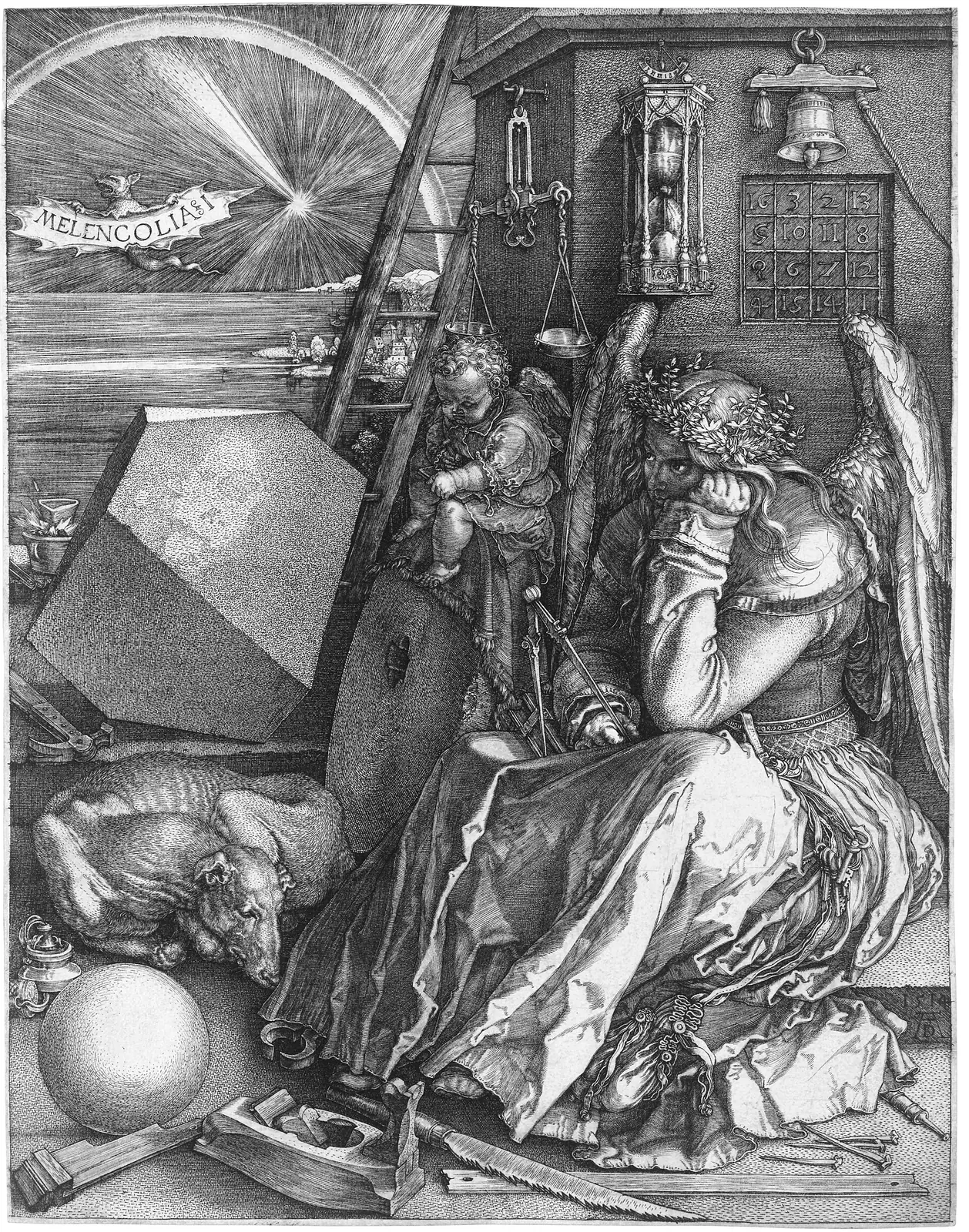
In works such as Melencolia I and Knight, Death and the Devil, Dürer uses print to produce not just illustration but argument. Tools, animals, textures, geometry, armor, and skulls are arranged with the precision of thought. The Northern Renaissance is therefore not only a painting culture. It is also a culture of sheets, presses, and portable complexity.
Bosch and Bruegel widen the field
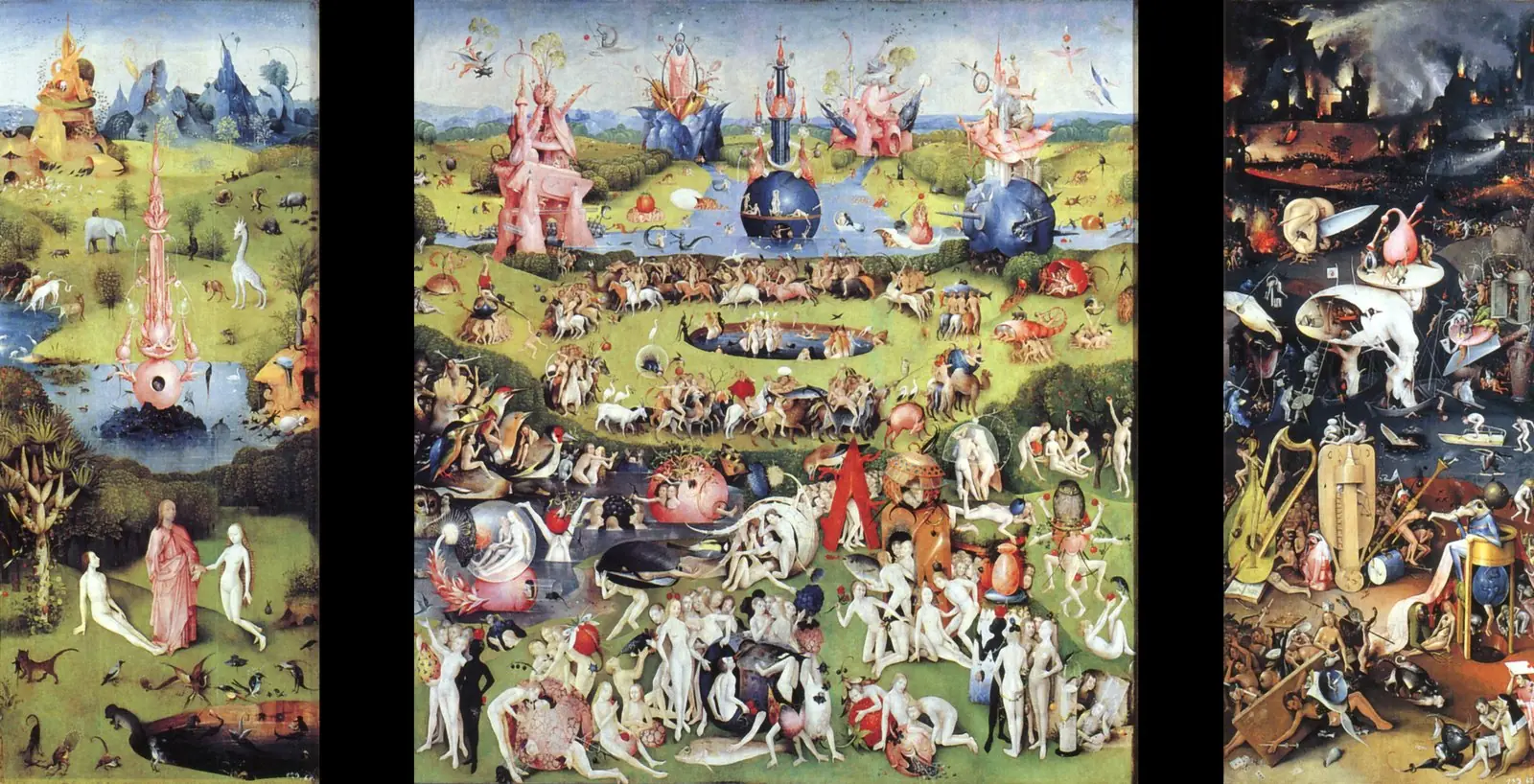
Hieronymus Bosch shows how dense Northern looking can become when it is pushed toward moral overload. In The Garden of Earthly Delights, the eye keeps discovering bodies, hybrids, punishments, temptations, and impossible transitions. The picture behaves less like a stable window than like a field of escalating interpretation.
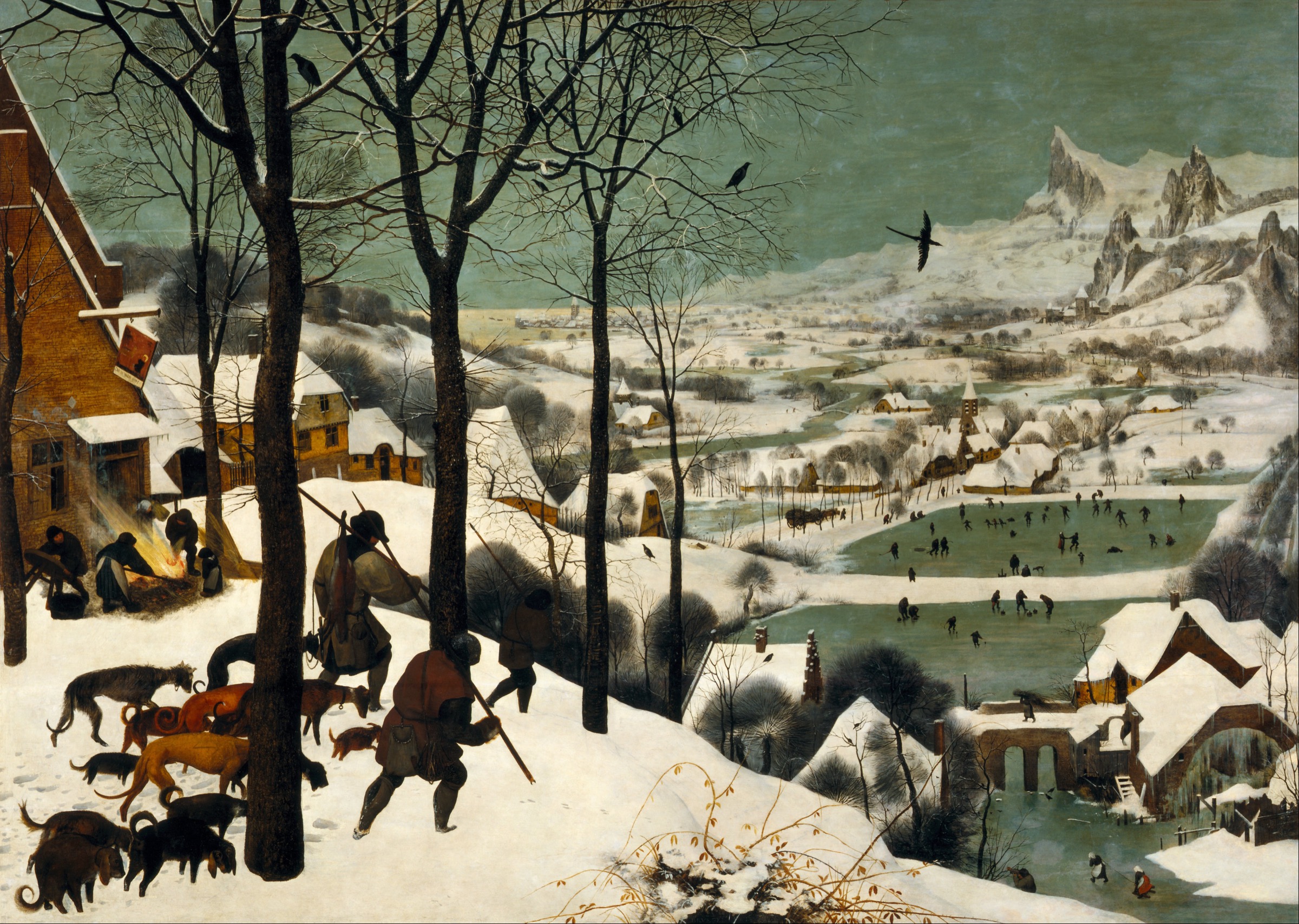
Pieter Bruegel the Elder keeps that distributed intelligence but cools it. In Hunters in the Snow, the same appetite for incident opens into weather, labor, village life, and distance. Detail no longer only loads a panel with symbolic pressure; it becomes a way of understanding how many lives fit inside one environment.
Holbein turns objects into public argument
By the sixteenth century, and under the pressure of court service, diplomacy, and confessional fracture, the movement also produces some of Europe's sharpest images of public life. In The Ambassadors, Hans Holbein the Younger uses globes, instruments, books, fabrics, and an anamorphic skull to make diplomacy itself readable. The painting looks poised and controlled, yet nearly every object carries pressure: confession, measurement, learning, wealth, mortality, fracture.
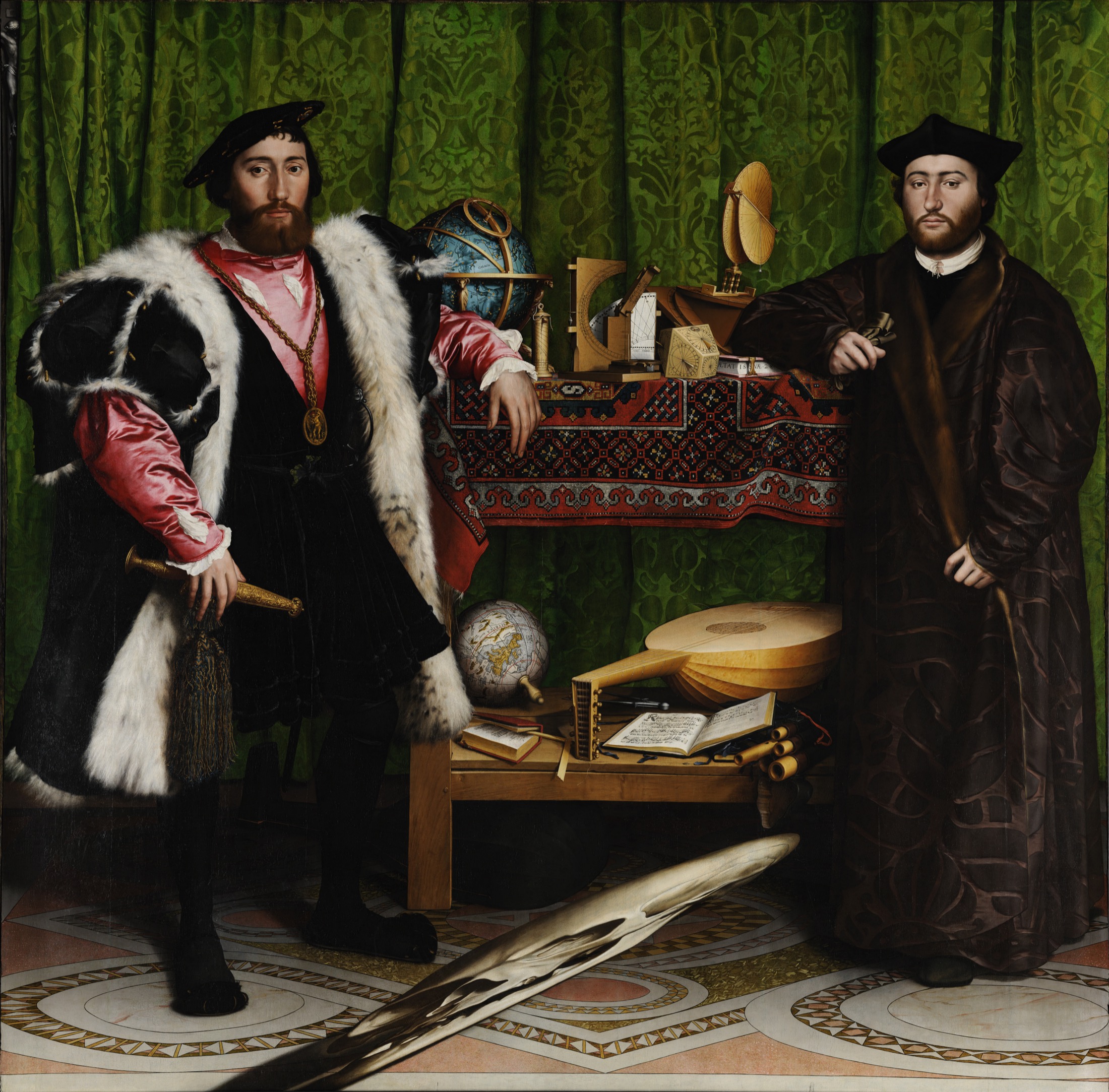
The movement has now moved from devotion and domestic witness into politics, learning, and representation at the highest level. Objects do not lose their force when the setting becomes elite. They become even more strategic.
How to read Northern Renaissance art without overreading
The movement invites interpretation, but it punishes fantasy. The best method is sequential: describe the object first, then test what it may mean, then ask who the image was made for and how such images circulated.
- Describe function before symbolism.
- Ask whether oil finish or print line changes the force of the claim.
- Compare private, devotional, and civic settings before assigning meaning.
- Notice when landscape or crowd scale changes the kind of reading required.
Artists to move through
Works to move through
For the direct side-by-side comparison with Italy, read Italian Renaissance vs Northern Renaissance. It clarifies the difference in bodies, objects, oil detail, and print.
A compact route runs from The Arnolfini Portrait to Melencolia I, then from Bosch beside Bruegel's Hunters in the Snow and The Harvesters to The Ambassadors. It moves from the room to the printed sheet, then to the widened world, and finally to public argument.
Then try the art quiz.
Primary sources
Frequently asked questions
No. It shares humanist ambition with Italy, but it develops in different conditions: urban markets, lay devotion, merchant patronage, and especially the growth of print. Its art relies more heavily on objects, surfaces, and portable images as carriers of meaning.
Because objects are rarely neutral. Mirrors, fabrics, tools, books, instruments, and domestic items can all help a painting function as testimony, devotion, satire, or public argument. The movement teaches viewers to treat material detail as active meaning.
Because all of them trust dense looking. Van Eyck uses objects and surfaces to thicken meaning, Dürer does the same through print, Bosch pushes detail toward moral overload, and Bruegel opens it into crowd life and landscape. The subjects differ, but the discipline of seeing remains related.