
Baroque Artist
Peter Paul Rubens
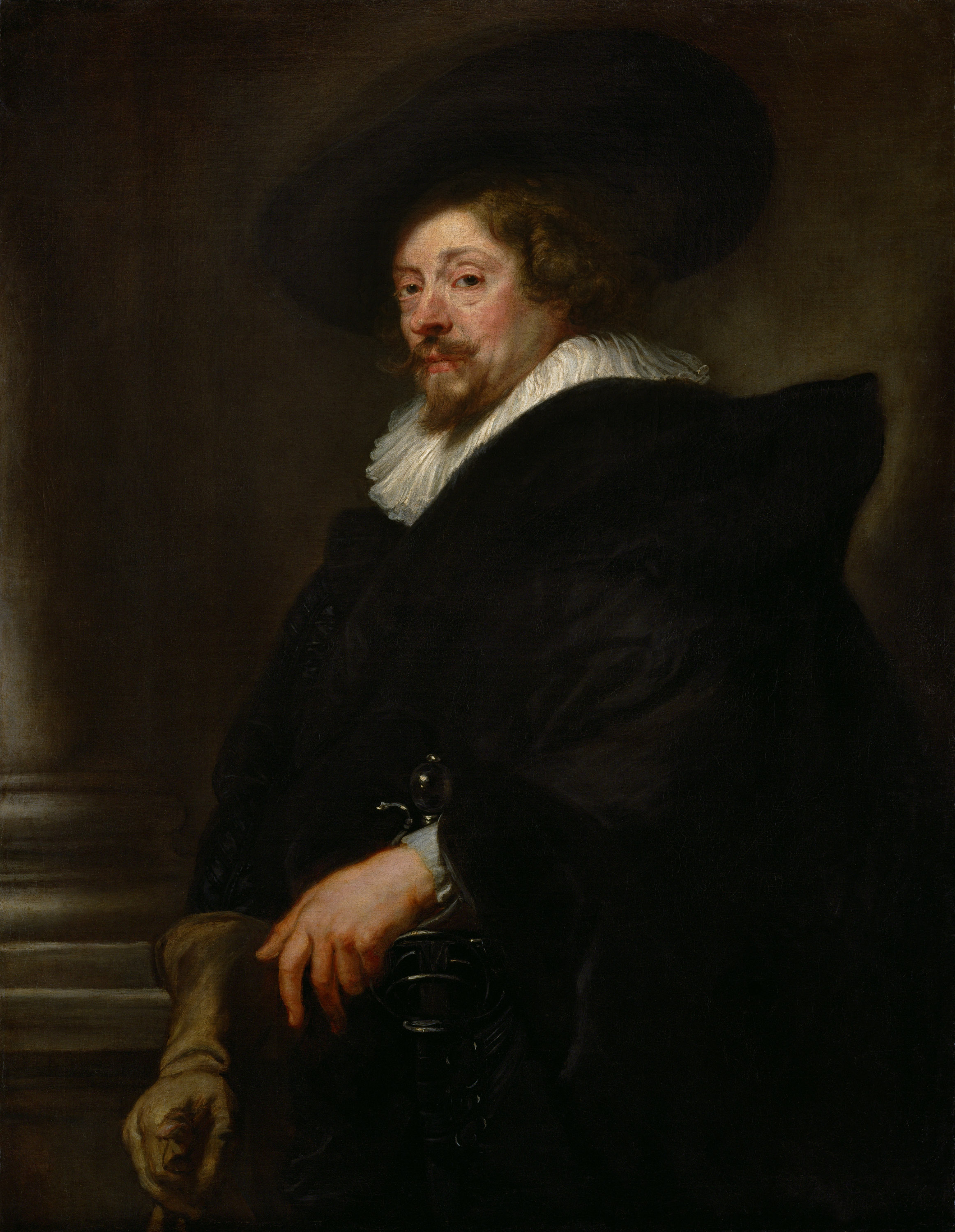
Peter Paul Rubens is the Flemish painter of twisting bodies, lifted drapery, and images large enough to organize a church or a court. He is often remembered for abundance, and the word fits: more color, more motion, more figures, more scale. But the real achievement is structural. Rubens knew how to turn many bodies into one readable surge. Inside Baroque art, his role is decisive: he proves that expansiveness does not have to mean confusion.
Painter, diplomat, and Antwerp strategist
Born in 1577 and active above all in Antwerp, Rubens built a career that moved between workshop labor, learned humanist culture, court service, and diplomacy. He spent formative years in Italy, studied antique sculpture and Venetian color, and returned north with a visual language far bigger than local convention. By the time he was running a major Antwerp workshop, he was not simply producing paintings. He was organizing an international operation.
That scale belongs to the work itself. Rubens is not a solitary genius working only through private inspiration. He is also a political artist in the broadest sense: someone who understood patrons, churches, dynastic prestige, and the public uses of image-making. His later diplomatic missions only sharpen what was already visible in the paintings themselves. He knew how to make visual authority travel.
With Rubens, scale is part of the meaning
Many artists can paint movement. Rubens is different because he builds movement for large settings. Altarpieces, ceiling programs, princely portraits, mythological cycles: all demand compositions that read at a distance and still reward closer looking. He solves that problem through sweeping diagonals, linked gestures, broad color rhythms, and bodies that carry momentum from one edge of the canvas to the other.
His pictures feel warm and public rather than narrowly spotlighted because he spreads attention across the surface while keeping the whole arrangement legible. Rubens does not usually trap the eye in a single dark chamber the way Caravaggio can. His gift is not only intensity. It is orchestration.
Rubens at work: The Descent from the Cross
The Descent from the Cross (Antwerp triptych) makes his method visible at once. A white shroud draws a long diagonal through the panel, Christ's body is lowered by many hands rather than isolated in heroic display, and grief is organized around an act of controlled handling. Rubens turns a sacred subject into a public image of coordinated motion.
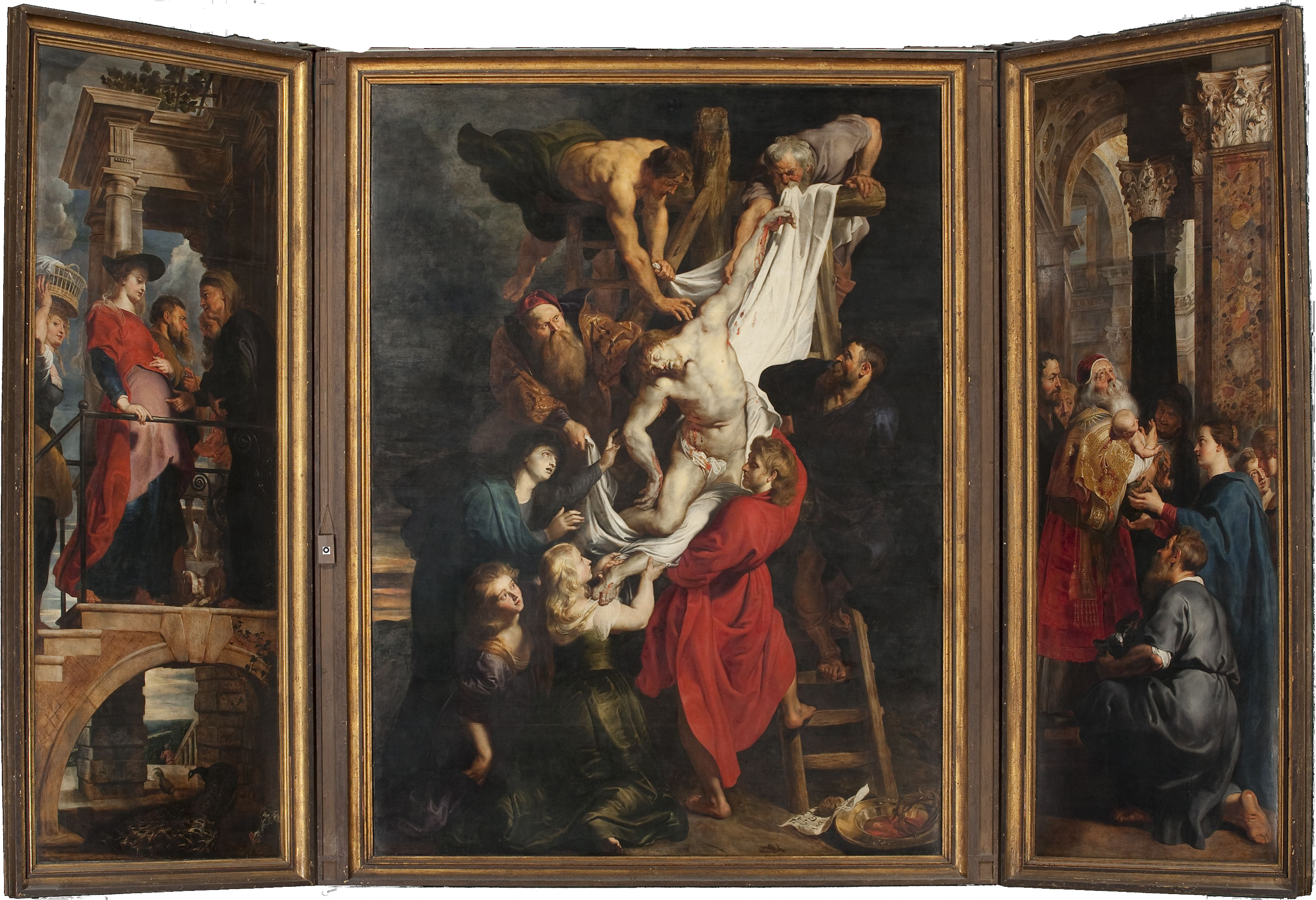
The painting corrects two lazy ideas at once. Rubens is not only a painter of flesh and excess, and Baroque religious art is not limited to dark-room shock. He builds grandeur through many figures working together. The result is emotionally immediate, but also formally exact.
The Lyon Adoration: a crowd held by touch
In The Adoration of the Magi, held by the Musée des Beaux-Arts de Lyon, Rubens applies the same discipline to a horizontal picture. The Christ Child and the kneeling king form the anchor; around them, gifts, servants, soldiers, fabrics, animals, and onlookers turn arrival into a readable Baroque surge.
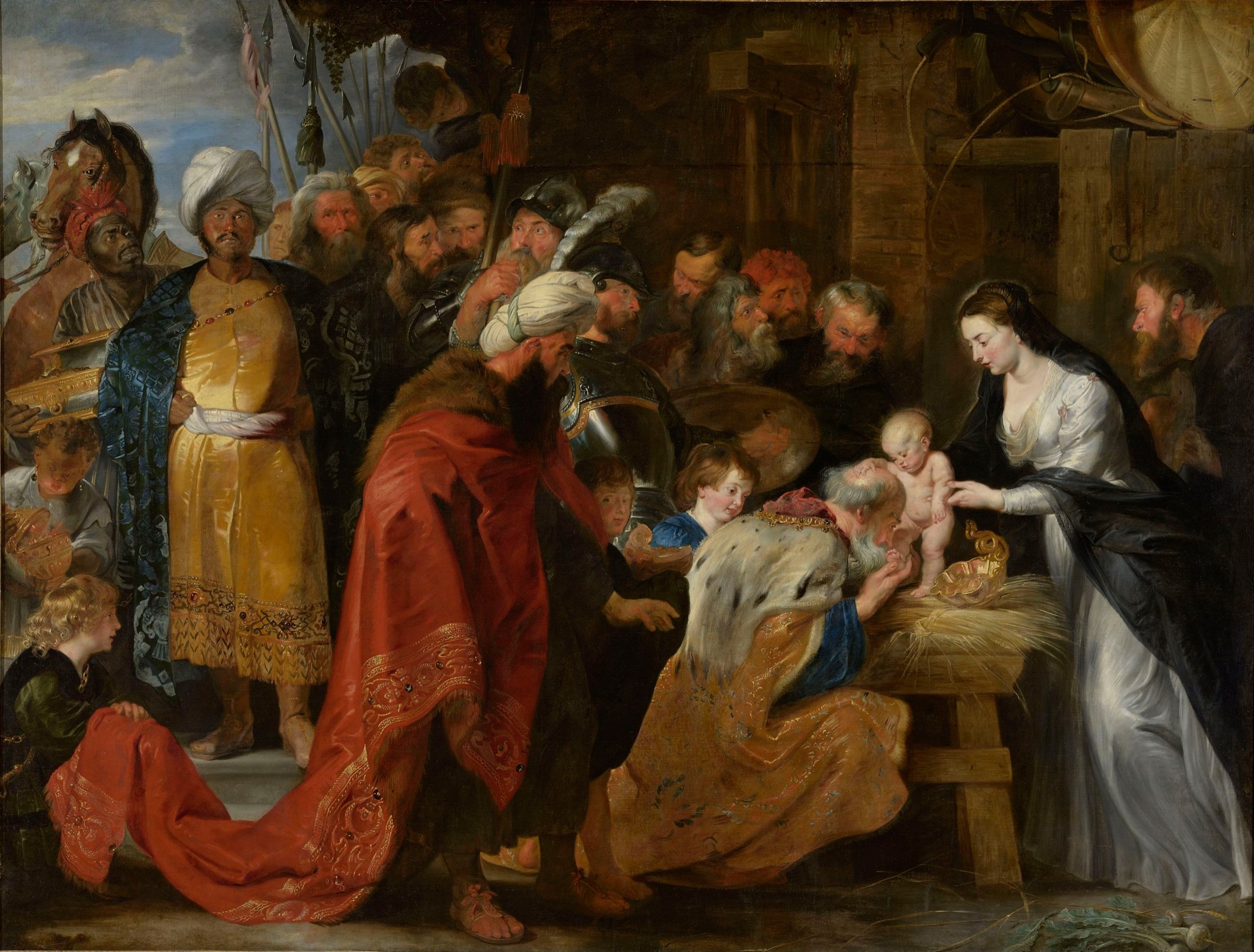
Placed beside The Descent from the Cross, the Lyon painting clarifies Rubens's range. One image lowers a dead body through coordinated grief; the other gathers a world around a living child. Both depend on linked bodies, persuasive color, and public readability.
More than motion: warmth, flesh, and persuasive color
Rubens's paintings move because color moves with them. Reds answer blacks, flesh tones open against white cloth, and light travels over skin and satin in broad, persuasive waves. He learned from Titian and other Venetians that color can guide the eye as powerfully as line. In Rubens, that lesson becomes public rhetoric.
The famous "Rubensian" body belongs here too. It is easy to reduce it to a cliché about voluptuous flesh, but that misses the point. Rubens uses bodies to store energy. Muscles twist, hips turn, cloth tightens, and the picture gains momentum because every form seems ready either to advance or to receive force. His figures are not static ideals. They are engines of pictorial pressure.
An Antwerp workshop with European reach
Rubens's workshop helped make his style continental. Assistants, collaborators, repeat commissions, and diplomatic contacts allowed his solutions to circulate far beyond Antwerp. Court painting, religious commissions, and luxury collecting all absorbed something from him. Even when later artists resist Rubens, they do so against a standard he helped set.
The legacy is clearest when he is placed between Caravaggio and later northern painters such as Rembrandt. Caravaggio compresses drama; Rubens expands it; Rembrandt redistributes it across civic and psychological space. Rubens is the crucial middle term if you want to understand how Baroque art became large, mobile, and internationally persuasive.
How to place Rubens within Baroque
Read The Descent from the Cross for Rubens's vertical church drama, then The Adoration of the Magi for his horizontal orchestration of crowd, gift, and touch. From there, the Baroque guide connects Rubens with Caravaggio and Rembrandt. Then try the art quiz.
Primary sources
- Rubenshuis: Biography of Rubens
- The National Gallery: Peter Paul Rubens
- The Met: Peter Paul Rubens and Anthony van Dyck (Paintings)
- Britannica: Peter Paul Rubens
- Cathedral of Our Lady Antwerp: The Descent from the Cross
- Musée des Beaux-Arts de Lyon: The Adoration of the Magi
- Wikimedia Commons: self-portrait image record