
Hudson River School Founder
Thomas Cole
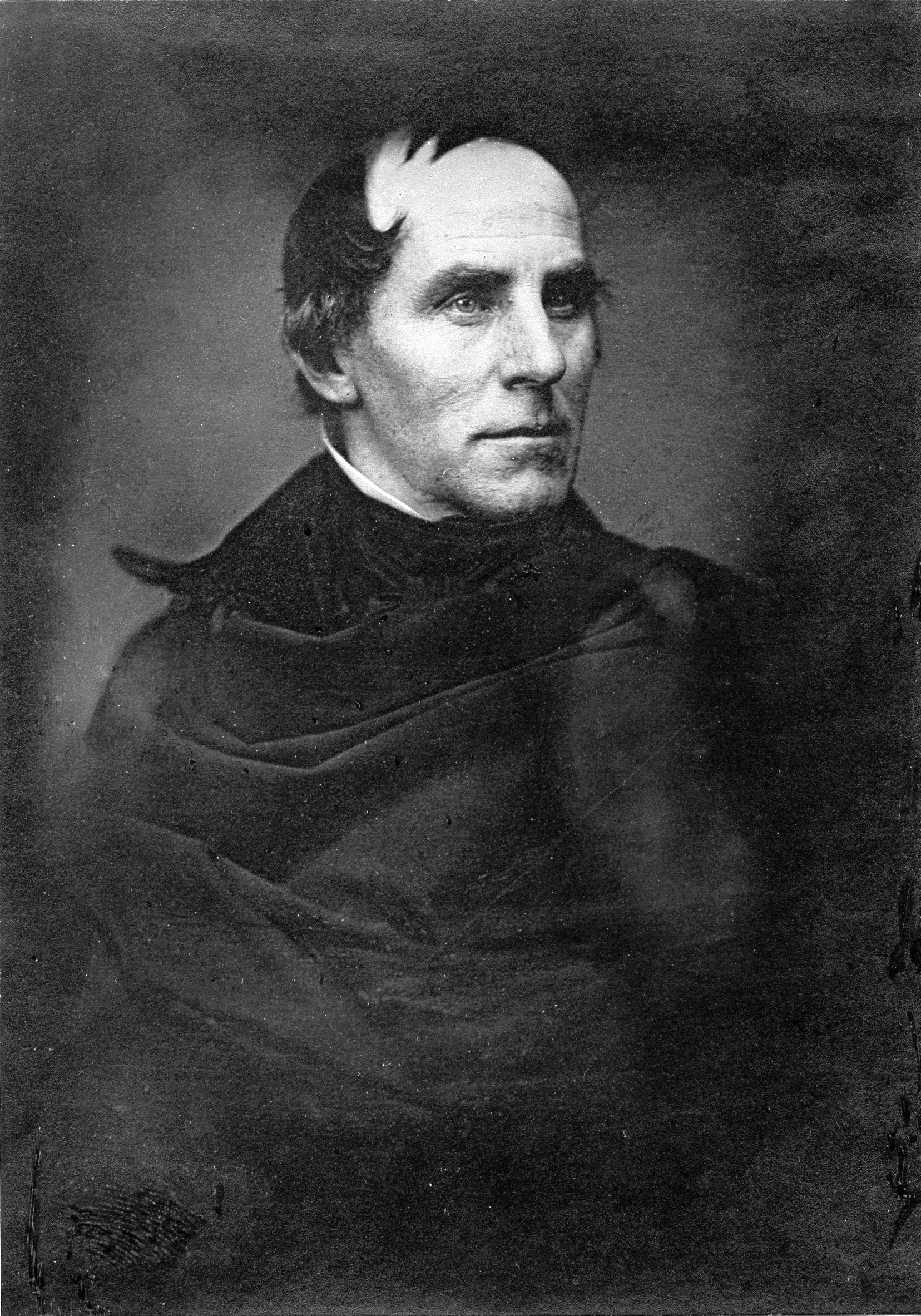
Thomas Cole is the painter who gave American landscape national ambition, moral tension, and a scale once reserved for history painting. Born in England and active in the United States, he did not treat scenery as backdrop. He treated it as a way to think about expansion, memory, religion, labor, and loss. That is why he matters so much. Cole is not only a painter of mountains, rivers, and storms. He is the artist who makes landscape bear the weight of a country's self-image.
Training and early career
Cole was born in 1801 in Bolton-le-Moors, in industrial Lancashire, and emigrated with his family to the United States in 1818. His training did not begin inside a long European academy career. He learned painting in a country still building its cultural institutions, first working in Ohio and then building his career in the Northeast. That mattered. Europe already had established hierarchies of grand subject matter. American landscape had not yet been granted the same dignity. Cole saw that gap and filled it. Early trips through the Hudson Valley, the Catskills, and New England convinced him that American scenery could support an art at once national and intellectually serious.
The result was not simple celebration. Cole admired the grandeur of the American land, but he was never easy about what settlement and economic development might do to it. That unease separates him from later postcard versions of national scenery. He paints beauty, but he also paints warning. His landscapes ask what a young republic chooses to honor, and what it is willing to destroy in the name of improvement.
Landscape as a public argument
Cole's paintings work because they are structured, not merely observed. Weather, light, clearing, river bend, fallen tree, and tiny figures are arranged to make the land readable as an idea. That is already clear in The Oxbow, where a storm-dark wilderness and a cultivated river valley occupy the same panoramic field. The picture is about looking, but it is also about judgment. The land is split between different futures, and the viewer has to read the terms of that split.
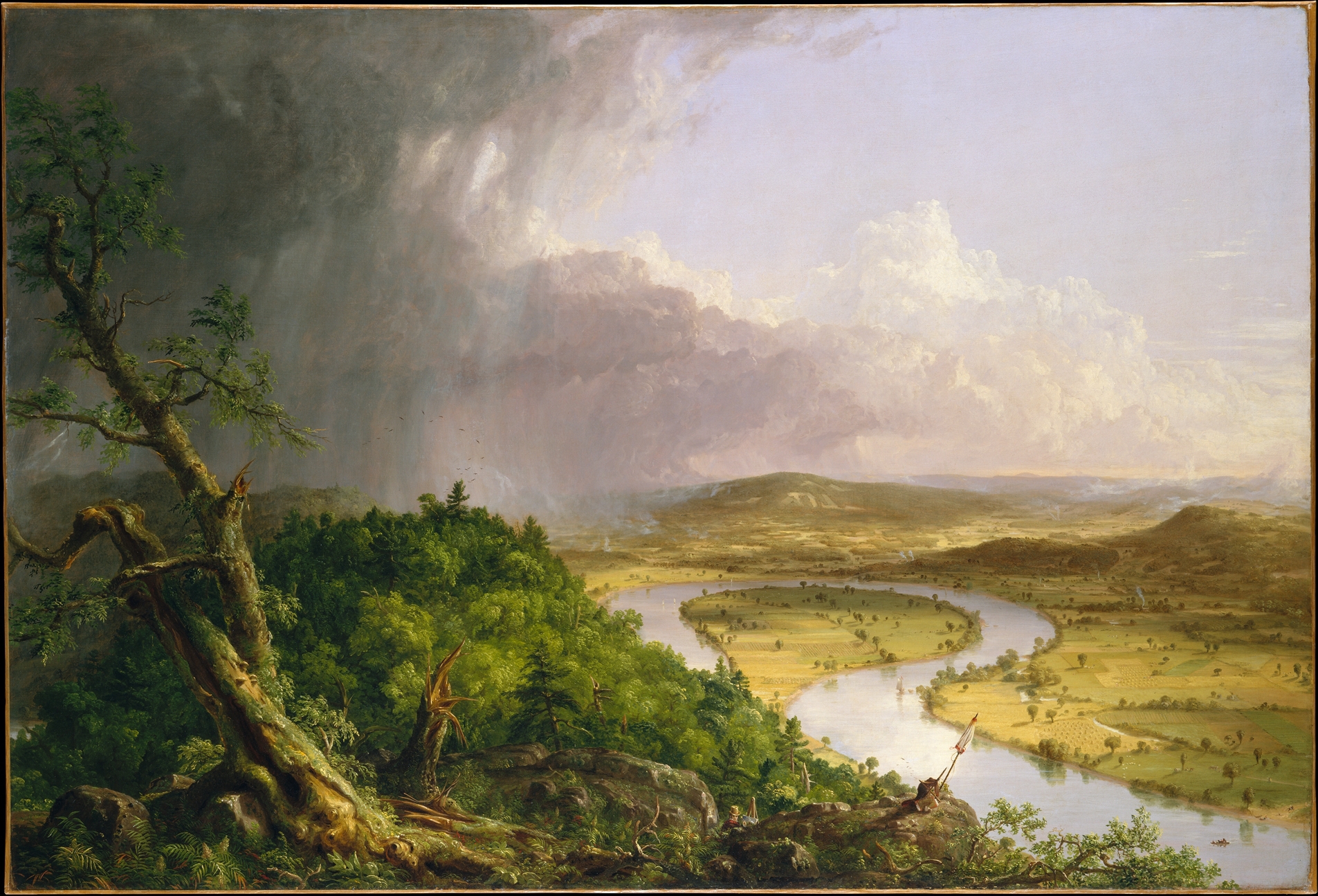
This is where Cole differs from a merely descriptive landscape painter. He does not want the viewer to say only, "what a magnificent view." He wants the land to become legible as a moral and historical field. The painter's job, in his hands, is not to copy scenery but to compose it until its tensions become visible.
The founder of the Hudson River School
Because of that ambition, Cole stands at the origin of the Hudson River School. The phrase names more than a place. It names a way of giving American landscape scale, luminosity, and public seriousness. Later painters would expand the panoramic distances and atmospheric clarity associated with the movement, but Cole sets its intellectual terms. The wilderness is never neutral. The cultivated valley is never just a pleasant improvement. The nation enters the picture through land.
That is also why Cole belongs within a wider nineteenth-century Romantic field. He shares with Caspar David Friedrich and J. M. W. Turner an interest in scale, weather, instability, and the limits of human control. But his emphasis is more civic. Where Friedrich often turns inward and Turner collides atmosphere with industrial force, Cole asks what a national landscape should mean in a republic that is still inventing itself.
History, allegory, and the fear of decline
Cole's ambition goes beyond topographical landscape. He also painted allegorical and historical cycles, most famously The Course of Empire, in which a civilization rises, triumphs, declines, and collapses. Even when no mountains or rivers dominate the frame, the same concern remains: what happens when prosperity hardens into excess, and when power loses its moral center? That question helps explain why his landscapes feel so charged. They are not detached views. They belong to a larger meditation on how societies occupy time and space.
Read from that angle, Cole becomes a far more complicated figure than the simple founder of an "American nature school." He is a landscape painter who keeps history inside the landscape. Trees, clouds, cuts in the land, and traces of cultivation all carry pressure from outside themselves. He paints scenery, but he is thinking about civilization.
Legacy and influence
Cole's legacy begins inside the Hudson River School itself. Later American landscape painters inherit from him the panoramic scale, the charged weather, and the idea that land can carry public meaning. His influence is visible not only in the grandeur of later nineteenth-century landscape, but in the expectation that scenery can also become historical thought.
He also helped define how American art could imagine the land at national scale without making that imagination innocent. Later viewers can admire the grandeur and still feel the tension. Settlement is visible. Erasure is visible. The beauty of the land and the ideology wrapped around it are difficult to separate. That complexity is one reason his work remains so useful now. After Cole, landscape can be more than scenery, more than travel record, more than private reverie. It can carry moral argument, public ambition, and historical anxiety all at once.
Continue with Thomas Cole
Then try the art quiz.