
Artist Analysis
Caspar David Friedrich
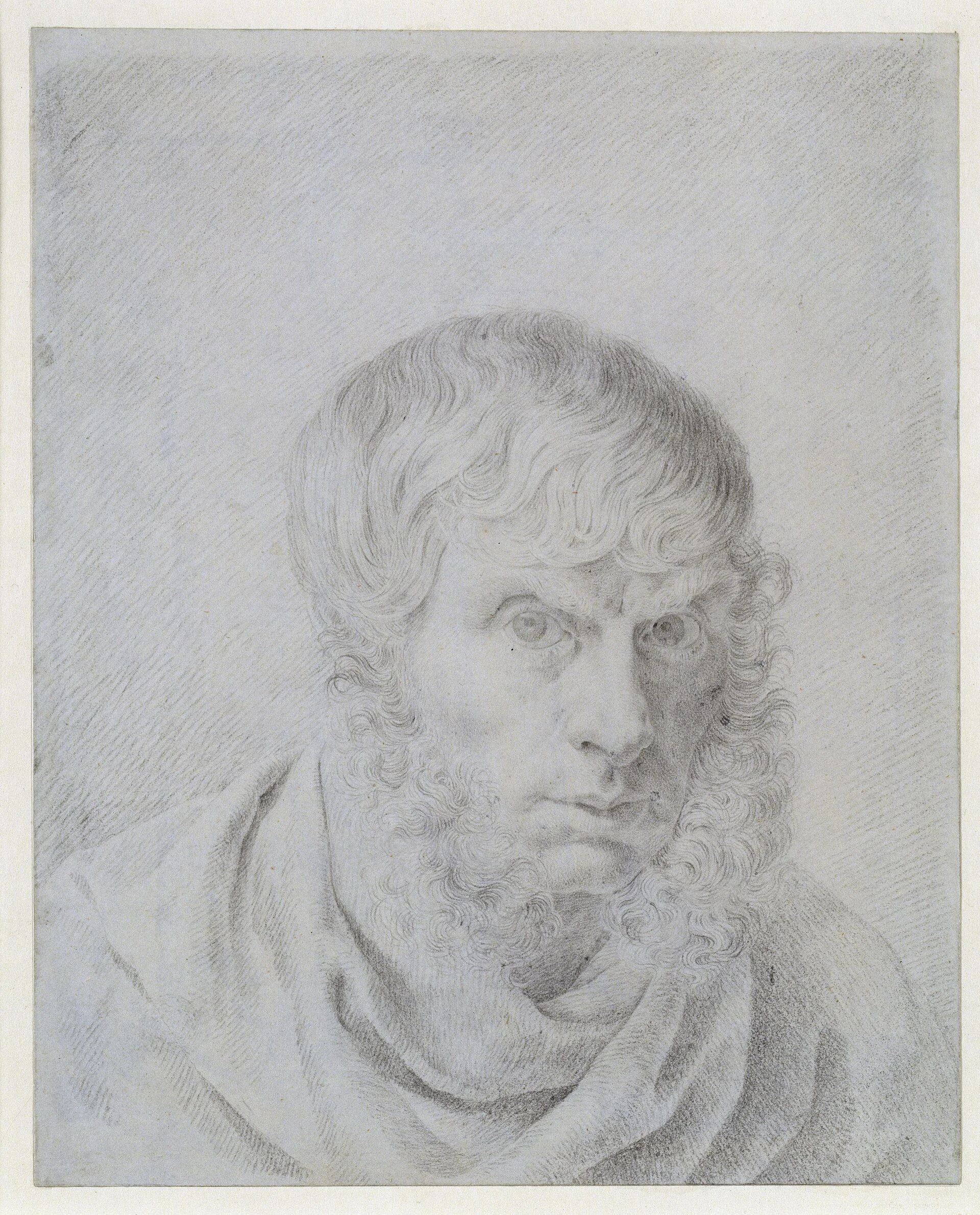
Friedrich made silence visible: his landscapes read like philosophical propositions, not postcards. In his best paintings, you do not simply observe nature; you feel what it means to stand before time, weather, death, and belief without easy certainty.
Baltic origins, Romantic crisis, and political atmosphere
Friedrich was born in 1774 in Greifswald, a Baltic town where flat coastlines and shifting skies were part of daily life. Personal tragedy shaped him early: several siblings died when he was young, and his mother died before he reached adulthood. Those losses matter because his art keeps returning to fragile human presence set against spaces that are older, colder, and larger than any individual life.
He trained in Copenhagen, then worked in Dresden, where he encountered the intellectual currents of early German Romanticism. Europe around him was unstable: the Napoleonic wars, political restoration, and debates about national identity made questions of history and belonging unusually sharp. Friedrich rarely painted battle scenes or public events, yet his images absorb this pressure. Ruins, bare trees, and distant horizons often behave like historical signs: civilization is present, but precarious.
Religious debates also matter. Friedrich was not producing church propaganda, but he was deeply invested in spiritual questions. His paintings frequently stage moments where nature becomes a medium for transcendence rather than a neutral backdrop. A cross on a mountain, a moon over a cemetery, or a figure before a sea of cloud can hold theological weight without becoming literal illustration.
Ruckenfigur, weather, and unstable orientation
His most famous device is the Ruckenfigur, a figure seen from behind. It is a simple compositional decision with major consequences: instead of reading a face, you share a viewpoint. The painting turns into an invitation to occupy another person’s stance in space. In Wanderer above the Sea of Fog, this strategy gives the image its peculiar tension. The man appears to command the landscape, yet he is also swallowed by it.
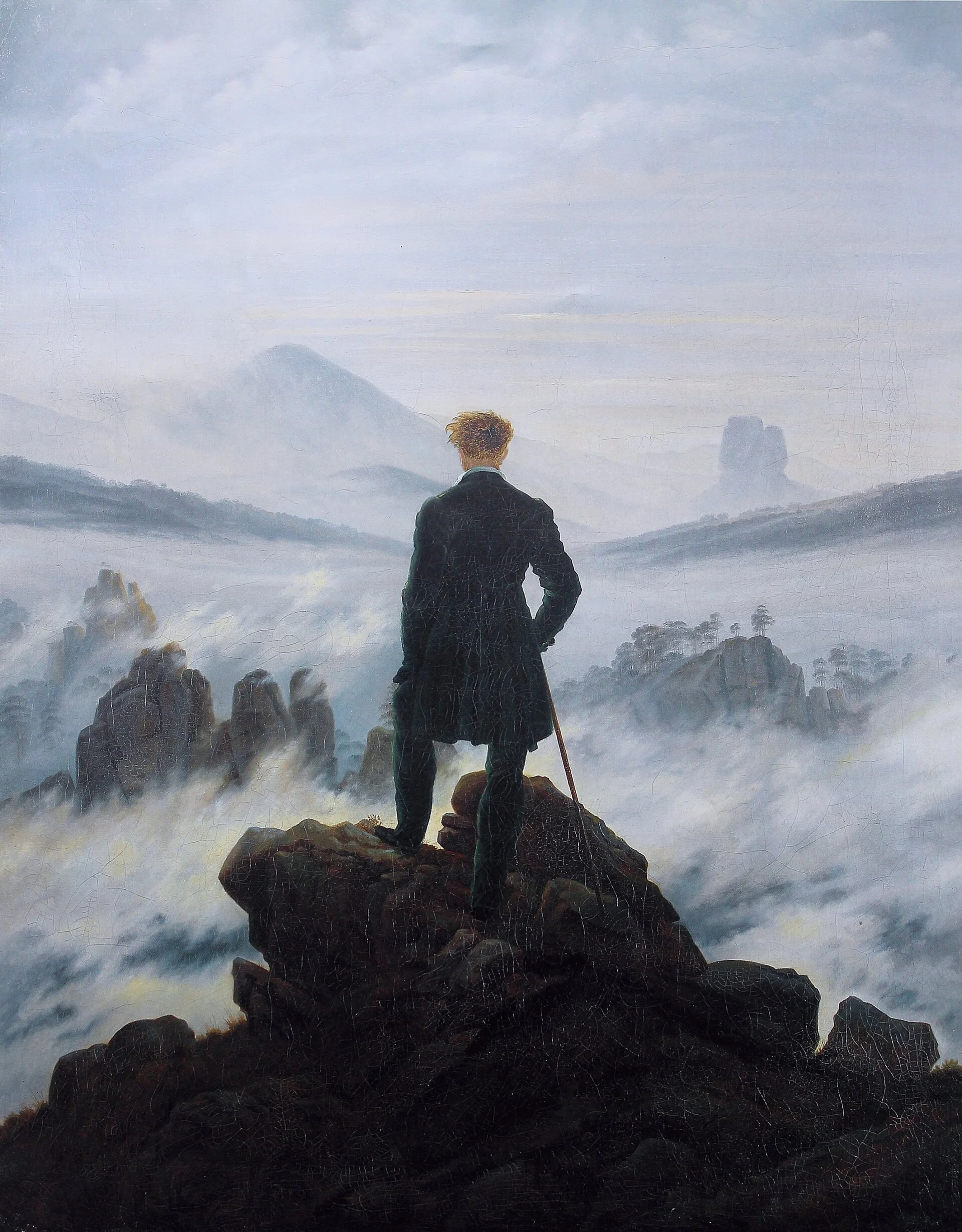
Friedrich’s atmosphere is precise, not vague. Fog, dusk light, winter branches, and broken architecture are arranged with structural discipline. He uses verticals and diagonals to create orientation problems: where exactly is stable ground, and where does depth begin? That uncertainty is intentional. He wanted viewers to experience a difficult kind of looking in which certainty recedes and contemplation becomes work.
Color is restrained but strategic. Cold blues and grays carry distance; warm accents arrive sparingly and often read as temporary interruptions. This economy of palette prevents decorative excess and keeps the emotional register serious. Even when the subject is beautiful, the mood is rarely carefree. The beauty feels earned, sometimes after the image has passed through melancholy or silence.
Landscape as philosophical method and long afterlife
Friedrich helped define Romanticism by showing that landscape could be intellectually and spiritually rigorous. He did not treat nature as spectacle. He treated it as a structure for thinking about mortality, freedom, and the limits of knowledge. That shift changed what landscape painting could do in Europe and differs sharply from the civic drama in Eugène Delacroix and Liberty Leading the People.
His reputation rose, then fell in the late nineteenth century, then rose again in the twentieth as historians and artists rediscovered the conceptual strength of his pictures. Modern and contemporary photographers, filmmakers, and installation artists still borrow his grammar: lone figure, vast field, suspended weather, unresolved meaning. The image type is now widespread, but Friedrich’s best works remain difficult to exhaust because they keep a productive ambiguity between personal feeling and collective history, a line that later feeds Symbolism and even Expressionism in artists such as Edvard Munch and works like The Scream.
Friedrich's legacy is therefore methodological as much as thematic: his influence persists wherever artists use atmosphere to stage thought, not just mood.
If you are exploring Explainary through movements, read this page alongside Romanticism and then compare Friedrich’s visual solitude with the symbolic intensity of Symbolism. The continuity is not linear, but the family resemblance is strong: atmosphere as argument, not ornament.
Key works in Explainary
Associated movements
Continue with the art quiz to validate recognition, context, and comparison.