
Movement Guide
Hudson River School
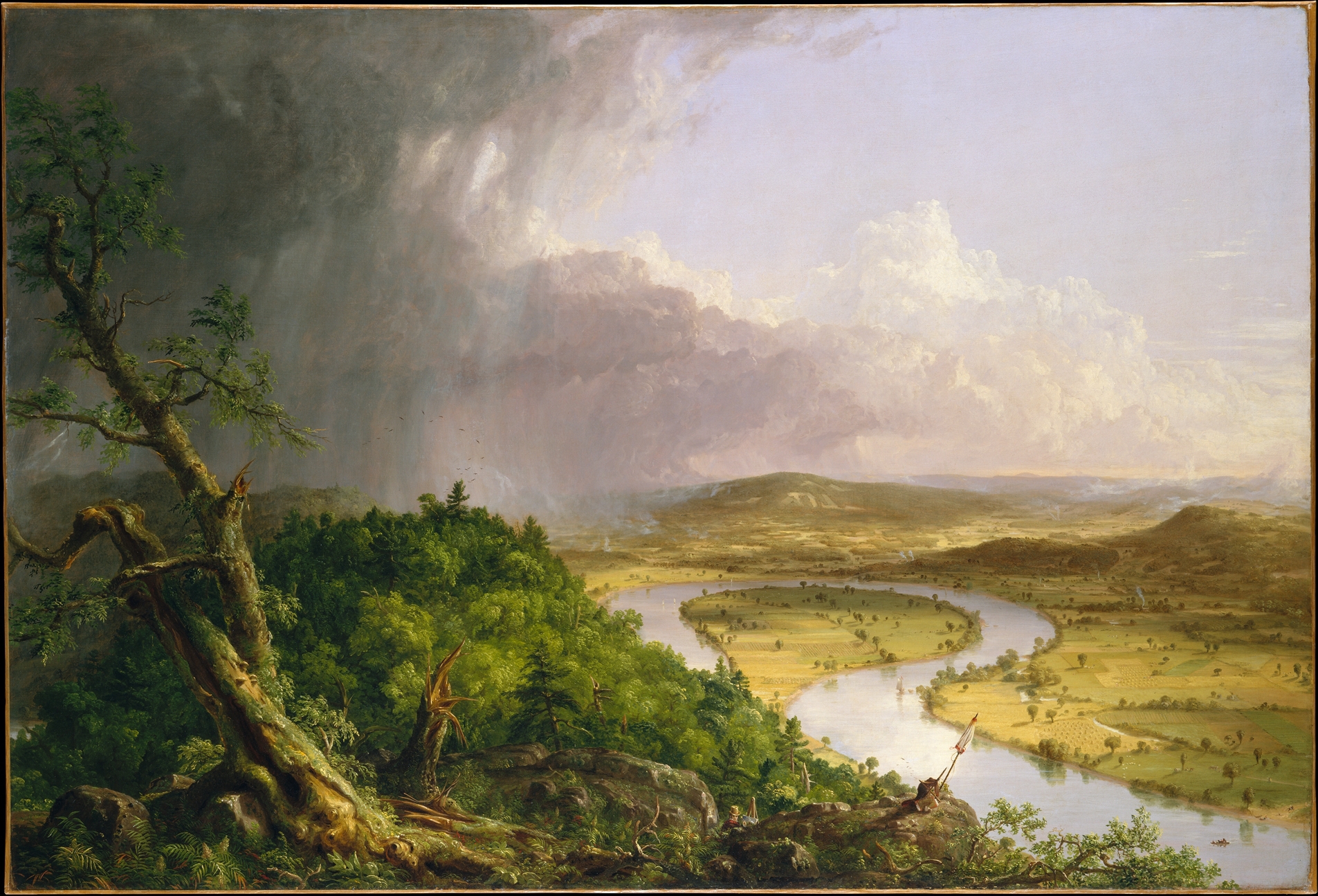
The Hudson River School makes landscape do the work of history painting. Mountains, rivers, storms, clearings, and skies are not treated as passive scenery. They carry national ambition, spiritual feeling, and political tension. This is why the movement matters. It helps turn the American landscape into a subject large enough to stand for the country itself.
The name can mislead modern readers. There was no formal academy and no single doctrine. What unites the painters gathered under the label is not a manifesto but a shared wager: American land could sustain serious art at monumental scale. Landscape could become public, philosophical, and historically charged.
Thomas Cole starts the argument
The movement begins with Thomas Cole, because he gives the landscape an intellectual problem to carry. In The Oxbow, a storm-dark wilderness and a cultivated river valley occupy the same panoramic field. The picture is majestic, but it is also divided. Beauty and unease remain bound together. That balance becomes foundational for the movement.
Cole's importance lies there. He does not use the land to offer a simple patriotic image. He organizes it until questions about settlement, scale, and providence become visible inside the composition itself. Later painters would amplify the panoramic sweep and the luminous distance associated with the Hudson River School, but Cole gives the movement its first serious tension.
Wilderness, light, and national scale
The Hudson River School emerges in a republic still deciding how to picture its territory. Painters of the movement turn rivers, mountains, forests, and changing skies into evidence of national magnitude. Their landscapes are expansive because the country imagines itself expansively. But these pictures are not just geographic. They are rhetorical. Scale and atmosphere make the land feel providential, elevated, and worth possessing.
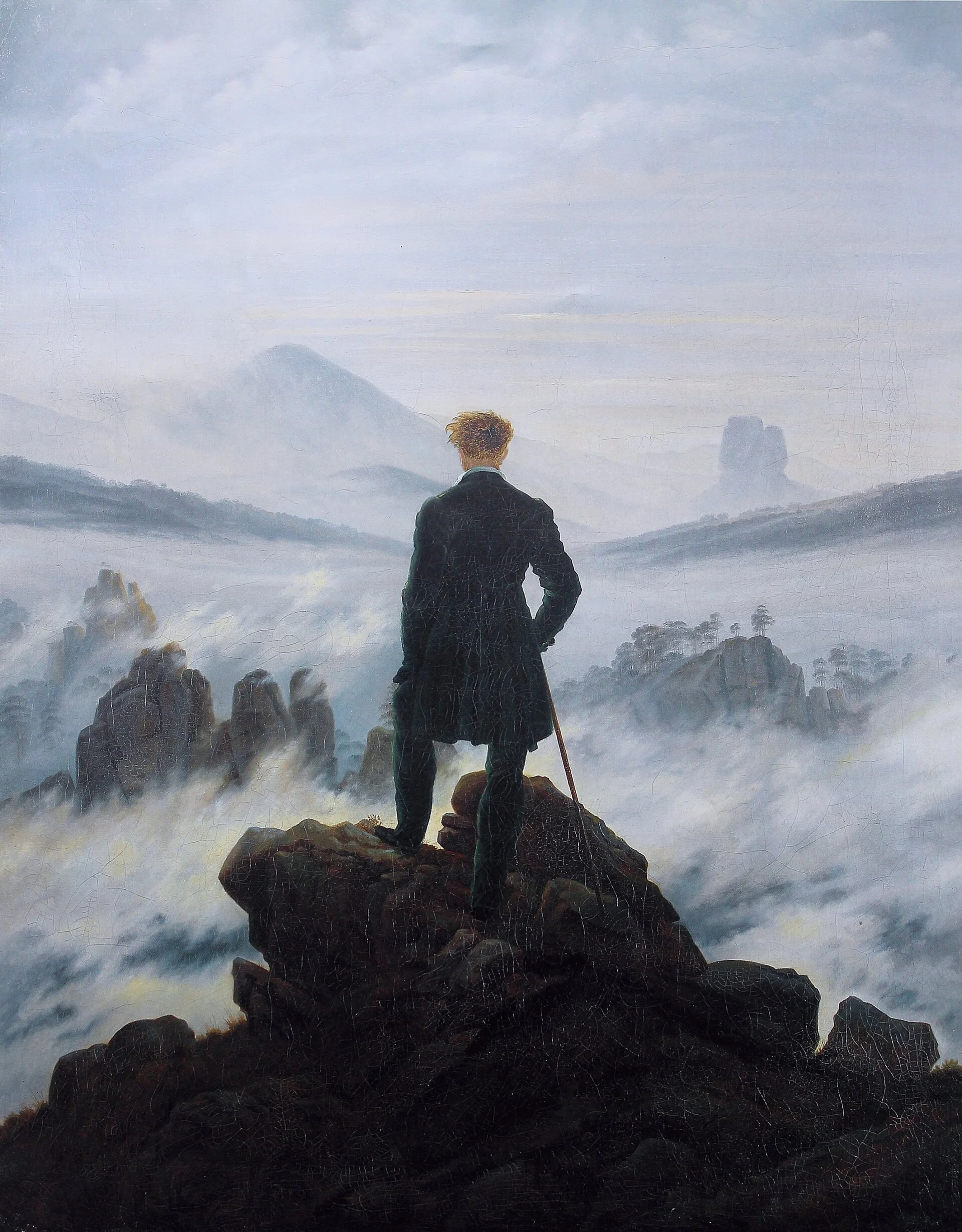
That is one reason the movement sits naturally inside Romanticism. Like Caspar David Friedrich and Turner, Hudson River School painters rely on weather, distance, and the sublime. But they give those forces a more openly national frame. In Europe, Romantic landscape often turns toward inward reflection or civilizational anxiety. In the United States, it also becomes a way of making territory look historically destined.
Not just untouched nature
It is tempting to describe the movement as a pure celebration of untouched wilderness. That is too simple. The paintings do exalt grandeur, but they also register roads, clearings, farms, smoke, boats, or settled valleys. The crucial issue is not whether nature remains untouched. It is how the picture frames the relationship between nature and settlement.
That framing is political. The movement belongs to a settler society expanding westward and learning to see land as resource, promise, inheritance, and divine sign. Hudson River School paintings do not all endorse that project in the same way, but they participate in it. Their magnificence and their ideology are difficult to separate. That tension is part of what makes the movement still worth reading carefully.
From the Catskills to a broader American vision
The label "Hudson River School" starts from the Hudson Valley and the Catskills, but the movement quickly opens outward. Its painters help establish the idea that American landscape, wherever found, can sustain major art. That matters historically. It gives the United States an answer to Europe's old hierarchy of subjects. A mountain range, a river bend, or a clearing after storm can now function with the seriousness once reserved for battles, saints, or emperors.
This broader vision also explains why the movement becomes a hinge in American art. Later painters would make the nation visible through local life, labor, and region in very different ways, as in American Regionalism. The Hudson River School operates earlier and on a grander scale. It asks whether the land itself can be the public image through which a nation first recognizes its size and destiny.
Continue through the movement
Then try the art quiz.
Primary sources
Frequently asked questions
The Hudson River School is a nineteenth-century American movement that turned landscape into a national art through panoramic scale, luminous atmosphere, and moral reflection on land.
Yes. It is an American branch of Romantic landscape painting, but with a stronger emphasis on national identity, settlement, and the meaning of the land in a young republic.
Not simply. Its paintings often admire grandeur and untouched nature, but they also register cultivation, expansion, and the political framing of land.