
Rococo
The Swing
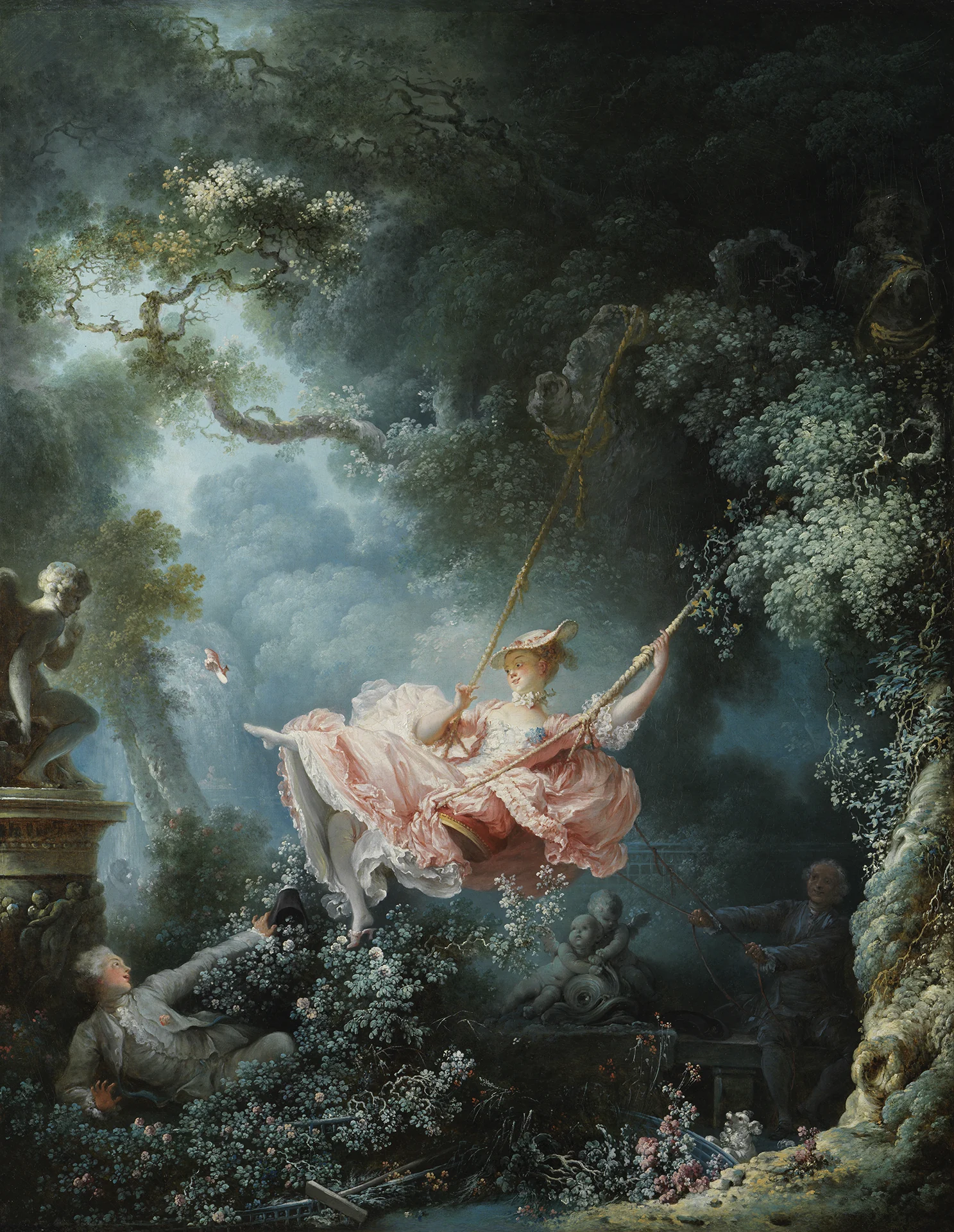
A virtuoso Rococo scene where flirtation, hierarchy, and theatrical illusion are wrapped in dazzling brushwork.
A staged flirtation built as a social machine
Fragonard choreographs a triangular economy of gazes: hidden lover, airborne woman, older patron who powers the swing while missing the real exchange. Curving foliage and flying drapery make desire feel spontaneous, but the structure is engineered with precision. Every diagonal controls access: who sees, who is seen, and who remains blind.
That construction reflects Rococo court culture at its sharpest. Wit, luxury, and erotic play are never free-floating; they depend on social asymmetry and plausible deniability. The painting endures because it shows this mechanism clearly: pleasure is staged, timed, and distributed through power.
Pleasure is engineered, not spontaneous
The work choreographs three gazes: the concealed admirer, the airborne woman, and the older patron who unwittingly powers the swing. Desire is distributed through positioning, timing, and theatrical concealment.
Rococo lightness can mask its rigor. Fragonard controls brush rhythm, foliage density, and diagonals so the scene feels effortless while operating as a highly calibrated machine of attention.
Rococo lightness is engineered with ruthless compositional precision.
Commission, censorship, and coded desire
The painting did not emerge from pure fantasy. It belongs to a culture where aristocratic patrons used private imagery to stage wit, status, and erotic games while staying within plausible deniability. The Swing is explicit enough to be provocative and oblique enough to remain socially playable. That calibration is central to its brilliance.
The famous flying shoe is not just a playful detail. It punctures decorum and marks a transfer of control in the scene. Combined with hidden gaze lines, it turns a garden into a theater of coded permissions: who can see what, and under which social cover.
Rococo surface as social mechanism
Fragonard's brushwork is often praised for speed and charm, but the composition is highly engineered. Dense foliage works like curtains on a stage, directing visibility. Light pools around the woman in motion, while male figures occupy asymmetrical zones of power and ignorance. The apparent spontaneity is produced through disciplined control.
Read this against Olympia and you can trace a shift in how desire is represented. Fragonard encodes it in aristocratic play; Manet makes it confrontational and modern. The works are centuries apart but linked by the politics of looking.
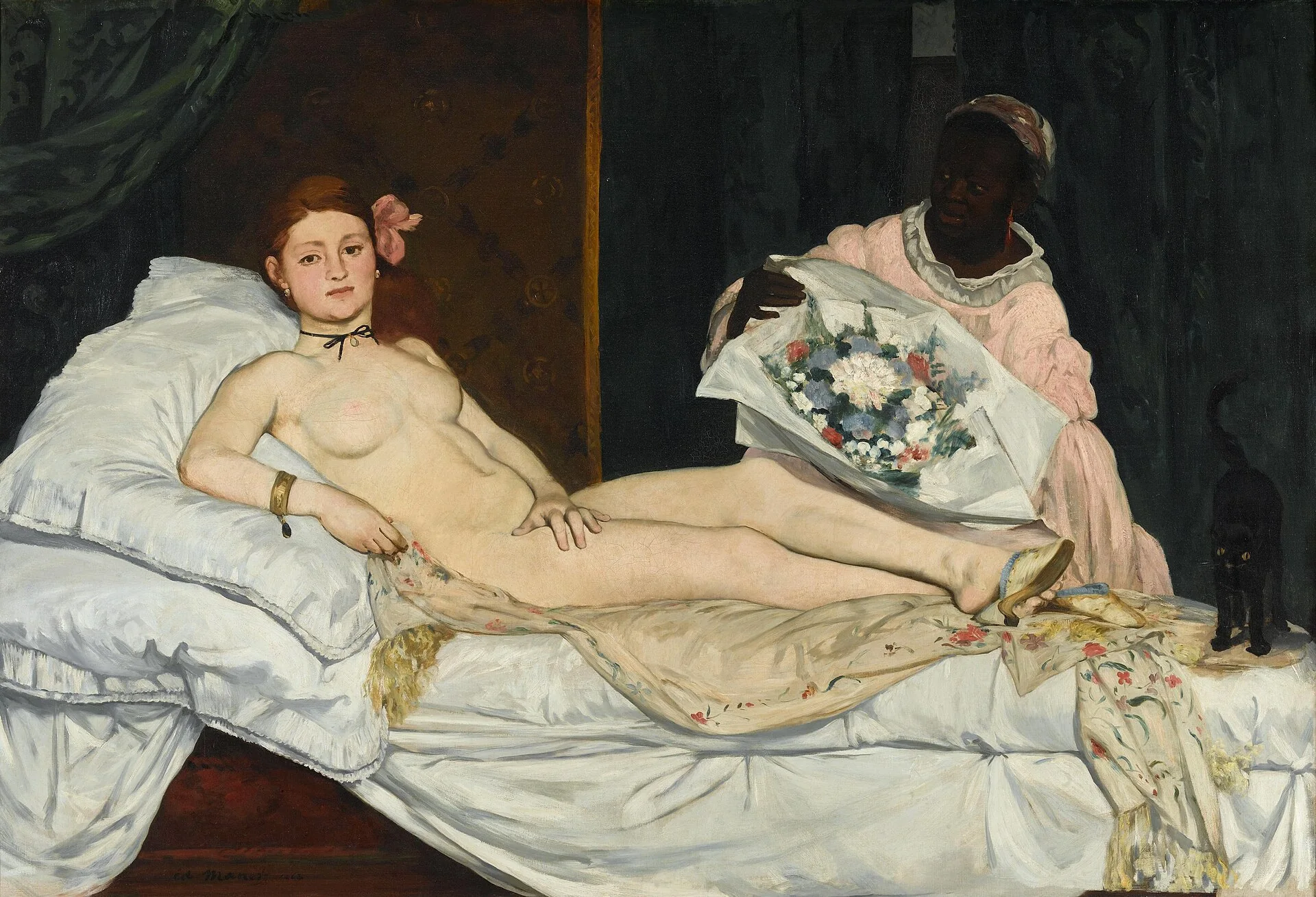
From court theater to modern gaze politics
The painting remains relevant because it anticipates contemporary image dynamics: curated spontaneity, playful surfaces masking strong power structures, and spectatorship as a social game. It is dazzling, but never naive.
Used well, The Swing teaches a rigorous method: read pleasure as design, and design as ideology. With Fragonard's profile and the Rococo overview, the work becomes less a decorative icon and more a precise document of how images organize desire.
Its historical specificity matters for that reading. The painting emerged in a pre-revolutionary aristocratic culture where private wit and public rank were tightly interwoven. Fragonard does not describe modern mass media, but he does show a recognizable mechanism: social roles are staged through controlled visibility. What appears as playful excess is actually a disciplined arrangement of who gets to see, who gets seen, and who unknowingly sustains the scene's pleasure economy.
Explore more
Related works
If The Swing is clearer now, try the art quiz and see whether you can spot works by Jean-Honoré Fragonard in seconds.