
Artist Analysis
Jean-Honoré Fragonard
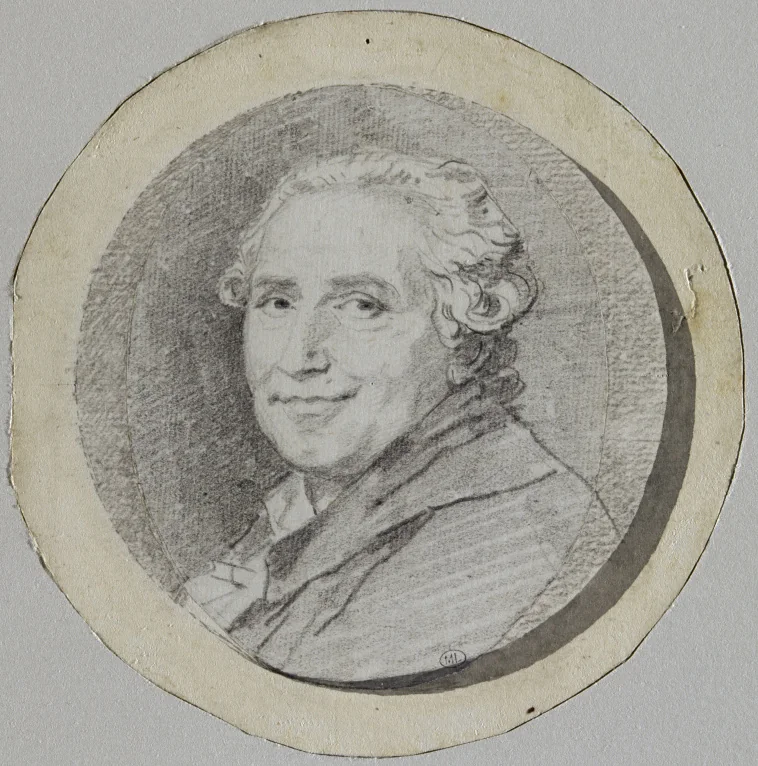
Jean-Honoré Fragonard proves that pleasure painting can be analytically severe. In the high phase of Rococo, he builds scenes of desire with strict control of gaze, rank, and narrative timing, especially in The Swing. Beneath the sparkle, each gesture is calibrated as social evidence.
Court patronage, training, and coded sociability
Jean-Honoré Fragonard was trained in Parisian academic circuits, notably through François Boucher and the institutional framework that shaped high eighteenth-century French painting. Yet his mature work is inseparable from private patronage under the late Ancien Régime, where wit, discretion, and controlled transgression were social currency. This context matters because Fragonard does not paint “love scenes” as neutral decoration. He paints systems of behavior: who is allowed to look, who must hide, who controls tempo, and who risks exposure.
Seen this way, Rococo is not lightweight surface but a visual politics of leisure. Gardens, silk, foliage, and ornamental architecture function as social technology, staging rank and desire simultaneously. Fragonard's brilliance is to keep the image pleasurable while making its choreography legible to viewers who read signs of protocol and status.
Why he moved away from institutional painting, and why that mattered
Fragonard did not reject academic training; he redirected it. After his admission to the Royal Academy in 1765, he could have pursued large public history painting, the most prestigious institutional route. Instead, he increasingly favored private commissions, decorative cycles, and intimate cabinet-scale works. The shift was practical and strategic: private patrons offered more freedom for tone, subject, and experiment than official programs built around moral exempla and public decorum.
That choice was innovative because it relocated artistic ambition. Fragonard brought high technical discipline into formats associated with leisure and intimacy, proving that small-scale Rococo painting could carry complex social analysis. In modern terms, he moved value from institutionally approved subject matter to compositional intelligence itself. Read with Rococo and works like The Swing, the move looks less like retreat and more like a new model of pictorial modernity before the Revolution.
The Swing as a social machine
In The Swing, comic sensuality depends on strict compositional engineering. The diagonal launch of the body, hidden witness in foliage, controlling figure in shadow, and drifting shoe all produce a timed sequence of revelation. Nothing is accidental. Fragonard converts flirtation into narrative mechanics, where visual delight and social risk are inseparable.
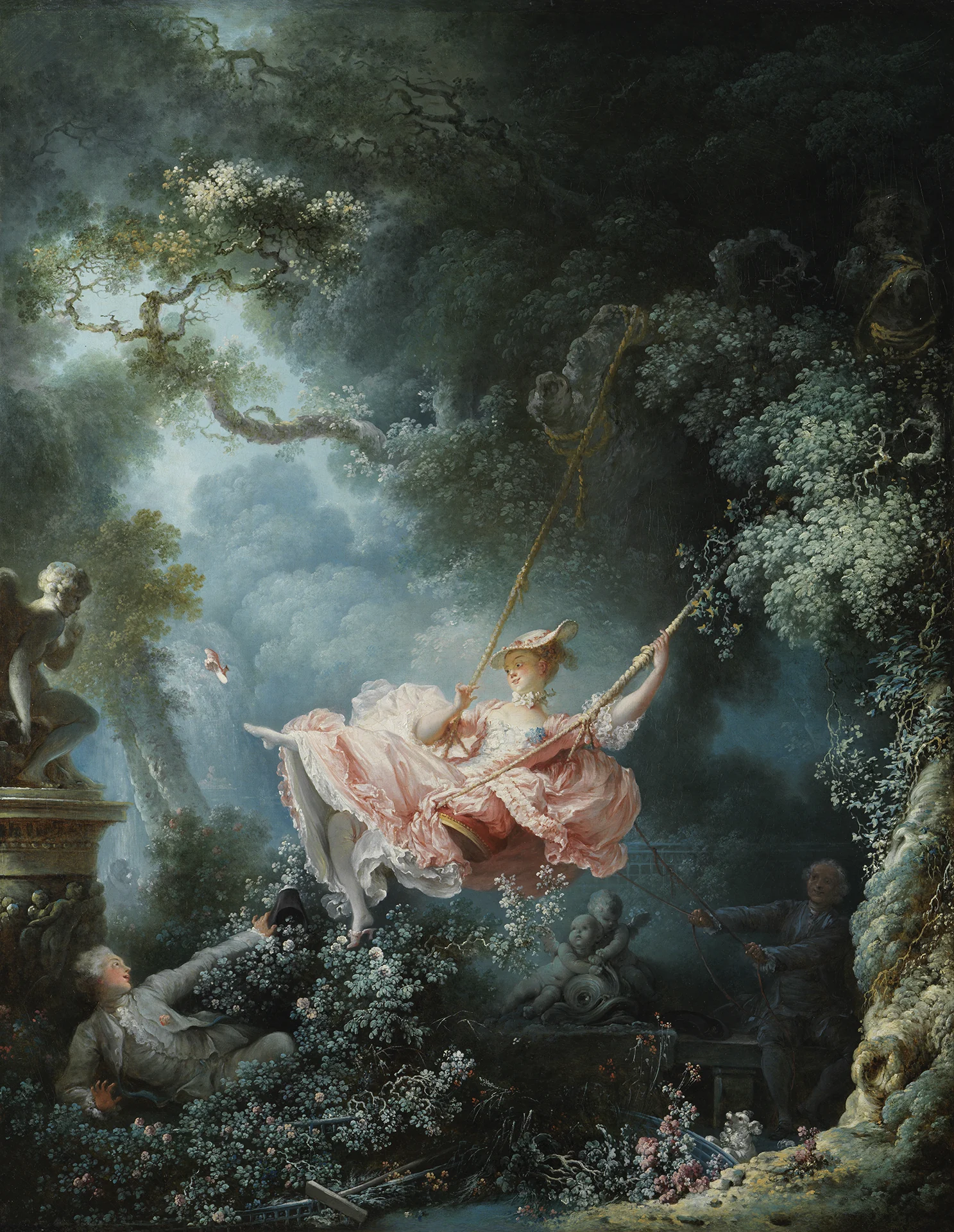
That theatrical intelligence explains why Fragonard remains central to reading the eighteenth century. He records an elite world on the edge of rupture, where coded intimacy, privilege, and surveillance coexist. Rococo surface becomes political evidence once the painting is read as a script rather than as ornamental fantasy.
Technique, reception shifts, and contemporary relevance
The apparent speed of Fragonard's brushwork is anchored by careful value planning and directional control. He uses luminous accents to guide attention, then softens transitions so scenes feel airborne while staying structurally exact. A practical method is to separate contour rhythm, color temperature, and gaze lines between figures. When those layers are tracked, the painting reads less like decorative ease and more like editorial precision.
His reception changed with politics: after the Revolution, the social world that sustained Rococo collapsed, and nineteenth-century taste often preferred moral gravity over courtly nuance. Yet modern media revived many Fragonard strategies under new names: staged intimacy, seductive framing, and desire managed through composition. In 2026, that grammar remains visible in fashion photography, cinema, and luxury branding.
A useful comparison is with Édouard Manet and Olympia. Manet makes social confrontation explicit; Fragonard embeds it in elegance. Both are historically modern in different ways. Fragonard's durable contribution is to show that pleasure images can carry hard social information when formal timing is read precisely, a dynamic echoed in Why Art Goes Viral and in contemporary image economies.
One final historical detail sharpens this profile: Fragonard's later years unfolded in a transformed institutional landscape where many ancien-régime patronage circuits had collapsed. The shift did not erase his relevance; it changed its frame. Today his paintings are read not as nostalgic relics, but as precise laboratories of attention management. That is why they remain valuable for both art historians and practitioners studying how images organize desire, status, and narrative timing.
Historical positioning and legacy
Fragonard's legacy is strongest where viewers stop separating “decorative” from “critical” art. His paintings demonstrate that ornament can function as social argument, not visual excess. In long perspective, he links eighteenth-century court spectacle to modern economies of seduction: the tools change, but the management of gaze and desire remains structurally similar. This historical positioning explains why his work endures in scholarship and in contemporary visual practice.
Key works in Explainary
Associated movements
Now test recall with the art quiz: can you recognize Jean-Honoré Fragonard from visual cues in works like The Swing?
Continue with the artwork library, movement pages, and essay comparisons to strengthen historical comparison.