
Photographic Modernist
Alfred Stieglitz
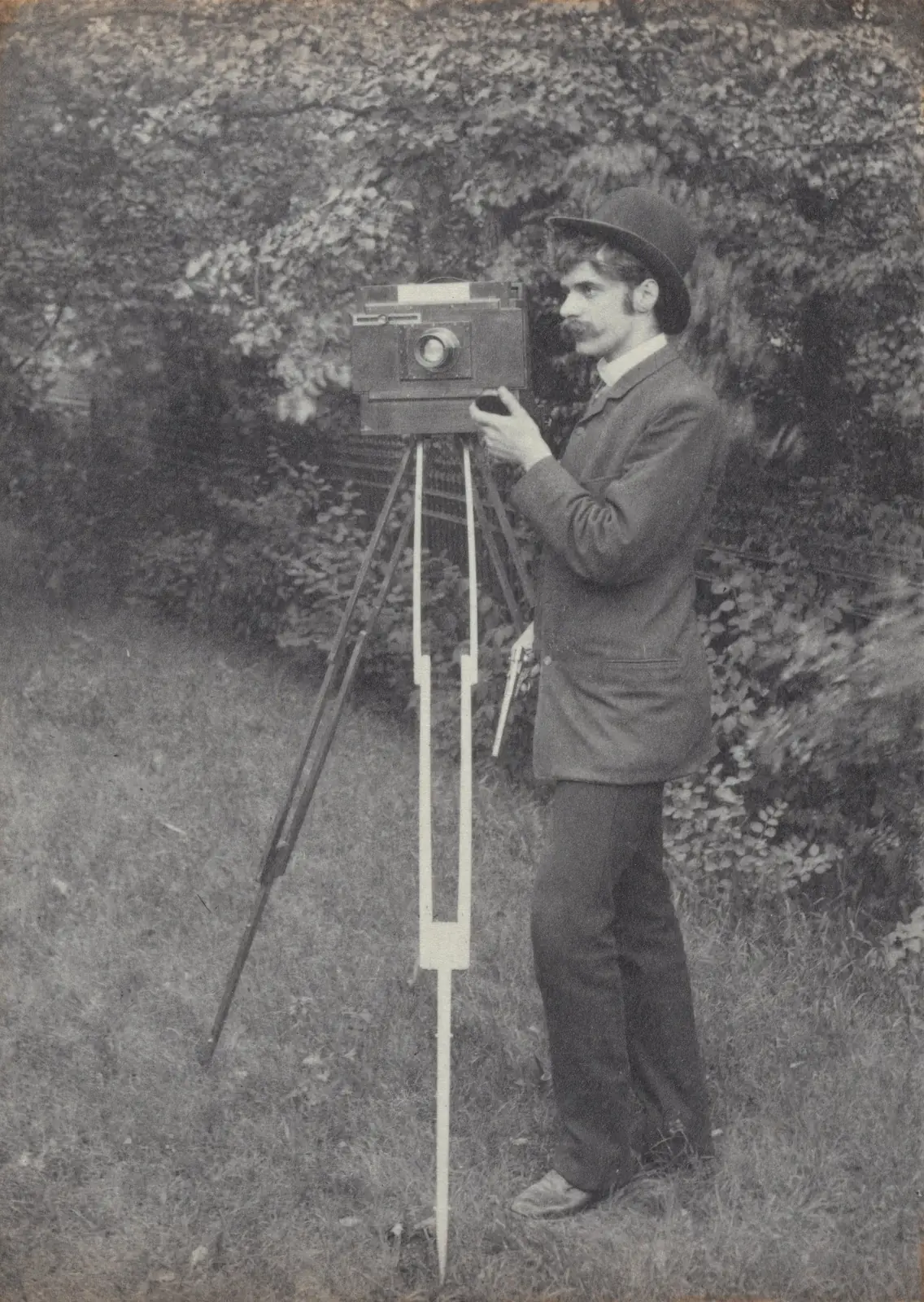
Stieglitz mattered because he did not defend photography only with pictures. He built journals, exhibitions, galleries, and arguments until the medium could no longer be treated as a minor mechanical craft. That is why his place in art history is larger than the career of a single photographer. He is one of the people who changed the status of photography itself.
This page is easiest to read if you hold two roles together. Stieglitz is an image-maker of real consequence, especially in The Steerage. But he is also an editor, promoter, gatekeeper, and public strategist. He belongs to the history of photography not only because he made strong images, but because he helped define the institutions through which strong images would be seen and judged.
Berlin training, New York ambition
Born in Hoboken in 1864, Stieglitz studied in Berlin in the 1880s, where he learned chemistry, engineering, and photographic technique under conditions that gave him unusual technical confidence. When he returned to New York in 1890, he did not come back as a hobbyist. He came back determined to prove that photography could claim the seriousness usually reserved for painting and sculpture.
That ambition matters because it explains the scale of his project. Stieglitz is never only solving the problem of his own style. He is trying to change the standards of a medium. The question is not just how to make a better photograph. It is how to make critics, collectors, museums, and audiences understand that a photograph can deserve the same sustained attention as any other modern artwork.
He builds a system, not just a career
The turning point is institutional. Through Camera Notes, then Camera Work, the Photo-Secession, and finally the gallery known as 291, Stieglitz creates channels where photography can be edited, sequenced, printed, exhibited, and debated at a high level. That is one of his deepest achievements. He did not wait for the art world to welcome photography. He built venues that forced the issue.
291 is especially important because it broadens the argument. It is not only a room for photographs. It becomes a place where American audiences encounter major currents of modern European art. According to the Met and the National Gallery of Art, Stieglitz helped make 291 one of the first American venues to show artists such as Rodin, Matisse, Cezanne, and Picasso. That means his role is double: he raises the status of photography while also helping define what modern art looks like in the United States.
The Steerage as turning point
If you want the fastest way into Stieglitz, start with The Steerage. Made in 1907 on a transatlantic ship, the photograph turns class separation into visible structure. Deck levels, gangplanks, railings, hats, and bodies are arranged so that social hierarchy becomes legible as geometry. The image is documentary, but it is also composed with exceptional formal control.
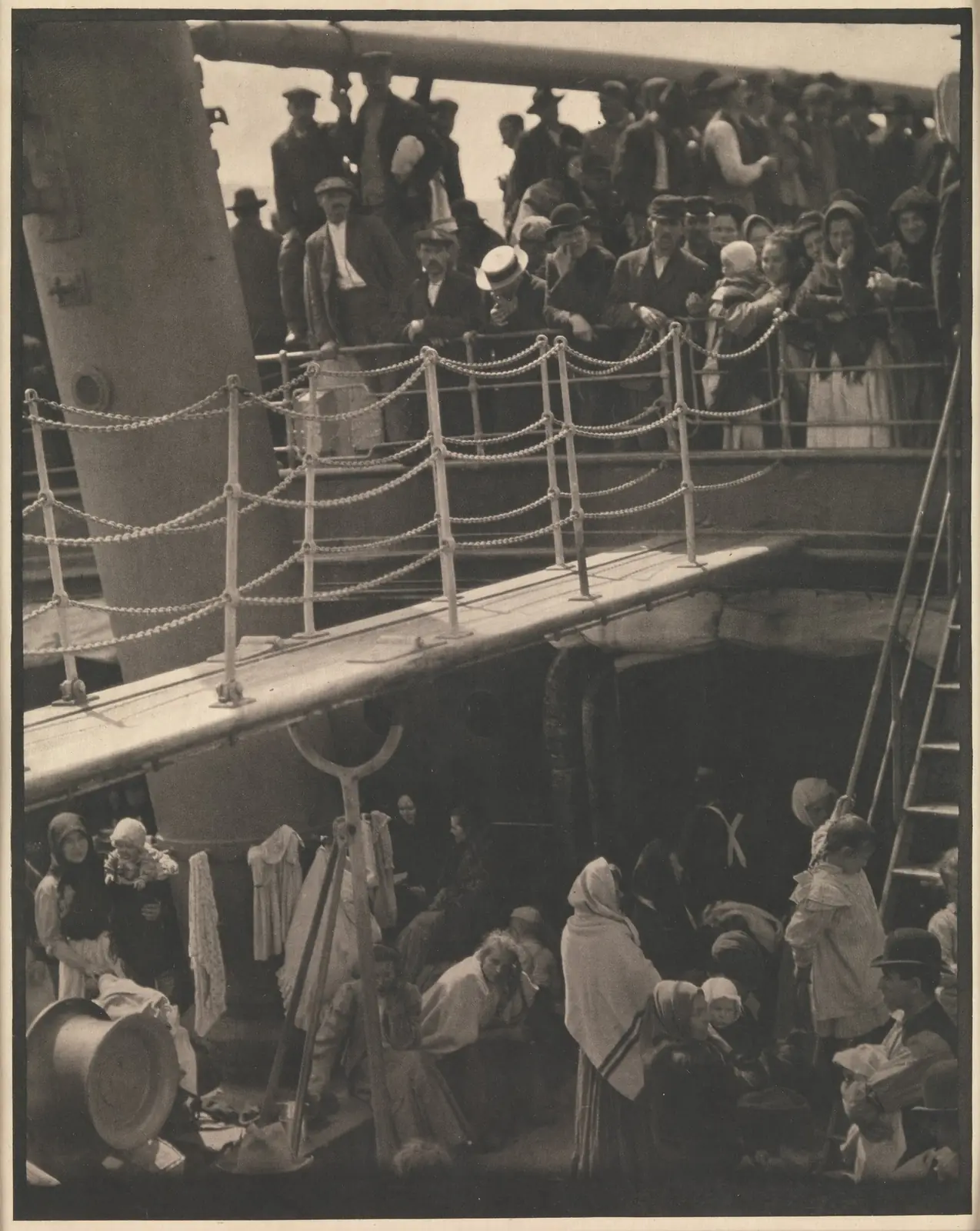
That is why the image matters so much historically. It shows Stieglitz moving beyond softer pictorial atmosphere toward a more self-confident photographic modernism. The picture does not ask to be admired because it resembles painting. It argues that the camera can organize form and meaning on its own terms.
From pictorial softness to modern structure
Stieglitz does not begin there. Early in his career, he works close to Pictorialism, with a greater taste for softness, tonal atmosphere, and painterly finish. What makes him especially useful is that he does not stay fixed inside that language. He helps photography move through it. The Steerage sits at the hinge, but the broader arc matters just as much.
Later work confirms that he was not only a public advocate with one famous picture. His portraits of Georgia O'Keeffe, his cloud studies known as the Equivalents, and his photographs from the windows of his later galleries show him pushing photography toward sequence, mood, and abstraction without giving up the medium's exactness. That later range keeps him from being reduced to a single institutional role. He was also testing how far photography itself could go.
Why his influence exceeds photography alone
Stieglitz is therefore useful as a bridge figure. He belongs inside the history of photography, but he also belongs inside the history of modern exhibition culture. He helps define who gets shown, how work is framed, and what counts as serious looking. In that sense, he changes the medium and the room around the medium at the same time.
This is why comparison with Dorothea Lange is productive. Lange shows what happens when photographic authority is directed more openly toward social witness and public consequence, especially in Migrant Mother. Stieglitz is doing something different but complementary. He is building the legitimacy, structure, and visual confidence that make later photographic arguments easier to sustain.
What to keep from Stieglitz now
Stieglitz still matters because contemporary image culture runs on questions he faced directly. Who determines legitimacy? Who controls circulation? Which images receive careful sequencing and interpretive framing, and which disappear into noise? He understood that the life of an image depends on infrastructures of editing, display, and critical language, not on capture alone.
That is what makes him more than an early photography hero. He is a model for reading the relationship between making, mediation, and power. Once you see that, Stieglitz stops looking like a biographical name attached to The Steerage and starts looking like one of the people who taught modern audiences how a medium becomes an art.
Reading paths from Stieglitz
A strong route is simple: begin with The Steerage, then move to Photography, then compare Stieglitz with Dorothea Lange and Migrant Mother. That sequence clarifies the shift from making photography count as art to making photography act forcefully in public life. Then try the art quiz.
Primary sources
Frequently asked questions
Stieglitz is historically important because he did more than make photographs. Through editing, publishing, exhibiting, and arguing for the medium, he helped make photography count as modern art in the United States.
291 was Stieglitz's New York gallery, formally called the Little Galleries of the Photo-Secession. It became a crucial site for photography and for the introduction of modern European art to American audiences.
The Steerage matters because it shows Stieglitz joining social observation and strong formal structure in one image. It is one of the clearest turning points in photographic modernism.
He begins close to Pictorialism but becomes one of the figures who push photography toward a more self-confident modernist language. His career is best understood as a transition, not a fixed label.