
Movement Guide
Realism in Art
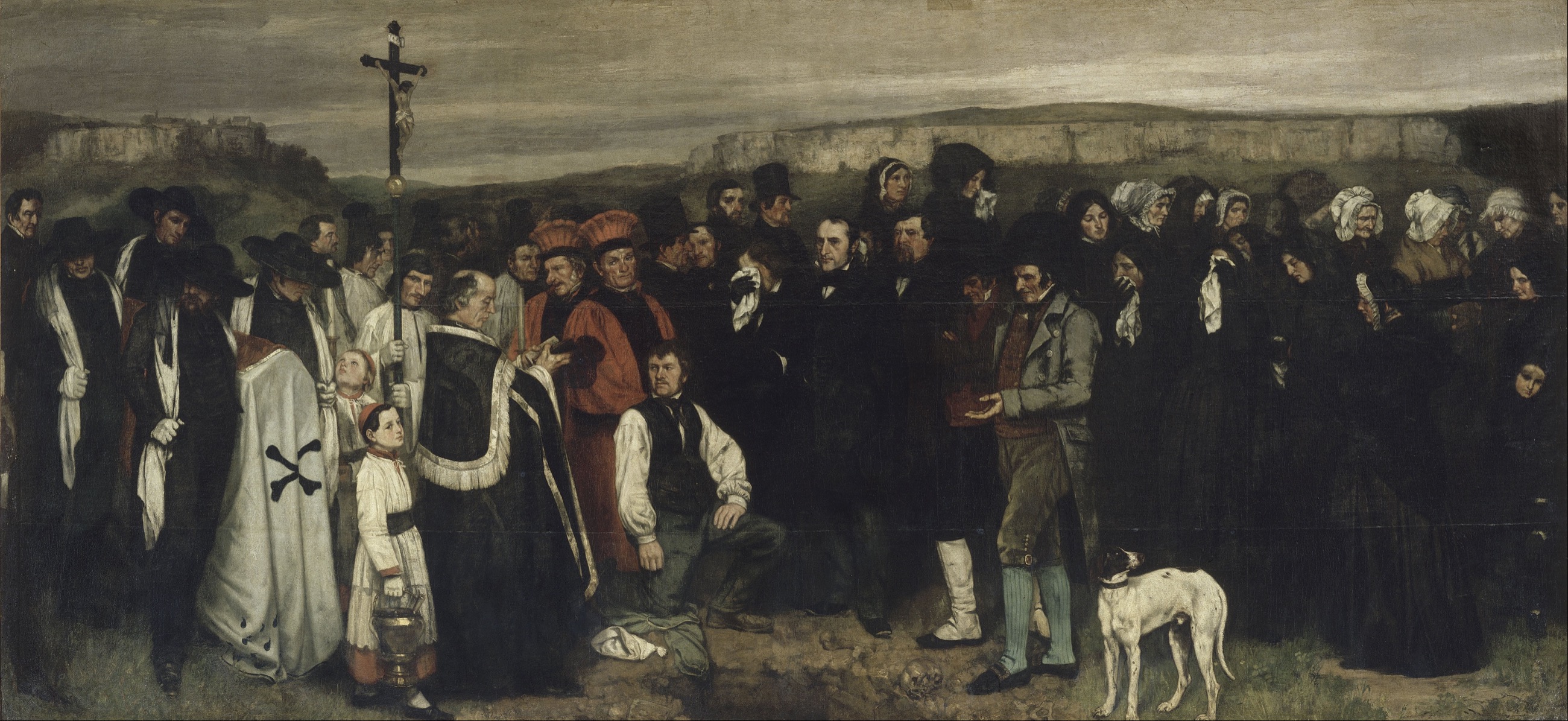
What is Realism in art? It begins when painting gives ordinary life the scale once reserved for saints, generals, and myths. In A Burial at Ornans, Gustave Courbet turns a provincial funeral into a public event of major art. In The Gleaners, Jean-François Millet gives poor rural labor a similarly grave place in the image. In The Horse Fair, Rosa Bonheur makes a Paris horse market carry that same seriousness through animal force, trade, and public spectacle. Later Manet, and later still documentary photography, push the pressure into modern leisure, urban work, migration, and poverty. What unites the movement is not a single surface effect, but a decision about what deserves seriousness.
The realist break
Realism is not simply accurate drawing; it is the decision to make ordinary life, labor, and social structure carry the weight of major art. Courbet gives a village burial monumental scale, Millet gives field labor gravity, Bonheur gives a market public force, and Manet pushes the same pressure into urban modernity. The useful test is to ask what each work refuses to idealize.
Courbet makes the break visible
In A Burial at Ornans, villagers from Courbet's native region are given the size and gravity of history painting. That was the scandal. Critics were not simply reacting to rough paint or plain faces. They were reacting to the collapse of an old hierarchy in which ordinary people were expected to remain small, decorative, or anecdotal.
Realism should not be defined as neutral copying. Courbet is making a claim about what deserves labor, scale, and public visibility. The movement starts there: not with the idea that art should become flatly factual, but with the refusal to hide modern life behind mythological cover.
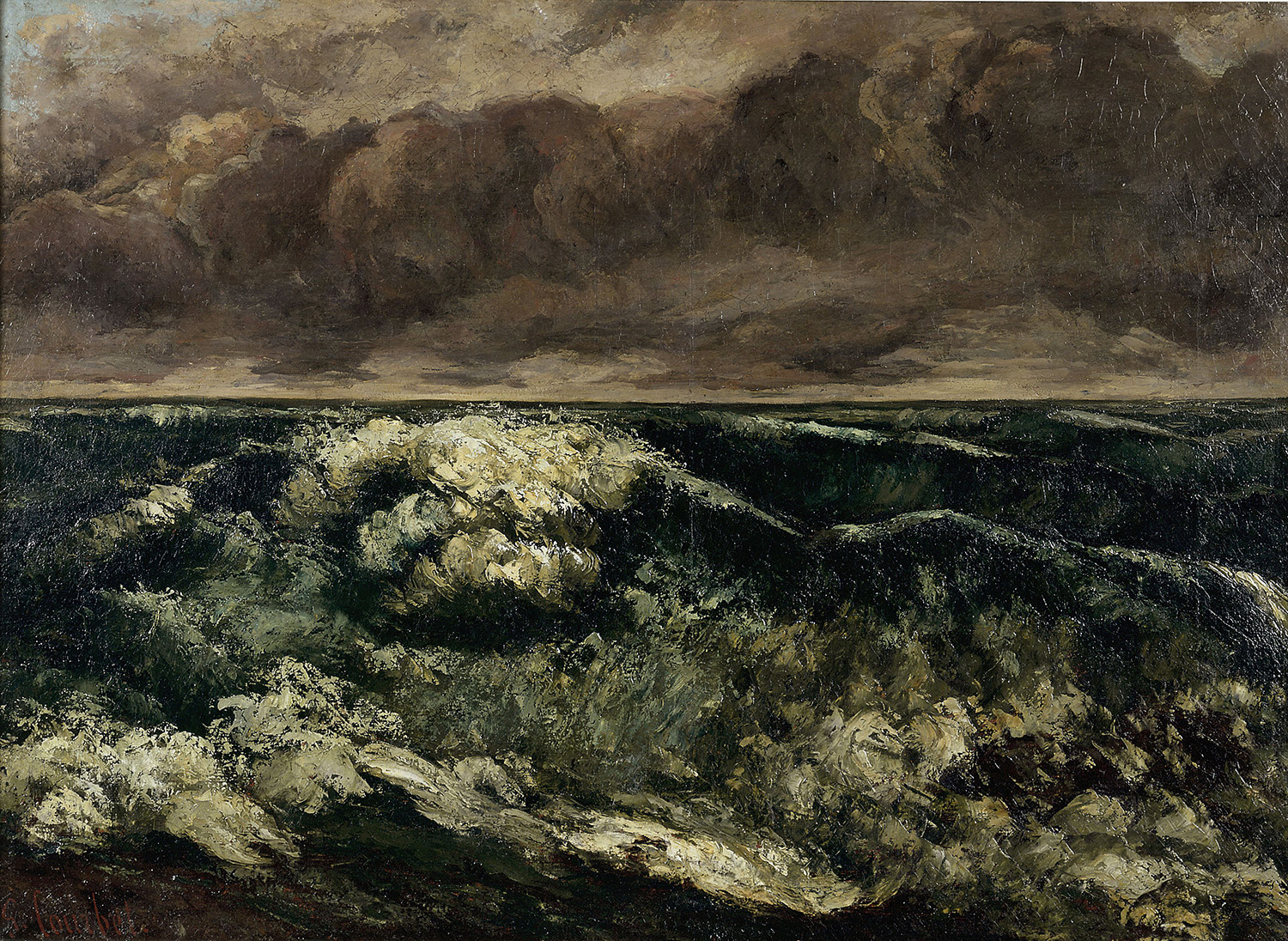
The Wave shows the same break without a human subject. Courbet removes boats, shoreline anecdote, and romantic storm drama, then makes the sea itself carry the pressure. The painting turns natural force into a Realist subject through thick paint, compressed framing, and physical weight.
Millet gives rural labor another kind of weight
Millet makes the same break through quieter means. In The Gleaners, three women collect what the main harvest has left behind. The field behind them is full of abundance, carts, and workers, but that wealth remains distant. The foreground belongs to repetitive survival labor. Realism here does not need Courbet's huge public spread. It can work through restraint, bodily rhythm, and social distance.
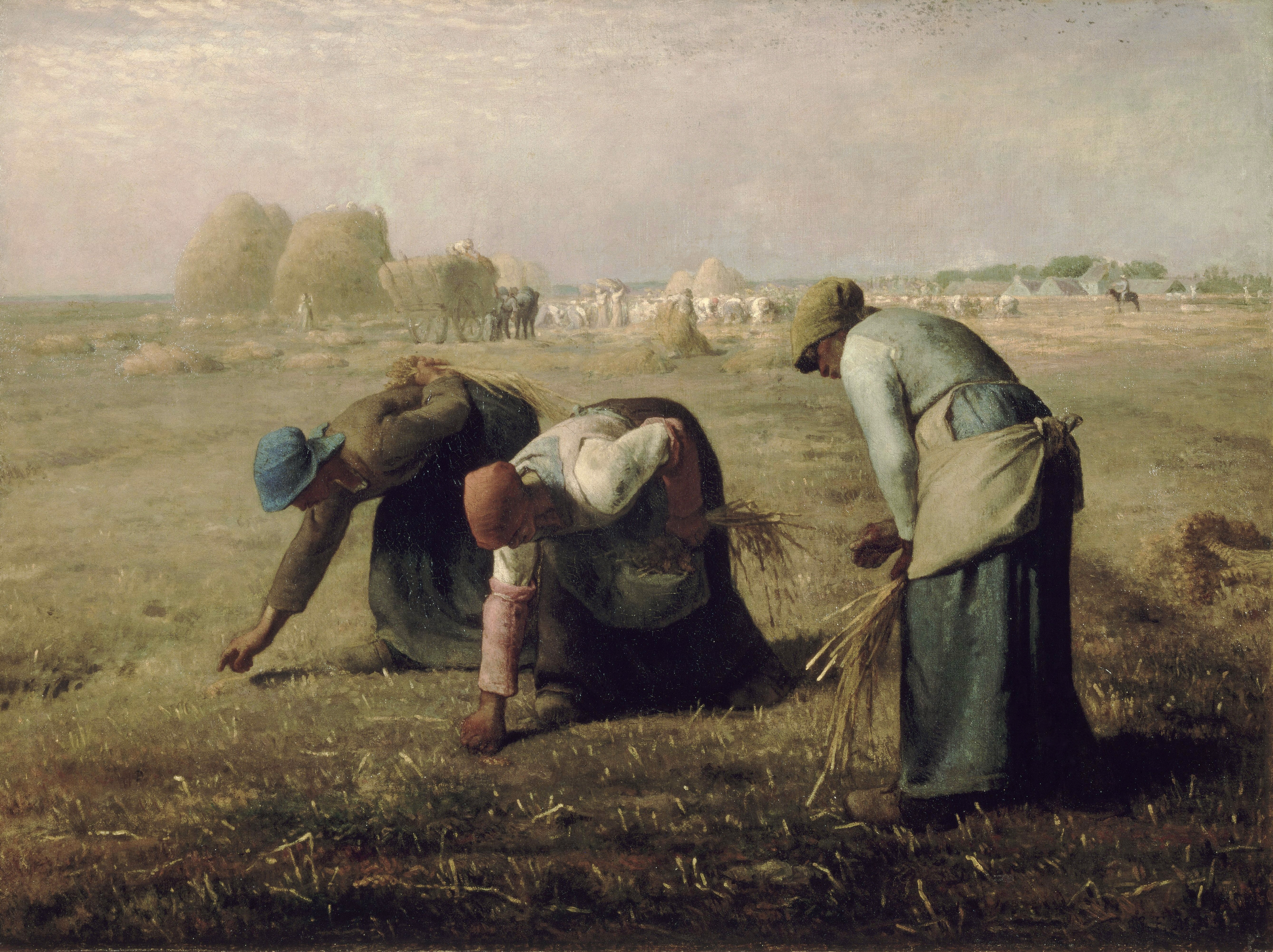
That difference matters because it widens the movement. Courbet shows a whole village taking the scale of history painting. Millet narrows the field and lets repeated work carry the force. Both, however, refuse to treat ordinary people as decorative background. That shared refusal is more important than any single stylistic recipe.
Bonheur gives Realism the market as a major subject
With Rosa Bonheur, Realism opens onto another major subject. In The Horse Fair, the monumental scene is neither a funeral nor poor field labor, but a horse market on the Boulevard de l'Hôpital in Paris. Bonheur uses enormous scale to make trade, handling, and animal power structurally serious. The painting shows that Realism could absorb public spectacle without becoming theatrical fiction.
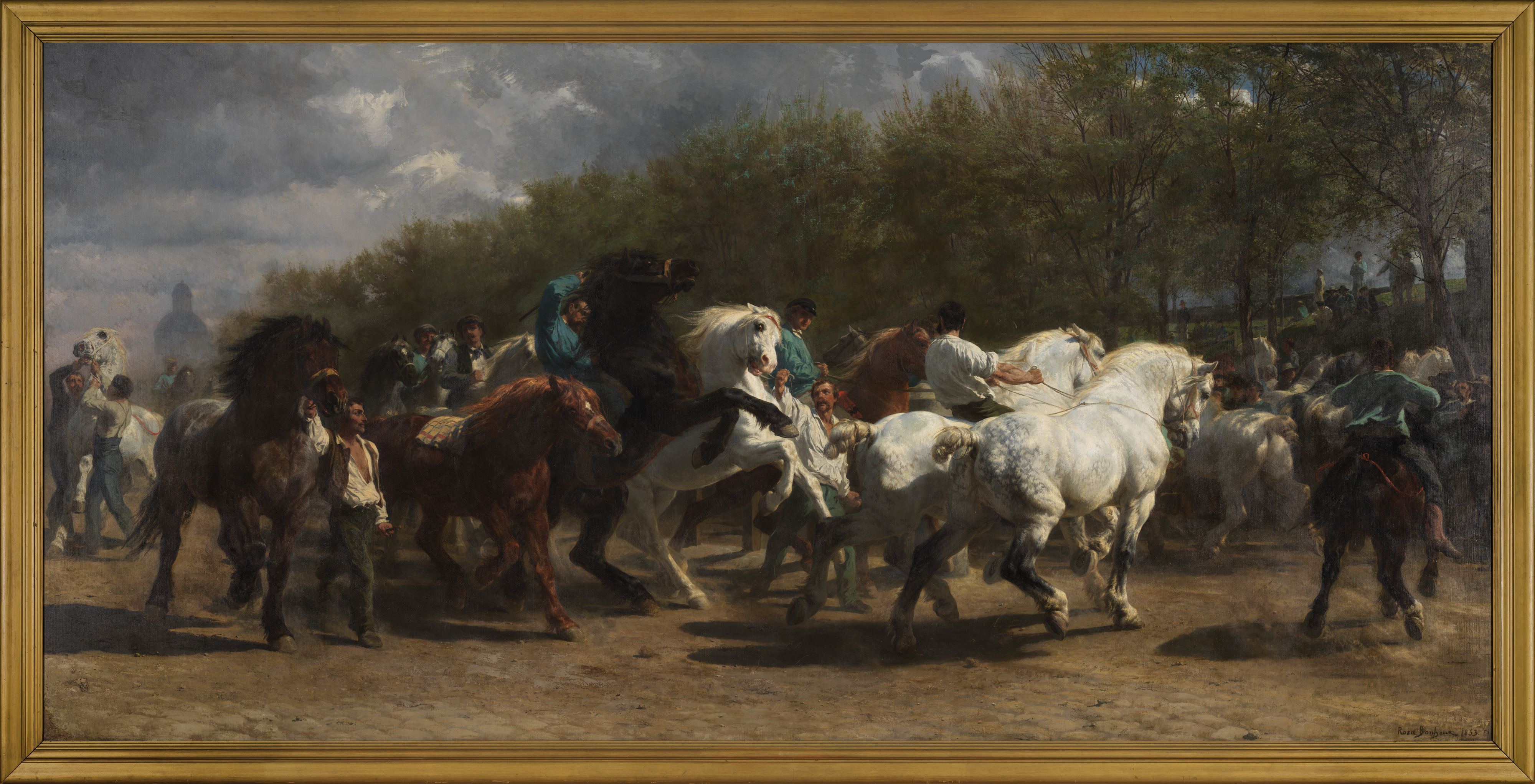
Bonheur widens the movement without weakening it. She does not leave social reality behind for a picturesque love of horses. She shows labor, evaluation, control, and unstable power in public view. Together, Courbet, Millet, and Bonheur make it clear that Realism can take the form of collective ritual, repetitive poverty, or organized commercial force.
No mythic cover, no flattering disguise
Seen broadly, Realism rejects two habits at once. It rejects idealized subject matter as the automatic summit of painting, and it rejects the polished finish that makes serious images look socially untouchable. Thick paint, direct observation, compressed space, and blunt physical detail are not just stylistic signatures. They are ways of keeping the image answerable to the world it depicts.
A simple reading test helps: ask what the work refuses to beautify, what it refuses to explain away, and what kinds of bodies or routines it allows to occupy the center. Realism becomes clearer when form is read as a social decision rather than as neutral technique.
From Courbet to Manet and documentary pressure
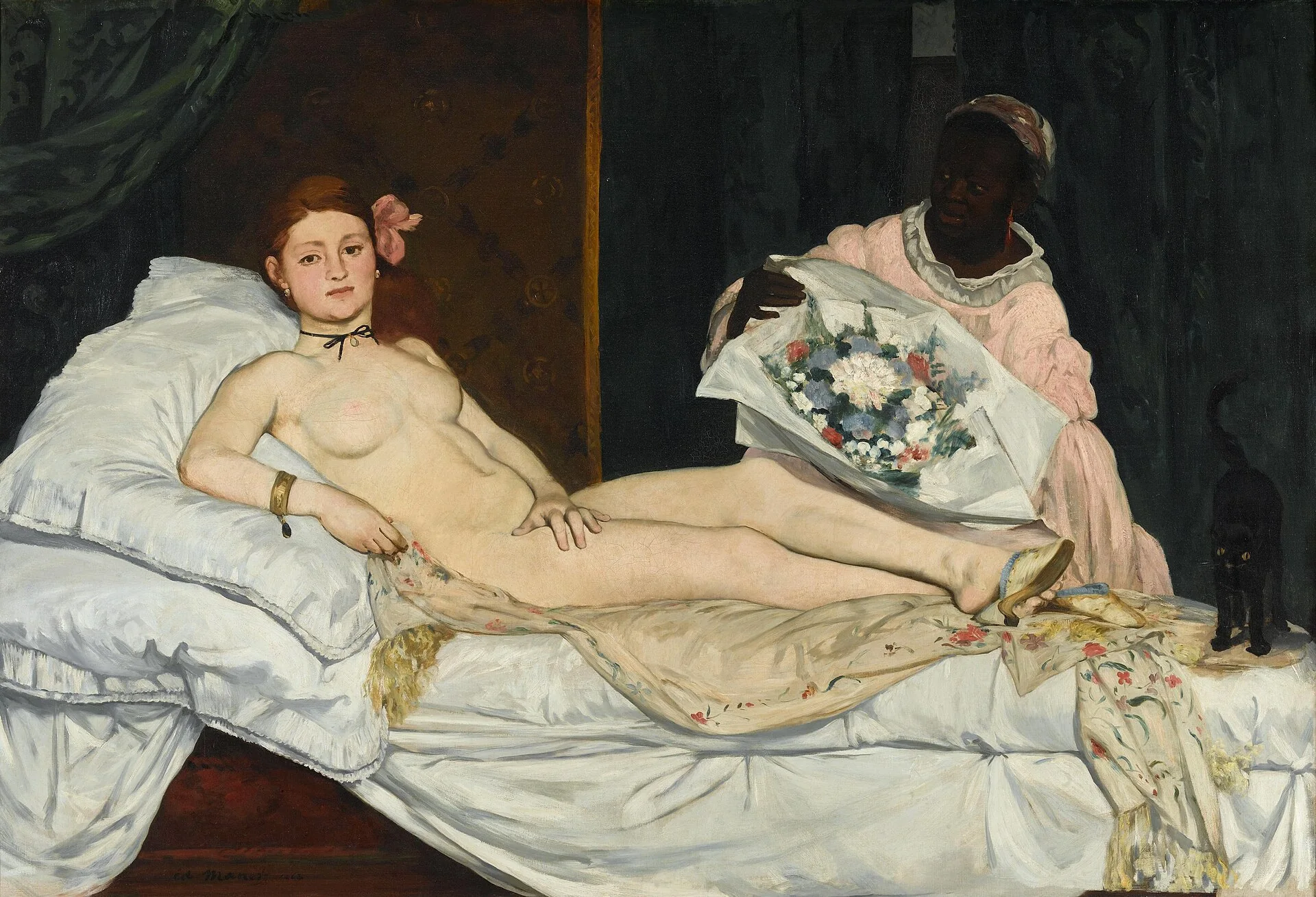
Courbet does not exhaust the movement. Le Déjeuner sur l'herbe, Olympia, and A Bar at the Folies-Bergère move the realist problem into urban modernity. Manet does not paint village ritual or rural labor. He paints the public life of leisure, sex, service work, and spectatorship. Yet the logic is continuous: no mythic excuse, no safe distance, no polite separation between formal problem and social problem.
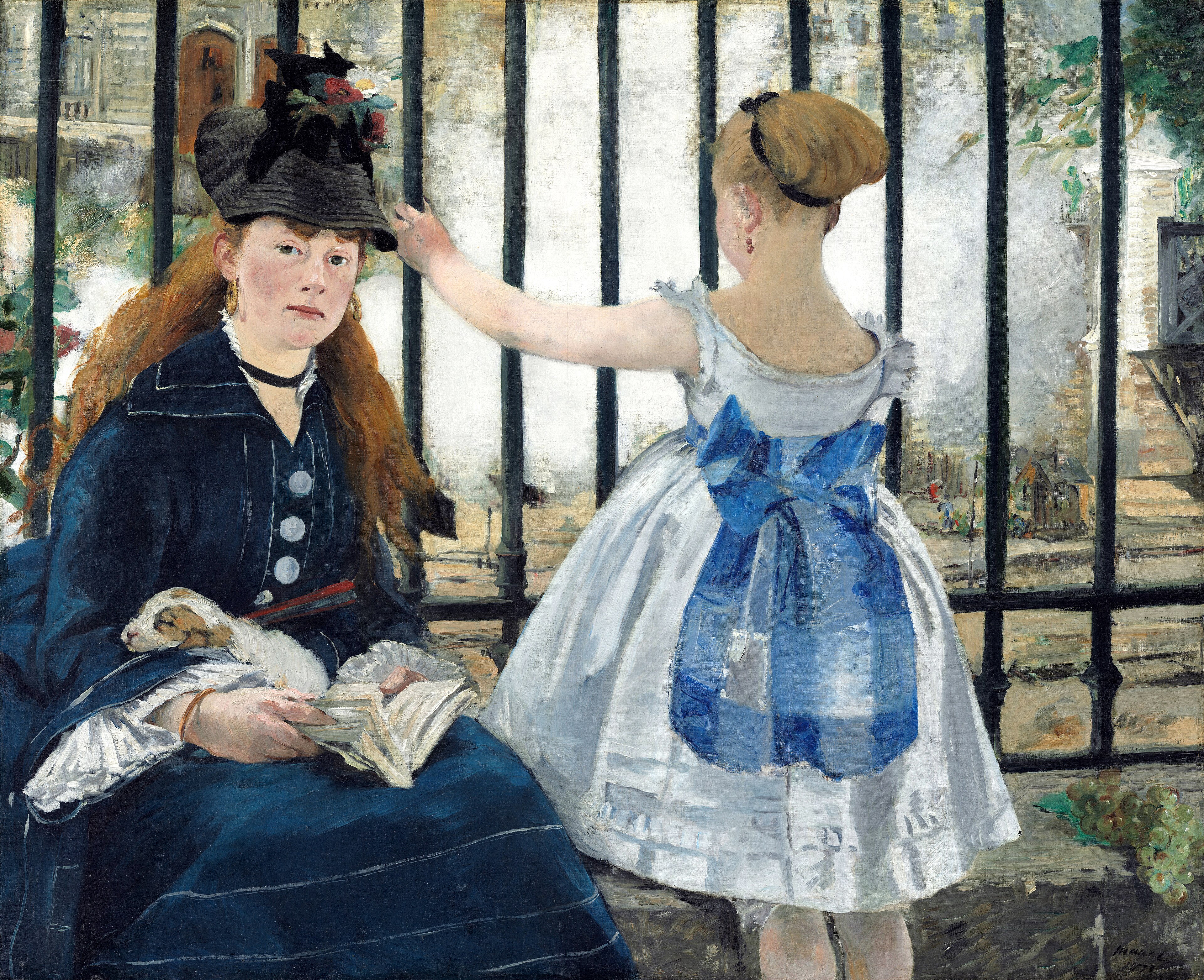
The Railway carries that pressure into the infrastructure of modern Paris. Manet does not describe the train directly; he shows a fence, a child turned toward the tracks, Victorine Meurent's unreadable gaze, and steam rising through the city. Realism becomes less a matter of rural or urban subject matter than of making social conditions visible.
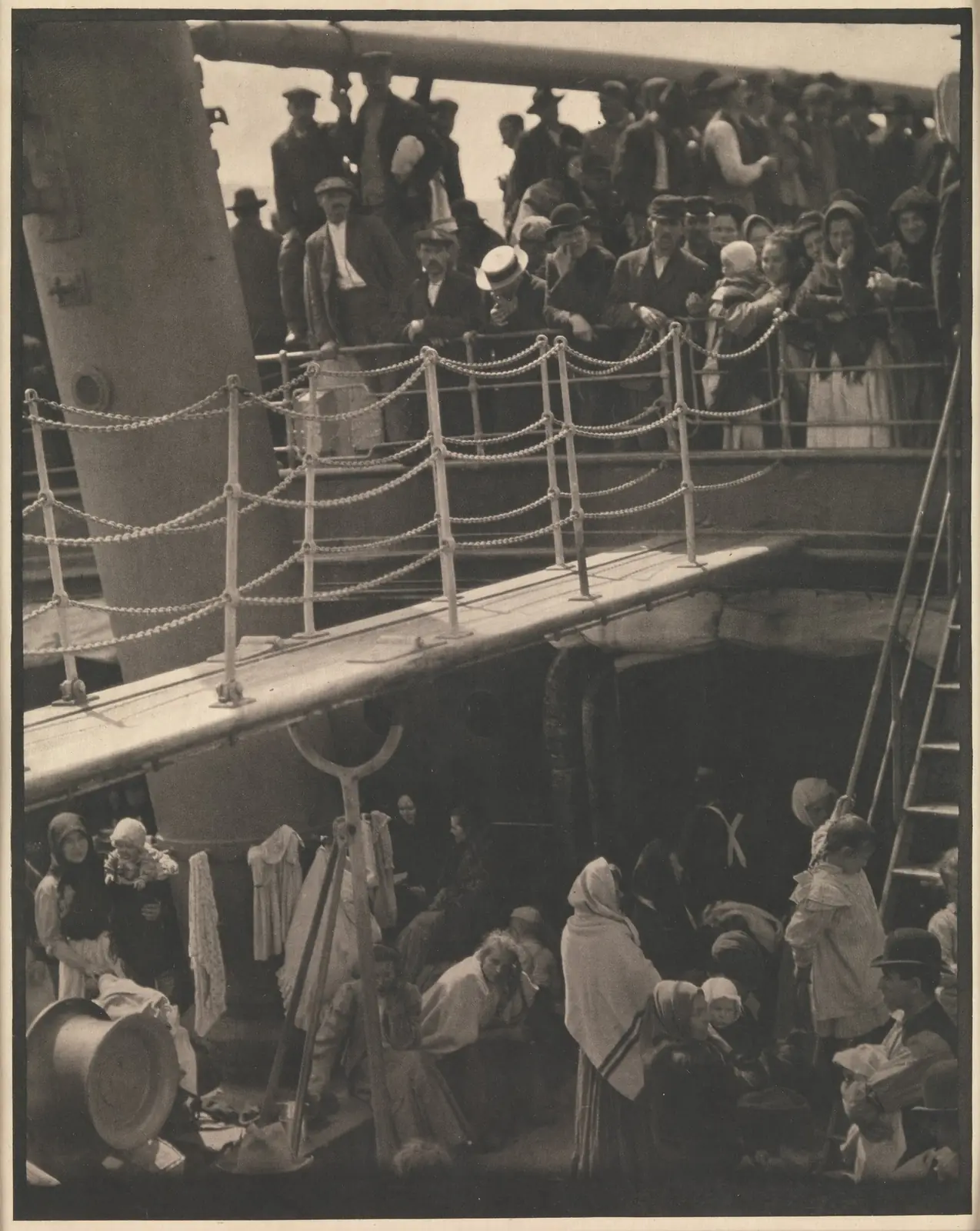
The same pressure crosses into photography. The Steerage organizes migration and class separation through deck, stair, and crowd. Migrant Mother gives economic distress an unforgettable human face. Different media, same insistence: social reality is not background. It is the subject.
A Quebec route through Realism
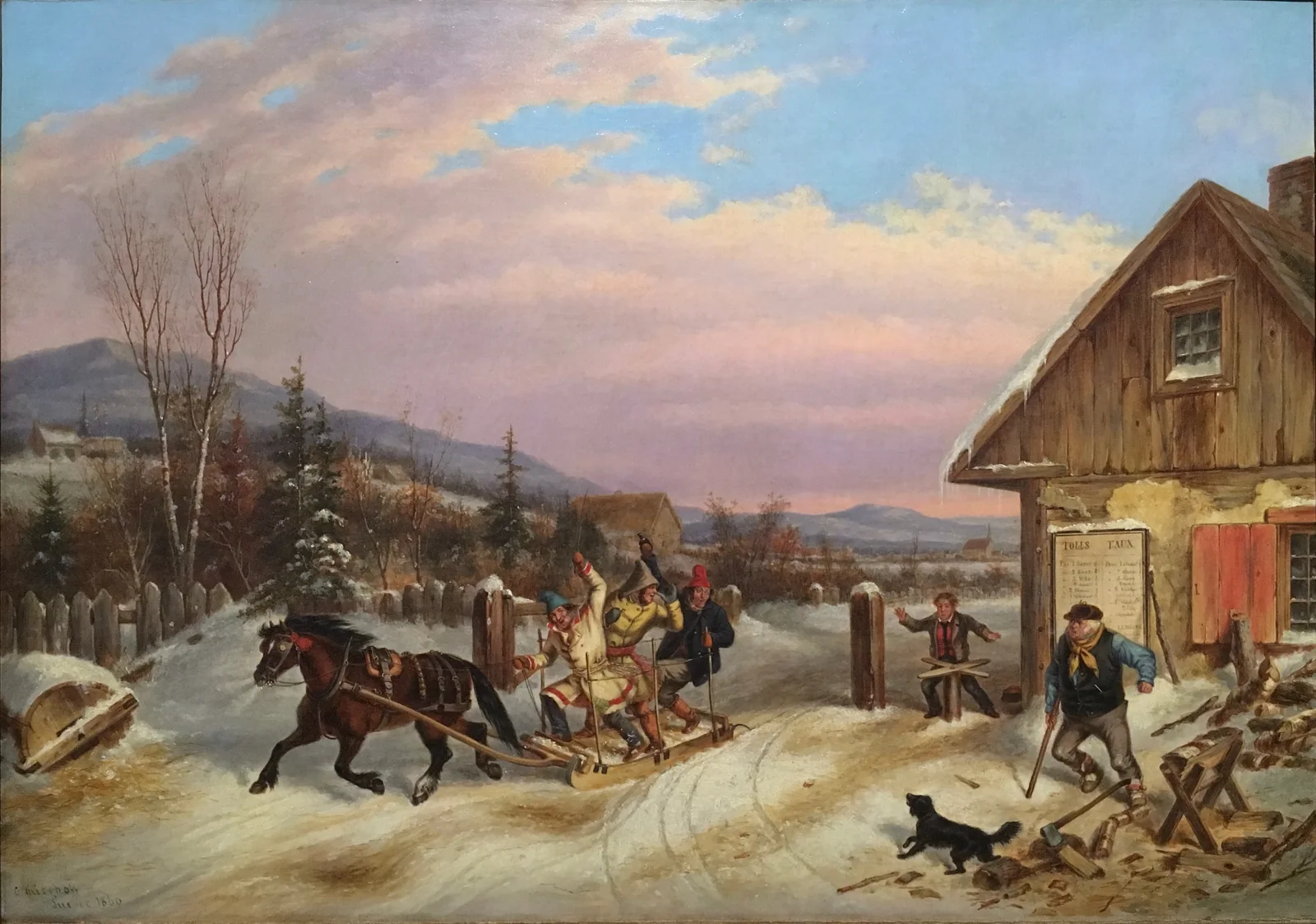
Explainary also makes room for a Quebec branch of the movement. In The Toll Gate and Bilking the Toll, Cornelius Krieghoff turns roads, checkpoints, weather, and small negotiations into readable structures of local power. The scale is smaller than Courbet's, but the question is related: how does an image make routine social order visible?
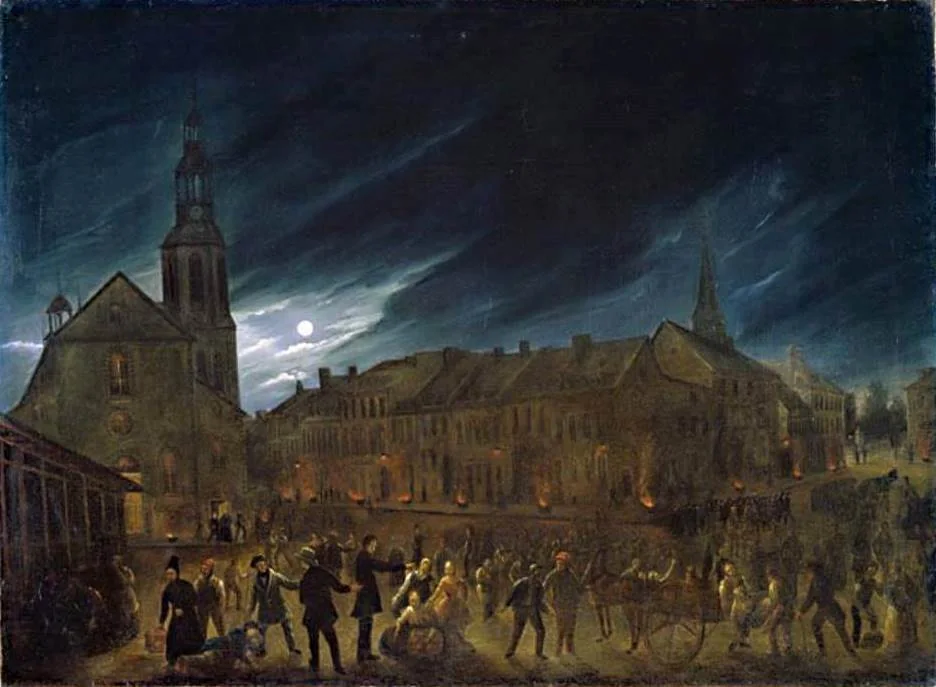
That route widens further in The Habitant Farm, The Ice Bridge at Longue-Pointe, and Cholera Plague, Quebec. Winter infrastructure, civic crisis, and collective rhythm all come into view. Realism here is less about Parisian scandal than about how institutions, climate, and local contracts shape daily life.
How Realism helps read images
Modern visual culture is crowded with images that ask to be believed. News photography, platform images, AI pictures, and editorial framing all compete for credibility. The realist lesson is not that some images are simply objective. It is that every image has conditions of production, a point of view, and a social world that it either reveals or conceals.
The movement travels well from art history to media criticism because it treats credibility as a constructed visual relation. It helps readers distinguish evidence from performance, framing from fact, and empathy from manipulation without pretending that form does not matter. The method is simple: compare linked works, test one formal hypothesis, then return to context and revise it.
Key artists
Key works in Explainary
Taken together, these works show Realism less as a fixed style than as a recurring decision to give ordinary life full public weight.
Primary sources
- Musée d'Orsay: A Burial at Ornans
- Musée des Beaux-Arts de Lyon: The Wave
- Musée d'Orsay: The Gleaners
- The Metropolitan Museum of Art: The Horse Fair
- National Gallery of Art: The Railway
- The Met: Nineteenth-Century French Realism
- Tate Art Terms: Realism
- The National Gallery: Jean-François Millet
- National Gallery of Canada: The Toll Gate