
Artist Analysis
Edvard Munch
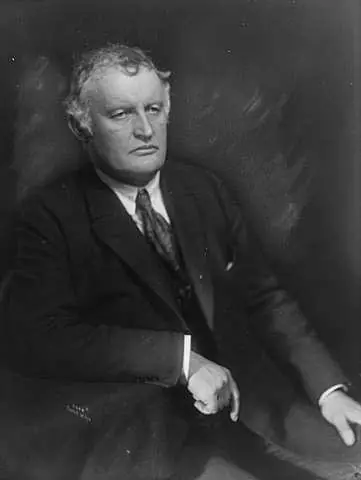
Munch did not paint moods; he engineered visual systems for states of mind under pressure. He made anxiety, desire, grief, and dread visible by treating painting and printmaking as instruments of psychological intensity rather than neutral description.
Illness, loss, and the social pressure of modern life
Edvard Munch was born in 1863 and came of age in a Norway still negotiating modern urban identity, secular change, and new cultural institutions. His mother's early death and his sister's death from tuberculosis are often cited, and they do matter, but biography alone is too narrow. Munch trained at the Royal School of Art and Design in Kristiania (Oslo) while absorbing literary and philosophical debates about anxiety, sexuality, and social alienation. His work grows from that intersection: private grief translated into a broader visual language for modern psychological instability.
A concrete career anecdote captures the turning point: in 1892, an exhibition of his work in Berlin was closed early after public controversy. Rather than ending his trajectory, the scandal accelerated it. Munch understood that hostile reception meant he had touched a nerve in late nineteenth-century visual culture. From that point forward, he built images that refused polite emotional distance and made inner conflict structurally visible.
How Munch builds emotion into line, color, and space
Munch's method is formal before it is confessional. He destabilizes contour, compresses depth, and lets color temperature do narrative work that academic modeling once handled. Skies pulse, shorelines bend, bodies tilt, and perspective loses certainty when psychic pressure rises. These are not expressive accidents. They are repeatable compositional decisions that convert fear, jealousy, desire, and exhaustion into spatial experience.
That is why he sits between Symbolism and Expressionism. Symbolist charge remains, but it is pushed toward direct perceptual impact. Later painters and printmakers, including Wassily Kandinsky, inherit this shift from narrative allegory to structural affect.
The Scream as a media strategy, not a single icon
The Scream is often reduced to one image from 1893, but Munch repeatedly reworked the motif in painting, pastel, lithography, and related print forms. Repetition was his method, not a byproduct. Each version modifies edge pressure, tonal contrast, and surface grain to test how the same existential event can be transmitted differently across media. The familiar figure on the bridge is therefore less a fixed emblem than an experimental unit in a longer process.
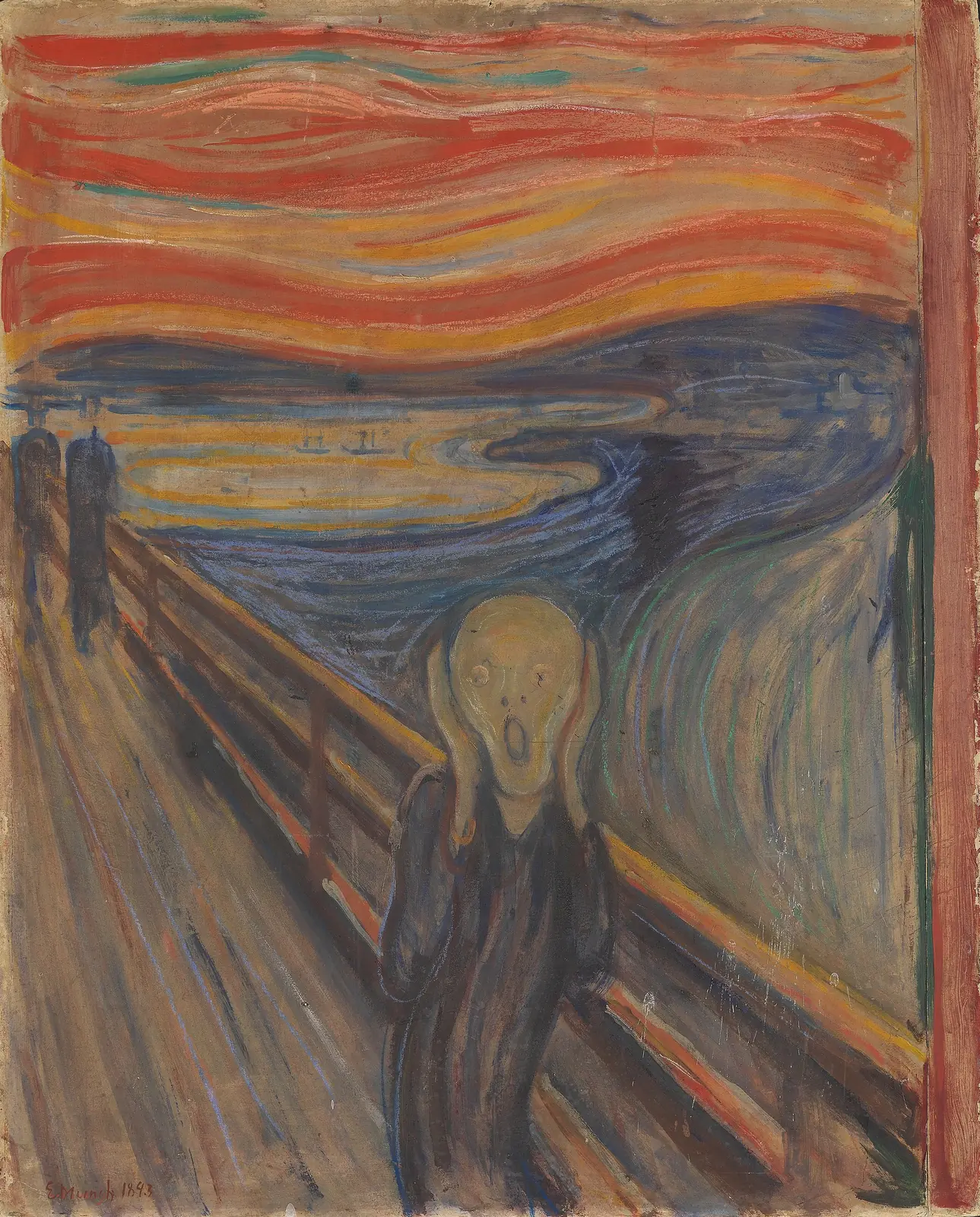
This repeat-and-circulate logic explains his unusual durability. Munch anticipated modern image ecosystems in which cultural force depends not only on originality, but on transferability across formats and publics. His print practice made that transfer possible decades before mass visual culture normalized it.
Crisis, recovery, and mature work after 1908
Munch's 1908 nervous collapse and treatment in Copenhagen are often narrated as a biographical break; they are better read as a shift in visual tempo. After recovery, his work keeps psychological tension but expands into larger cycles, murals, and a different handling of light and bodily presence. The emotional register does not disappear. It becomes more architectonic, especially in later commissions, where he tests whether public scale can hold private intensity.
His legacy follows from this full arc, not just from one famous scream. Compare him with Caspar David Friedrich and Vincent van Gogh: all three engage instability, but Munch makes repetition itself a modern method. In that sense, he remains central to any serious account of how twentieth-century art learned to picture interior life without reducing it to anecdote.
A final practical point concerns media literacy. Munch understood that prints, posters, and illustrated journals could transform reception faster than salon painting alone. His motifs circulated between elite and popular audiences, where they were re-read as symbols of modern nerves, not just Norwegian biography. This circulation history matters when teaching his work today: it explains why Munch belongs as much to the history of image systems as to the history of painting.
Key works in Explainary
Associated movements
Continue with the art quiz to validate recognition, context, and comparison.