
Artist Guide
Gustav Klimt
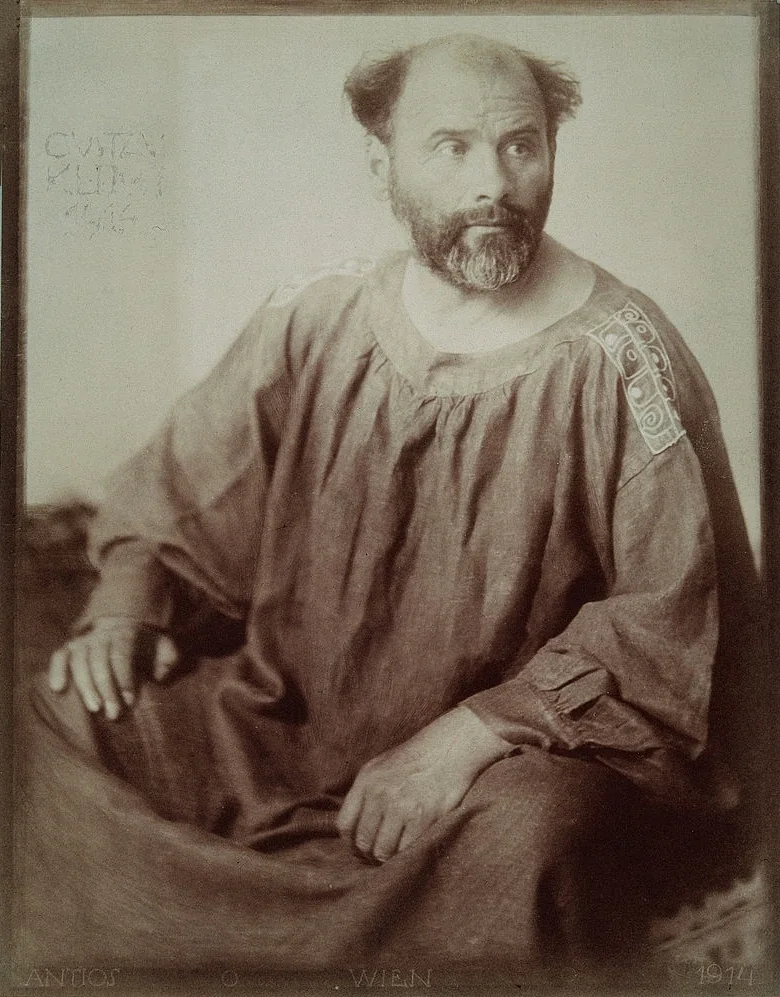
Klimt's gold is never just gold. In his hands, decoration becomes structure, psychology, and social argument at once. That is why his paintings still feel contemporary: they stage desire, power, and fragility inside the same visual surface.
From artisan training to Viennese rupture
Born in 1862 near Vienna to a family of craftsmen, Klimt trained at the Vienna School of Arts and Crafts before entering large civic commissions with the Künstler-Compagnie. Those early projects for Ringstrasse theaters gave him technical control over monumental surfaces, historical allegory, and decorative integration. They also taught him how closely artistic style was tied to institutional power in late imperial Vienna.
The break came in 1897, when Klimt and allies founded the Vienna Secession to challenge academic hierarchy and exhibition control. This is the key historical pivot in his biography: he moved from sanctioned public decoration toward a riskier language where ornament, erotic charge, and psychological ambiguity could no longer be contained by official taste.
When official commissions turned into conflict
The University of Vienna ceiling paintings (Philosophy, Medicine, Jurisprudence) made that conflict public. Commissioned for a prestigious setting, they were attacked as too dark and too sexually charged; Klimt eventually withdrew from state commissions. This episode is more than scandal history: it explains why his later work intensifies the tension between beauty and unease instead of offering decorative comfort.
Seen in this context, Klimt's career is coherent rather than split between "official" and "private" phases. He keeps asking the same question: how can a surface attract the eye while refusing ideological reassurance?
The Kiss as a test of pattern and embodiment
In The Kiss, gold is not embellishment; it is a structural device that compresses space, fuses bodies, and turns background into a charged field. The faces and hands stay naturalistic enough to anchor empathy, while garments become geometric and vegetal systems that destabilize bodily boundaries.
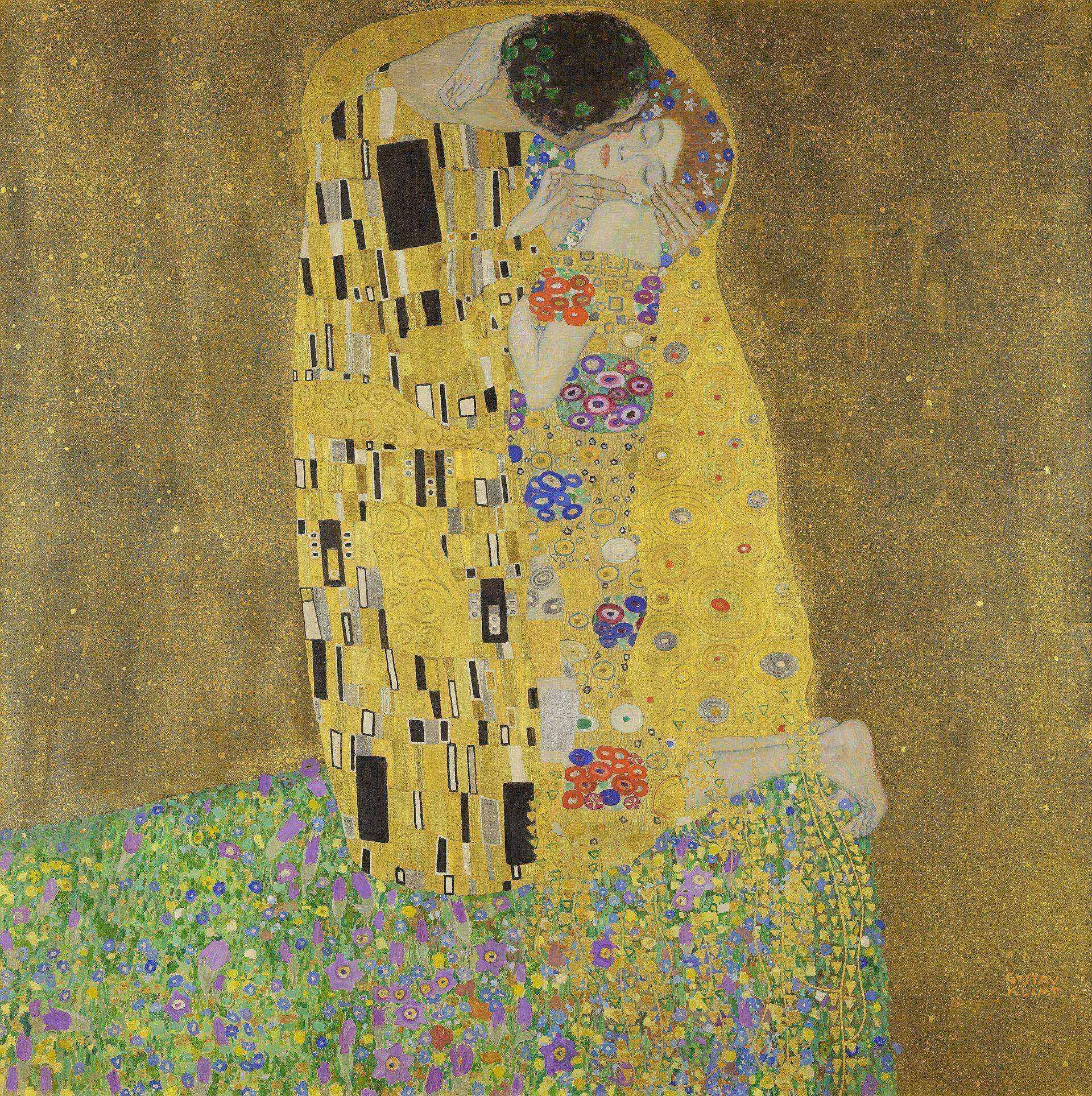
Klimt's preparatory drawings show how engineered this effect is. He studies shoulders, neck rotations, and hand pressure repeatedly before committing to painted rhythm. The sumptuous finish depends on strict drafting discipline, which is why his images hold up under close formal analysis.
Historical position and long afterlife
Klimt sits at a strategic crossroads between Symbolism, decorative reform debates, and early modern image culture. Comparing him with William Morris and Strawberry Thief is useful because both treat ornament as a system, but Klimt keeps a sharper psychological and erotic voltage inside that system.
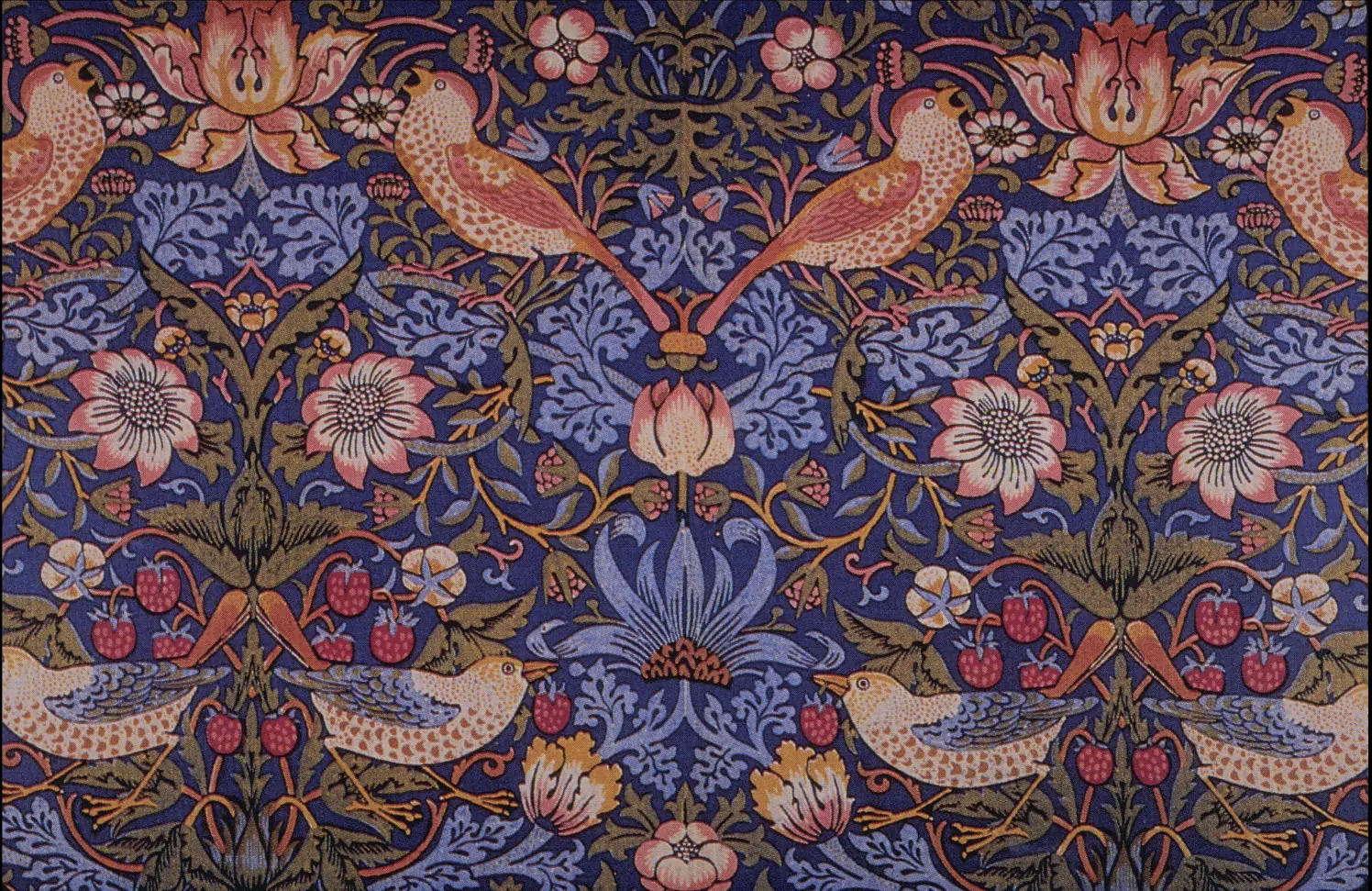
His influence persists because he solved a durable modern problem: how to make an image immediately seductive without making it conceptually shallow. In photography, fashion, and digital design, "Klimt-like" effects are common; the difficult part is still what he mastered - sustaining structural tension beneath visual luxury.
Portrait commissions as social laboratories
Klimt's portrait practice, especially for Vienna's Jewish and liberal bourgeois patrons, sharpened his method in concrete terms. He had to balance likeness, status display, and psychological ambiguity within a single surface. This is where his ornamental intelligence becomes social analysis: dresses and backgrounds do not simply frame the sitter, they stage class aspiration, vulnerability, and self-fashioning at once.
That balance is one reason his paintings remain central to museum audiences and research debates. They are beautiful, but they are never merely decorative souvenirs of fin-de-siecle elegance. They preserve the tensions of a city negotiating modern identity through gender codes, patronage, and public visibility. Reading Klimt through this lens keeps biography, method, and historical context tightly connected.
Key works in Explainary
Associated movements
Continue with the art quiz to test recognition, context, and formal comparison.