
Arts and Crafts
Strawberry Thief
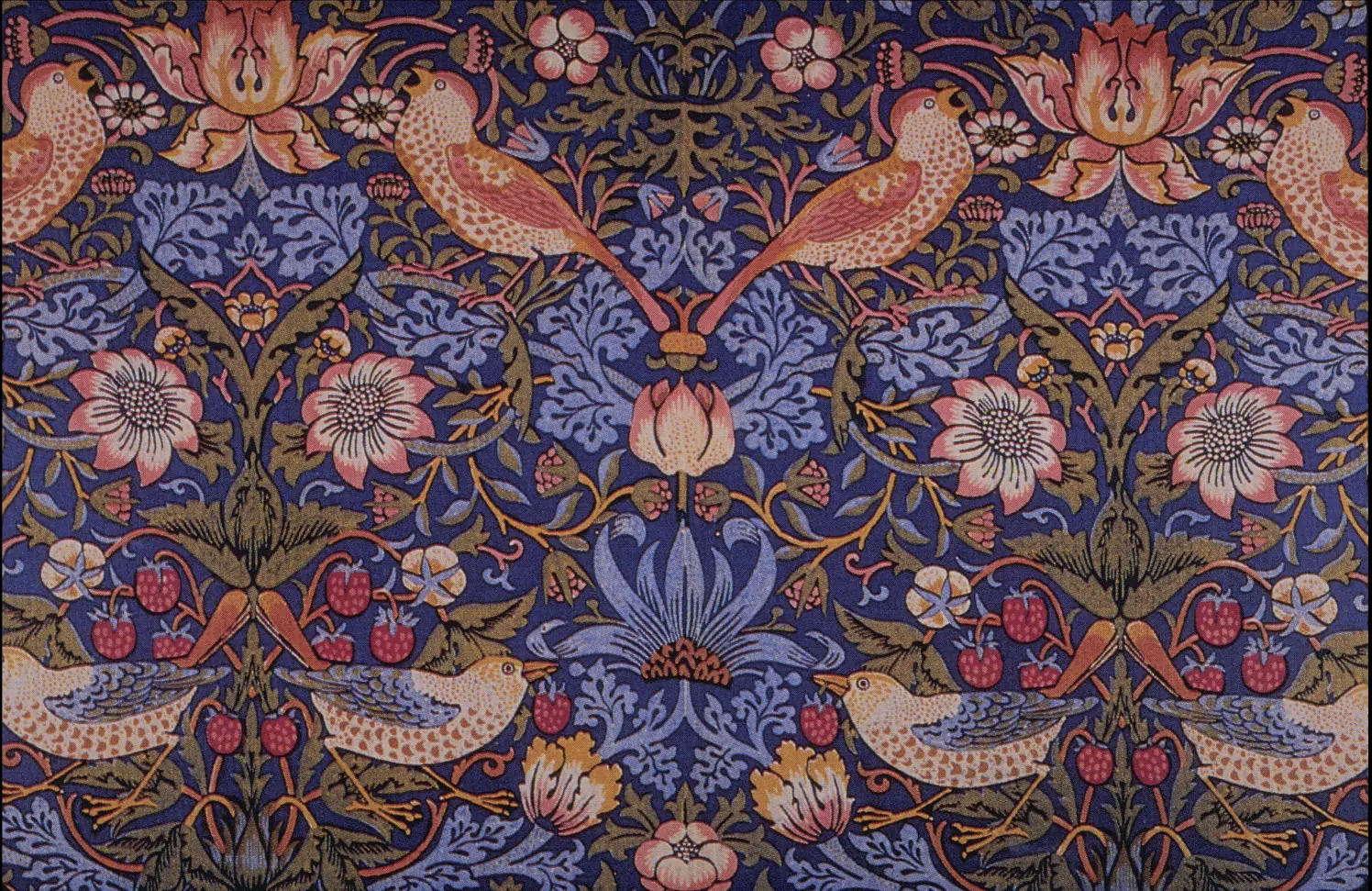
A pair of birds steals fruit, and Morris turns the garden raid into a complete theory of design. Strawberry Thief is not a charming Victorian print with birds scattered across a blue ground. It is a furnishing textile in which repeat pattern, dye work, workshop labor, and domestic use all carry the argument. On one surface, William Morris treats an ordinary room as a place for serious looking.
A garden incident turned into a textile system
Strawberry Thief is an 1883 printed cotton furnishing fabric designed for Morris & Co. The motif shows thrushes among strawberries, leaves, and flowers, arranged in a repeat that can extend across curtains, wall hangings, or furniture covers. The subject comes from a domestic incident: birds stealing fruit from the kitchen garden at Kelmscott Manor, Morris's country house in Oxfordshire.
The title keeps the design close to lived experience. These are not symbolic birds floating in decorative space. They are small raiders caught in action, and Morris builds a whole environment around them. The strawberries give the pattern its anecdote; the repeat turns that anecdote into structure.
Why the repeat never feels mechanical
The design holds because it balances order and surprise. The birds appear in paired positions, the stems loop with controlled symmetry, and the strawberries punctuate the field like bright visual beats. Nothing looks rigid, yet nothing drifts. Morris makes the surface feel vegetal without letting it become loose.
A furnishing textile needs that discipline. A painting can command attention from a fixed frame; a textile has to live with furniture, daylight, corners, wear, and repeated glances. Strawberry Thief gives the eye enough structure to feel calm and enough variation to keep returning. Its intelligence is not hidden behind the motif. It is built into the way the motif can occupy a room for years.
Indigo, Merton Abbey, and the cost of beauty
Strawberry Thief is famous for its look, but the technique is just as important. Morris used the demanding indigo-discharge method at Merton Abbey, the workshop site he took over in the early 1880s to bring textile production under closer control. The cloth was dyed, selectively bleached through the design, and then block printed with additional colors. The process required timing, washing, registration, and repeated handling rather than anonymous speed.
That technical history prevents the design from becoming a generic image of prettiness. The blue ground, red berries, yellow accents, and crisp outlines are the visible result of labor. Morris did not separate beauty from production. He wanted the finished object to make skill legible.
Arts and Crafts without slogan
The textile belongs at the center of the Arts and Crafts movement because it compresses the movement's main questions into one object. Can an everyday thing be made with seriousness? Can ornament clarify use instead of disguising cheapness? Can a room train attention rather than numb it?
Morris's answer is not a lecture attached to a pattern. It is the pattern itself. The birds, leaves, dyes, repeat, and scale all work together. The textile is commercial, decorative, and ideological at the same time. That tension gives it force: it wants beauty to enter ordinary life, even though the costly process made Morris & Co. fabrics easier for affluent buyers to own than for the broader public his politics defended.
For Morris, a repeat pattern was not background. It was a way of making a room behave with intelligence.
Medieval ornament clarifies Morris's method
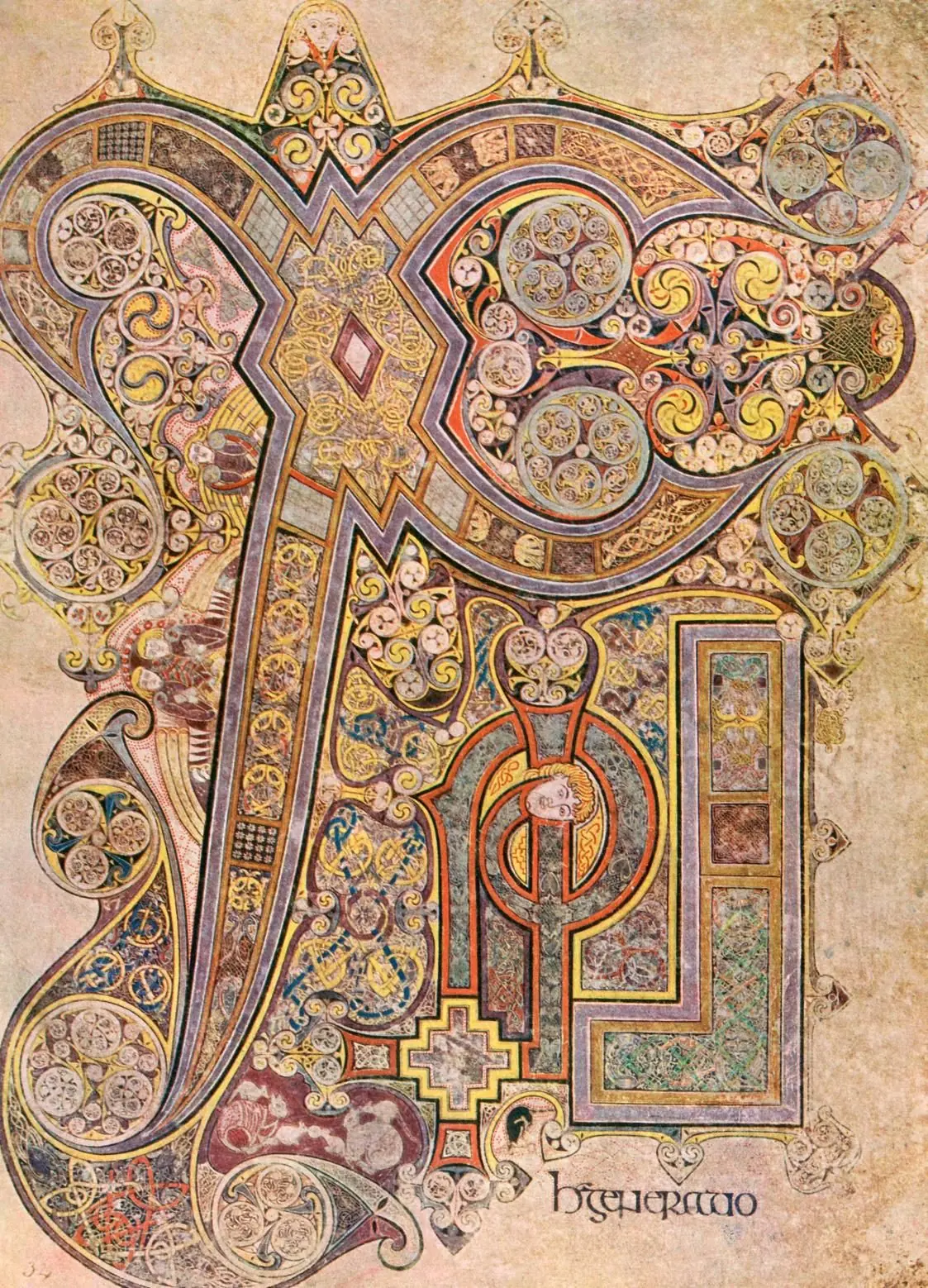
Morris loved medieval art because it treated pattern as a way of organizing attention. The comparison with the Book of Kells Chi Rho Page is useful: both surfaces are dense, rhythmic, and built for slow looking. The manuscript page concentrates ornament around sacred text; Morris transfers comparable intensity into domestic design.
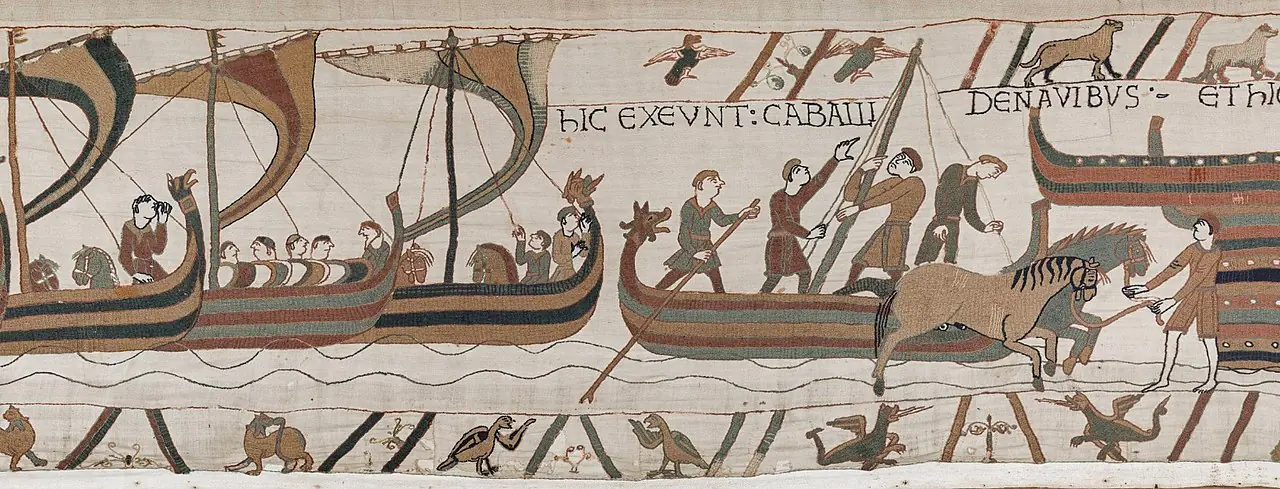
The Bayeux Tapestry offers another comparison. Its long textile surface organizes bodies, animals, weapons, and inscriptions into a continuous visual field. Strawberry Thief is not narrative in that sense, but it shares a textile logic: movement is carried by repetition, interval, and the rhythm of forms across fabric.
Modern order makes the contrast sharper
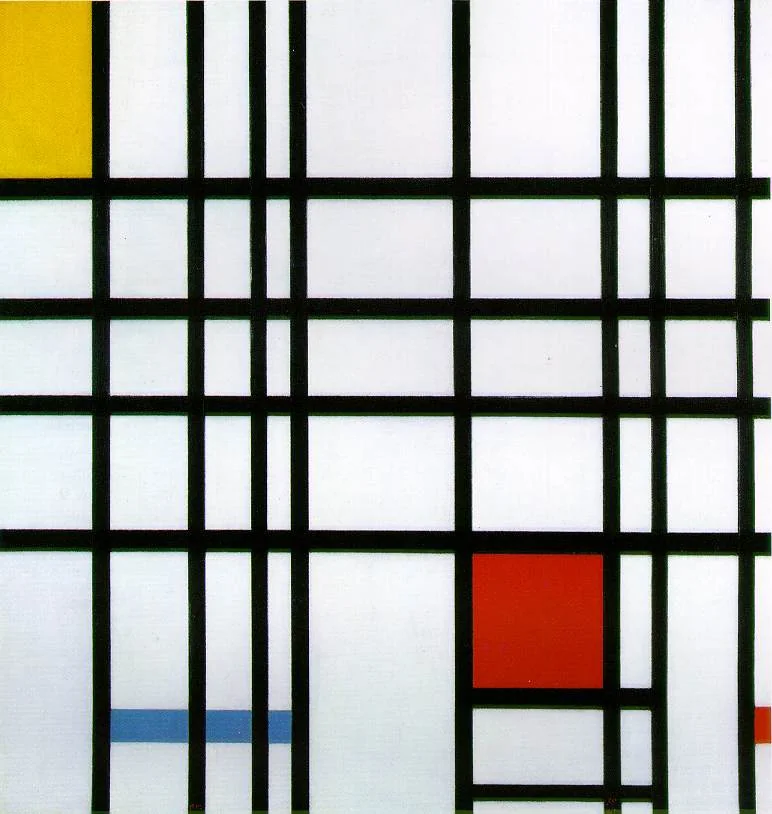
A later comparison with De Stijl sharpens Morris's achievement. Mondrian's grid seeks order by reducing the world to line, block, and primary color. Morris seeks order through vegetal density, touch, and recurrence. Both refuse visual accident. They disagree about how spare a designed world should become.
How to read Strawberry Thief quickly
- Track the birds first. Their paired positions create the pattern's pulse.
- Follow one stem until it disappears into the repeat. The apparent natural growth is carefully engineered.
- Notice how berries and flowers prevent the blue ground from becoming heavy.
- Keep technique in view. The crispness of the pattern comes from slow dye and printing work, not from decorative ease.
Seen this way, Strawberry Thief is not only a beloved Morris pattern. It is a compact lesson in what design can do when form, process, and use are treated as one problem.
After this reading, use the art quiz to test whether you can recognize Morris quickly when textile design, manuscript ornament, and modern abstraction appear side by side.
Explore related paths
Sources
Frequently asked questions
Strawberry Thief is an 1883 printed furnishing textile designed by William Morris. It shows thrushes among strawberries, leaves, and flowers arranged as a repeating pattern for domestic interiors.
The title refers to thrushes that Morris observed stealing strawberries in the kitchen garden at Kelmscott Manor, his country house in Oxfordshire.
The textile was made with indigo discharge and block printing. The cloth was dyed, bleached through the pattern, then printed with additional colors through a slow, skilled workshop process.
It connects directly to Arts and Crafts because Morris treats pattern, material, skilled labor, and daily use as one design problem. The textile turns household decoration into an argument about quality.
Museum examples are held by institutions including the Victoria and Albert Museum, the William Morris Gallery, the Huntington, and the Cleveland Museum of Art.