
Symbolism
The Kiss
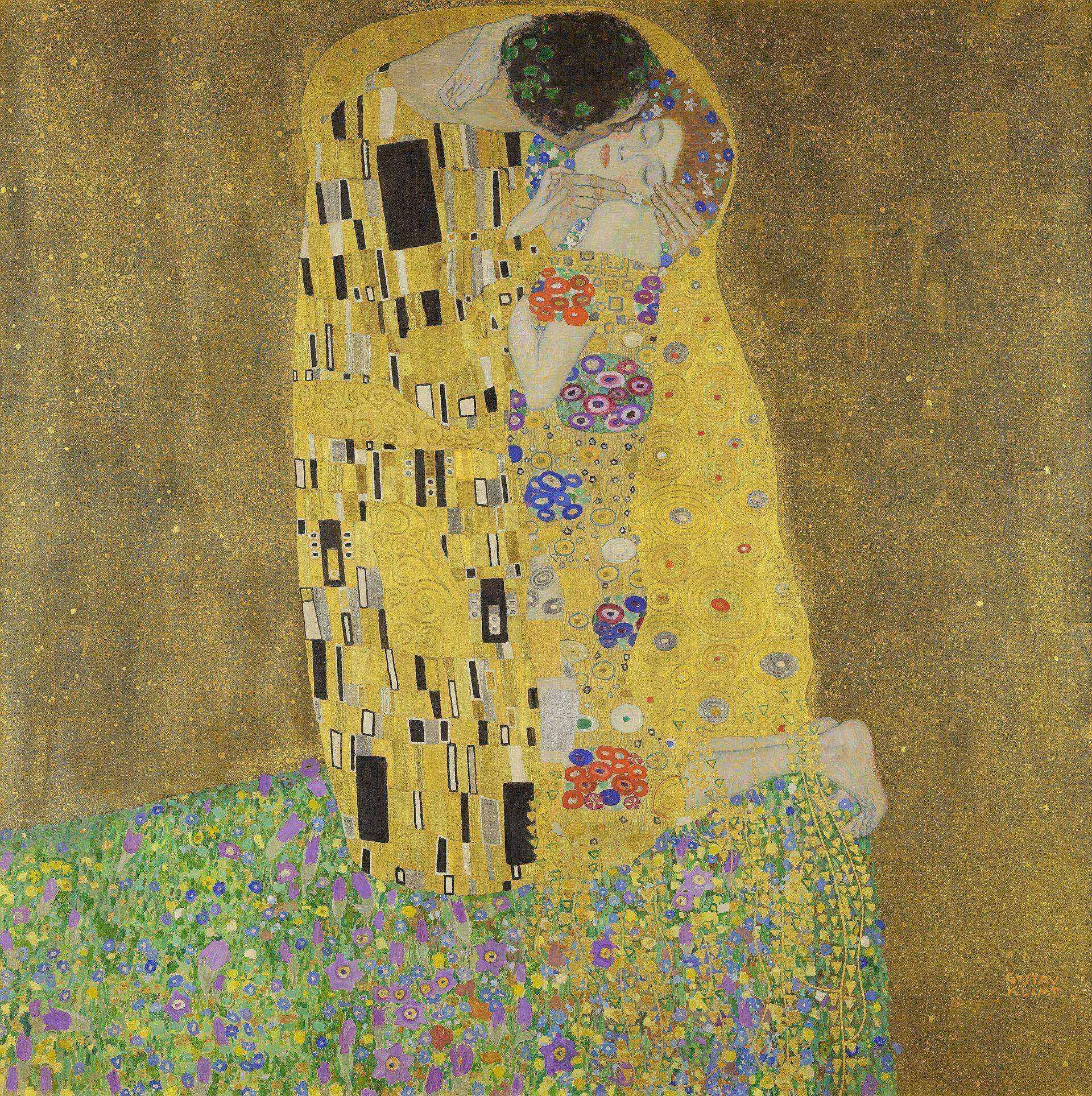
A devotional image of intimacy where ornament and body negotiate power, tenderness, and transcendence.
Two bodies held at the edge of a void
Klimt builds a vertical icon: two figures fused into one luminous block, then suspended above a flowered edge that behaves like a cliff. The mosaic robe is not background decoration; it is the structural field that binds the pair while preserving difference between masculine rectangles and feminine circles.
Vienna 1908: Secession ambition and private modernity
Painted in Vienna at the edge of modernity, the work reflects both Secession ambitions and Symbolist psychology. Gold evokes Byzantine sacred art, but the embrace is unmistakably modern: private, vulnerable, and negotiated rather than idealized in classical distance.
Why this image became globally persistent
The painting became globally iconic because it resolves a difficult equation: high ornament with emotional immediacy. It reads instantly on social media, yet survives close museum viewing thanks to extraordinary control of edge, texture, and chromatic hierarchy.
The edge beneath their feet matters
The couple is not grounded in a stable room; they stand on a narrow floral ledge that drops away into indeterminate space. That precarious placement turns intimacy into a risked act, not a decorative pose.
Notice how the woman's face remains naturalistic while the garments become nearly abstract. Klimt keeps one foot in bodily presence and another in symbolic design, so emotion and ornament keep testing each other.
Klimt makes ornament perform emotion, not hide it.
Gold as technology, not decoration
The Kiss belongs to Klimt's "golden phase," but the metallic surface is doing more than adding luxury. Gold and silver leaf flatten depth, redirect light, and suspend the couple between object and icon. The painting behaves differently from ordinary oil on canvas: it catches ambient light and changes with viewer position, which means the work is partly staged by the room around it.
That material choice also connects Viennese modernism to Byzantine and medieval visual traditions. Klimt is not quoting the past nostalgically; he is using historical surface logic to solve a modern question about intimacy and transcendence.
The geometry of bodies and pattern
The robe around the man is built from rectangles and vertical blocks, while the woman's garment carries circles, spirals, and floral signs. This formal contrast is often read as gender coding, but the more important point is compositional reciprocity: hard and soft modules interlock to hold the embrace in tension. Neither body fully absorbs the other.
Look closely at hands, neck, and jawline. Klimt keeps these passages naturalistic to anchor vulnerability, then lets ornament take over the surrounding field. Emotion survives because anatomy and pattern continuously renegotiate control.
From Viennese icon to global image system
The painting succeeds both as a high-resolution museum object and as a compressed digital icon. Few works retain that dual strength. Read it with Yellow-Red-Blue, The Ten Largest, No. 7, and Symbolism to compare how modern artists used pattern and spiritual ambition to renegotiate what a figure image can do.
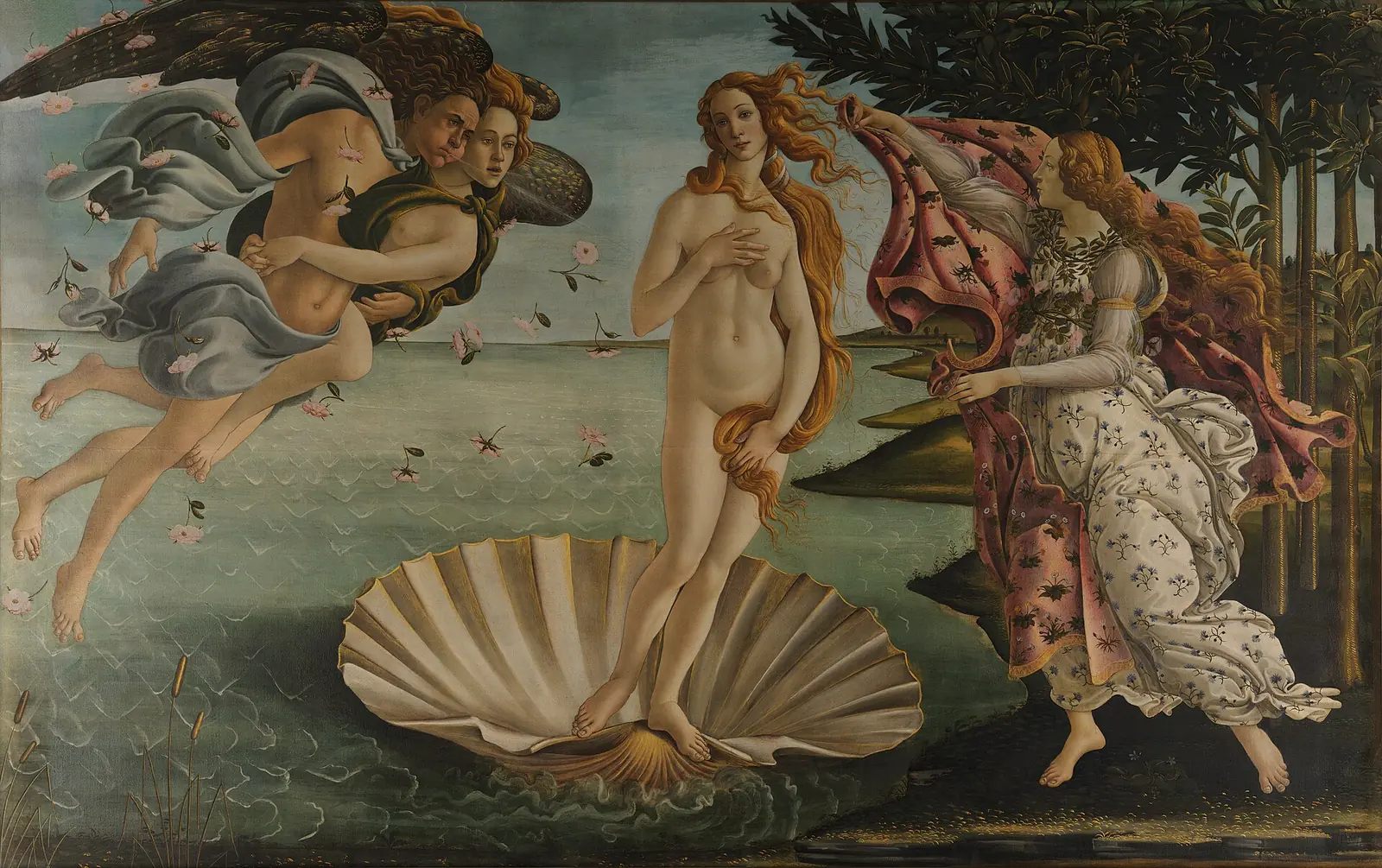
By comparison, Olympia makes erotic modernity confrontational, while The Birth of Venus keeps desire in mythic mediation. The Kiss sits between those poles: it is sensuous without sentimentality, symbolic without opacity.
The work also clarifies a key modern tension: images can be both intimate and institutional. In Vienna, it was tied to Secession debates, patronage, and museum display; today, the same composition circulates as a personal emblem. Klimt's structure survives that scale shift because its central relation, two figures negotiating closeness at the edge of instability, remains legible under radically different viewing conditions.
Explore more
Related works
If The Kiss is clearer now, try the art quiz and see whether you can spot works by Gustav Klimt in seconds.