
French Neo-Impressionist Artist
Henri-Edmond Cross
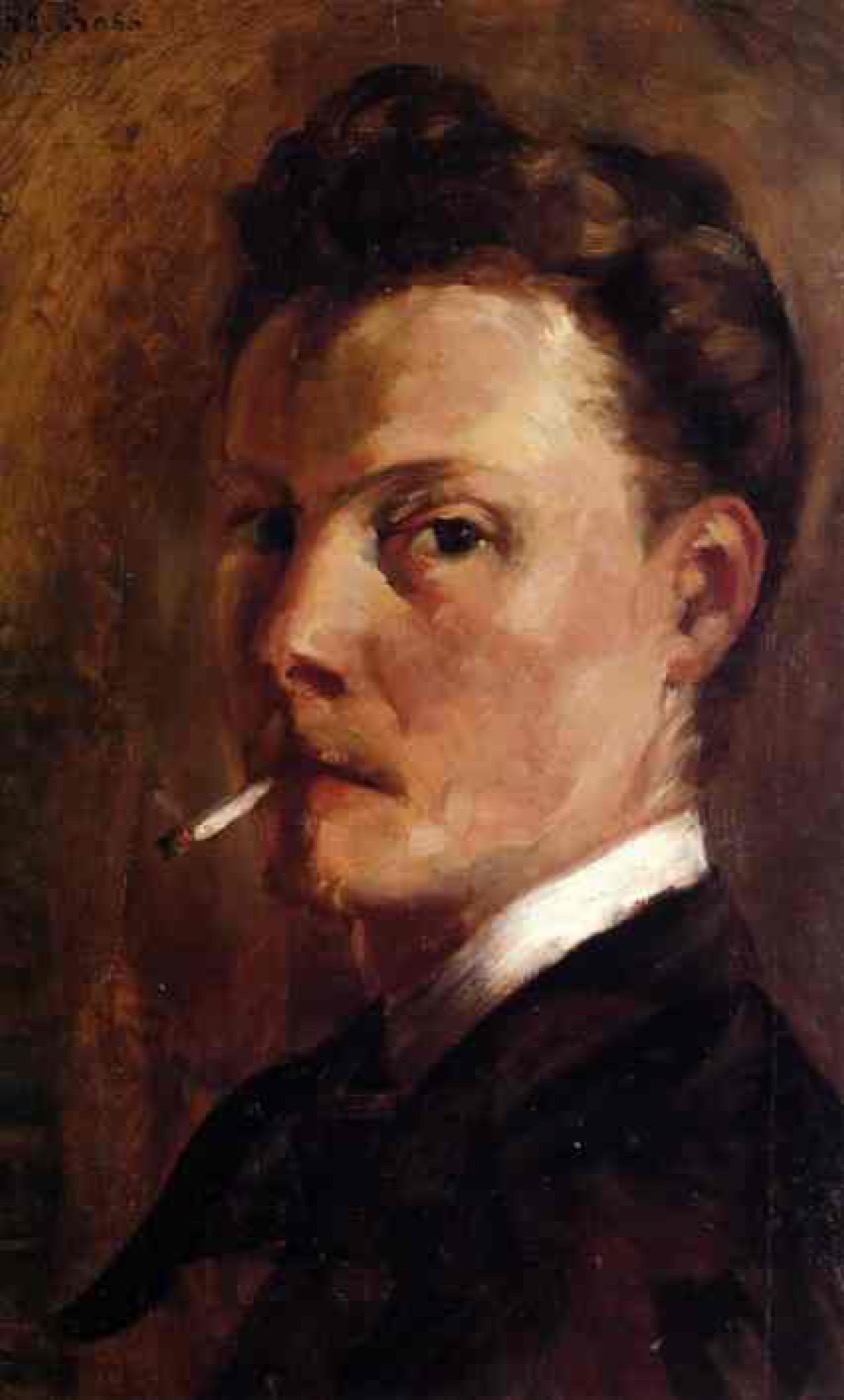
Cross is the pointillist who lets the dots open into warm air. Born Henri-Edmond Delacroix in Douai, he moved from northern French training to the Neo-Impressionist circle around Seurat and Signac, then made the Mediterranean coast a laboratory for mosaic color, decorative scale, and modern pleasure.
His place in Neo-Impressionism is crucial because he changes the movement's pressure. Seurat gives the method its disciplined architecture. Signac gives it argument, mobility, and public force. Cross gives it breadth: evening landscapes, coastal vegetation, figures at rest, and a surface that points toward Matisse.
From Delacroix to Cross
Cross was born in 1856 as Henri-Edmond-Joseph Delacroix. He adopted the name Cross partly to avoid confusion with Eugène Delacroix and with another artist named Henri Cros. That change of name fits a career built through recalibration. He trained within more conventional nineteenth-century painting before turning toward the avant-garde networks that gathered around the Salon des Indépendants.
The Neo-Impressionist method gave him a way to join observation, structure, and color. Yet Cross never feels like a mere follower. His mature paintings loosen the point into larger pieces, giving divided color the density of mosaic and the slow rhythm of southern light.
The Evening Air and the decorative ambition
The Evening Air is the central work for reading him on Explainary. Painted around 1893, it presents figures in a Mediterranean landscape as heat and light subside. The scene has no narrative urgency. Its power lies in suspension: bodies pause, trees rise, the ground and sky hold the image in measured bands.
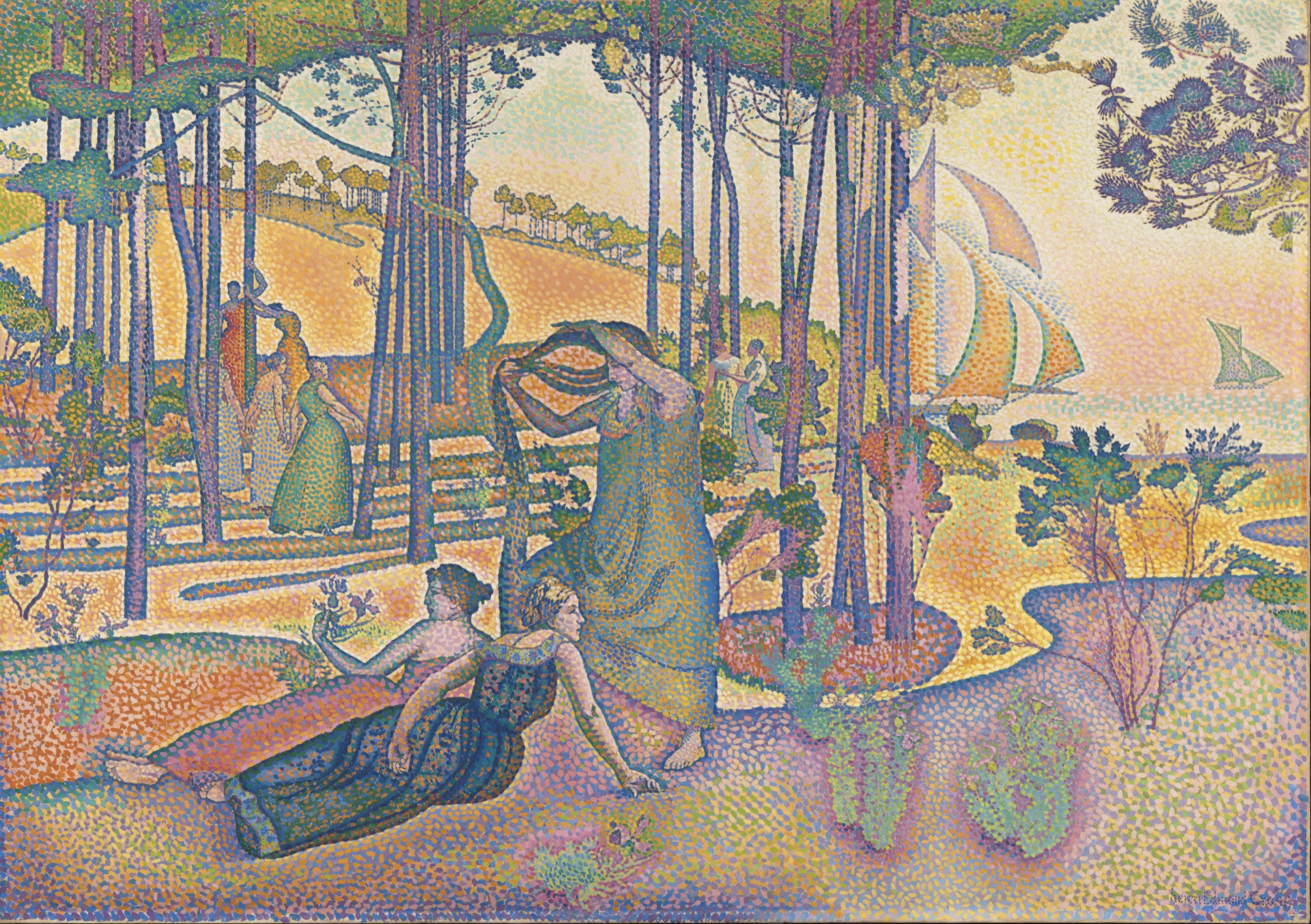
The painting grew from a shared ambition with Signac to create a decorative monument to the southern landscape. That phrase can sound grand, but the result is practical and visible: a big canvas where pointillist marks widen into rectangular color units and make the surface feel built rather than merely brushed.
A method changed by the South
Cross's move to the South of France in the early 1890s changed his art. The coast offered intense light, open horizons, trees, bathers, gardens, and a climate that seemed to invite broader color. He did not abandon Neo-Impressionism; he stretched it until it could hold a different kind of sensation.
This matters historically because Cross helps separate pointillism from the caricature of tiny dots. His mature touch can be blocky, rhythmic, and openly decorative. The viewer still experiences optical mixture and color contrast, but the marks also assert themselves as units of design.
Beside Seurat, Signac, and Van Rysselberghe
Cross is easiest to place by comparison. La Grande Jatte makes Seurat's pointillism a social and optical machine. Signac's Opus 217 turns it into a portrait of criticism, anarchist culture, and graphic design. Théo van Rysselberghe adapts it to Belgian portraiture and interior life.
Cross adds the decorative landscape as a major path. His paintings show figures, trees, coves, gardens, and water held together by color architecture. The method becomes less like a proof and more like a climate one can enter.
Legacy toward Matisse
Cross's legacy runs through color modernism. The Orsay history of The Evening Air records that Matisse saw the painting at Signac's house, La Hune, and drew from it for Luxe, calme et volupté. That link is not a footnote. It marks a passage from Neo-Impressionist division to the stronger chromatic independence of the early twentieth century.
Later painters did not need to keep Cross's exact method to inherit his lesson. Color could organize a composition without obeying local description. A landscape could be both observed and designed. Pleasure, light, and structure could occupy the same surface without cancelling one another.
How to read Cross
Start close enough to see the shape of the mark. Cross often trades the punctual dot for a larger unit that behaves like a tessera in a mosaic. Then step back and watch how those units settle into trees, bodies, shade, and air. His best paintings are built across that shift of distance.
The second question is emotional. Cross does not carry Seurat's tense social detachment or Signac's polemical edge. He searches for a modern calm made through method. That calm is active, because every interval of color has to hold its place.
Continue with related pages
Then use the art quiz to test whether Cross's mosaic light reads differently from Seurat's social geometry and Van Rysselberghe's inward portraiture.