
Artist Analysis
Hilma af Klint
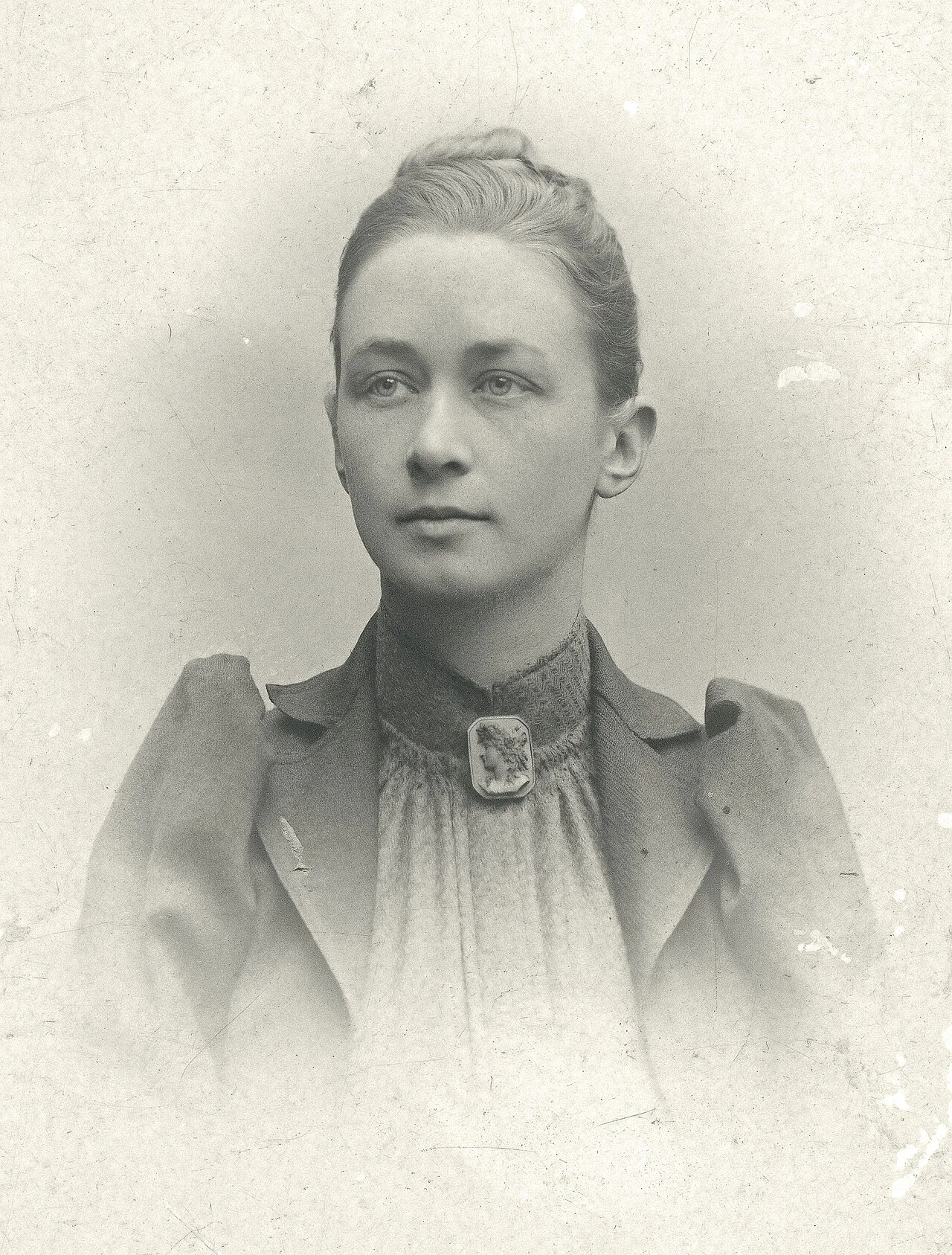
Af Klint did not anticipate abstraction by accident; she built it as a long-form research program. She developed a large-scale abstract language before abstraction became institutionally visible, combining disciplined visual systems, esoteric inquiry, and serial structure.
Stockholm training and a parallel abstract project
Hilma af Klint was trained at the Royal Academy of Fine Arts in Stockholm and mastered the professional conventions of late nineteenth-century painting. That institutional formation matters: she knew exactly what counted as finished public art in her time. Her radical move was not ignorance of convention, but a deliberate parallel practice that used abstraction as structured inquiry. In other words, she did not “accidentally prefigure” modernism; she built a research program that conventional art institutions were not prepared to frame.
A concrete biographical anchor is the group known as “The Five,” with whom af Klint developed spiritual and symbolic protocols that fed directly into her mature cycles. Whatever one thinks of the esoteric context, the paintings themselves show disciplined formal organization: recurring signs, calibrated palettes, and serial logic across canvases. This is the key to reading her seriously: symbolism is never separate from compositional control.
The Ten Largest and the logic of serial scale
Projects such as The Ten Largest, No. 7 demonstrate strategic ambition at monumental scale. These are not private mystical notes. They are constructed visual systems in which curvature, color hierarchy, and symbolic recurrence behave like variables in an experiment. Af Klint repeatedly tests how a sequence can carry transformation, not only representation.
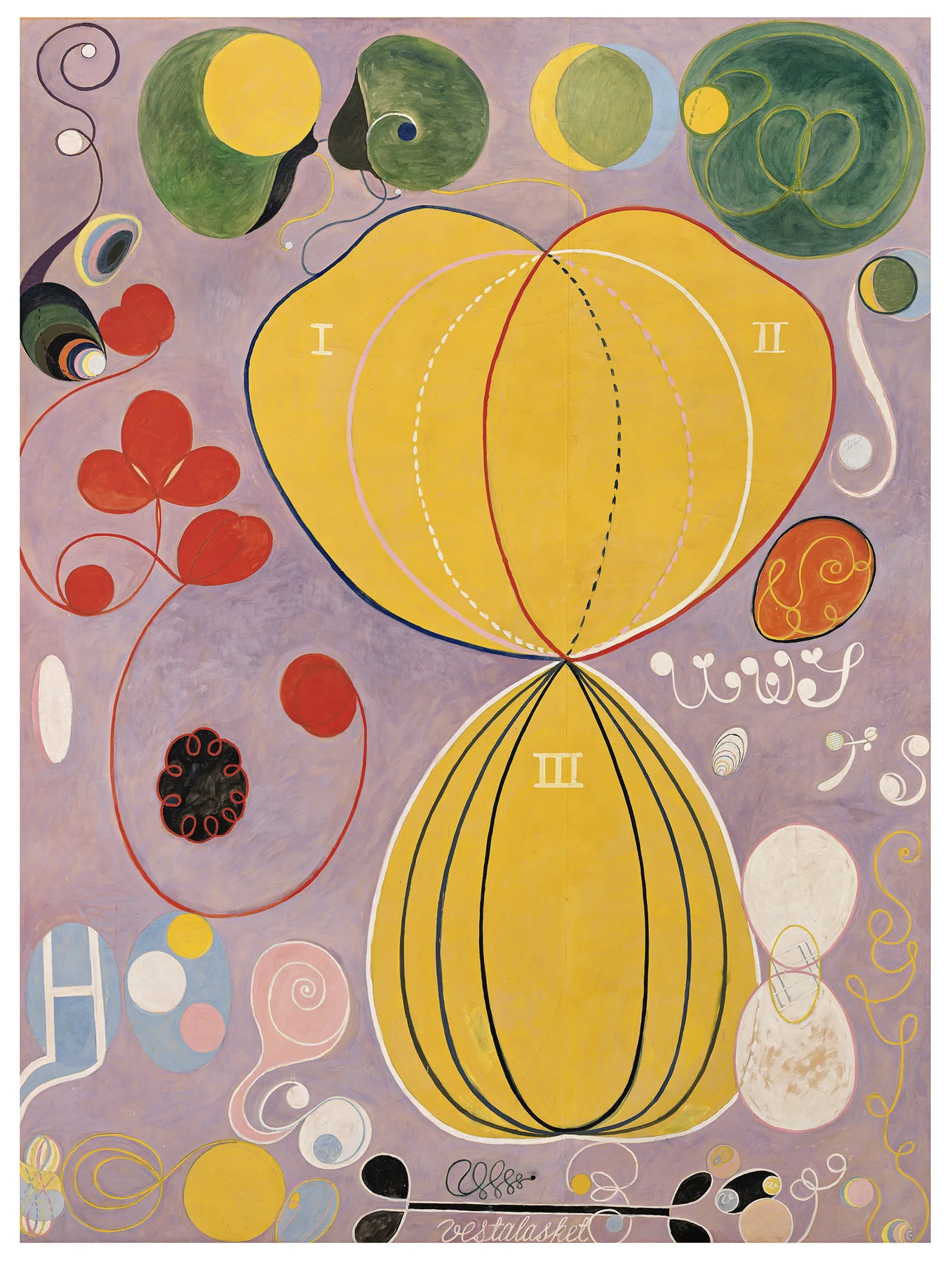
The most productive method is serial comparison: what remains stable across a cycle, what changes, and at what level (symbol, rhythm, scale, chromatic temperature)? That protocol reveals why af Klint cannot be reduced to a single icon image. Her strongest claims are temporal and structural, distributed across sets.
Delayed reception and canon politics
Af Klint's work circulated minimally during her lifetime, and much of it entered broad institutional discourse decades later. This delay is central, not anecdotal. It means twentieth-century abstraction narratives were consolidated around other figures before her paintings were fully visible. The recent reassessment therefore changes not only attribution, but the model of how abstraction emerged historically.
By 2026, major museum scholarship has deepened this correction, but simplified headlines remain common. A stronger reading keeps two facts together: first, af Klint expands the map of abstraction beyond a single avant-garde axis; second, her paintings remain formally demanding independent of revisionist debates. She matters because of what the works do, not only because of what art history omitted.
This reception history also teaches a broader methodological lesson. Archives, estate rules, exhibition policy, and translation networks can delay or accelerate canon formation regardless of artistic quality. Af Klint is therefore a case study in historical visibility: she shows how institutional timing shapes what later generations call “innovation.” Keeping that frame in view makes interpretation more rigorous and prevents the familiar cycle of replacing one simplified origin myth with another.
Comparative routes across abstraction
Use this page with Abstract Art, then compare with Kandinsky, Malevich, and Mondrian. The goal is not to rank pioneers, but to identify different systems: af Klint's symbolic serial architecture, Kandinsky's dynamic orchestration, Malevich's reductive threshold, Mondrian's equilibrium grids. That comparative frame makes abstraction historically plural and visually precise.
Her long-term legacy is methodological. Af Klint shows that abstraction can function as sequence, notation, and conceptual scaffolding while remaining materially compelling at first encounter. That combination keeps her structurally central to any high-level account of modern image systems.
Key works in Explainary
Associated movement
Continue with the art quiz to validate recognition, context, and comparison.