
Artist Guide
Kazimir Malevich
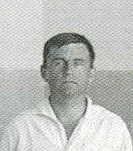
Malevich treated abstraction as a structural reset, not a decorative trend. Born in 1879 near Kyiv and active across the late-imperial and early Soviet period, he turned painting into a laboratory for what image-making could do after representation. Suprematism was his answer: not a style label, but a method for testing relation, interval, and perceptual tension as primary content.
From provincial training to the Moscow avant-garde
Malevich's early path moved through Symbolist and Neo-Primitivist experiments before he reached the non-objective turn. This development matters because Suprematism did not appear from nowhere in 1915; it came from years of negotiating icon traditions, modern urban culture, and the pressure of competing avant-garde programs. By the time he formulated Suprematism, he had already learned how quickly style can become convention, and he treated reduction as a way to restart pictorial thought at its structural base.
That biographical trajectory also places him within a specific historical frame: artists in the Russian Empire and early Soviet years were asked to reinvent visual language while political institutions were being rebuilt around them. Malevich worked inside that volatility, and his paintings read like propositions about what artistic freedom could still look like under rapid ideological change.
His published texts reinforce that ambition. Malevich argued that painting could detach from object description and still carry intellectual force through relation alone. Whether one agrees with that claim or not, it explains why his canvases should be read with unusual technical attention: minor shifts in angle, border, and pressure are not secondary details but the core argument.
1915 and the icon-corner shock of Black Square
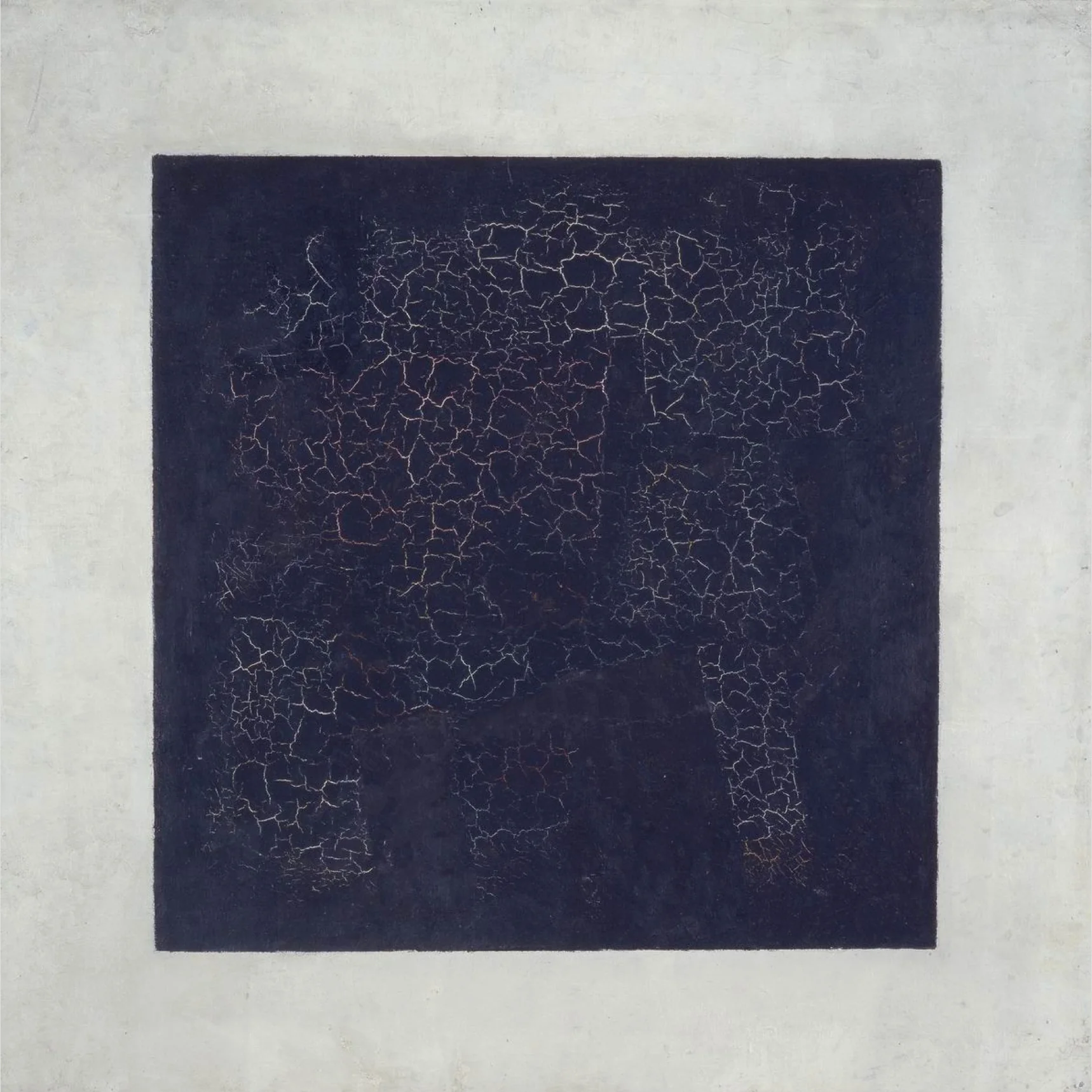
At the 0.10 exhibition in Petrograd in 1915, Malevich installed Black Square high in a room corner associated with domestic religious icons. That curatorial decision was an argument in itself: the painting was presented as a new kind of foundational image. Formally, the work is not a neutral monochrome block. Edge vibration, tonal irregularity, and slight instability in the square's relation to the ground create pressure that keeps the surface active. The provocation was therefore double, symbolic and perceptual.
How White on White pushes reduction past comfort
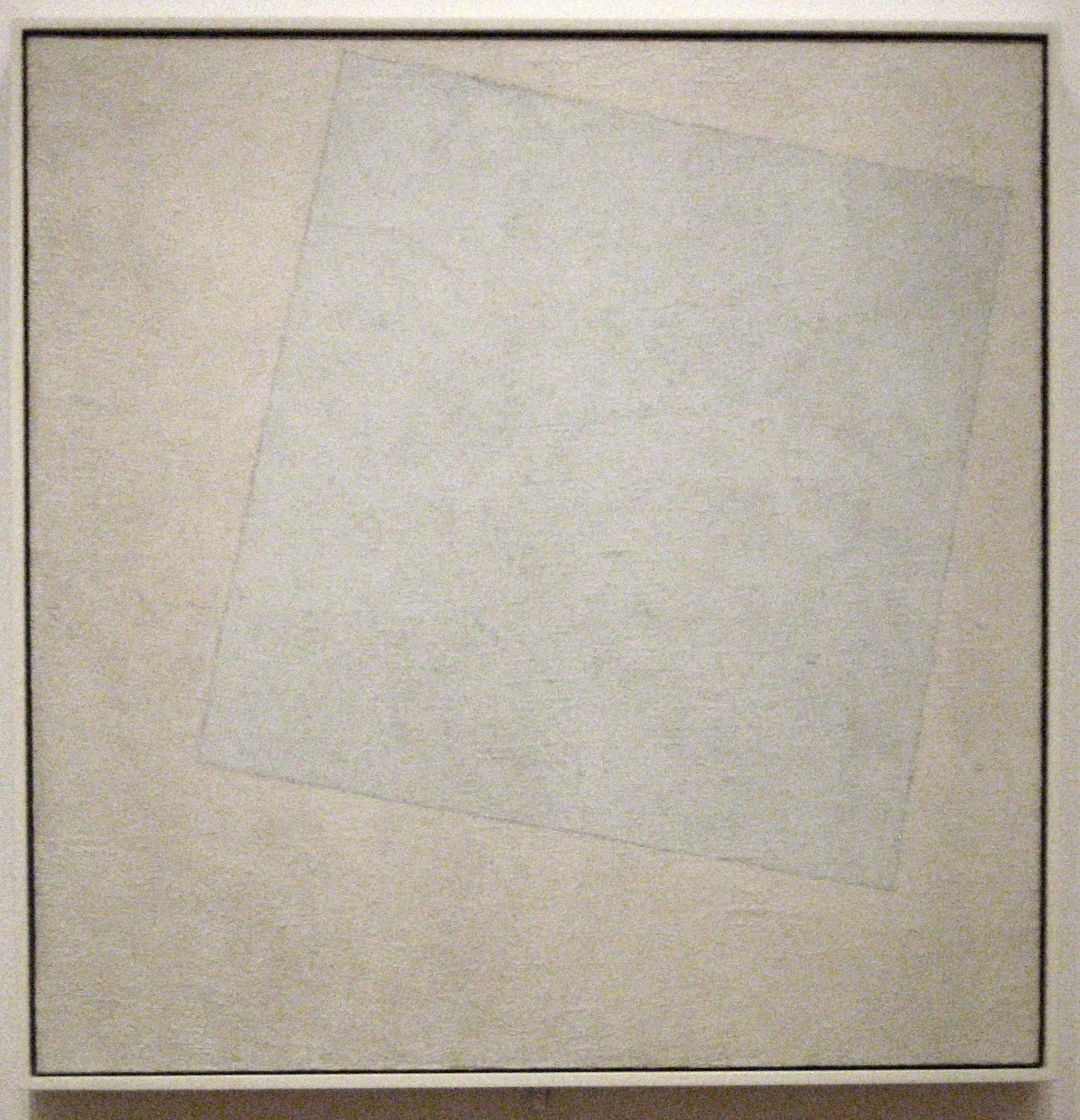
With White on White, Malevich moved from contrast to near-threshold perception. Direction, tilt, and interval replace recognizable subject matter. The painting asks viewers to read almost imperceptible differences in orientation and value, making attention itself the medium. This is where Suprematism becomes more than shock value: it becomes a disciplined test of how little is needed for a painting to remain structurally alive.
Teaching, institutional pressure, and why the work still matters
Malevich's influence expanded through teaching and writing, including his work at Vitebsk, where Suprematist ideas moved from singular canvases into collective pedagogy. Later Soviet cultural controls reduced the space for non-objective painting, and his late career included partial returns to figuration. That arc is not a contradiction; it shows how artistic method is shaped by institutions as much as by studio intention. Read him with Piet Mondrian, Wassily Kandinsky, and the Abstract Art page to see distinct routes through modern abstraction, then continue with When Artists Started Abstract Art for broader chronology.
One concrete anecdote captures his afterlife: when Malevich died in 1935, a black-square motif appeared on his coffin and funeral arrangements. Even at that moment, the work functioned as more than a single canvas; it had become a sign for an entire program about perception and modernity. That continuity between studio experiment, public display, teaching, and memory is a key reason he remains central in art-historical debates.
Key works in Explainary
Associated movement
Continue with the art quiz to validate recognition, context, and comparison.