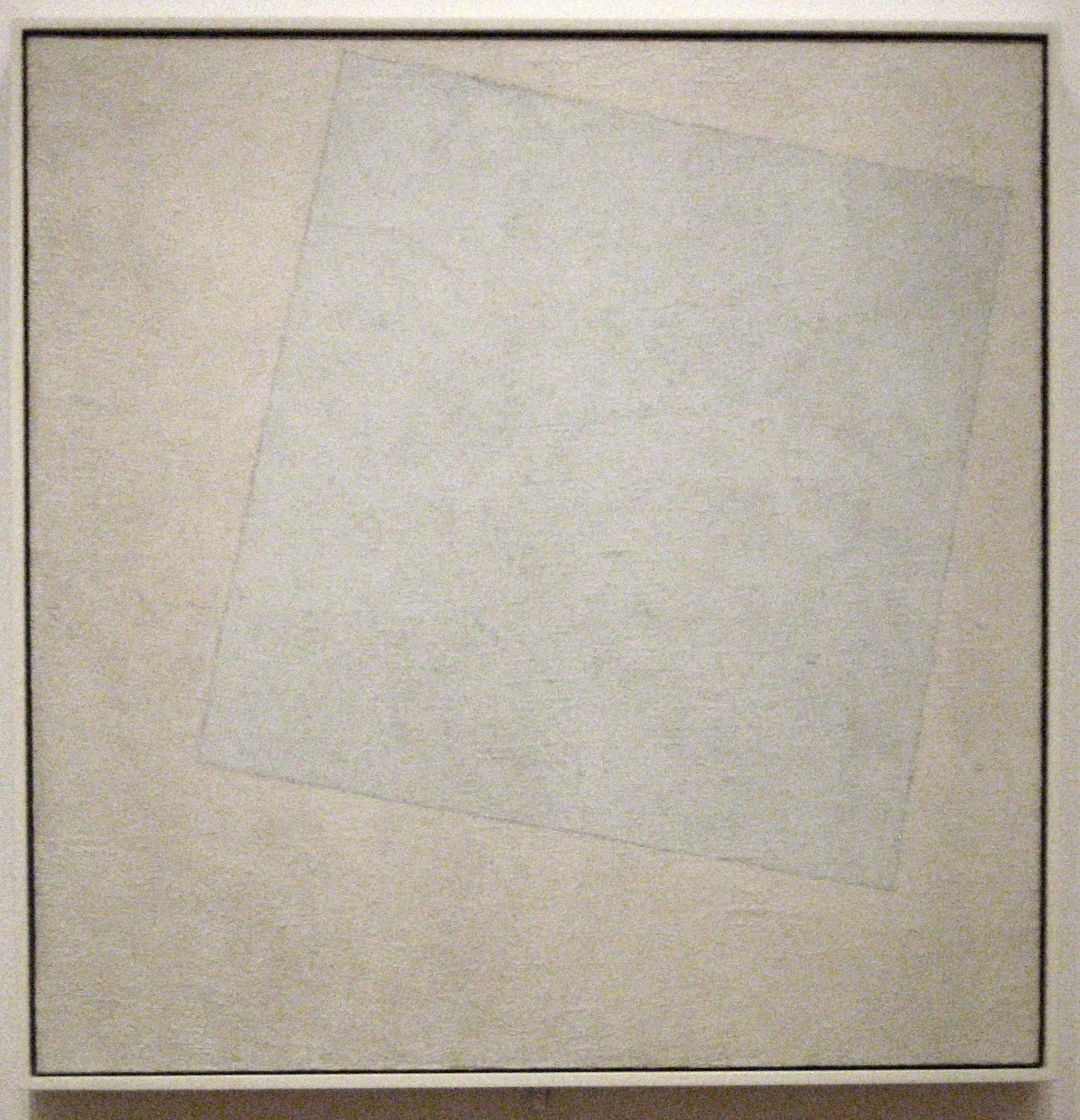
Abstract Art
The Ten Largest, No. 7 (Adulthood)
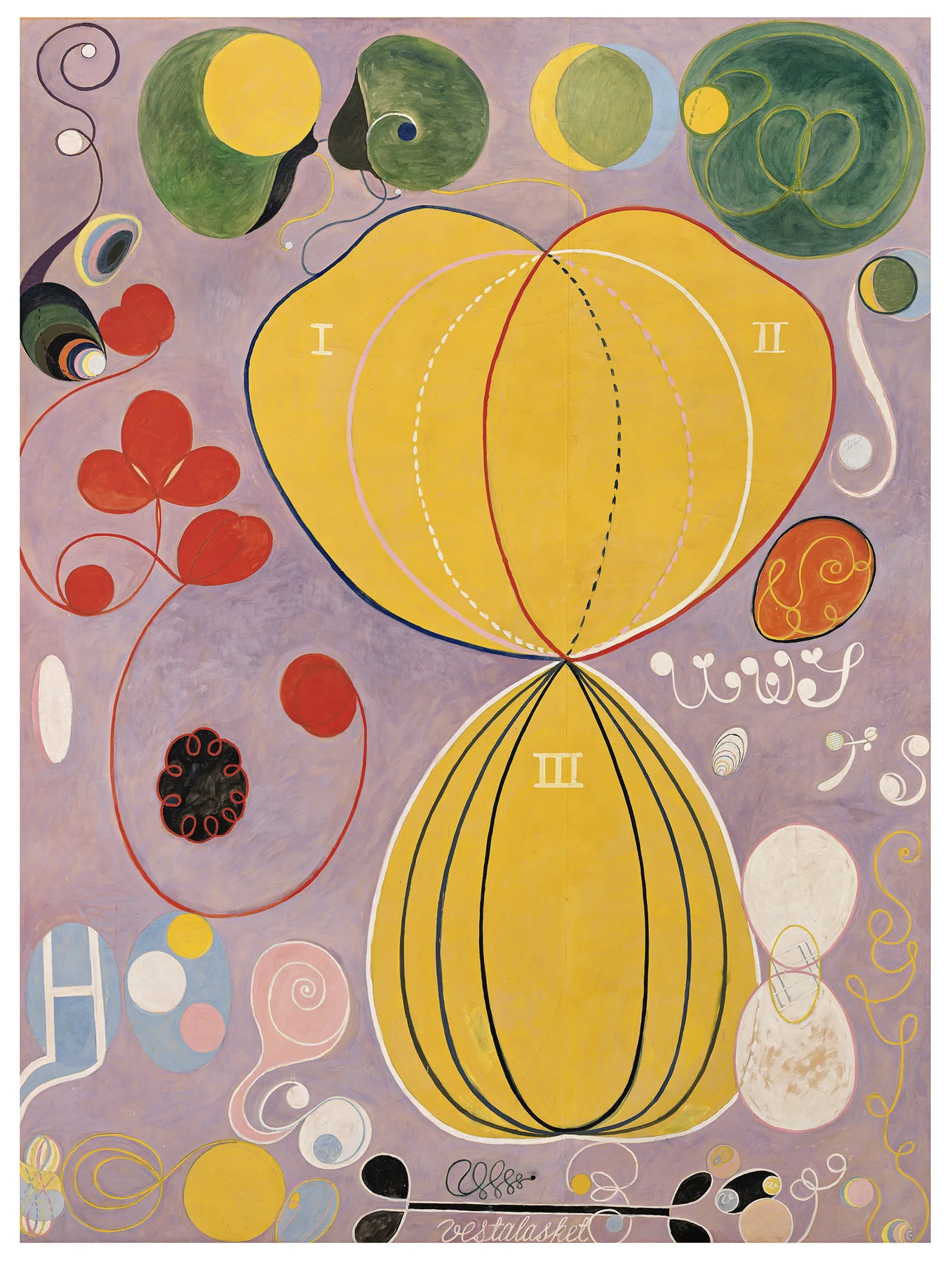
A monumental painting where circles, petals, and scripts replace direct representation, turning life stages into a visual system.
1907 context: a monumental cycle, not an isolated canvas
Hilma af Klint painted this work in 1907 in Stockholm as part of the Paintings for the Temple project, specifically the Ten Largest sequence on the stages of life. That context matters: this is not a decorative one-off but one panel inside a larger intellectual program where abstraction, spiritual inquiry, and visual structure are deliberately linked.
Circles, inscriptions, and a life-stage architecture
The surface is organized by oversized circular forms, vertical axes, floral-biomorphic motifs, and handwritten signs. Pink and orange passages carry warmth and expansion; blues and violets create cooler intervals; black lines and lettering punctuate the field like directional markers. Because the canvas is monumental, these elements are read physically as well as optically: from a distance you register global rhythm, up close you decode local symbols and brush decisions.
Intention and method: abstraction as relational language
Af Klint does not abandon meaning; she relocates it. Instead of narrative figures, she builds significance through recurrence, contrast, and proportion. Tempera and paper mounted on canvas produce a matte surface where large color zones remain stable while finer details stay legible. The result is a layered syntax: first composition, then symbols, then possible metaphysical readings.
Why this work changes the abstraction timeline
Placed beside Kandinsky's Composition VII and Malevich's Black Square, this painting shows that abstraction did not emerge from one method alone. Kandinsky intensifies orchestration, Malevich radicalizes reduction, and af Klint develops diagrammatic systems at monumental scale. Reading them together clarifies what makes Hilma af Klint indispensable: she proves that non-objective painting can be both formally strict and interpretively open.
From private archive to public turning point
A crucial part of this story is reception. Af Klint requested that many works remain unseen for years after her death, which delayed their place in mainstream art-historical narratives. As museums and archives began showing the series more fully, viewers recognized that these paintings were not marginal curiosities but major propositions about how abstraction could think through life, time, and transformation.
That delayed visibility changes interpretation. Instead of asking who "invented abstraction" first, the better question is how different artists built different abstract languages under different pressures. In that broader frame, The Ten Largest, No. 7 is not an exception. It is a foundational case of abstraction as a large-scale epistemic tool: a way of structuring ideas, not just producing novel style.
It also explains why this work attracts such broad audiences today: it remains intellectually open while giving viewers concrete visual anchors. Few early abstract paintings combine that level of accessibility with this degree of structural ambition.
That balance between clarity and depth is precisely what makes the panel so durable in both museum interpretation and academic debate.
If The Ten Largest, No. 7 (Adulthood) is clearer now, try the art quiz and see whether you can spot works by Hilma af Klint in seconds.
Primary sources
- Moderna Museet — Hilma af Klint exhibition context
- Guggenheim — Hilma af Klint: Paintings for the Future
- Hilma af Klint Foundation — official archive context
- Encyclopaedia Britannica — Hilma af Klint
- Wikimedia Commons — public-domain file metadata
Abstraction here is not the absence of meaning; it is meaning organized through relation, rhythm, and attention.
Explore more
For a transversal path, pair this canvas with White on White and the method essay How to Understand a Painting.