
Movement Guide
Abstract Art
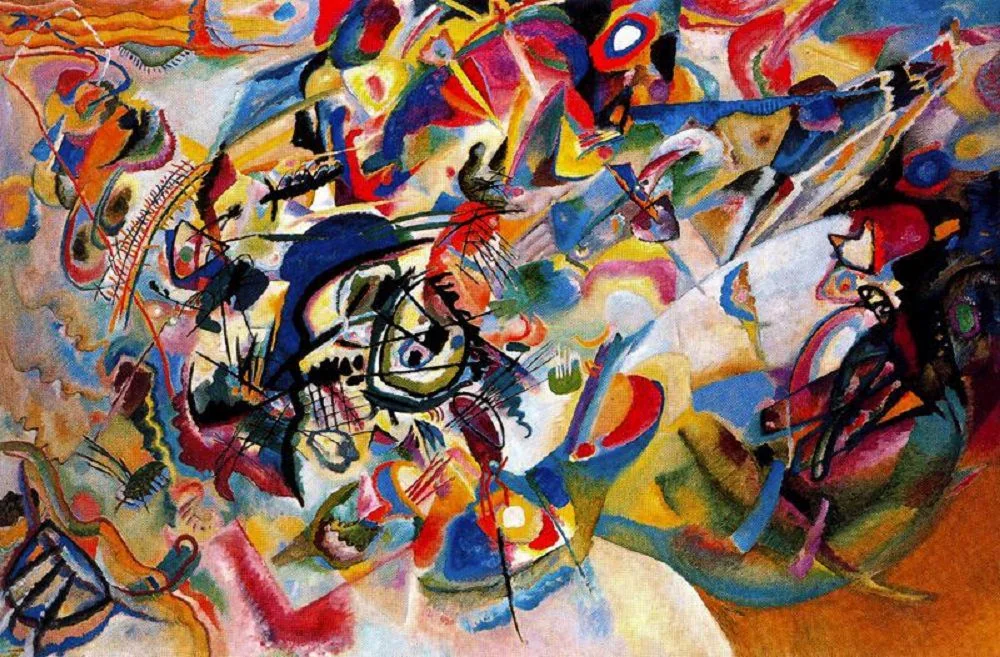
Abstract art shifts emphasis from depicting objects to organizing relations—color, line, form, interval, and rhythm—as the main carriers of meaning. At its best, abstraction is neither vague nor merely decorative. It makes structure itself visible and asks viewers to read pressure, balance, tempo, and hierarchy with unusual precision.
What defines it
- Non-objective or semi-objective composition where relations do the work once assigned to description.
- High attention to hierarchy, interval, rhythm, edge behavior, and proportional balance.
- A shift from telling a story to building a perceptual system.
Why it emerged
Abstract art emerged when artists stopped treating modernity as only new subject matter and began treating perception itself as a field of construction. The question was no longer just what to depict, but whether painting could think through relation—color against color, line against interval, field against pressure—without leaning on familiar objects.
That shift did not happen in one studio or one manifesto. It formed across symbolic experiments, musical analogies, spiritual programs, Cubist reductions, and design-minded searches for visual order.
Plural origins, not a single invention
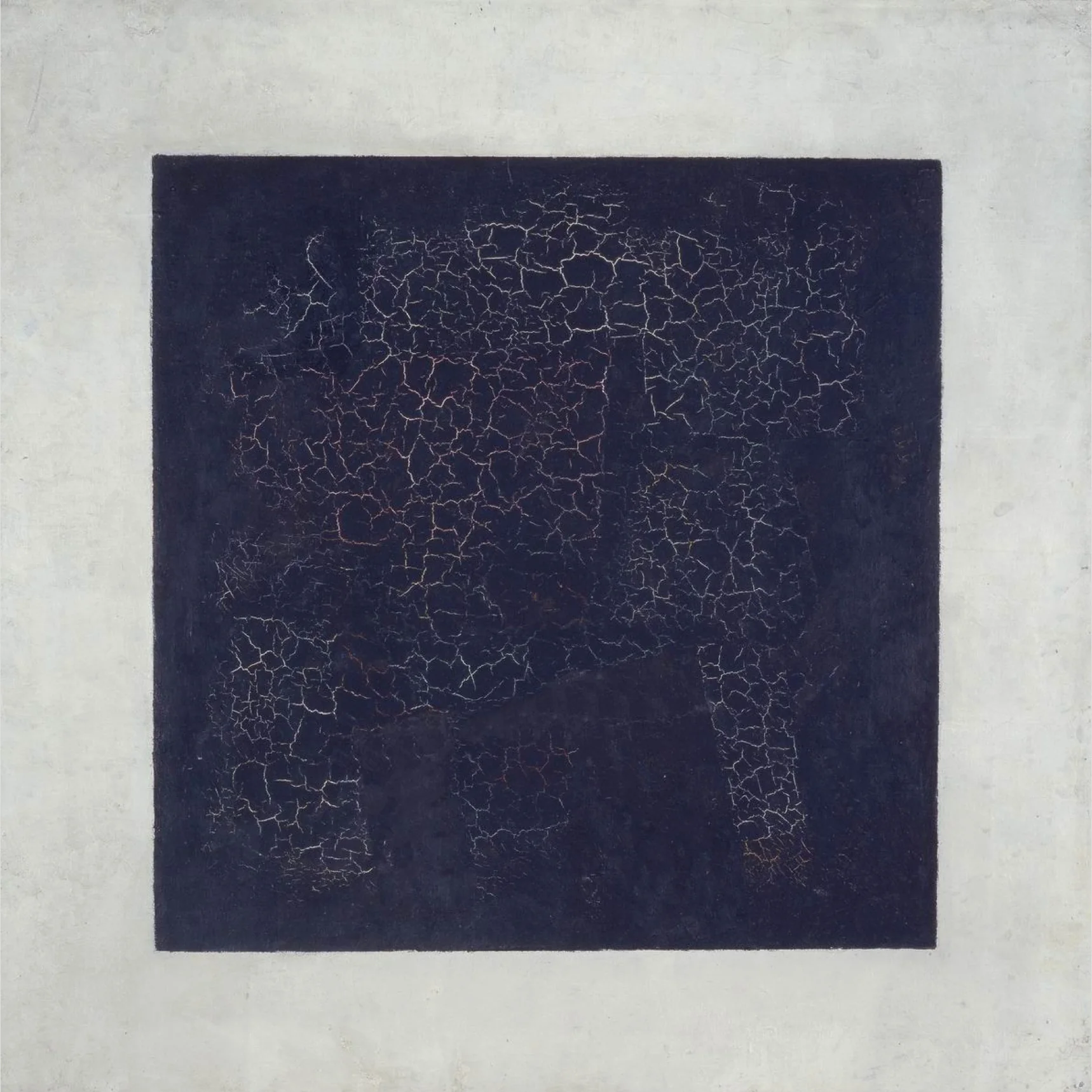
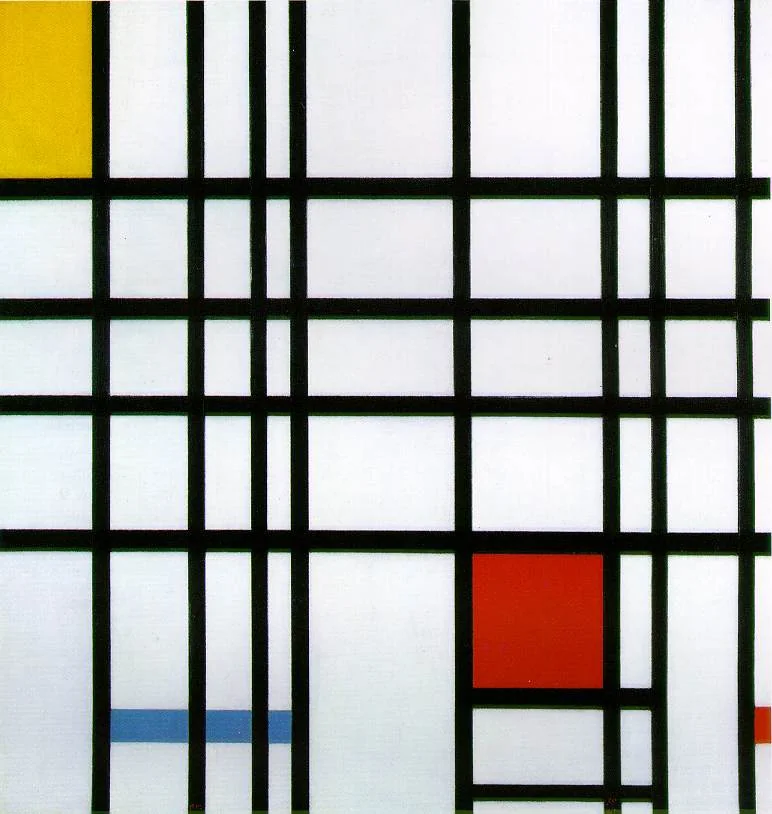
By the 1910s, abstraction already had several live routes: Hilma af Klint's serial symbolic systems, Kandinsky's dynamic orchestration, Robert Delaunay's chromatic simultaneity in Orphism, Malevich's radical reductions, and Mondrian's proportional grids. Treating all of that as one style flattens the movement at the exact point where it becomes historically interesting.
The useful move is comparative. Ask what each artist thinks painting is for once descriptive obligation loosens. The answers differ, and those differences are the movement.
What to read beyond "non-figurative"
The common definition—art without recognizable subject matter—is only a threshold. Strong abstract works are built from hierarchy, pacing, edge behavior, interval, and controlled imbalance. They become easier to read once you track how the composition organizes attention rather than searching for hidden objects.
Put The Ten Largest, No. 7, Composition VII, and Black Square side by side. All are abstract, but each compresses a different theory of meaning: symbolic sequence, orchestrated turbulence, and radical reduction.
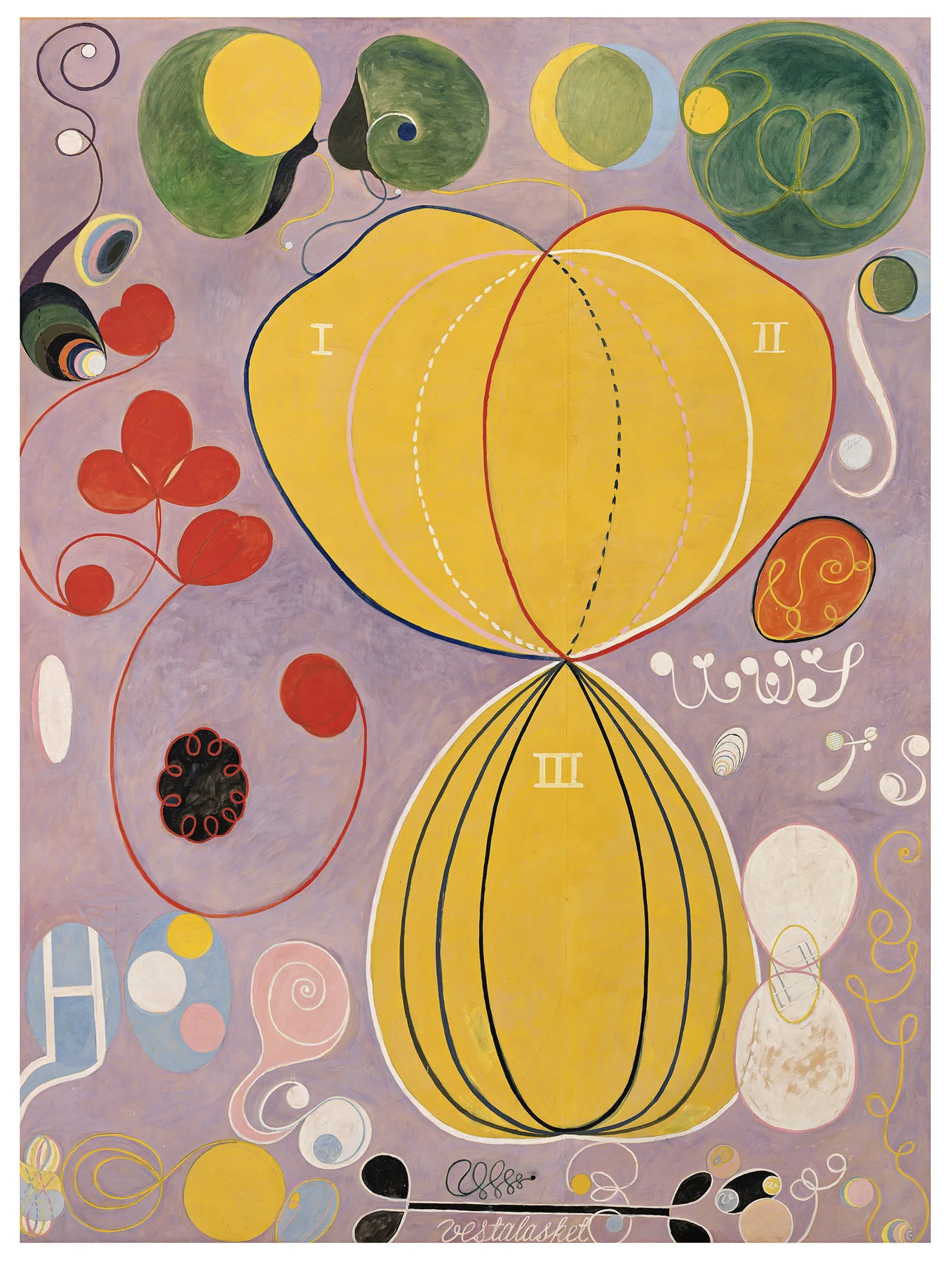
A movement with multiple working methods
Compare those routes with Composition with Red, Blue and Yellow. Mondrian treats abstraction as a calibrated system of proportion, not an outburst or a manifesto. That is why abstraction is better understood as a family of methods than as a single look.
A strong reading order on Explainary is Composition VII by Wassily Kandinsky, White on White by Kazimir Malevich, then Mondrian, with Orphism and af Klint widening the field through chromatic pulse and serial symbolism. The sequence makes a core point visible: abstraction can move toward orchestration, declaration, serial symbolism, or modular balance without ceasing to be abstraction.
How to read abstraction without flattening it
Start with three questions: where does the eye accelerate, where does it rest, and which relations carry the most weight? Then compare how different artists build those answers. This turns abstraction from a label into a method of looking.
On Explainary, the most productive route is to move between movement page, artist page, and artwork page, then return. Each loop replaces general vocabulary with visible evidence.
Why abstraction remains central in 2026
We now live inside abstract systems—interfaces, dashboards, maps, brand grammars, motion cues, and data visualizations—so abstraction is no longer a museum exception. It is part of daily cognition.
Painting still matters because it slows that literacy down and makes its stakes visible. Abstract art teaches how form can organize perception before narrative arrives. Use the art quiz as a quick check: can you reconnect those different abstract strategies to the right artists and works?