
Realist Artist
Jean-François Millet: Style, Major Works, and Why He Matters
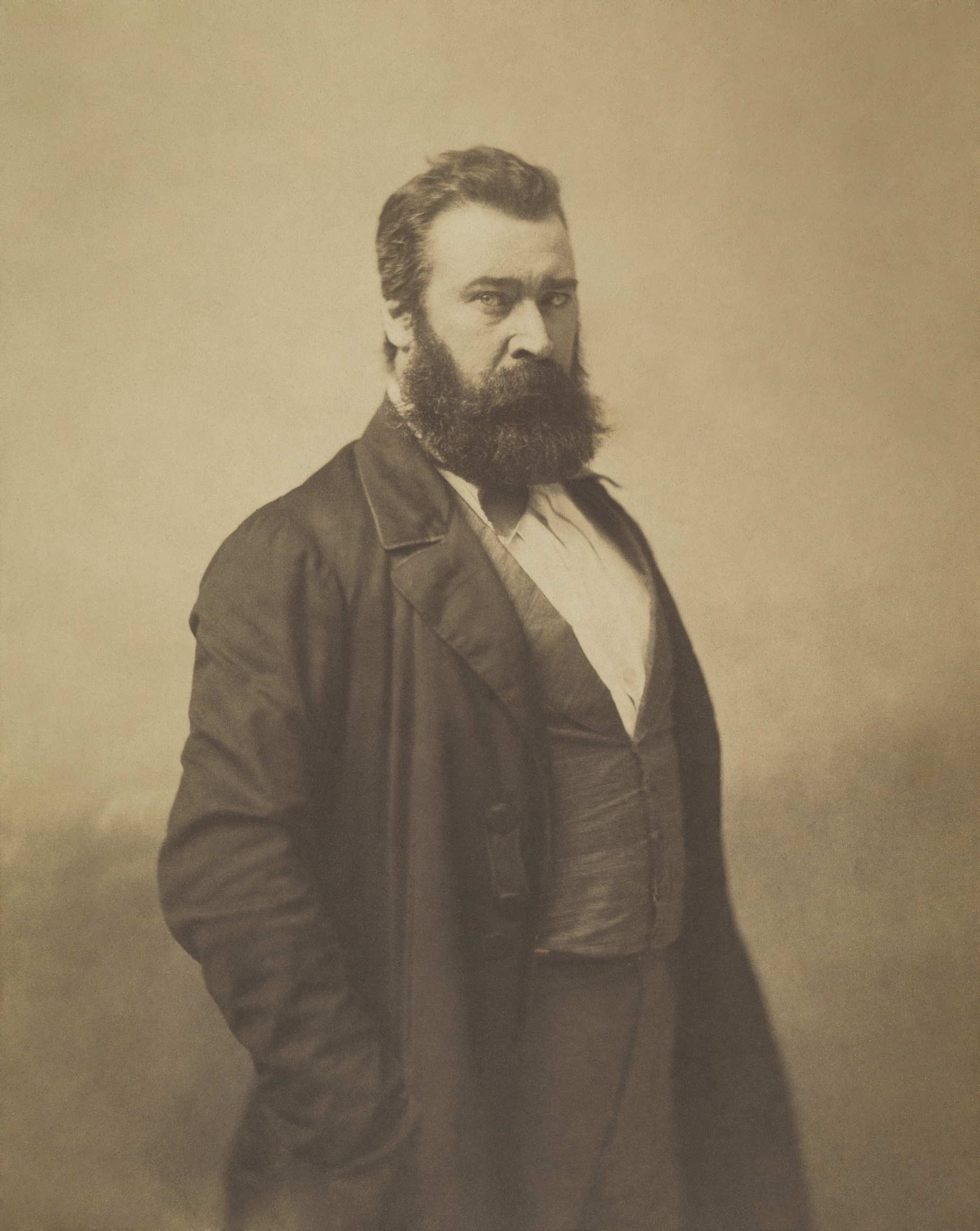
Why does Jean-François Millet matter? Because he gave rural labor the gravity and scale of a major modern subject. Born into a farming family and later active in Barbizon, he turned sowers, gleaners, shepherdesses, and wood gatherers into figures serious enough to anchor modern painting. Inside Realism, he stands apart from Courbet: less confrontational, more concentrated, and more dependent on posture, rhythm, and the relation between bodies and land.
From Normandy to Barbizon
Millet was born in 1814 in Gruchy, in Normandy, into a farming family. That origin is not a romantic footnote added later to flatter the work. It helps explain why peasant life never appears in his art as a costume or excursion. After early training in Cherbourg, he moved to Paris, where he studied at the Ecole des Beaux-Arts and worked through the competitive world of Salon painting. He knew academic practice from the inside before stepping away from its preferred subjects.
The decisive shift came with Barbizon, where he settled in 1849. That village near the Forest of Fontainebleau became a working base for painters interested in landscape and rural life outside academic formula. For Millet, Barbizon was not just a scenic refuge. It was the place where peasant labor, seasonal rhythm, and open land could be treated as structurally serious subjects.
Why peasants became central
Millet is sometimes reduced to the painter of poor peasants, as if that were simply a matter of sympathy. The reality is sharper. He gives manual work pictorial weight at a moment when French society is being reorganized by industrial change, urban growth, and political fear of the laboring classes. Rural figures in his paintings are therefore not just local types. They sit inside a larger nineteenth-century argument about labor, dignity, poverty, and who counts as the nation.
What makes his art distinctive is that he rarely turns this into open rhetoric. He does not usually stage dramatic protest or narrative climax. Instead, he builds meaning through posture, repetition, and the relation between bodies and land. The result is solemn rather than agitated. That solemnity is one of the reasons later viewers, including Van Gogh, found him so compelling.
Millet is not only the painter of hardship
It would still be a mistake to flatten him into one mood. Millet painted sowers, shepherdesses, wood gatherers, resting peasants, and later landscapes with animals and village edges around Barbizon. Works such as The Sower and The Angelus show how broad his range could be: labor, prayer, routine, and twilight all remain central, but they are handled with different emotional temperature.
This matters because it clarifies his real achievement. Millet does not simply document the poor. He finds a pictorial language in which ordinary rural actions can become grave without becoming theatrical. Bodies are generalized enough to stand for more than one individual, yet they never feel abstract. That balance is hard to achieve and helps explain his long afterlife.
One major case: The Gleaners
In The Gleaners, three women bend, gather, and rise in slow sequence, while the wealth of the harvest stays farther back in the field. Millet does not isolate a dramatic incident. He isolates a structure of labor. The painting is about class distance as much as about work itself.
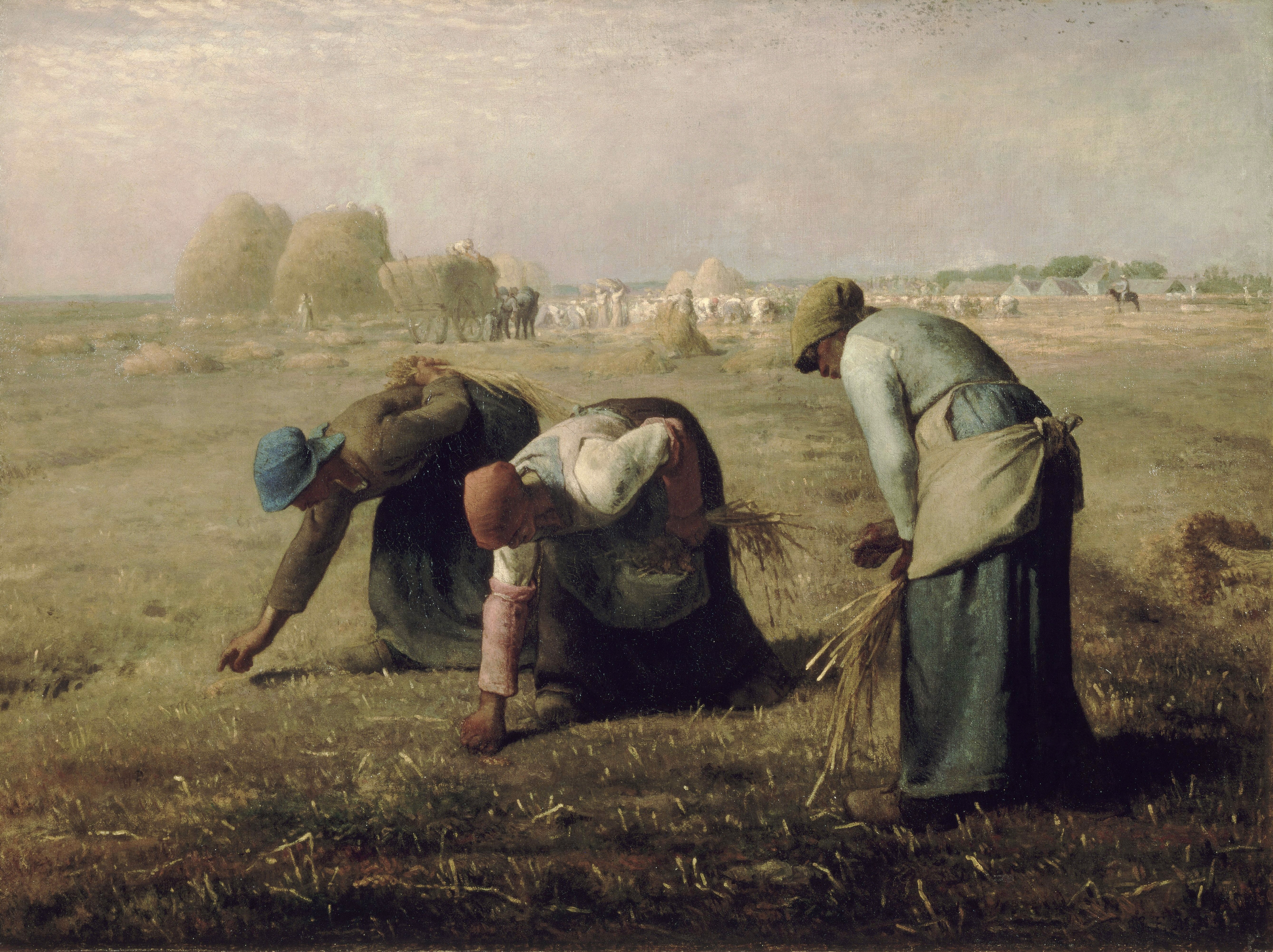
What the picture clarifies about Millet as a whole is his refusal of both anecdote and pity. He does not sentimentalize poverty, but he also does not strip it of dignity. The women remain poor, supervised, and socially marginal, yet the painting grants them formal weight. That is a durable artistic decision, not only a social observation.
From Millet to Van Gogh and later social images
Millet's influence runs strongly through later modern art because he proved that laboring bodies could anchor serious painting. Van Gogh copied and reworked Millet repeatedly, not to imitate rustic subject matter, but to learn how ordinary work could become visually inevitable. The line continues further out than direct stylistic imitation. Once Millet had shown that peasant life could carry formal gravity, later artists and photographers could return to poverty and work without needing mythological disguise.
Read him beside A Burial at Ornans to clarify two routes through Realism. Read him beside Migrant Mother to see how the representation of hardship changes across media and centuries. His achievement lies less in one iconic image than in a whole way of making labor visible without cheapening it.
Reading paths from Millet
Begin with The Gleaners, move out to Realism, then compare Millet's rural gravity with Courbet and later with Dorothea Lange. Then try the art quiz.